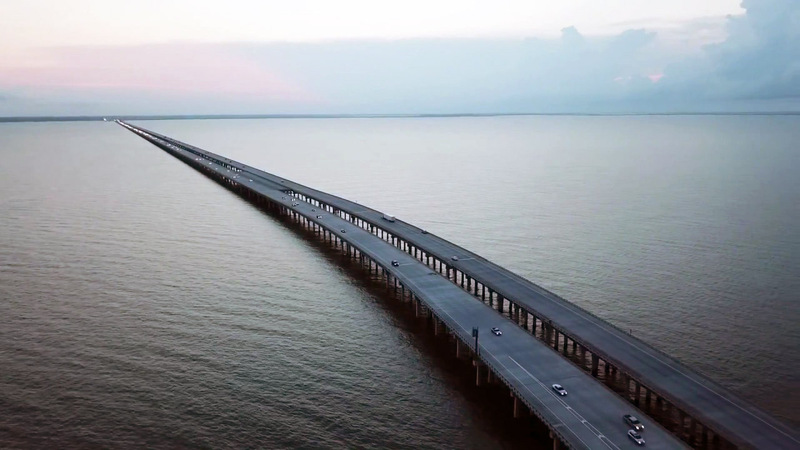
<?xml version="1.0" encoding="UTF-8"?>
<feed xmlns="http://www.w3.org/2005/Atom">
  <title type="text">Acadiana Historical</title>
  <updated>2026-10-11T20:34:02+00:00</updated>
  <generator uri="http://framework.zend.com" version="1.12.20">Zend_Feed_Writer</generator>
  <link rel="alternate" type="text/html" href="https://mail.acadianahistorical.org/"/>
  <link rel="self" type="application/atom+xml" href="https://mail.acadianahistorical.org/items/browse?output=rss2"/>
  <id>https://mail.acadianahistorical.org/</id>
  <author>
    <name>Acadiana Historical</name>
    <uri>https://mail.acadianahistorical.org</uri>
  </author>
  <link rel="hub" href="https://pubsubhubbub.appspot.com/"/>
  <entry>
    <title type="html"><![CDATA[Site 9: St. Roch Cemetery — The Society Tomb: Screwmen&#039;s Benevolent Association at Work]]></title>
    <summary type="html"><![CDATA[<img src="https://mail.acadianahistorical.org/files/fullsize/838544e96f4bf22a42a393a05ff5c212.jpg" alt="[Untitled]" /><br/><p>Today, the Society Tomb of the Screwmen’s Benevolent Association in St. Roch Cemetery No. 1 stands as the only known public monument in New Orleans to the screwmen who once played such an important role on the city’s waterfront. For generations, these highly skilled laborers used jackscrews to tightly pack cotton into the holds of ships, helping make New Orleans one of the world’s great cotton ports. Despite their importance to the city’s economy and waterfront culture, remarkably little remains to commemorate their work. The society tomb is a rare physical reminder of a profession—and a community of working men—that was once a familiar part of life along the New Orleans levee.</p><p>Although graves and cemeteries are generally excluded from the National Register of Historic Places because a person’s burial site is not necessarily connected to their achievements in life, the Screwmen’s Benevolent Association tomb at St. Roch Cemetery offers something that historic buildings and documents often cannot. Standing before it provides a tangible, deeply human connection to the men whose labor, struggles, and solidarity helped build New Orleans into one of the nation’s great ports, reminding us that behind the history of commerce and industry were ordinary people whose lives and contributions deserve to be remembered.</p><p>St. Roch Cemetery No. 1 reflects the deep connections among faith, immigration, disease, and death in nineteenth-century New Orleans. The cemetery was established in 1874 by Father Peter Leonard Thevis, pastor of Holy Trinity Church, to serve the parish’s predominantly German Catholic congregation. </p><p>The cemetery’s origins are closely tied to New Orleans’s long struggle with yellow fever. During the epidemic of 1867, Thevis prayed to St. Roch, the Catholic saint traditionally invoked for protection against plague and disease, asking that his parishioners be spared.  The cemetery was dedicated on September 6, 1875, when the cornerstone of the small  chapel was laid. The completed chapel was formally dedicated on August 16, 1876, the feast day of St. Roch.</p><p>Early burials were often simple in-ground graves marked by wooden crosses, while masonry tombs initially lined the central avenue leading to the chapel. Gradually, the above-ground tombs, wall vaults, religious statuary, and orderly pathways created the distinctive landscape seen today. In this way, St. Roch Cemetery No. 1 preserves not only the history of a neighborhood, but also the religious traditions and experiences of New Orleans’s nineteenth-century immigrant communities.</p><p><em><strong><a href="https://mail.acadianahistorical.org/items/show/337">For more (including 5 images) view the original article</a></strong></em></p>]]></summary>
    <published>2026-08-13T18:49:11+00:00</published>
    <updated>2026-10-11T20:34:02+00:00</updated>
    <link rel="alternate" type="text/html" href="https://mail.acadianahistorical.org/items/show/337"/>
    <id>https://mail.acadianahistorical.org/items/show/337</id>
    <author>
      <name>Laura M. Hughes</name>
    </author>
  </entry>
  <entry>
    <title type="html"><![CDATA[A.J. Davis Memorial Highway: A Louisiana Pilot&#039;s Final Flight ]]></title>
    <summary type="html"><![CDATA[<img src="https://mail.acadianahistorical.org/files/fullsize/02a65c721b2e779ef721ee4ff84041fb.jpg" alt="[Untitled]" /><br/><p>In the heart of Louisiana, where old live oaks stretch out over the bayou roads, there's a highway named after a local hero. This man answered his country's call to serve from the cockpit of a military plane. Back in 1997, the Louisiana Legislature decided to honor Captain Ashley James "A.J." Davis by naming the A.J. Davis Memorial Highway after him. Davis was from Baton Rouge and flew for the United States Air Force, sadly losing his life while serving his country.</p><p>A.J. Davis was born on November 19, 1960, in Hammond, Louisiana, a place known for its strong-willed people. He joined the Air Force in 1989 and worked his way up to become an Aircraft Commander in the 76th Airlift Squadron. During his time in the Air Force, he spent over 2,900 hours flying the military CT-43 plane. Davis had many important jobs, including flying First Lady Hillary Clinton to Bosnia and Turkey. He also played a role in Operation Deliberate Force, which took place over Serbia in 1995. His experiences took him to the highest levels of duty, giving him a unique perspective on the world. Davis's time in the Air Force was marked by notable assignments and a strong sense of determination, reflecting the character of his hometown in south Louisiana.</p><p>On a rainy April 3, 1996, Captain Davis was in charge of Flight IFOR 21, which took off from Zagreb. The plane was carrying a very important group of people, including Commerce Secretary Ronald H. Brown, who were on a mission to help rebuild Bosnia and Croatia after the Dayton Accords. As the plane flew through the heavy rain and poor visibility, it relied on old navigation systems to guide it towards Dubrovnik Airport. But something went terribly wrong, and the plane crashed into a mountainside near the city. Sadly, all 35 people on board lost their lives in the tragic accident. The incident was a devastating blow to the efforts to rebuild the war-torn region, and it would be remembered for a long time as a tragic loss of life.</p><p>President Clinton paid his respects to the fallen heroes at Dover Air Force Base, recalling their bravery as patriots who brought America's hope to a far-off and troubled land. Meanwhile, in Mississippi, Captain Davis, who was only 35 years old, was given a final farewell at Biloxi National Cemetery. His life, though short, was one of service and sacrifice, leaving behind a legacy that will be remembered. The president's words echoed the sentiments of a nation, as people came together to mourn the loss of these brave men and women.</p><p>The A.J. Davis Memorial Highway is a lasting tribute that can be found along the roads of his home state, serving as a reminder of a man who came from the bayous of Louisiana and went on to serve with great distinction and courage. This highway stands for all the people from Louisiana who have worn a uniform, whether they were in the air, at sea, or on the battlefield, and unfortunately did not make it back home. As people drive by the moss-covered oak trees, they are reminded of his name, which lives on as a son of Louisiana who will never be forgotten. The memorial highway is a quiet way to honor his memory, and it's a testament to the impact he had on the state and its people. For those who travel through the area, the highway is a poignant reminder of the sacrifices made by people like A.J. Davis, and it's a way to keep his legacy alive.</p><p>Drive slow. Look up. And carry his spirit forward. </p><p><em><strong><a href="https://mail.acadianahistorical.org/items/show/335">For more (including 3 images) view the original article</a></strong></em></p>]]></summary>
    <published>2026-05-08T03:43:41+00:00</published>
    <updated>2026-05-08T17:25:16+00:00</updated>
    <link rel="alternate" type="text/html" href="https://mail.acadianahistorical.org/items/show/335"/>
    <id>https://mail.acadianahistorical.org/items/show/335</id>
    <author>
      <name>Acadiana Historical</name>
    </author>
  </entry>
  <entry>
    <title type="html"><![CDATA[Johnny Wyatt Memorial Highway : The memory of former Bossier City Marshal ]]></title>
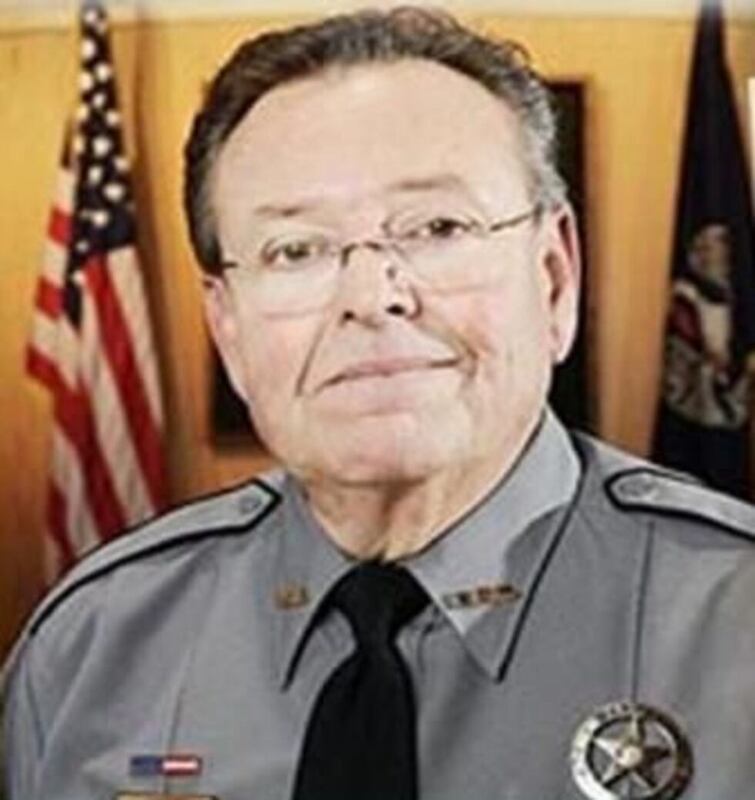
    <summary type="html"><![CDATA[<p><strong><em>A man of law enforcement that will never be forgotten</em></strong></p><img src="https://mail.acadianahistorical.org/files/fullsize/e9c19eb2225f6d10ce4c912323cd0d05.jpg" alt="City Marshal Johnny Wyatt" /><br/><p>Johnny Wyatt was born July 23rd, 1946 in Bossier City, Louisiana. He was a 1964 graduate of Bossier High School and continued his education at Louisiana Tech University in Ruston, Louisiana. He served as the city marshal in Bossier City from 1991 up until his death in 2010. A city marshal serves as the executive officer of the city court, acting as the enforcement arm for judicial orders. The city marshal is a member of law enforcement that can make arrests, conduct traffic, and carry a fire arm, but they do not have to do these tasks often. The main responsibility of a city marshal is to execute orders and mandates of the court. </p><p>In Louisiana, a city marshal is elected into office. In other states, the city marshal is appointed to office by the mayor. The city marshal of Bossier City can run unlimited times and serves a six year term. Wyatt won the 1991 city marshal election and never lost another one. He was re-elected three times because of the good work that he did for Bossier City. He established “A Step in the Right Direction”, which was a program that assisted young people and their parents that were in need due to alcohol or drug addiction. In 2006, Wyatt started the Northwest Louisiana Internet Crimes against Children Task Force. He started this task force because he loved his grandchildren and did not want any children to fall into the hands of a child predator. The last thing he started was the Bossier City Marshal’s Office Cyber Crime Unit and they would assist other agencies with digital forensics. </p><p>On October 8th, 2010, Wyatt was driving eastbound on Interstate 220 in Bossier Parish around 7:45 pm. He took the Shed Road exit, but his vehicle rolled past a stop sign and crashed into a culvert. He was taken to LSU Medical Center where he was pronounced dead. He was buried on October 12th, 2010 at Hill Crest Memorial Cemetery in Haughton, Louisiana. </p><p>His memory will forever be remembered when traveling on Interstate 220 in Bossier Parish. The Louisiana Department of Transportation and Development hosted a ceremony on Thursday August 20th, 2015 that dedicated a portion of Interstate 220 to the former City Marshal of Bossier City, Johnny Wyatt. </p><p>Quotes from friends, co-workers, and family:</p><p>"Johnny had the great ability to lead a thousand people, or to sit down with one person and to make that person he or she feel like they were the most important in the entire world." Bossier Sheriff Larry (October 9th, 2010). </p><p>“There was never a time that Johnny did not greet me with a smile. He was truly a fine man and will be greatly missed. Rest assured that his legacy will continue to help others far into the future.” Mike Boggs (October 13th, 2010). </p><p>“My heart felt condolences on the loss of Johnny. He was my close and dearest friend. I can't express my own heartache for his death. He will be sorely missed by all in our community. We just wish him God's speed and know that he is with the lord. He certainly was an inspiration to us all.” Charlie Davis (October 13th, 2010). </p><p>. </p><p><em><strong><a href="https://mail.acadianahistorical.org/items/show/334">For more (including 7 images) view the original article</a></strong></em></p>]]></summary>
    <published>2026-04-30T02:19:30+00:00</published>
    <updated>2026-05-07T21:43:42+00:00</updated>
    <link rel="alternate" type="text/html" href="https://mail.acadianahistorical.org/items/show/334"/>
    <id>https://mail.acadianahistorical.org/items/show/334</id>
    <author>
      <name>Ian Harrington</name>
    </author>
  </entry>
  <entry>
    <title type="html"><![CDATA[Cecil B. Tramel Memorial Highway- The Legacy of a Liberator: The Legacy of the Liberators]]></title>
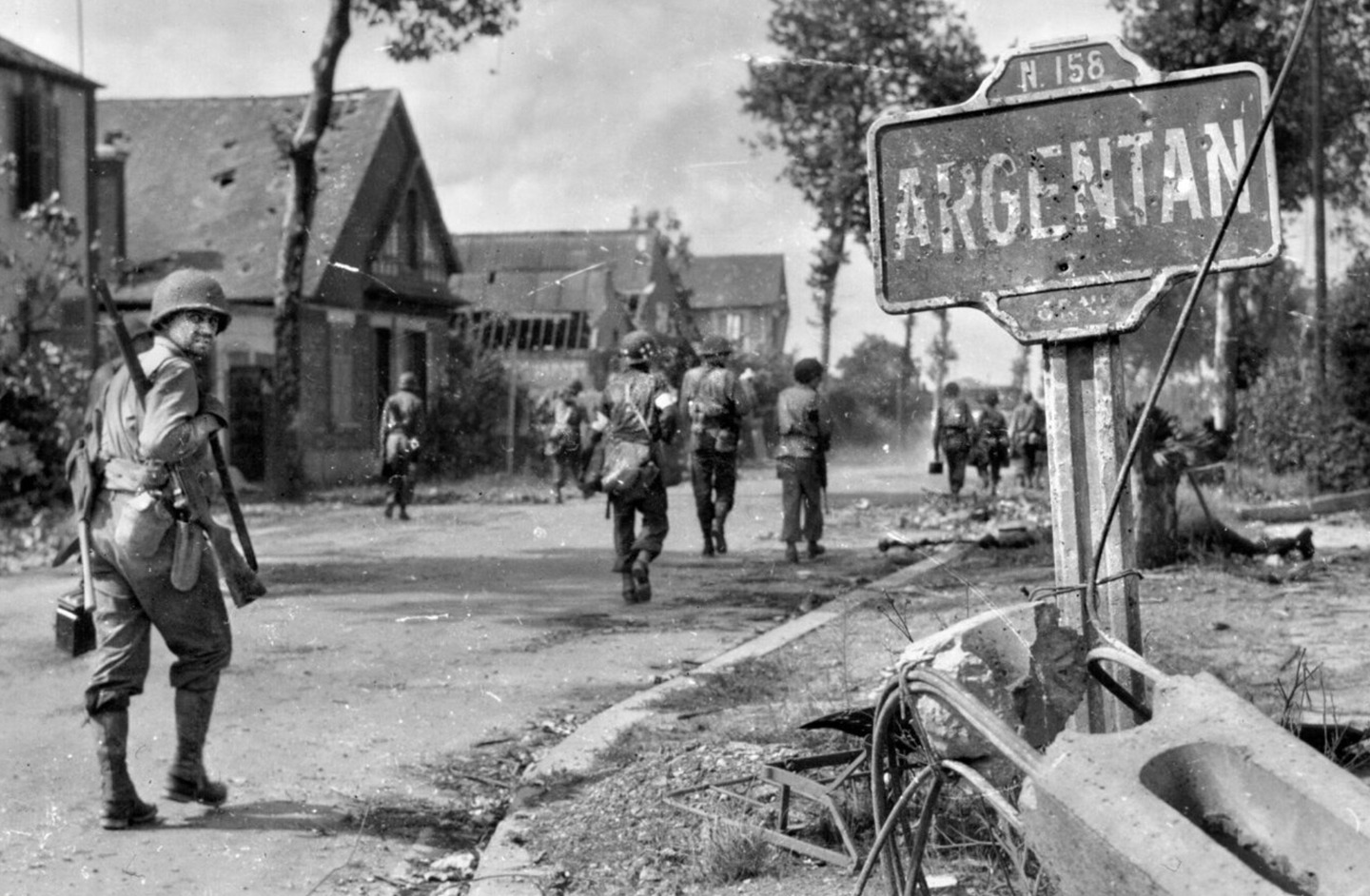
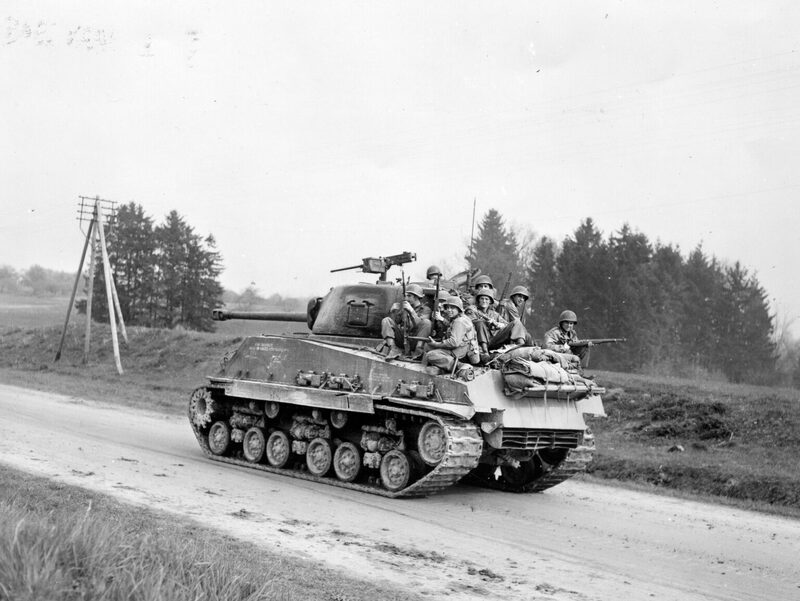
    <summary type="html"><![CDATA[<p><strong><em>In June of 1944, Allied forces stormed the beaches of Normandy, France in what was the opening act of the liberation of greater Europe. As the invasion led deeper into France, Louisiana-native Cecil B. Tramel gave his life on August 20 in Argentan, France. His legacy as a liberator is told through the lens of the wider advancement into France.</em></strong></p><img src="https://mail.acadianahistorical.org/files/fullsize/90656915d10783f06bf8f3c8c8c2eb08.jpg" alt="Photo of Allied liberators in Argentan, France" /><br/><p>In the town of Mittie, LA lies the Cecil B. Tramel Memorial Highway, named in honor of a soldier fallen in Normandy, France following the D-Day invasion in 1944. Giving his life in service of his country before reaching the age of 30, Cecil B. Tramel landed in France as part of the liberation force set to free Europe from the grip of the Axis powers, in what is known as Operation Overlord. The invasion of Europe began on D-Day, June 6, 1944, with units from American and British forces storming the beaches of Normandy, France. Amidst a barrage of artillery fire from deeply embedded German forces, Allied troops fought desperately for every inch of beachhead gained. Over the course of D-Day, which involved a cooperation of naval, airborne and ground forces, Allied forces suffered over 4,000 deaths in a single day. The push into France continued for months after the initial assault on D-Day, with troops fighting to establish a gateway into the rest of Europe. </p><p>Fighting with the 318th Infantry Regiment of the U.S. Army’s 80th Division, Cecil B. Tramel and his fellow soldiers pushed further into the depths of Nazi-occupied France. In August of 1944, the 318th Infantry Regiment made their way into Argentan, France, a town that “played a pivotal role during the final phase of the Battle of Normandy.” In Argentan the 318th encountered two German Panzer divisions and “[o]n August 18, 1944, a new offensive was launched” and the 318th “was in charge of taking Argentan.” Unfortunately, “the infantry suffered heavy casualties due to machine gun fire and mortar shells.” The fight to secure Argentan was brutal, and “about 80% of the town was destroyed.” Argentan was finally liberated on August 20, 1944, tragically, the same day that Cecil B. Tramel lost his life. </p><p>News of Tramel’s death reached his family via a telegram delivered by the Red Cross, as was commonplace during the war. Thousands of families just like Tramel’s received the devastating news of their loved one’s death on a slip of paper through the mail.  Over seventy years later, Tramel would be memorialized beyond a telegram with a stretch of Louisiana Highway 26 named in his honor. Surviving members of his family traveled to view the unveiling ceremony, including his sister-in-law Gertrude Tramel. Gertrude recounted the last time she saw Cecil, when she and her husband brought him to the Oberlin, Louisiana bus station to ship out on his tour of duty in Europe. Despite the many long years between his death and the dedication of his highway memorial, Cecil Tramel was never forgotten by his family. And now, he will be forever remembered in the community of Mittie, Louisiana.</p><p>After the town of Argentan was secured by Allied forces, the push into France continued until almost the entirety of the nation was liberated from the Germans grip. The capital of Paris was secured by the Allies on August 25, 1944, and a massive victory parade took place on August 29th to celebrate the achievement. As 1944 drew to a close and the war entered a new year, more and more European nations were liberated. By Spring 1945, the death knell was tolling for the Nazi regime, as Allied forces rapidly advanced toward Berlin. For months Allied forces had liberated concentration camps, conquered towns and cities, and decimated the German military. The leader of the Nazi regime, Adolf Hitler, committed suicide on April 30, 1945, with Germany finally surrendering on May 8, 1945. The liberation of Europe from the tyranny of Nazi Germany was a long, arduous, and bloody fight. The freedom of millions could not have been secured without the sacrifices of soldiers like Cecil B. Tramel, who gave their lives for the deliverance of others. While a stretch of road is hardly enough to repay the debt we owe to their service, it is a small token of a grateful nation. </p><p>Bibliography</p><p>Argentan in 1944 - Orne - Battle of Normandy. </p><p>https://www.dday-overlord.com/en/battle-of-normandy/cities/argentan.   </p><p>Accessed 28 Apr. 2026.</p><p>“Argentan WW2 D-Day History and Present Day.” D-Day Center, 18 Apr. 2026, </p><p>https://www.dday.center/normandy-today/ww2-dday-towns/argentan/.</p><p>Schmidt, Theresa. “Highway Named after WWII Soldier.” Https://Www.Kplctv.Com, 23 </p><p>Nov. 2010, https://www.kplctv.com/story/13552922/highway-named-after-wwii-soldier. </p><p>“The Liberation of Paris.” The National WWII Museum | New Orleans, 25 Aug. 2023, </p><p>https://www.nationalww2museum.org/war/articles/liberation-paris.</p><p>“V-E Day: Victory in Europe.” The National WWII Museum | New Orleans, </p><p>https://www.nationalww2museum.org/war/topics/v-e-day-victory-europe.  </p><p>Accessed 28 Apr. 2026.</p><p><em><strong><a href="https://mail.acadianahistorical.org/items/show/331">For more (including 4 images) view the original article</a></strong></em></p>]]></summary>
    <published>2026-04-28T18:07:24+00:00</published>
    <updated>2026-05-07T22:02:35+00:00</updated>
    <link rel="alternate" type="text/html" href="https://mail.acadianahistorical.org/items/show/331"/>
    <id>https://mail.acadianahistorical.org/items/show/331</id>
    <author>
      <name>Madelynn Dunn</name>
    </author>
  </entry>
  <entry>
    <title type="html"><![CDATA[Legacy beyond the Name: The Life and Vision of deLesseps &quot;Toni&quot; Morrison Jr. ]]></title>
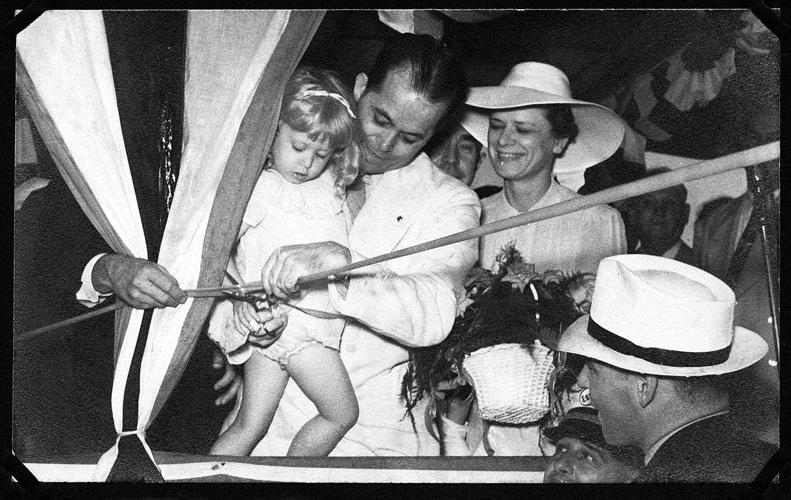
    <summary type="html"><![CDATA[<p><strong><em>In New Orleans, the Morrison name once stood for power, reform, and possibility. But deLesseps Morrison Jr. chose a different path, one that moved beyond City Hall and into the wider world of global trade, energy innovation, and new ideas for the city’s future.</em></strong></p><img src="https://mail.acadianahistorical.org/files/fullsize/5f3c2855f9f769b3c6639f94b2a98cde.jpg" alt="[Untitled]" /><br/><p>The story of DeLesseps Morrison Jr. begins in the shadow of one of New Orleans' most influential political families. Born in 1944, he grew up watching his father, deLesseps Story Morrison, reshape the city as mayor. Politics was part of daily life, and leadership was expected. For many, this would have meant following the same path. But Morrison Jr. had a wider vision.</p><p>Educated at Louisiana State University and trained in law, he quickly showed an interest in international affairs. His time studying abroad in Argentina gave him a global perspective that set him apart from many Louisiana politicians of his time. While others focused on local issues, he began thinking about how New Orleans could connect to the wider world through trade, language, and economic development.</p><p>In 1974, Morrison Jr. entered public office as a member of the Louisiana House of Representatives. During his time in the legislature, he supported policies to improve residents' everyday lives, including expanding access to health care. He also built a reputation as a forward-thinking leader who was not afraid to take on new challenges.</p><p>His political career reached a turning point in 1977 when he ran for mayor of New Orleans. The race marked a major shift in the city’s history, as Ernest "Dutch" Morial won the election and became the city’s first Black mayor. Morrison Jr.’s loss showed that the city was changing, prompting him to look beyond traditional politics.</p><p>After leaving elected office, he focused on business and innovation. He became deeply involved in promoting renewable energy, especially ethanol production, long before it became a national priority. He believed that Louisiana could lead in new industries if it was willing to take risks. Although his projects faced setbacks, they reflected his belief in progress and long-term growth.</p><p>Morrison Jr. also supported efforts to expand the city’s economy through industries like film production, helping lay the groundwork for what would later become a growing part of New Orleans’ economy. His ideas often came before their time, and not all of them succeeded, but they showed a willingness to think beyond the present.</p><p>He died in 1996 at the age of fifty-two, leaving behind a career that blended public service with global ambition. Today, his story reflects a different kind of leadership, one that looked past tradition and toward new possibilities for New Orleans.</p><p><em><strong><a href="https://mail.acadianahistorical.org/items/show/329">For more (including 4 images) view the original article</a></strong></em></p>]]></summary>
    <published>2026-04-28T17:54:25+00:00</published>
    <updated>2026-05-08T13:27:49+00:00</updated>
    <link rel="alternate" type="text/html" href="https://mail.acadianahistorical.org/items/show/329"/>
    <id>https://mail.acadianahistorical.org/items/show/329</id>
    <author>
      <name>Kaori Rodney</name>
    </author>
  </entry>
  <entry>
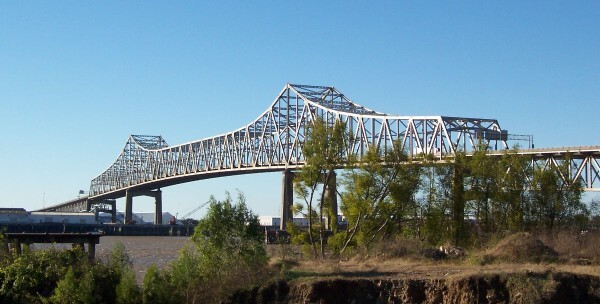
    <title type="html"><![CDATA[ Horace Wilkinson Bridge : A bridge that was welded and elevated to preserve the legacy of three generations. ]]></title>
    <summary type="html"><![CDATA[<p><strong><em>Horace Wilkinson Bridge is a bridge constructed to honor the legacy of three separate Horace Wilkinsons who served in the Louisiana Legislature for years. </em></strong></p><img src="https://mail.acadianahistorical.org/files/fullsize/972df96abc8d4459e7e2dc4734136076.jpg" alt="Horace Wilkinson Bridge " /><br/><p>Louisiana is a state rich in rivers, bayous, marshes, and wetlands, making bridges essential for travel. The state is home to some of the most impressive and unique bridges, including the Lake Pontchartrain Causeway, the Crescent City Connection, and the Huey P. Long Bridge. Louisiana is also home to the Horace Wilkinson Bridge, one of its most notable structures, welded  and elevated to reflect its significance.</p><p>The Horace Wilkinson Bridge, also known as the “New Bridge,” runs along Interstate 10, connecting Port Allen (West Baton Rouge Parish) to Baton Rouge (East Baton Rouge Parish). The 14,150-foot (2.5-mile) cantilever steel truss bridge rises 175 feet above the Mississippi River. It features a 4,550-foot superstructure and a 1,235-foot clear span, with an overall width of 500 feet. The bridge carries six lanes of traffic. Plans to build the bridge began in the early 1960s.</p><p>Before the Horace Wilkinson Bridge was built in 1968, travelers depended on the Huey P. Long–O.K. Allen Bridge, which opened in the 1940s and became known as the “Old Bridge.” Over the years, the region experienced an increase in highway and waterway traffic that the Old Bridge could no longer sustain. Traffic congestion and bottlenecks worsened, placing strain on Baton Rouge’s infrastructure. As a result, the Louisiana Department of Highways proposed and commissioned the construction of a “New Bridge” to reduce congestion throughout the region.</p><p>In 1960, plans to build the new bridge began. The Louisiana Department of Highways partnered with Modjeski and Masters, which designed the bridge, while construction was carried out by the American Bridge Company. On March 21, 1963, work began on the bridge’s substructure units. Three years later, in January 1966, contractors started on the superstructure. Construction was completed in February 1968, and the bridge opened on April 10, 1968. In total, the project cost $15,574,174.</p><p>Despite the bridge’s architectural significance and its role in reducing traffic congestion and expanding infrastructure, the Louisiana Legislature passed Act 206 of 1968 to officially name the “New Bridge” the Horace Wilkinson Bridge. The bridge was named to honor and preserve the memory of three generations of the Wilkinson family: Horace Wilkinson Sr. (1854–1941), Horace Wilkinson Jr. (1888–1966), and Horace Wilkinson III (1913–1961). They were father, son, and grandson, respectively, and all three served in the Louisiana Legislature. Collectively, they served a total of fifty-four years. In addition to their legislative service, they were prominent figures in the Baton Rouge metropolitan area.</p><p>Horace Wilkinson Sr. (1854–1941) was born on Point Celeste Plantation in Plaquemines Parish. Before entering politics, he was a well-known planter. In 1883, he married Julia Merwin of New Orleans and moved to West Baton Rouge. Between 1884 and 1900, he managed Poplar Grove Plantation in Port Allen before returning to Plaquemines Parish for three years. In 1905, he returned to West Baton Rouge and purchased Poplar Grove Plantation. Around this time, he became actively involved in his community.</p><p>Horace Wilkinson Sr. was an advocate for Louisiana’s agriculture and infrastructure. He served as a member of the West Baton Rouge Parish Police Jury, as president of the Atchafalaya Basin Levee Board, and as president of the Choctaw Drainage Board. He was also elected to the Louisiana Constitutional Convention and served for twenty-one years in the Louisiana Legislature.</p><p>During his time in the legislature, Horace Wilkinson Sr. advocated for improved drainage systems, bridges, and roads. In 1918, during the administration of Ruffin Pleasant, he introduced a bill to purchase the Gartness Plantation in south Baton Rouge; this land later became the site of Louisiana State University. During the administration of John Parker, Horace Wilkinson Sr. served as the manager of the Angola State Penitentiary.</p><p>As mentioned, the bridge is named after Horace Wilkinson Sr.’s son and grandson. Both Horace Wilkinson Jr. and Horace Wilkinson III also played important roles in the Louisiana Legislature. Horace Wilkinson Jr. (1888–1966) followed in his father’s footsteps. He was a well-known sugar planter who lived on Poplar Grove Plantation. Like his father, he served in the Louisiana Legislature for 16 years and was a member of the West Baton Rouge Police Jury. Horace Wilkinson Jr. also served on the LSU Board of Supervisors for fourteen years. He is credited with being the first planter in Louisiana to use sheep to control Johnson grass in sugarcane fields.</p><p>Horace Wilkinson III (1913–1961) attended LSU and graduated in 1936 with a degree in agriculture. Like his father and grandfather, he followed a career in public service. He served twelve years as a member of the West Baton Rouge Police Jury and became a member of the LSU Board of Supervisors in 1959. Horace Wilkinson III was also a member of the Farm Bureau, the American Sugar Cane League, the National Cattlemen’s Association, and Sigma Nu Fraternity.</p><p>He was active in Louisiana politics for several years and served as a Louisiana senator from 1952 to 1956. He was reelected in 1960 but died in 1961 before completing his term. In total, Horace Wilkinson III served ten years as a Louisiana senator. While delivering a speech in 1961, he died from a stroke.</p><p>Overall, the Wilkinson family contributed significantly to Louisiana politics, infrastructure development, and agricultural advancement. They were strong advocates for the state’s progress. The bridge was built in their honor and stands as a lasting tribute to their legacy.</p><p>The Horace Wilkinson Bridge is also a symbol of modern engineering advancements. It is one of the highest bridges that crosses the Mississippi River. Its cantilevered truss design allows it to support heavy loads while also providing clearance for ships navigating the river, helping to reduce ship-related accidents.</p><p>Despite the bridge’s impressive design and historical significance, travelers often face challenges when using it. Although it was built to help reduce traffic congestion, the route is now known for frequent daily traffic delays.</p><p>The increased volume of vehicles has led to traffic delays and accidents. The original design of the Horace Wilkinson Bridge allowed little room for emergency contingencies. In response, in recent years, efforts have been made to implement additional safety measures for the bridge. For example, in 2003, the merge between Interstate 10 East and Interstate 10 West was redesigned to improve traffic flow. However, heavy traffic congestion remains an ongoing issue.</p><p>Currently, efforts to improve the bridge and make it safer for travelers continue to be an important focus. The Horace Wilkinson Bridge is a significant structure in the Baton Rouge area. It represents the legacy of the Wilkinson family and their efforts to improve the region. Overall, the bridge stands as a symbol of human ingenuity and progress.</p><p><em><strong><a href="https://mail.acadianahistorical.org/items/show/327">For more (including 6 images) view the original article</a></strong></em></p>]]></summary>
    <published>2026-04-27T22:59:58+00:00</published>
    <updated>2026-05-07T22:35:31+00:00</updated>
    <link rel="alternate" type="text/html" href="https://mail.acadianahistorical.org/items/show/327"/>
    <id>https://mail.acadianahistorical.org/items/show/327</id>
    <author>
      <name>Jaquala Hebert </name>
    </author>
  </entry>
  <entry>
    <title type="html"><![CDATA[Joseph D. Waggonner, Jr. Highway: Honoring the work of a Louisiana Congressman]]></title>
    <summary type="html"><![CDATA[<img src="https://mail.acadianahistorical.org/files/fullsize/9c54bd3b4af43f5fdbfe34b0634b77d0.jpg" alt="[Untitled]" /><br/><p>Joseph D. Waggonner Jr. was a Louisiana Congressman who served nine terms from 1961 to 1979. Throughout his life, he was involved with the Local, State, and National Government and earned countless titles and honors.</p><p>As a graduate of Louisiana Tech, he received an honorary doctorate, was named a distinguished alumni in 1977 and Alumnus of the Year in 1992, and had two professorships endowed in his name. He was also an active member of the local Methodist church in his hometown of Plain Dealings, Louisiana and became an honorary alumnus of Centenary College of Louisiana.</p><p>Waggonner was also a veteran of both World War II and the Korean War. As a civilian back home in Plain Dealings, he ran a business distributing wholesale petroleum products. He first entered the political sphere in 1954 when he was elected to the Bossier Parish School Board. Later, he rose to President of the United Schools Committee of Louisiana and eventually moved to membership in the Louisiana Board of Education in 1960.</p><p>Just a year later, in 1961, a special election saw him voted into the House of Representatives, where he represented the state of Louisiana for nine consecutive terms. Throughout that time, he became known as the unofficial leader of the conservatives of both Louisiana and the United States. He was a staunch opponent of desegregation and a strong voice for states’ rights, voting against the Civil Rights Act of 1964 and the Voting Rights Act of 1956. Near the end of his time in the House of Representatives, however, he claimed to have mellowed on the issue, claiming to have “accepted the law” (CITATION). </p><p>Waggonner also spent time and effort working to his home state of Louisiana, especially the northwest region. Interstate 49, stretching between New Orleans and Shreveport, was planned and funded with his oversight. Because of this, a portion of Interstate 220 in Shreveport, Louisiana was named Joseph D. Waggonner, Jr. Highway. </p><p>The representative retired from Congress in 1979, continuing to serve his local community.</p><p><em><strong><a href="https://mail.acadianahistorical.org/items/show/324">For more (including 3 images) view the original article</a></strong></em></p>]]></summary>
    <published>2026-04-23T20:27:00+00:00</published>
    <updated>2026-05-07T22:54:37+00:00</updated>
    <link rel="alternate" type="text/html" href="https://mail.acadianahistorical.org/items/show/324"/>
    <id>https://mail.acadianahistorical.org/items/show/324</id>
    <author>
      <name>Mia C. Johnston</name>
    </author>
  </entry>
  <entry>
    <title type="html"><![CDATA[Sam A. Siracusa : How Sam A. Siracusa built a legacy that extended far beyond business into the heart of local life]]></title>
    <summary type="html"><![CDATA[<p><strong><em>A small town businessman became one of Morgan City’s most influential leaders through hard work, generosity, and an unwavering commitment to his community.</em></strong></p><img src="https://mail.acadianahistorical.org/files/fullsize/d1d8c2088c39b3ae35fed4c3bf96d62b.jpg" alt="Sam presented as the Morgan City Bank Director. " /><br/><p>Sam A. Siracusa stood at the edge of his service station on a warm afternoon in Morgan City, watching cars pass along the newly redirected highway. Years earlier, he had stood in almost the same way beside his father and brother, pumping gas after school and learning what it meant to build something from the ground up. Now, the station had moved, the town had grown, and so had he.</p><p>Morgan City was changing, and Sam was changing with it. What began as a small family business became the foundation for something much larger. He understood people, and more importantly, he understood the town. When opportunities came, he took them. He helped organize a bank. He invested in property. He built connections that stretched across St. Mary Parish. People began to see him not just as a businessman, but as someone who could help shape the future of the community.</p><p>But it was not in boardrooms or business deals that Sam earned his most memorable name. It happened at Sacred Heart, when a group of boys came to him with a simple request. They needed football uniforms. Sam listened, then helped. That moment turned into years of involvement. He showed up at games, helped organize events, and supported the school in ways that went far beyond money. Students and families saw him everywhere, always working, always helping.</p><p>They started calling him “Sister Sam.” It was a joke at first, but it stuck. The name carried a kind of respect that titles never could. It meant he belonged to the school as much as any teacher or student. It meant he cared.</p><p>Even as his business responsibilities grew, Sam never stepped away from the community. He served on boards, helped guide local organizations, and gave his time wherever it was needed. He believed that success meant little if it was not shared.</p><p>When he passed away in 1979, the town he had spent a lifetime building paused to remember him. His family mourned him, but so did the school, the church, and the businesses he had helped create. His presence had been woven into the everyday life of Morgan City.</p><p>Long after his passing, his influence remained. The institutions he supported continued, the community he helped shape endured, and the nickname he earned still echoed in memory. Sam A. Siracusa had done more than live in Morgan City. He had helped define it.</p><p><em><strong><a href="https://mail.acadianahistorical.org/items/show/322">For more (including 4 images) view the original article</a></strong></em></p>]]></summary>
    <published>2026-04-14T15:06:50+00:00</published>
    <updated>2026-05-08T13:18:02+00:00</updated>
    <link rel="alternate" type="text/html" href="https://mail.acadianahistorical.org/items/show/322"/>
    <id>https://mail.acadianahistorical.org/items/show/322</id>
    <author>
      <name>Kaori Rodney</name>
    </author>
  </entry>
  <entry>
    <title type="html"><![CDATA[LA Airborne Memorial Bridge : The Gateway to Acadiana]]></title>
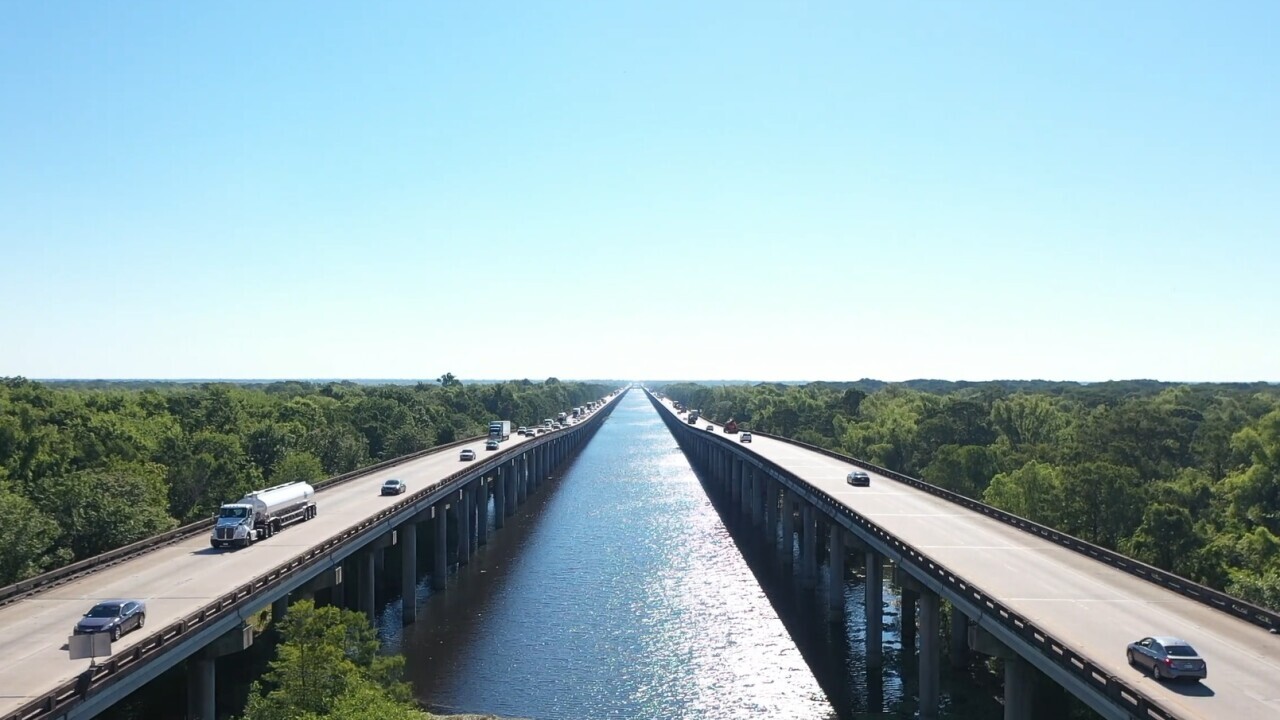
    <summary type="html"><![CDATA[<p><strong><em>The LA Airborne Memorial Bridge consists of twin spans along I-10 that connect Baton Rouge to Acadiana. It stands as a symbol of Louisiana’s expansion.</em></strong></p><img src="https://mail.acadianahistorical.org/files/fullsize/3fad5096de92f823d07752dba46004db.jpg" alt="LA Airborne Memorial Bridge " /><br/><p>The Atchafalaya Basin is a testament to Louisiana’s economic, ecological, and cultural significance. Spanning millions of acres, it is the largest swamp in the United States. The basin also serves as a vital corridor along Interstate 10, connecting Acadiana to Baton Rouge and eastern Louisiana. Despite its many resources, it has posed challenges for travel for decades. As a result, the Atchafalaya Basin Bridge was built.</p><p>The Atchafalaya Basin Bridge is a pair of twin bridges that run east and west through South Louisiana. The bridge serves as a gateway along Interstate 10, connecting Lafayette to Baton Rouge. Before the bridge was constructed in 1971, traveling to Baton Rouge took approximately three hours, while reaching New Orleans took about four hours. In the early 1900s, crossing the basin required water transportation, such as ferries.</p><p>Between 1906 and 1911, the Southern Pacific Railroad Company constructed a railway known as the Baton Rouge Branch, which crossed the Atchafalaya Basin. Its purpose was to provide a shorter route to eastern parts of Louisiana and to transport freight across the basin. The railway operated for sixteen years before being destroyed by the flood of 1927. Efforts to repair it were unsuccessful, and the line was eventually abandoned. Today, remnants of the railroad can still be seen within the swamps.</p><p>In the 1950s and 1960s, Louisiana’s interstate system was under development. Civil engineers needed to find a solution that would allow direct access across the Atchafalaya Basin. Before construction of the bridge could begin, engineers had to explore the basin to identify a stable foundation. This process was lengthy and took several years. During their research, engineers discovered nearly ninety feet of mud before reaching layers of sand that were stable enough to support the bridge’s pillars.</p><p>In 1971, construction of the Atchafalaya Basin Bridge began, and it was completed two years later, in 1973. The structure consists of twin spans that stretch 18.2 miles, with pillars driven approximately 140 feet deep. At the time of its completion, the Atchafalaya Basin Bridge was the second-longest bridge in the United States; today, it ranks as the third longest. It is surpassed by the Lake Pontchartrain Causeway and the Manchac Swamp Bridge, both of which are slightly longer.</p><p>After the bridge opened, travel times to Baton Rouge and New Orleans were significantly reduced, with trips taking about two to three hours instead of four.</p><p>Since the 1970s, the bridge has been known as the Atchafalaya Basin Bridge because it spans the basin. During the 1980s, there were efforts to name infrastructure after military personnel. In 1989, the bridge was officially renamed the Louisiana Airborne Memorial Bridge (LA Airborne Memorial Bridge). It was renamed on July 10, 1989, to honor the United States Army’s 82nd Airborne Division. The bridge serves as a tribute to all members and veterans of the United States Airborne Forces, including those who served in World War II.</p><p>Today, approximately 30,000 vehicles cross the bridge each day. Over the years, it has played an important role for many Louisianans, supporting the expansion of the state’s infrastructure and Acadiana’s economy. The bridge carries a significant volume of materials along Interstate 10 in both eastbound and westbound directions and serves as a vital link to several industries within Louisiana.</p><p>It also connects ports along the Gulf Coast, facilitating maritime logistics. In addition, the bridge contributes to Louisiana’s tourism industry by providing access to the Atchafalaya Welcome Center and recreational activities within the basin. Activities such as fishing, boating, and swamp tours generate revenue for local businesses.</p><p>While the bridge is widely recognized for its importance, it is also known for motor vehicle accidents. Heavy traffic makes it a particularly dangerous location for collisions, and when accidents occur, they can cause severe congestion. Since 2014, the Atchafalaya Basin Bridge has been the site of more than 1,000 accidents, some of which have resulted in 15 fatalities. On average, about 197 accidents occur each year.</p><p>Efforts have been made to improve safety on the bridge. For example, in 1998, the speed limit was reduced from 70 miles per hour to 60.To further reduce accidents, several laws and regulations are enforced for those traveling on the bridge. Speed limit signs are installed to alert drivers when they are exceeding the limit. In addition, 18-wheelers and commercial trucks are prohibited from using the left lane and are required to remain in the right lane for the entire 18-mile span. Louisiana State Troopers are also present on the bridge to monitor traffic.</p><p>In recent years, Louisiana legislators proposed installing an automated camera system that would issue tickets to drivers who crossed the bridge in under eighteen minutes. However, between 2024 and 2026, the proposal was abandoned, and local law enforcement continued to monitor traffic on the basin.</p><p>The Atchafalaya Basin Bridge, also known as the LA Airborne Memorial Bridge, is one of the most notable man-made structures in Louisiana. It carries a rich history that is significant to the state. The bridge is more than just a link between Acadiana and Baton Rouge; it is a symbol of Louisiana’s growth and expansion.</p><p><em><strong><a href="https://mail.acadianahistorical.org/items/show/321">For more (including 6 images) view the original article</a></strong></em></p>]]></summary>
    <published>2026-04-14T00:29:33+00:00</published>
    <updated>2026-05-08T16:44:23+00:00</updated>
    <link rel="alternate" type="text/html" href="https://mail.acadianahistorical.org/items/show/321"/>
    <id>https://mail.acadianahistorical.org/items/show/321</id>
    <author>
      <name>Jaquala Hebert </name>
    </author>
  </entry>
  <entry>
    <title type="html"><![CDATA[The Corporal Clovis Wayne “J.R.” Searcy Jr. Memorial Highway<br />
: The Life and Leagacy of Corporal Clovis Wayne “J.R.” Searcy Jr. ]]></title>
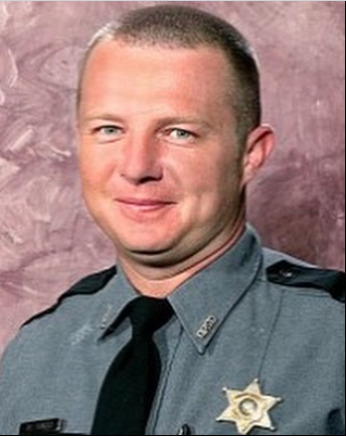
    <summary type="html"><![CDATA[<p><strong><em>After two days of fighting for his life, Corporal Clovis Wayne "J.R." Searcy of the Ouachita Parish Sheriff's Office tragically lost his life to wounds sustained in the line of duty. A dedicated family man and community service member, Corporal Searcy left a legacy of love and service behind him.</em></strong></p><img src="https://mail.acadianahistorical.org/files/fullsize/423c9c2bf47de97fb255531bd072e3d2.jpg" alt="Photo of Corporal Clovis Wayne &quot;J.R.&quot; Searcy Jr." /><br/><p>On March 6, 2010, Corporal Clovis Wayne “J.R.” Searcy Jr. lost a two day fight for his life to a gunshot wound he sustained responding to an assault in Ouachita Parish, Louisiana. An Air Force veteran of four years and an eight-year member of the Ouachita Parish Sheriff’s Office, Searcy died at a mere thirty-three years old, after dedicating over a third of his life to service. Born in West Monroe, Louisiana, Searcy’s life was full of family and fun. He spent his time “participating in his children’s sporting events, four-wheel racing, [and] mud digging.” A graduate of West Ouachita High School in 1994, Searcy left home to join the United States Air Force. While serving in the Air Force as a military police officer, Searcy “met the love of his life, Kerry, his wife of 9 years,” with whom he shared “2 children Justin and Maegan Searcy, as well as his step-son Nicholas Lambert.” When he wasn’t enjoying time with family, Searcy was a dedicated Sheriff’s Deputy serving his community. Searcy’s career with the Sheriff’s Office included “several years as a K-9 officer which was his true passion,”where he was also remembered as “always willing to help anyone in need.” In addition to his job as a Sheriff’s Deputy, Searcy was also a business owner, operating a lawn care service called C&amp;K Searcy Enterprises. Searcy also dedicated time to directing traffic during the arrivals and dismissals of students at Woodlawn Elementary School, ensuring that all students remained safe. </p><p>On the fateful day of March 4, 2010, Searcy was joined by another deputy in responding to an aggravated assault call in West Monroe. The suspect had been reported as trying to run over people with his vehicle and was standing outside of his vehicle when the two deputies arrived on scene. Searcy, with his taser in hand, ordered the suspect to put his hands up and surrender. However, Searcy did not know that the suspect had a handgun hidden behind him in the small of his back. Acting as though he was going to surrender, the suspect suddenly reached for the concealed weapon and opened fire. Corporal Searcy was struck twice “just an inch above his protective vest,” as “the second deputy returned fire, killing the suspect.” Searcy was rushed to the hospital, where he fought for two days before finally succumbing to his wounds on March 6, 2010. </p><p>After his life was tragically cut short, family and friends began the process of memorializing their fallen loved one. A local branch of the Ouachita Parish Public Library was named in Searcy’s honor at the behest of his friends, “with a statue of him and his K-9 partner, Rico, near the entrance.” Then, in 2011, Searcy was honored with the naming of the Corporal J.R. Searcy Memorial Highway. Running through his home parish, the highway bearing Searcy’s name is a fitting tribute to his life and legacy. In addition to the library and road named in his honor, the Corporal J.R. Searcy Memorial Scholarship at the University of Louisiana Monroe (ULM) is awarded in his memory to students in the criminal justice program. The scholarship was created by Searcy’s longtime friend Dennis Wall, a fellow law enforcement officer and promoter of the “XTREME Battle of the Badges” fundraiser. Wall presented ULM with a check for $43, 478.19, with donations doubling in size the following year, cementing the scholarship as a tribute to Searcy “that will last well into the future and ensure a student is trained, in his memory, to protect our community.” Searcy’s life and legacy are a testament to his dedication to serving his community and as a loving family man. The Corporal J.R. Searcy Memorial Highway is only a small token of appreciation for the life tragically lost to a senseless act of violence.</p><p>“Corporal Clovis Wayne Searcy, Jr. .” The News-Star (Monroe, Louisiana), March 10, </p><p>2010. https://www.newspapers.com/image/226438302/?match=1&clipping_id=new.</p><p>“In Memory of Corporal J.R. Searcy.” Facebook. Ouachita Parish Sheriff’s Office, March 6, </p><p>2024. </p><p>https://www.facebook.com/OuachitaParishSheriffsOffice/posts/in-memory-of-co</p><p>rporal-j-r-searcywe-remember-our-fallen-brother-ouachita-parish-s/723521649</p><p>960250/.</p><p>The Officer Down Memorial Page (ODMP). “Corporal Clovis Wayne ‘J.R.’ Searcy, Jr., </p><p>Ouachita Parish Sheriff’s Office, Louisiana.” Accessed March 31, 2026. </p><p>https://www.odmp.org/officer/20340-corporal-clovis-wayne-jr-searcy-jr. </p><p>“ULM News.” Accessed March 31, 2026. </p><p>https://www.ulm.edu/news/archives/2011/mar11/searcy.html.</p><p><em><strong><a href="https://mail.acadianahistorical.org/items/show/317">For more (including 4 images) view the original article</a></strong></em></p>]]></summary>
    <published>2026-03-31T16:52:46+00:00</published>
    <updated>2026-05-07T23:06:34+00:00</updated>
    <link rel="alternate" type="text/html" href="https://mail.acadianahistorical.org/items/show/317"/>
    <id>https://mail.acadianahistorical.org/items/show/317</id>
    <author>
      <name>Madelynn Dunn</name>
    </author>
  </entry>
  <entry>
    <title type="html"><![CDATA[Thomas M. Alexander Memorial Highway: A man who risked his life for others. ]]></title>
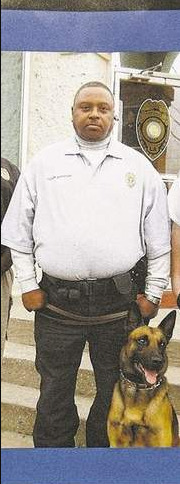
    <summary type="html"><![CDATA[<p><strong><em>A fallen law enforcement officer who is honored. </em></strong></p><img src="https://mail.acadianahistorical.org/files/fullsize/b93df3eb8bce4a5506b7b4d2526ae43a.jpg" alt="[Untitled]" /><br/><p>Sergeant Thomas M. Alexander died in the line of duty. On September 11th, 2010, police received a 911 alert for a home invasion. The resident was outside the city limits for the Rayville Police department, but Sgt. Alexander was the closest to the scene so he took the call. The person who called 911 was home alone when she heard glass shatter. When Sgt. Alexander arrived at the scene, he made sure the victim was safe and went inside to apprehend the suspects. When he got to the back room, he approached the closest where he was shot four times. Richland Parish Sheriff Charles McDonald stated in 2010 that, “ He was ambushed. He told the victim to run. He basically saved her life.” Three suspects were arrested. Robert J. Walker of Rayville was arrested at the scene. He was found hiding under a bed in the home. Two hours after the shooting, Anthony D. Oatis of Monroe was arrested. The final suspect, Richard L. Long Jr. of Monroe was arrested the next day. All three suspects were booked into the Richland Parish Detention Center on first-degree murder of a police officer and aggravated burglary charges.</p><p>Sgt. Alexander served for a total of twenty-years on the police force. His first seven years of duty was with the Richland Parish Sheriff's Office and the final thirteen years was with the Rayville Police Department. Many of his fellow policemen miss him very deeply. On September 13th 2010, “The News-Star” paper, out of Monroe, Louisiana, interviewed a few people days after the death of Sgt. Alexander. Rayville Police Chief, Willie Robinson, worked with Sgt. Alexander for over thirty years. He says that, “This time ain’t easy. Tommy was like a son to me, he’ll be greatly missed, I promise. He died a hero.” </p><p>In 2013, the Louisiana Department of Transportation and Development officially named a section of Louisiana Highway 80 in Rayville, Louisiana “Thomas M. Alexander Memorial Highway”. The section of highway is from the intersection of Bob’s Lane and Highway 80 and stretches east to the intersection of Orchard Lane and Highway 80. This section is approximately three miles long. The memorial highway passes through downtown Rayville, Louisiana. HB No.171 was presented to the Louisiana House of Representatives. It stated that, “Designates a portion of La. Highway 80 in Richland Parish, from its intersection with Bob's Lane east to its intersection with Orchard Lane, as the "Thomas M. Alexander Memorial Highway". A section of this dedicated road is also by where Sgt. Alexander lost his life, while saving others.</p><p><em><strong><a href="https://mail.acadianahistorical.org/items/show/315">For more (including 4 images) view the original article</a></strong></em></p>]]></summary>
    <published>2026-03-30T19:59:01+00:00</published>
    <updated>2026-05-07T23:17:44+00:00</updated>
    <link rel="alternate" type="text/html" href="https://mail.acadianahistorical.org/items/show/315"/>
    <id>https://mail.acadianahistorical.org/items/show/315</id>
    <author>
      <name>Ian Harrington</name>
    </author>
  </entry>
  <entry>
    <title type="html"><![CDATA[E.J. &quot;Lionel&quot; Grizzaffi : The Man who gave a life of Service in Morgan City]]></title>
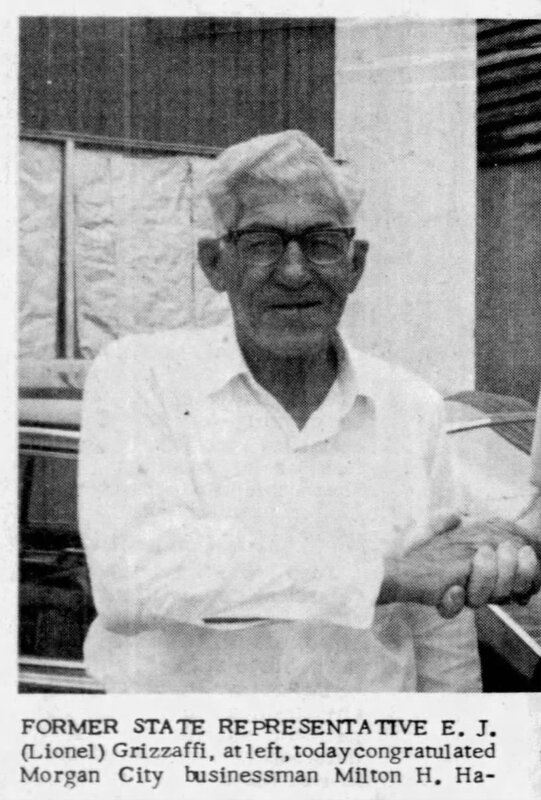
    <summary type="html"><![CDATA[<p><strong><em>Emanuel Joseph “Lionel” Grizzaffi was a Morgan City civic leader whose life combined business, public service, and community involvement.</em></strong></p><img src="https://mail.acadianahistorical.org/files/fullsize/20a45af61f9dfe238409045cbdb35eae.jpg" alt="E.J. &quot;Lionel&quot; Grizzaffi" /><br/><p>Emanuel Joseph “Lionel” Grizzaffi was born on August 30, 1901, in Morgan City, Louisiana. At the time, the town was growing quickly as a port along the Atchafalaya River. Fishing, shrimping, and maritime trade drove the local economy. Shipyards lined the riverbanks, building and repairing vessels used across the Gulf Coast. Growing up in this environment, Grizzaffi learned early how important waterways and transportation were to coastal life.</p><p>His family operated a shipyard in Morgan City. This placed them at the center of the town’s river-based economy. Boats needed constant repair, especially those used in shrimping and shipping. As a result, shipyards were essential to daily life. Grizzaffi later recalled in a local interview that “the river was the town’s lifeline,” a phrase that reflected how deeply these industries shaped the community. That experience influenced his later interest in economic development.</p><p>As a young man, Grizzaffi also stood out on the baseball field. From 1919 to 1931, he played semi-professional baseball. Teams traveled from town to town, drawing large crowds. Games often turned into community events. Older residents remembered Grizzaffi as “a steady player who could always be counted on in a tight game.” His time in baseball helped him build connections across southern Louisiana.</p><p>Grizzaffi eventually turned his attention to civic leadership. In 1947, he helped establish the Morgan City–Berwick Chamber of Commerce and became its first president. In this role, he worked with business owners and local officials to promote growth. He also encouraged cooperation between Morgan City and Berwick, two towns separated by the river but closely connected in daily life.</p><p>His involvement in government followed soon after. From 1944 to 1948, he served on the St. Mary Parish Police Jury. This body handled local issues such as road maintenance, budgets, and public services. The experience gave him a direct role in shaping how the parish developed during a period of postwar growth.</p><p>Grizzaffi’s leadership extended beyond the local level. During the mid-twentieth century, coastal Louisiana was undergoing major changes. The expansion of the oil industry, improvements in highways, and increased demand for seafood all reshaped the region’s economy. Within this context, Governor Earl K. Long appointed Grizzaffi to the Gulf States Marine Fisheries Commission. There, he worked with representatives from other Gulf Coast states to manage fisheries and protect marine resources. In 1957, he served as chairman.</p><p>He also contributed to the Louisiana Game Fish and Oyster Committee. Over twelve years, he helped address issues affecting fishing and oyster harvesting. His work reflected a sustained commitment to balancing economic growth with resource management in a region that depended heavily on its natural environment.</p><p>Grizzaffi later served in the Louisiana House of Representatives. There, he focused on improving infrastructure and supporting regional development. His interest in transportation continued when Governor John McKeithen appointed him to the Louisiana Board of Highways. He served from 1964 to 1970, a time when the state was expanding its road network to meet growing demand.</p><p>One of the most pressing local challenges was crossing the Atchafalaya River. Morgan City and Berwick depended on each other, but travel between them was limited. As traffic increased along U.S. Highway 90, the need for a modern bridge became clear. Community leaders, including Grizzaffi, pushed for a solution.</p><p>When the new bridge was completed in 1975, it was named the E. J. “Lionel” Grizzaffi Bridge. The dedication recognized his many contributions to the region. A local newspaper later described the structure as “a link not just between two towns, but between past efforts and future growth.” Today, the bridge carries thousands of vehicles each day and remains a key part of the area’s infrastructure.</p><p>Even in his later years, Grizzaffi stayed active in public life. In 1975, he ran for the Louisiana State Senate in District 21. Although he did not win, the campaign showed his continued interest in serving the region.</p><p>Outside of public service, Grizzaffi was devoted to his family. He was married to Carrie C. Grizzaffi, and together they raised two children, Luke Joseph Grizzaffi and Virginia Grizzaffi Versen. Their lives reflected the close-knit nature of southern Louisiana communities, where family, church, and local ties were central.</p><p>On June 8, 1982, Grizzaffi and his wife were killed in a car accident in Morgan City. Their deaths deeply affected the community. They were buried in Morgan City Cemetery, alongside many generations of local families.</p><p>Today, the E. J. “Lionel” Grizzaffi Bridge stands as a lasting reminder of his contributions. From his early days in a shipyard family to his years in public leadership, he played a key role in shaping Morgan City. His work supported transportation, strengthened coastal industries, and encouraged regional cooperation. Through both his actions and his legacy, Grizzaffi helped guide his community through a period of important economic and social change.</p><p><em><strong><a href="https://mail.acadianahistorical.org/items/show/304">For more (including 4 images) view the original article</a></strong></em></p>]]></summary>
    <published>2026-03-10T18:23:27+00:00</published>
    <updated>2026-05-07T23:25:13+00:00</updated>
    <link rel="alternate" type="text/html" href="https://mail.acadianahistorical.org/items/show/304"/>
    <id>https://mail.acadianahistorical.org/items/show/304</id>
    <author>
      <name>Kaori Rodney</name>
    </author>
  </entry>
  <entry>
    <title type="html"><![CDATA[L.A. &quot;Buddy&quot; Henagan Memorial Parkway]]></title>
    <summary type="html"><![CDATA[<img src="https://mail.acadianahistorical.org/files/fullsize/2dee3ae9c30290af02ed8abaed634a33.jpg" alt="Henagan in DeQuincy Flood of 1966" /><br/><p>L.A. Henagan, nicknamed Buddy, was a civic leader and mayor of DeQuincy from 1966 until 1982.  He would also serve as mayor from 1990 until his death in 2004.  Henagan was a veteran, community leader, and union worker who came from a humble home, was raised in the aftermath of the Great Depression, and came of age at the start of the Second World War.  After serving in the Pacific Theater of World War II, Henagan would return home to DeQuincy, marry Marget Smith, and work as a locomotive engineer for the Missouri Pacific Railroad company.  Buddy Henagan also worked with his brother, R.P. (Rip) Henagan, as joint owners of the Parkway Cafe in DeQuincy.</p><p>Before running for mayor, Henagan displayed skills as a leader as the Charter President of the DeQuincy Athletic Booster Club and exhibited his commitment to justice by acting as a member of the DeQuincy Sheriff’s Posse.  In the years and months leading up to his election in 1966, Henagan served on the Board of Directors of the Chamber of Commerce as Chairman of the Highway Committee.  He also served as the Chamber’s chairman of the Finance Committee.  He was a member of the local Industrial Board, which aimed to bring new jobs through industry to DeQuincy and the surrounding area. Buddy Henagan would win the mayoral election of 1966, kicking off his nearly 30-year-long career as the city’s top executive.  As Mayor of DeQuincy, Henagan oversaw the development of the KCS Depot, the DeQuincy Railroad Museum, and the DeQuincy Industrial Park.  He was also responsible for the building of a new city hall, fire department, hospital, and post office.  Roads, sidewalks, new city paths, and sewage systems underwent renovations under Henagan’s leadership.  </p><p>Henagan also secured millions of dollars to finance public projects such as the construction of a new sports complex, ballfields, a neighborhood center, and a public pool.  These funds also contributed to the construction of more than eighty units of public housing.  Henagan was not only skilled in building up infrastructure, but he also understood the importance of being a part of the community.  This is best exemplified in his role as a member of the Volunteer Barbeque Crew, a local group that would barbecue for any organization in DeQuincy that needed help raising funds. </p><p>Despite the many public works and social outreach, Buddy Henagan's administration was not without controversy.  After Henagan’s death in 2004, John D. Williams, a former Louisiana inmate, claimed that Buddy Henagan, amongst other city officials, forced him to work additional hours, sometimes for the personal gain of Henagan and other local officials.  Williams asserted that he worked 20 hours a day during the city’s railroad festival, barbecued for over 26 hours at local fundraisers, and had to wax the floor of Henagan’s church.  The district court found that while Henagan likely abused his authority over Williams, these abuses were not enough to support Williams’ claim that his rights under the Fair Labor Standards Act or Thirteenth Amendment were infringed. </p><p>While Henagan’s abuse of power over Williams does not undo his great services to his community, it should not simply be erased from public memory either.  Henagan was a pillar of the community of DeQuincy who radically transformed the city in the latter half of the twentieth century.  Yet despite these improvements to public infrastructure and commitment to the people of DeQuincy through community involvement in organizations such as the Volunteer Barbeque Crew, Mayor Henagan was not infallible.  Sometimes these community outreach campaigns were even undercut by the exploitation of prison labor, as seen in John Williams’ experiences with Henagan’s barbeques or the railroad festival.  This is not meant to be an attack on Henagan’s character, but rather a commitment to the true memory of Henagan.  If our memorial highways only remember the good, we only set ourselves up for failure by painting an incomplete picture of the past.  By remembering the whole truth, we can still admire the good, but learn from the mistakes of the past so that we might not repeat them.</p><p><em><strong><a href="https://mail.acadianahistorical.org/items/show/303">For more (including 8 images) view the original article</a></strong></em></p>]]></summary>
    <published>2026-03-10T17:33:17+00:00</published>
    <updated>2026-05-07T23:25:55+00:00</updated>
    <link rel="alternate" type="text/html" href="https://mail.acadianahistorical.org/items/show/303"/>
    <id>https://mail.acadianahistorical.org/items/show/303</id>
    <author>
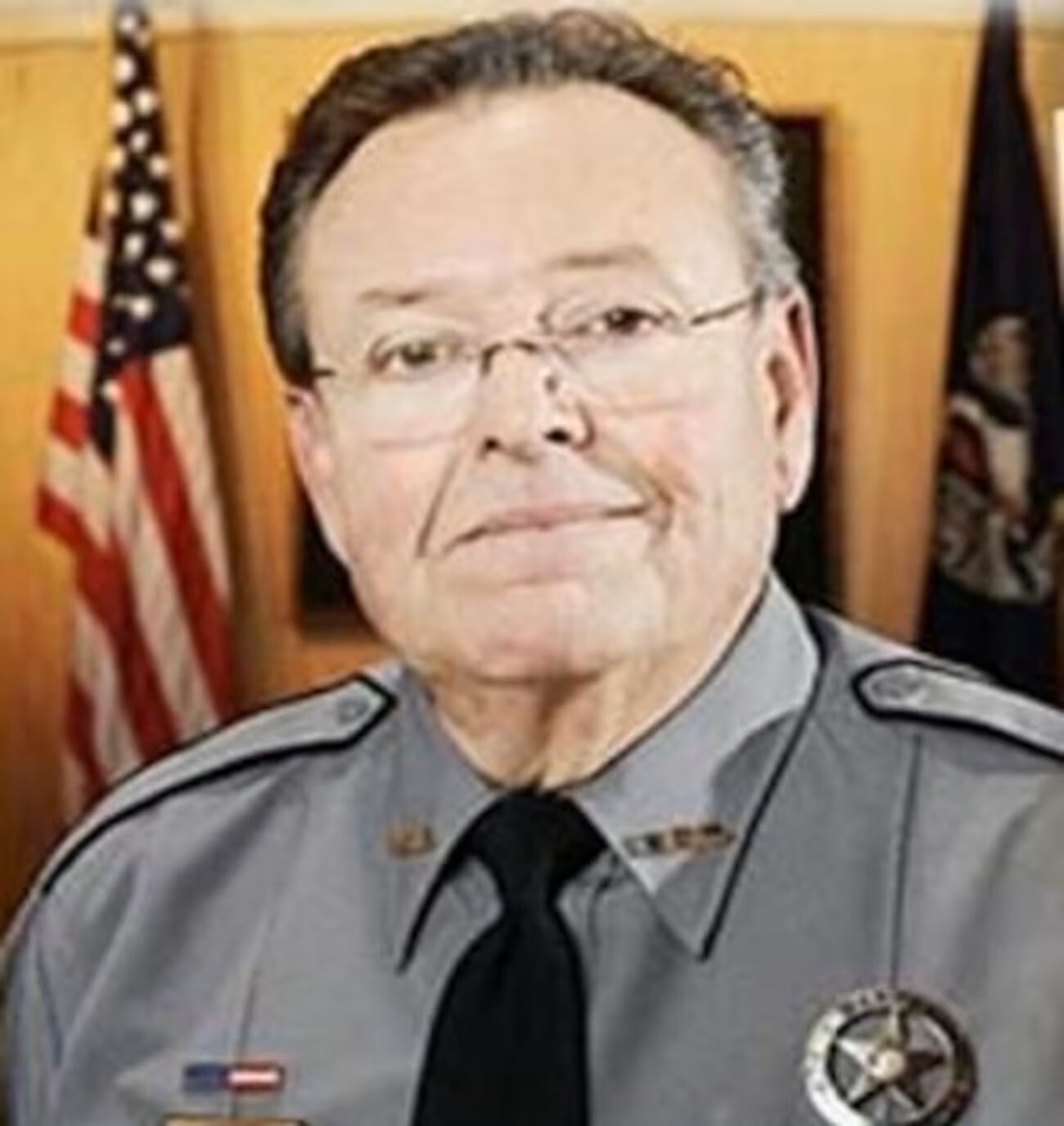
      <name>Jack Himel</name>
    </author>
  </entry>
  <entry>
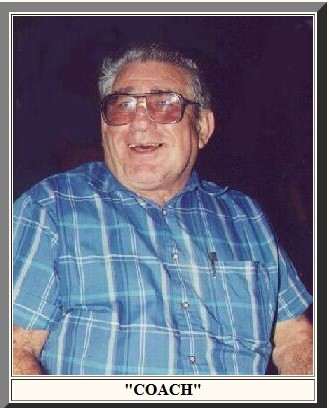
    <title type="html"><![CDATA[A.C. Schiro Memorial Highway : Merryville High School Coach to Sheriff Deputy ]]></title>
    <summary type="html"><![CDATA[<p><strong><em>A coach is a passionate and dedicated person that encourages and develops a team or player</em></strong></p><img src="https://mail.acadianahistorical.org/files/fullsize/0d4c727757ba39e563a6254e12b8e975.jpg" alt="Coach A.C. Schiro" /><br/><p>Being a high school coach takes commitment and time. People look up to you and will never forget you.</p><p>A.C. “Coach” Schiro was born January 21st 1927 in Baton Rouge, Louisiana. He graduated from Baton Rouge High School and went to college at Louisiana Tech University. He received his masters degree from McNeese State University. He moved to Merryville in 1949 after finishing college and began teaching and coaching at Merryville High School. He retired in 1979 after serving as a teacher, head football coach, and principal.</p><p>As a football coach at Merryville High School, Coach Schiro’s team won the district title twice. His team's first district title was in 1954 and the second was in 1963. His teams were also district runner-up four times. Those years were 1956, 1958, 1959, 1960. The Merryville class of 1954 credits their head coach on their class website. He served as head football coach of the Merryville Panthers from 1949 up until the late 1960's. After coaching, he became the principal of Merryville High School until his retirement in 1979. </p><p>After retirement from the public school system, Coach Schiro became Deputy Schiro for the Beauregard Parish Sheriff’s Office from 1980 to 1997. Even though he was not from the Beauregard area, he was deeply involved with the community. He lived for a few short years after retiring from the Sheriff's Office. He died on March 27th 2001 at the age of 74. </p><p>Shortly after his passing, the Louisiana DOTD dedicated a section of Louisiana Highway 110 in Merryville to A.C. “Coach” Schiro. The section of the road passes in front of Merryville High School and stretches for one mile. For his years of dedication to this small town high school,  Senator James David Cain proposed that the highway should be dedicated to him. It was finally passed and on Monday October 29th 2001, a ceremony was conducted to honor Coach Schiro. Officially naming the highway that passes in front of Merryville High School as “A.C. Schiro Memorial Highway”.</p><p>"I had a foul shot coming and I made that, also. I heard Coach Schiro let out a triumphant yell, because he spent lots of time with me in my basketball training" - George Edward Dewey Merryville Class of 1954.  </p><p><em><strong><a href="https://mail.acadianahistorical.org/items/show/301">For more (including 6 images) view the original article</a></strong></em></p>]]></summary>
    <published>2026-03-10T15:34:38+00:00</published>
    <updated>2026-05-07T23:26:23+00:00</updated>
    <link rel="alternate" type="text/html" href="https://mail.acadianahistorical.org/items/show/301"/>
    <id>https://mail.acadianahistorical.org/items/show/301</id>
    <author>
      <name>Ian Harrington</name>
    </author>
  </entry>
  <entry>
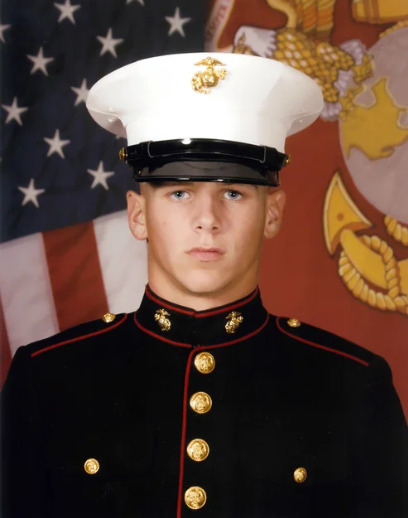
    <title type="html"><![CDATA[Semper Fidelis: The &quot;Corporal Matthew Thomas Richard Memorial Highway&quot;: From Iota to Afghanistan, the life and legacy of Corporal Matthew Thomas Richard.]]></title>
    <summary type="html"><![CDATA[<p><strong><em>Hailing from the small Louisiana town of Iota, Corporal Matthew Thomas Richard joined the United States Marine Corps with the goal of serving his country. Deployed to Helmund Province, Afghanistan, Corporal Thomas tragically lost his life to an IED explosion, but his legacy goes far beyond his death overseas.</em></strong></p><img src="https://mail.acadianahistorical.org/files/fullsize/d8e5f7b28c3f2626979998d74eef853d.jpg" alt="Corporal Matthew Thomas Richard" /><br/><p>At a mere 21 years old, Corporal Matthew Thomas Richard of the United States Marine Corps gave his life in service of his country while deployed in Helmand Province, Afghanistan. A team leader in the 2nd Battalion/8th Marines, Corporal Richard was killed in an IED explosion, after safely evacuating his team from danger. The War in Afghanistan was known for the prevalence of IED's (improvised explosive devices) , which posed grave danger to both civilians and soldiers alike. In a commendation received after his death, Corporal Richard was cited as “a highly courageous and dynamic leader” whose “initiative, perseverance, and total dedication to duty reflected credit upon him and were in keeping with the highest traditions of the Marine Corps and the United States Naval Service.” Corporal Richard’s selfless sacrifice in Afghanistan is a testament to how he lived, a life memorialized along Louisiana Highway 91, which runs through his hometown of Iota, Louisiana. </p><p>Born to parents Jeff and Alicia Ardoin Richard, Corporal Richard grew up in the Iota community surrounded by loving friends and family. A graduate of Iota High School, Corporal Richard was described as an avid outdoorsman and football player. Beyond his love of sports and the outdoors, Corporal Richard “loved his family, loved his friends, and loved his country.” Moreover, Corporal Richard was remembered as an incredibly compassionate and caring individual who  had a heart for service. The passion with which Corporal Richard held for taking care of others inspired him to enlist in the Marine Corps upon graduating from high school, as it was his dream to serve his country and alongside his fellow Marines. Corporal Richard’s determination to serve his country led him to be deployed in Afghanistan, where he was an exemplary Marine. Corporal Richard was remembered fondly by his fellow Marines for his “unbridled, comical personality and contagious enthusiasm” and as an “extraordinarily driven individual.”</p><p>After his death, Corporal Richard’s larger than life legacy would be honored with a foundation and a roadway bearing his name. Founded by his parents after his death, The Corporal Matthew Richard Memorial Foundation was created to “ensure that the death of our son does not end in only sorrow and pain” and “to bring help to those who are still here.” To further honor his legacy, a portion of Louisiana Highway 91 in Iota was designated the “Corporal Matthew Thomas Richard Memorial Highway” in 2015. Unlike the foundation, which was started by Corporal Richard’s parents, the mission to name a roadway in his honor began with an Iota eighth grader named Collin Steen. An Eagle Scout who was one of many that attended the funeral procession for Corporal Richard. Steen was inspired to begin a campaign to see Corporal Richard honored on one of Louisiana’s roadways. Steen, who was 13 at the time, wrote to Representative Jack Montoucet asking for legislation to authorize a road named for Corporal Richard. After the legislation passed, the new sign bearing Corporal Richard’s name was unveiled in Iota at his parents home, with Representative Montoucet remarking that he hoped “those who traveled the road and saw the sign were not only reminded of Richard but would say a prayer for him, his family, and remember all who serve the U.S.”</p><p>Today Corporal Richard’s legacy continues to shine through the efforts of his parents and the community in which he was raised. After his death, Iota “rallied around the Richard family and the family, in turn, has turned itself back into the community, creating scholarships and a memorial 5K run.” As of 2021, the Corporal Matthew Ricard Memorial Foundation had raised an estimated $170,000, “with most of the money helping organizations that assist veterans.” Additionally, the Foundation donates to community projects and awards a $1,000 scholarship to an Iota High School graduate every year.” While the circumstances surrounding Corporal Richard’s death were indeed heartbreaking, the efforts made by his family and community members shows the strength of small towns in the wake of tragedy. The Iota community surrounded Corporal Richard’s family with love and support in the wake of his passing, and continue to do so even over a decade after. Speaking about the efforts to keep Corporal Richard’s memory alive, his father Jeff proclaimed that “We are not going to let him be forgotten.” As long as the “Corporal Matthew Thomas Richard Memorial Highway” remains named and a sign stands tall, the life, sacrifice, and legacy of Corporal Richard will not be forgotten.</p><p><em><strong><a href="https://mail.acadianahistorical.org/items/show/300">For more (including 4 images) view the original article</a></strong></em></p>]]></summary>
    <published>2026-03-10T05:21:29+00:00</published>
    <updated>2026-04-28T19:17:46+00:00</updated>
    <link rel="alternate" type="text/html" href="https://mail.acadianahistorical.org/items/show/300"/>
    <id>https://mail.acadianahistorical.org/items/show/300</id>
    <author>
      <name>Madelynn Dunn</name>
    </author>
  </entry>
  <entry>
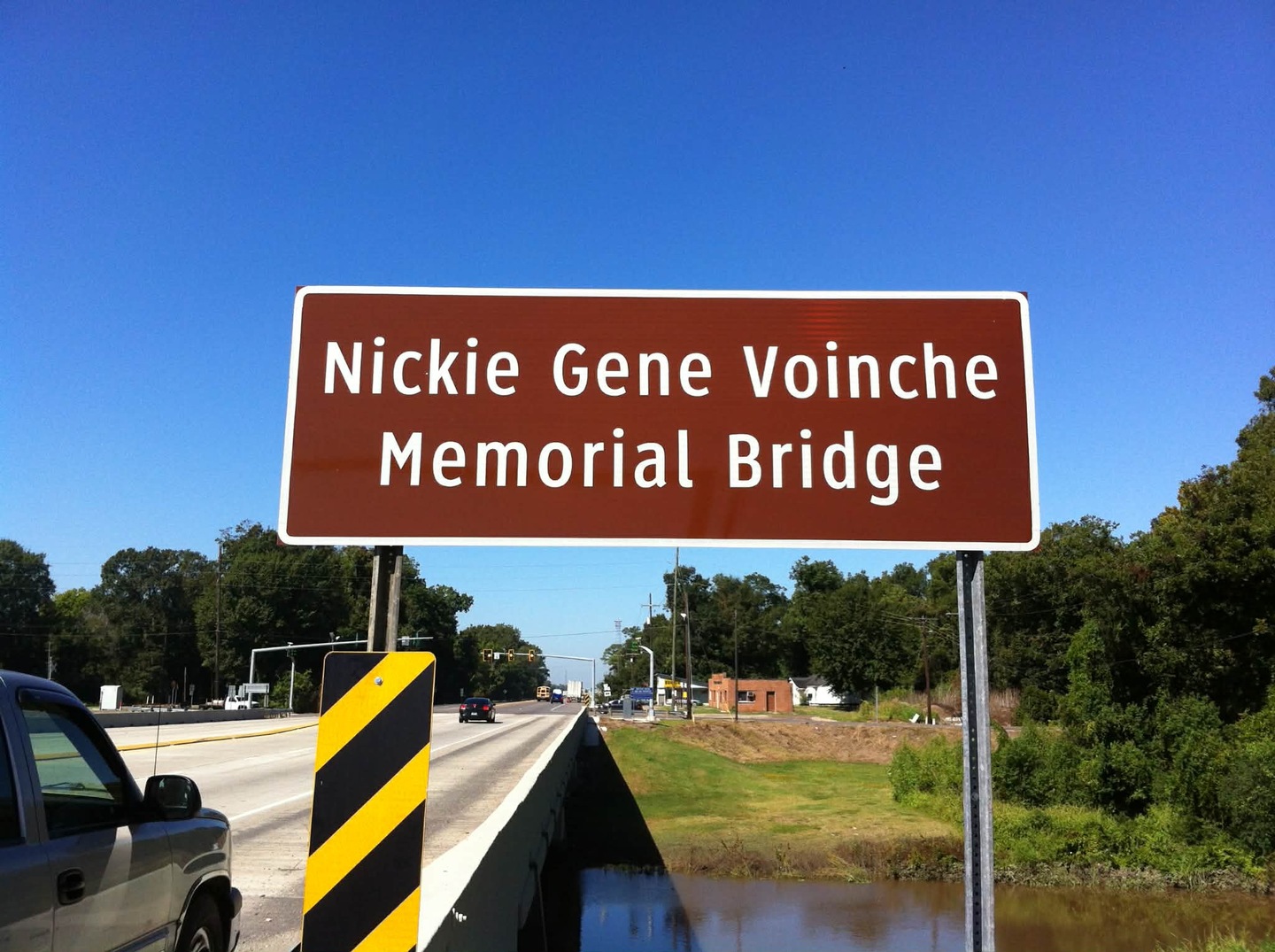
    <title type="html"><![CDATA[Nickie Gene Voinche Memorial Bridge: &quot;An extraordinary but ordinary man&quot;]]></title>
    <summary type="html"><![CDATA[<p><strong><em>Bridge on Highway 190 in Livonia, Louisiana named after Superintendent who oversaw its construction.</em></strong></p><img src="https://mail.acadianahistorical.org/files/fullsize/8ea5967c794a514ea911b271b8355c16.jpg" alt="[Untitled]" /><br/><p>On the morning of September 17th, 2011, Nickie Gene Voinche was on his way to work as a construction superintendent with Gilchrist Construction. He was heading to the bridge on Highway 190 in Livonia, Louisiana when he was tragically hit head-on by a vehicle in Morganza. Voinche passed away as a result of the incident.</p><p>Gilchrist Construction of Alexandria initiated a memorial in his honor, hoping to have the state bridge named after Voinche. Louisiana State Representative Johnson and Senator Ward co-authored a bill and presented it to the Louisiana Legislature. At a regular session in 2013, House Bill 419 named the bridge Nickie Gene Voinche Memorial Bridge.</p><p>Nickie Gene Voinche was born on September 23, 1954 in Marksville, Louisiana. He graduated from Marksville High School in 1972. In his young life, he once worked at the local church with his friends. When they finished with their work, the priest would let them take his car to town. However, he and his "pad-nas" would sometimes sneak out to town on their own. He also enjoyed going to the camp on weekends to hunt and fish. He earned himself the nickname “Hippie” amongst his family and friends and was known to never meet a stranger.</p><p>Voinche later married Julia Bordelon Voinche on June 30th, 1979. Together, they had three children, Chis, Celeste, and Samantha. At date of writing, he has four grandchildren. When his children were young, he worked for 4F Construction. He worked in heavy civil and road construction for all of his life, often working away from home. However, more than anything, he loved his family and always made time to spend with his loved ones. If he didn’t have to stay the night away at work in his camper, he would simply drive all the way back home to make sure his family got his time and love. There was nothing he was prouder of than his children and, later, his grandchildren, and he always made sure they knew it.</p><p>In his later life, he worked for Gilchrist Construction. He would still spend time with family and spend his Sundays cheering on the Saints. Saturday nights were often spent dining at his favorite restaurant, Outback. One of his favorite things to do was cut grass with his beloved tractor. He also loved to cook in his outdoor kitchen, smoking meat and barbequing. He made sure to visit his friends and family as often as he could, up until he passed away.</p><p>His daughter, Celeste Gauthier, speaks fondly of her father. "To know him," she said, "was to love him! My daddy was a simple man. He was funny, caring and kind, was NOT afraid to ask questions, enjoyed making others laugh...</p><p>"He would give his shirt off of his back to help anyone,and he truly did that! He NEVER met a stranger! It was like you were with a celebrity when you were with him because he knew everyone...I realized it when it was too late after his passing, I wanted to speak to others about him."</p><p>Beloved by friends, acquaintences, and family alike, Nickie Gene Voinche still lives on in the memory of all who knew him. The bridge on Highway 190 is just one small reminder of "extraordinary but ordinary" life that was cut too short.</p><p><em><strong><a href="https://mail.acadianahistorical.org/items/show/299">For more (including 3 images) view the original article</a></strong></em></p>]]></summary>
    <published>2026-03-09T17:42:53+00:00</published>
    <updated>2026-05-07T23:26:58+00:00</updated>
    <link rel="alternate" type="text/html" href="https://mail.acadianahistorical.org/items/show/299"/>
    <id>https://mail.acadianahistorical.org/items/show/299</id>
    <author>
      <name>Mia C. Johnston</name>
    </author>
  </entry>
  <entry>
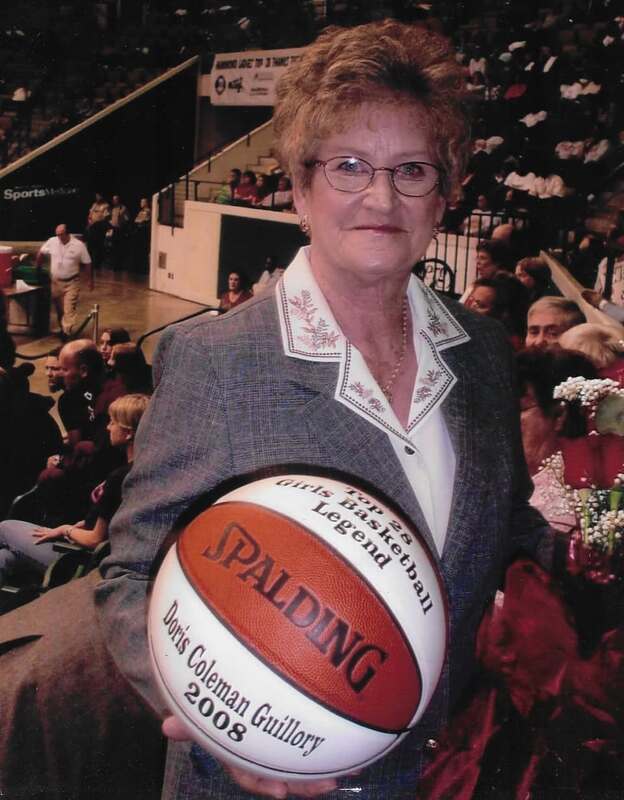
    <title type="html"><![CDATA[Doris Coleman Guillory Memorial Bridge : The Legend from Longville ]]></title>
    <summary type="html"><![CDATA[<p><strong><em>From high school basketball courts to the professional arena, Doris Coleman Guillory paved the way for female athletes. </em></strong></p><img src="https://mail.acadianahistorical.org/files/fullsize/d314c9ab1af081bf0e000572a83e44eb.jpg" alt="Doris Coleman Guillory posing at a basketball game. " /><br/><p><b>Louisiana is home to a lot of amazing people who carry Louisiana’s culture within them. Louisiana is also home to many local legends. One in particular is Doris Coleman Guillory.Doris Coleman Guillory’s love for basketball exemplify her role as an extraordinary athlete who helped shape the future of women’s basketball. Born in 1943, Doris Coleman grew up in Longville, Louisiana, a small community in Beauregard Parish. Her love for basketball was evident from an early age. At just eight years old, she built her own basketball hoop by nailing an old foot tub to a pecan tree in her backyard. This gave her access to practice and perfect her skills.</p><p>When Doris graduated from high school in 1961, athletic scholarships for women were nonexistent. If a woman wanted to pursue a career in basketball, she had to play professionally, but opportunities were extremely limited. At the time, there were only two known professional women’s basketball teams: Hazel Walker’s Arkansas Travelers and the Red Heads. After high school, Doris tried out for a spot on the Arkansas Travelers and earned a place on the team. Between 1962 and 1968, she played professional basketball. </p><p>While playing, Doris and her teammates competed against male teams under men’s rules. Sometimes, they played against military and semi-professional teams. There were no exceptions to basketball rules when competing agaisnt male teams. During an interview, Doris stated, “It was rough and tough playing against male teams. They didn’t have any pity on us.” During games, Doris and her teammates were required to maintain a ladylike appearance. They had to roll their hair and apply full makeup before each game. However, this requirement did not stop the Arkansas Travelers from matching their opponents’ energy and dominating on the basketball court. As a member of Hazel Walker’s Arkansas Travelers, Doris played approximately 200 games per season, and the team won 85 percent of its games. During her professional career, she competed against legends such as Wilt Chamberlain, who played for the Harlem Globetrotters, the San Francisco Warriors, the Philadelphia 76ers, and the Los Angeles Lakers. Together, Doris and her teammates were true pioneers, paving the way for the future of women’s professional basketball, including the WNBA. In 1968, Doris retired from professional basketball and worked at Trunkline Gas Company for forty years, performing engine maintenance and serving as a fire extinguisher and crane inspector. She also dedicated several years to the Beauregard Parish School Board. <p>In recognition of her extraordinary high school basketball legacy, Doris was inducted into the Louisiana High School Athletic Association Hall of Fame in 1993. She was credited with popularizing the overhand jump shot, a maneuver that could not be duplicated by any girl at the time. This move even made boys envious. Doris was also recognized for scoring more than 4,000 points during her high school career, setting a record that would not be broken for over thirty years. Additionally, her free-throw record was recognized during her induction: she made 1,147 free throws, averaging 39 per season and 10.6 per game.</p><p>In 2007, Senator James David Cain of Dry Creek, Louisiana, proposed Senate Bill No. 61 to rename the Hickory Creek Bridge in honor of Doris Coleman Guillory. On August 15, 2007, the bridge was officially renamed the Doris Coleman Guillory Bridge to recognize her remarkable basketball accomplishments.The bridge is located on Louisiana Highway 110 over Hickory Creek, west of Longville. It is a relatively small, two-lane tee-beam bridge that measures 160 feet. The bridge was originally constructed in 1948. </p><p>Unfortunately, Doris Coleman Guillory passed away in 2022. However, her legacy lives on through the renaming of the Hickory Creek Bridge and her contributions to sports. Her accomplishments continue to inspire athletes across the state of Louisiana. </p><p><b></b></b></b></p><p><em><strong><a href="https://mail.acadianahistorical.org/items/show/297">For more (including 6 images) view the original article</a></strong></em></p>]]></summary>
    <published>2026-03-09T15:26:17+00:00</published>
    <updated>2026-05-07T23:27:55+00:00</updated>
    <link rel="alternate" type="text/html" href="https://mail.acadianahistorical.org/items/show/297"/>
    <id>https://mail.acadianahistorical.org/items/show/297</id>
    <author>
      <name>Jaquala Hebert </name>
    </author>
  </entry>
  <entry>
    <title type="html"><![CDATA[Chess Richardson Memorial Bridge: A historic bridge for a small town ledgend ]]></title>
    <summary type="html"><![CDATA[<p><strong><em>From Confederate Army Colonel to State Senator</em></strong></p><img src="https://mail.acadianahistorical.org/files/fullsize/eb2556d774376cafaa9124328f6e7147.jpg" alt="Col. Hardy Chesley Richardson" /><br/><p>When traveling east on LA 16, in order to get into the small town of Franklinton, Louisiana, you will need to cross over the Bogue Chitto River. To do this, you will travel over the Chess Richardson Memorial Bridge. Though the bridge does not have the same iron beam cross design that it once had, the remembrance of Col. Hardy Chesley Richardson is still the same.</p><p>Colonel Hardy Chesley Richardson was born on April 20th 1822, in a small community named Ben's Ford, Louisiana. He was married to Martha Warren and they lived together in Sunny Hill, Louisiana until his death in 1888. It is said that Col. Richardson was a very large man, standing anywhere from 6 feet 4 inches to 6 feet 6 inches and weighing roughly 250 pounds.</p><p>The American Civil War was fought from 1861 to 1865 between the north and south in America. The reason for the American Civil War was because of the abolishing of slavery. The South was trying to keep slavery to help keep their economy. The North wanted to abolish slavery and make everyone free. The North fought under the Union Army. The South fought under the Confederate Army. Since Louisiana is located in the south, they joined the Confederacy. Col. Richardson was a colonel in the Confederate Army during the American Civil War. He was in charge of "Camp Moore" in Tangipahoa Parish, where 200 men trained to fight for the Confederacy. His crew, also known as the Washington Rifles, went on to join General Robert E. Lee's army in Virginia. Col. Richardson's army fought in eight battles. They fought in the following: First Manassas (Bull Run), Fredericksburg, Gettysburg, Sharpsburg, Chancellorsville, Second Manassas, Petersburg, and the raid on Chambersburg, Pennsylvania. In their final battle, the raid on Chambersburg, Col. Richardson was shot and wounded and would end his leadership in the Confederate Army. </p><p>Upon his return back home, Col. Richardson raised cattle, served as the parish clerk of court in Washington Parish, and served on the Louisiana State Senate. He also ran for the United States Senate but lost the election by three votes. He would suddenly pass away on July 5th 1888, after collapsing on his front porch. </p><p>The Chess Richardson Memorial Bridge began construction in 1935 and was offically opened on April 23rd, 1936. The bridge would be a significant piece of history in Franklinton, Louisiana, until in 1989, the Louisiana State Legislature and the DOTD would decide on tearing down the bridge and replacing it with a modern bridge. The bridge was officially torn down in 1998, and the new bridge was officially opened on March 18th, 1998.</p><p>Col. Hardy Chesley Richardson's service in the Confederate Army during the American Civil War and his public service in Washington Parish left a lasting impact in Eastern Louisiana. As travelers pass by the Varnado Store Museum, they can still see the iconic sign that once was mounted on the bridge.</p><p><em><strong><a href="https://mail.acadianahistorical.org/items/show/294">For more (including 7 images) view the original article</a></strong></em></p>]]></summary>
    <published>2026-02-24T21:18:10+00:00</published>
    <updated>2026-03-16T17:07:02+00:00</updated>
    <link rel="alternate" type="text/html" href="https://mail.acadianahistorical.org/items/show/294"/>
    <id>https://mail.acadianahistorical.org/items/show/294</id>
    <author>
      <name>Ian Harrington</name>
    </author>
  </entry>
  <entry>
    <title type="html"><![CDATA[The &quot;James &#039;Terry&#039; Watson Memorial Highway&quot;:<br />
More than than a memorial for a life lost, but a reminder of a life lived.: One man&#039;s passion for adventure and helping other led to a life of service both at home and around the globe: The story of James &#039;Terry&#039; Watson]]></title>
    <summary type="html"><![CDATA[<p><strong><em>From the opium fields of Afghanistan to the narrow city streets of Bogota, Colombia, DEA agent James 'Terry' Watson traveled to some of the most dangerous locales around the globe disrupting major international drug pipelines. His journey into this harrowing world fit for a television series started humbly though, from the small town of Holly Ridge, Louisiana. </em></strong></p><img src="https://mail.acadianahistorical.org/files/fullsize/2479118027d32e95f509c2af254ecc34.jpg" alt="Map of Bogota, Colombia" /><br/><p>In Richland Parish, Louisiana lies a stretch of LA. Hwy. 183, also known as the “James ‘Terry’ Watson Memorial Highway.” Named for a fallen DEA agent and Richland Parish native, the road is more than just a memorial for a life lost, but a reminder of a life lived. Born in the town of Holly Ridge, Louisiana to parents Paul and Henrietta Watson on December 9, 1970, Terry Watson had a heart for adventure. Growing up, Watson “enjoyed riding motorcycles,” as well as “traveling, snow skiing, and running which he continued to enjoy all of his life.” Watson soon developed an interest in law enforcement, and set upon a path that would take him on an international journey as a law enforcement officer and eventual federal agent.</p><p>Watson began his career as a Richland Parish Sheriff’s deputy where he later transitioned to working in narcotics investigations. During his tenure at the Richland Parish Sheriff’s Office, Watson was also a student, attending Northeast Louisiana University where he pursued a degree in Criminal Justice. After Watson earned his Criminal Justice degree, he joined the United States Marshal's Service, where he was then assigned to work in Biloxi, Mississippi. Following two years of service with the US Marshal’s, Watson “achieved his lifelong goal and was hired by the Drug Enforcement Administration (DEA) in which he devoted 13 years of service.” As a federal agent, the nature of Watson’s work was often incredibly hazardous . In his three deployments to Afghanistan, Watson was involved with “conducting dangerous counter-narcotics missions as a member of DEA’s FAST program.” The FAST program, Foreign-deployed Advisory Support Team, “deployed specially trained DEA agents to work alongside U.S. Special Operations Command (SOCOM) and NATO forces” to “identify and dismantle Afghanistan's top drug traffickers, disrupt the opium and heroin trade, and cut off financial pipelines supporting terrorist organizations.” Watson’s work was invaluable both at home and abroad, stifling both the spread of illegal drugs as well as quelling the activities of terrorist organizations through the disruption of their financial support. </p><p>Unfortunately Watson would only be able to make so much of an impact before his life was tragically cut short at forty-two years old and after thirteen years of service with the DEA. While on assignment in Bogota, Colombia as part of a drug-smuggling investigation, Watson would be attacked while riding in a taxi cab as part of a robbery scheme. While inside the cab, Watson was assaulted with a stun gun and then stabbed with a knife. Although he was able to escape from the cab, Watson would collapse and succumb to his injuries in a hospital. Despite the devastating circumstances surrounding his death, Agent Terry Watson’s life and service are the most important of his story. </p><p>Travelling to dangerous places like Afghanistan and Colombia were assignments that Watson volunteered for, and as his family wrote in a statement after his passing, “[v]olunteering and taking those risks were part of his character and demonstrate the type of person he was.” Watson was determined to make a difference in the world, and was willing to place himself in harm’s way to do so. Hopefully when people drive past the “James ‘Terry’ Watson Memorial Highway” sign they will remember his name, and take the time to look him up the next time they have a free moment. When they do they will see the life and legacy of a man who dedicated himself to making the world a little safer for all of us. According to his mother, Henrietta Watson, “her son traveled the stretch of highway almost every day of the first 22 years of his life. It was the road that brought him home.” The notion that the section of roadway named after Watson was the same that he traveled as a young man is nothing but bittersweet. James ‘Terry’ Watson was more than just a DEA agent, he was a husband, a brother, and a son. Perhaps most importantly though, he was a man from a small town in Louisiana who craved adventure and wanted to help others. He found a way to combine those two passions by leading a life of service both at home and around the globe.</p><p><em><strong><a href="https://mail.acadianahistorical.org/items/show/293">For more (including 4 images&#32;&amp;&#32;1 audio file) view the original article</a></strong></em></p>]]></summary>
    <published>2026-02-24T20:11:02+00:00</published>
    <updated>2026-05-07T23:29:21+00:00</updated>
    <link rel="alternate" type="text/html" href="https://mail.acadianahistorical.org/items/show/293"/>
    <id>https://mail.acadianahistorical.org/items/show/293</id>
    <author>
      <name>Madelynn Dunn</name>
    </author>
  </entry>
  <entry>
    <title type="html"><![CDATA[Saint Tammany: The Native American Leader Behind Louisiana&#039;s Unique Parish: How a Lenni Lenape Chief Inspired St. Tammany’s Name]]></title>
    <summary type="html"><![CDATA[<p><strong><em>When people hear the name St. Tammany Parish, they might assume it was named after a Catholic saint, like many other parishes in Louisiana. However, the “Saint” in St. Tammany is not connected to the Catholic Church at all. Instead, the parish is named after a Native American leader called Tamanend, also known as Tammany, who became a symbol of peace, freedom, and early American identity.</em></strong></p><img src="https://mail.acadianahistorical.org/files/fullsize/019eb25360d7018f2297d00d539a69f6.jpg" alt="Tamanend" /><br/><p>Saint Tammany is one of the most unusual figures in American history. Unlike traditional saints recognized by the Catholic Church, Saint Tammany was actually a Native American leader of the Lenni Lenape people, also known as the Delaware tribe. He lived during the late 1600s in the region that is now Pennsylvania, New Jersey, and Delaware. His real name was Tamanend, but over time, Americans began calling him Tammany. His transformation from a historical figure into a symbolic “saint” reveals how early Americans constructed national identity through myth, memory, and selective storytelling.</p><p>Tamanend was known for being wise and peaceful. He is most remembered for his relationship with William Penn, the founder of Pennsylvania. When Penn arrived in North America, he hoped to build fair and peaceful relationships with Native Americans. Tamanend was one of the leaders who made agreements with him. These agreements later became powerful emblems of cooperation between Native Americans and European settlers. Early writers described Tamanend as calm, fair, and honorable.</p><p>As years passed, Tamanend’s story grew larger than life; he became almost legendary in American culture. After the American Revolution, the new nation wanted heroes who were not connected to Britain. Before independence, many colonists celebrated British figures like St. George. But after breaking away from Britain, Americans wanted their own national icons. Tamanend became a perfect choice. He represented harmony, fairness, and a connection to the American land. Calling him “Saint Tammany” was not religious. Instead, it was a symbolic way to honor him as a national hero.</p><p>In the late 1700s and early 1800s, groups were formed in his honor. One of the most famous was Tammany Hall in New York City. At first, this group, also known as Tammany Society, celebrated American independence and used Native American imagery in its meetings. Members even celebrated “St. Tammany’s Day.” However, over time, Tammany Hall became known for political corruption and unfair practices. Even though the organization later developed a controversial reputation, its original purpose was to honor Tamanend as a representation of American identity.</p><p>In 1810, St. Tammany Parish was officially created in Louisiana and named after Tamanend. This is especially interesting because Louisiana has a strong Catholic history, and most of its parishes are named after Catholic saints. St. Tammany is different. According to the St. Tammany Parish Library, the “Saint” in its name is not Catholic-related. It comes from the American tradition of honoring Tamanend as a symbolic saint of the new nation. This makes the parish unique within the state.</p><p>Today, Tammany Parkway, a portion of U.S. Highway 190 in St. Tammany Parish, continues to carry his name. Even though Tamanend never lived in Louisiana, his reputation spread across the country. His name came to represent unity, harmony, and pride in American independence.</p><p>However, the story of Saint Tammany also shows some contradictions in American history. Early Americans admired Tamanend and used him as a symbol of freedom and fairness. At the same time, Native American tribes across the country faced displacement and unfair treatment as the United States expanded westward. While Tamanend was honored in name, many Native Americans did not receive the same respect in reality. This creates an important reminder that history can be both inspiring and complicated.</p><p>It is also important to remember that much of what we know about Tamanend comes from stories passed down over time. Historical records about his life are limited, and some details may have been exaggerated. Still, there is strong evidence that he was a respected Lenni Lenape leader who supported peaceful relationships with colonists. His treaty with William Penn became a lasting emblem of cooperation, even though later relationships between Native Americans and settlers were often marked by conflict.</p><p>Saint Tammany was not a traditional saint but a Native American leader who became a powerful figure in early American culture. Tamanend was admired for his peaceful leadership and his role in building relationships with colonists. After the American Revolution, Americans adopted him as a representation of national pride and independence. Although the title “Saint” was symbolic and not religious, it showed how deeply he was respected. St. Tammany Parish in Louisiana carries his name as a reminder of this unique history. His story helps connect local Louisiana history to the larger story of how America created its national identity, while also demonstrating how historical memory and mythmaking can reshape real individuals into lasting national legends.</p><p><em><strong><a href="https://mail.acadianahistorical.org/items/show/292">For more (including 3 images&#32;&amp;&#32;1 audio file) view the original article</a></strong></em></p>]]></summary>
    <published>2026-02-24T20:03:19+00:00</published>
    <updated>2026-05-07T23:30:24+00:00</updated>
    <link rel="alternate" type="text/html" href="https://mail.acadianahistorical.org/items/show/292"/>
    <id>https://mail.acadianahistorical.org/items/show/292</id>
    <author>
      <name>Kaori Rodney</name>
    </author>
  </entry>
  <entry>
    <title type="html"><![CDATA[Reverend A.L. O&#039;Brien Memorial Highway: Remembering a Locally Beloved Evangelist.]]></title>
    <summary type="html"><![CDATA[<p><strong><em>Starks, Louisiana dedicated a portion of Louisiana Highway 109 to a Reverend that served their community for decades.</em></strong></p><img src="https://mail.acadianahistorical.org/files/fullsize/5da96433b4d68f1c6abe4ff11e55132d.jpg" alt="[Untitled]" /><br/><p>After his passing on February 4th, 1991, the community of Starks, Louisiana in western Calcasieu Parish saw to dedicating a portion of Highway 109 to the late Reverend A. L. O'Brien. He was the pastor at First Pentecostal Church for over 35 years and an active member of the Starks community. A. L. O'Brien was born on June 30th, 1922 in Pickering, Louisiana. After graduating high school, he moved to Lake Charles and converted to the Pentecostal faith at age 17. While living there, he assisted Reverend J. W. Evans for twelve years. During this time, he married Emily Donahue and fathered their child, Roger, in December of 1944. After he and his wife worked as Evangelists for a year, A. L. O'Brien served as a pastor in Topsy and Indian village at their respective Pentecostal churches. In July of 1954, he found his lifelong pastoral position at First Pentecostal Church in Starks, Louisiana. When he took on the pastorate at First Pentecostal, the church was in the process of building a new sanctuary for worship. He oversaw this and saw that the building was completed in 1956. In 1961, a new educational building for the church was completed and dedicated to Roger O'Brien, his son who passed away in 1960 after a battle with pneumonia. Through his time with the congregation, even as members came and went, the numbers saw tremendous growth. Eventually, Reverend O'Brien saw this and decided that more space was needed to accommodate the church and its services. By 1973, a new complex for the church was completed and dedicated. Reverend O'Brien served his congregation and community for over three decades before passing away on February 4th, 1991. After his passing, it was proposed that a portion of Louisiana Highway 109 in Calcasieu Parish be named in his honor. Today, the Memorial Highway passes directly beside First Pentecostal Church in Starks, Louisiana, where his memory and legacy lives on in the community he loved and that loved him in return.</p><p><em><strong><a href="https://mail.acadianahistorical.org/items/show/287">For more (including 7 images) view the original article</a></strong></em></p>]]></summary>
    <published>2026-02-10T20:46:12+00:00</published>
    <updated>2026-05-07T23:32:00+00:00</updated>
    <link rel="alternate" type="text/html" href="https://mail.acadianahistorical.org/items/show/287"/>
    <id>https://mail.acadianahistorical.org/items/show/287</id>
    <author>
      <name>Mia C. Johnston</name>
    </author>
  </entry>
  <entry>
    <title type="html"><![CDATA[Tunica Trace Memorial Byway : A Route To Treasure]]></title>
    <summary type="html"><![CDATA[<p><strong><em>Within the historic area of St. Francisville, Louisiana, Tunica Trace Byway, one of the oldest roads in the state of Louisiana, serves as a pathway of cultural preservation and heritage.</p></strong></p><img src="https://mail.acadianahistorical.org/files/fullsize/f637f712d6f160f8d1d67c2a9f78b82c.jpg" alt="[Untitled]" /><br/><p>
</p><p>Tunica Trace Byway is one of the oldest roads in Louisiana that holds deep historical significance. Located in St. Francisville, it represents the area’s commitment to historical preservation. For decades the byway has been known as Angola Road. The route was officially renamed in 1988 to honor the Tunica-Biloxi Tribe and recognize their contributions to the history of Louisiana and the United States.</p><p>The twenty-mile scenic byway follows Louisiana Highway 66. It begins in northern St. Francisville and extends to the Louisiana State Penitentiary (Angola). Along the way, travelers pass through approximately six thousand acres of land within the Tunica Hills Wildlife Area.This route offers a view of Louisiana that differs from the stereotypical image of the state’s landscape. Instead, travelors experience Louisiana's rolling hills, waterfalls, forests, wildlife, and vast greenery. </p><p>Tunica Trace Byway tells the story of the Tunica-Biloxi Tribe and their rich history. Although the tribe has played an important role in the development of Louisiana; however, the tribes origins trace back to the lower Mississippi Delta Valley. The Tunica-Biloxi Tribe first encountered European explorers in 1541, when they met the Spanish conquistador Hernando de Soto during his expedition in search of gold. Later, around 1699, the Tunica people encountered French explorers and settlers. Their encounter marked the beginning of a long-term alliance. </p><p>Historically, the Tunica-Biloxi Tribe is known for being fierce warriors and skilled traders. In the early eighteenth century, around 1706, the Tunica migrated from Mississippi to Louisiana and attacked the Houma Tribe. The Houma tribe were settled in St. Francisville at the time. After the attack, the Tunica gained control of the land in St. Francisville. They wanted better trading access with the French. When the French explored Louisiana during the 1700s, they encountered several hostile tribes. Around this time, the French also experienced tensions with British slave traders.</p><p>In their search for Native allies, the French formed a friendship with the Tunica people. They agreed to provide commodities such as salt, horses, and metal tools in exchange for diplomacy and military support.The alliance between the Tunica and the French lasted for sixty-four years, from 1699 until France ceded the land to Spain in 1763. The Spanish later honored the established alliance between the French and the Tunica-Biloxi Tribe. As a result, the Tunica-Biloxi Tribe fought alongside the Spanish and helped defeat the British during the Battle of Baton Rouge in 1779. </p><p>Tunica Trace Byway served as a multipurpose route in southeastern Louisiana and was a major trading path for Native Americans. In addition, it helped explorers and settlers travel between Louisiana and Mississippi. Most importantly, the route connected different communities and cultures. Tunica Trace Byway is also known for its hidden treasure. In 1968, one of the largest archaeological discoveries related to the byway occurred. A guard on duty at the Louisiana State Penitentiary discovered a cemetery dating back to the 1700s. The burial site belonged to the Tunica-Biloxi Tribe. Within the burial grounds, archaeologists found an abundance of brass, iron, kettles, skillets, axes, hoes, bottles, pottery, glass beads, and European ceramics. After studying the artifacts, researchers concluded that many of the items came from trade along Tunica Trace. </p><p>Today, Tunica Trace Byway is one of the most fascinating historical sites in St. Francisville, Louisiana. It represents a pathway to preserving Native American, American, French, and Spanish heritage.</p><p><em><strong><a href="https://mail.acadianahistorical.org/items/show/281">For more (including 5 images&#32;&amp;&#32;1 audio file) view the original article</a></strong></em></p>]]></summary>
    <published>2026-02-10T20:39:51+00:00</published>
    <updated>2026-03-17T05:12:48+00:00</updated>
    <link rel="alternate" type="text/html" href="https://mail.acadianahistorical.org/items/show/281"/>
    <id>https://mail.acadianahistorical.org/items/show/281</id>
    <author>
      <name>Jaquala Hebert </name>
    </author>
  </entry>
  <entry>
    <title type="html"><![CDATA[Johnny Wyatt Memorial Highway: Honoring a Legacy of Service, Leadership, and Community Impact]]></title>
    <summary type="html"><![CDATA[<p><strong><em>Sweeping across a key corridor of Bossier Parish, the Johnny Wyatt Memorial Highway serves to do more than connect points on a map—it connects a community to the enduring legacy of one of its most dedicated public servants.</em></strong></p><img src="https://mail.acadianahistorical.org/files/fullsize/09746db76edabc91aa5b7b4fc842b603.jpg" alt="Johnny Wyatt professional police Marshal photo" /><br/><p>The Johnny Wyatt Memorial Highway is a fitting testament to Bossier City Marshal Johnny Wyatt, whose life was an embodiment of steadfast public service and leadership. In 2004, this portion of I-220 in Bossier Parish was named, but it is not just a segment of highway—it is an evocative representation of a man who built his community through law enforcement and public service. Wyatt's legacy is embedded not just along the road but in the values that it represents: justice, dedication, and compassion. His work also left a lasting impact on Bossier City, setting a high standard of expectation for Louisiana's public officials. The highway ensures that his work will be remembered for centuries to come.</p><p>Johnny Wyatt's law enforcement career spanned decades and was diverse, characterized by a persistent commitment to the people he protected. Early in life, he committed himself to a public service career, eventually becoming Bossier City Marshal. He is remembered as a fair and humane dispenser of justice, and for his work ethic as he labored tirelessly to make the community safer. Apart from his official capacity, Wyatt was a working member of civic life, engaged in youth work and philanthropic causes for the benefit of the needy. His influence and presence were experienced on a daily basis in the lives of citizens, and he was a revered and well-liked person across every segment of society.</p><p>The legislative action of naming the highway was in itself an intentional and thoughtful gesture which reinforced the importance of Wyatt to the community. House Bill No. 1237 from Louisiana made it legal to mark the highway in his honor as a tribute, a move both parties among lawmakers welcomed. The bill emphasized Wyatt's exemplary service and broad public support behind the action to show how much his leadership weighed. At a time when civic trust in public institutions was undergoing a period of change, Wyatt was a person who had successfully walked the middle ground between the people and law enforcement. The highway designation ensured that his memory would be part of the state's permanent landscape.</p><p>A public dedication ceremony in August 2015 once again celebrated Wyatt's legacy, drawing the attention of the local news and reaffirming the community's affection for him. Family, law enforcement officers, and civic leaders gathered to celebrate his life and what he stood for. The ceremony was not only about his history but about how it was necessary to emulate his path of service and accountability. Speakers lauded his moves to bring modernization to the Marshal's office and transparency to city government, both of which had a profound impact. The ceremony was afternoon of unity and memory, that encouraged the gathering to carry forward Wyatt's mission of civic obligation.</p><p>Wyatt's work spanned beyond the state of Louisiana when he testifying before Congress in 2005 as the first congressman regarding the hurricane aftermath of Hurricane Katrina. His thoughtful and measured comments underscored the critical importance of local law enforcement and charities in responding to disasters, underlining the importance of community-based leadership. He spoke eloquently of the necessity to safeguard the most vulnerable—children, the elderly, and the displaced—during periods of crisis. His visibility at the national level ratified the wise choice to memorialize a state highway in his name and illustrated that his legacy was experienced many miles beyond the city limits. The Johnny Wyatt Memorial Highway therefore exists not merely as a tangible route but as a symbol of enduring service, which reminds every traveler of the power of integrity, empathy, and leadership in public service.</p><p><em><strong><a href="https://mail.acadianahistorical.org/items/show/280">For more (including 5 images, 1 audio file,&#32;&amp;&#32;1 video) view the original article</a></strong></em></p>]]></summary>
    <published>2025-05-11T14:44:43+00:00</published>
    <updated>2026-05-07T23:33:41+00:00</updated>
    <link rel="alternate" type="text/html" href="https://mail.acadianahistorical.org/items/show/280"/>
    <id>https://mail.acadianahistorical.org/items/show/280</id>
    <author>
      <name>Andrea Washington</name>
    </author>
  </entry>
  <entry>
    <title type="html"><![CDATA[Tiger Tracks: SSG Robert &quot;Pete&quot; Sweat Memorial Highway : Louisiana Highway 10 ]]></title>
    <summary type="html"><![CDATA[<p><strong><em>Louisiana Memorial Highway number 113 is a portion of Louisiana highway 10 that runs until the location of the Occupy II Baptist Church in Pitkin, Louisiana and is designated as the SSG Robert “Pete” Sweat Memorial Highway as of August 15, 2011.</em></strong></p><img src="https://mail.acadianahistorical.org/files/fullsize/51916a5384d9a48ccc5f89c06f789820.jpg" alt="Infantrymen catching a ride on a tank " /><br/><p><span>        SSG Robert E “Pete” Sweat was born to William Ephriam and Rosetta Perkins Sweat on October 28, 1920, on a farm in Pitkin, Louisiana. </span><span>He grew up assisting his father in their fields until his early 20s at the start of WWII. He trained at Fort Benning, Georgia, and was assigned to the 10</span><span>th</span><span> Armored Division of the 54</span><span>th</span><span> Infantry Regiment of the United States, also known as the “Tiger Division.” The 10</span><span>th</span><span> Armored Division was inactivated shortly after the war but operated under General George S. Patton in France. </span>
<span>     After receiving training with his division in September of 1944, Sweat and his squadmates ravaged the Germans in France, taking hundreds of Nazi prisoners. In the Ardennes Forest on December 16, 1944, the 10</span><span>th</span><span> Armored Division served as support for their comrades, mobilizing to Bastogne and the Bulge in Luxembourg. It is unsure where Sweat ended up during the Battle of the Bulge, but he survived this German counteroffensive and what ended up being the largest and deadliest battle fought by the U.S. in WWII. </span>
<span>     The next battle that Sweat and the 10</span><span>th</span><span> Armored Division would see was one at Heilbronn, a small city in southern Germany on the Neckar River, which was an important supply center for the German soldiers. The U.S. took the city and moved southward to Crailsheim, which is believed to be one of the most difficult battles of the war where the Germans would not let up. </span><span>This battle would last a few days, but Sweat’s life would come to an end on April 5, 1945. As enemy artillery fire hit targets and bullets whizzed through the air, one of Sweat’s squadmates was wounded in the line of fire. He swooped down to rescue him but was killed while returning to cover. </span>
<span>     The After Action report for April 1-5</span><span>th</span><span>, 1945 read “The enemy fought a delaying action entirely, using minefields covered by artillery and anti-tank weapons. Bridges were blown and artillery sighted in on important junctions and crossroads. Small arms fire ranged from light to moderate chiefly employed on outskirts of towns. Enemy tanks were in the area but moved about constantly. Towns which we occupied received light to moderate shelling to impede our progress. Results of Operations: 161 PoW captured, two 20mm. flak guns, four anti-tank guns, four trucks, two command cars and one prime mover captured or destroyed.”</span>
<span>      According to Sweat’s great nephew, who found a letter, Sweat was listed as “missing in action” on that date, but it became the official date of death for the family. </span><span>One of his nieces, Connie Britt, told The Leesville Daily Leader “the family attempted to find more information through the military records, but a 1973 fire at the National Personnel Records Center destroyed millions of files, including many of those relating to Sweat. ‘All they could tell us was that he was killed in action.’” </span>
<span>       After his death, the Allies won the war, and Sweat received a Purple Heart and two Silver Stars, the third-highest honor military personnel can receive. He is buried at Lorraine American Cemetery in St. Avold (Moselle), France. </span>
<span>      The SSG Robert "Pete" Sweat Memorial Highway was introduced by Representative Dorothy Sue Hill and signed by Governor Bobby Jindal. The Representative presented Sweat’s two sisters Mittie and Jean Cloud with a replica of the highway sign.</span></p><p><em><strong><a href="https://mail.acadianahistorical.org/items/show/279">For more (including 10 images, 1 audio file,&#32;&amp;&#32;1 video) view the original article</a></strong></em></p>]]></summary>
    <published>2025-05-06T01:30:20+00:00</published>
    <updated>2026-03-04T22:42:51+00:00</updated>
    <link rel="alternate" type="text/html" href="https://mail.acadianahistorical.org/items/show/279"/>
    <id>https://mail.acadianahistorical.org/items/show/279</id>
    <author>
      <name>Kallie R. Barron </name>
    </author>
  </entry>
  <entry>
    <title type="html"><![CDATA[A (Huey P.) Long Story: Sam Houston Jones Parkway: LA Highway 378 through Moss Bluff, Louisiana]]></title>
    <summary type="html"><![CDATA[<p><strong><em>Louisiana Memorial Highway 18 is named the Sam Houston Jones Parkway. The horizontal portion of Louisiana Highway 378 (LA 378) located in northeast Calcasieu Parish is dedicated in Sam Houston Jones’s honor. The parkway runs from Louisiana Highway 171 in Moss Bluff to Sam Houston Jones State Park. Jones worked to historically preserve the area of Calcasieu Parish, where the parkway is located.</em></strong></p><img src="https://mail.acadianahistorical.org/files/fullsize/2b02586a136348e424357d9d52f78ea3.jpg" alt="Gov. Jones and daughter" /><br/><p>Sam Houston Jones was born on July 15, 1897, in Merryville, Louisiana—a small town near DeRidder along the Texas-Louisiana border in Beauregard Parish. He graduated from DeRidder High School in 1915, as the valedictorian and class president. He studied at Louisiana State University (LSU) in Baton Rouge for two years but enlisted in the United States Army before receiving his graduation diploma. It is unknown if or when Jones completed an undergraduate degree, however, he excelled in the Army Reserve Officers Corps during World War I, a global conflict which lasted from 1914 to 1918. He entered the infantry, while spending most of his service at a nearby base, named Camp Beauregard, in Pineville, Louisiana. </p><p>After World War I, Jones returned to Baton Rouge, Louisiana and attended law school at LSU in 1919. Before graduating, Jones became involved and interested in local politics, serving as a delegate at the Louisiana Constitutional Convention of 1921. Jones was one of the 128,000 voting delegates which approved the new constitution. Within a year, Jones obtained a license to practice law in 1922; he took night classes to finish law school while working as a clerk of court during the day. He practiced law in DeRidder until 1924 when he moved to the city of Lake Charles, Louisiana. In Lake Charles, Jones practiced law before rising to district attorney of Calcasieu Parish in the 14th Judicial District, where he served from 1925 to 1934. </p><p>By August 1939, Jones had established quite the reputation as a rising politician. He was approached by the opposition of Huey P. Long Jr., who was Louisiana’s governor from 1928 to 1932 then a U.S. Senator from 1932 to 1935 when he was assassinated. Long changed Louisiana Politics through left-wing populist ideas of social reform from voting and educational improvements and economic wealth redistribution through state-funded taxes and tariffs. No other Louisiana governor had the same effect on Louisiana, creating the idea of a “Long dynasty” with several of Long’s relatives riding his coattails into political office. For this reason, anti-Long supporters wanted Jones to run for governor against Long’s brother, Earl, in 1940. Jones was hesitant to agree, knowing the power that the Longs held. Jones’s platform focused on honesty and honed in on the scandals and corruption of the Long years. They even compared Earl’s potential time in office to the previous Governor Richard Leche, Huey Long’s Successor who was convicted and imprisoned for misusing federal funds. Earl Long was Leche’s lieutenant governor from 1936 to 1939. While Earl held the lead vote during majority of the primary race, his reign splintered on the support of James Noe—the third gubernatorial candidate who was a former supporter of the Long family but supported Jones in the end. Jones won the runoff election in 1940, marking the end of the Long’s 12-year hold of the Louisiana governor’s office. On May 14, 1940, Jones was elected governor by popularity. </p><p>During his time in state office, Jones is most known for creating civil service legislation that restructured the government into a civil service system, with reductions to state agencies and state employment. While cutting some employment opportunities, he also raised the pay of teacher’s salaries and continued to raise the Long economic welfare programs, like free lunches for school children, equal pay among race for educators, and surpass funding for state and public colleges. Without name-recognition or politicking, Jones restored Louisiana’s image of an honest and respectful government. Jones called for fair, honest elections with the elimination of annual voter registration. He also implemented the voting machine system and pioneered a bidding system for state contracts and purchases to ensure anti-fraud. </p><p>At the same time that his political career was taking off, Jones’s family life was in full swing. He married a woman from DeRidder named Louise Gambrell Boyer in 1925. Boyer was a supportive wife and governmental ambassador. She was once introduced as the “Governor of the Governor of Louisiana” at a delegate dinner at the American Embassy in Mexico City in 1941. Jones and Boyer had four children, two during their marriage—Carolyn and Robert “Bobby” Jones—and two children who were adopted from Boyer’s previous marriage—James “Jimmy” and William “Bill” Boyer. </p><p>Jones did not seek an immediate second term. At the time, Louisiana’s constitution prohibited the secession of the incumbent governor after his term to avoid a hold on the seat. Therefore, Jones continued in office until May 9, 1944, when he was replaced by country music singer Jimmie Davis. Davis’s popular song “You Are My Sunshine” skyrocketed into popularity during Jones’s administration in 1940. Jones left Davis’s administration with a reduced debt and a substantial, $15 million-dollar, state treasury surplus—the first to do so in the last forty years. Jones was so financially responsible with monetary consolidation, that he would later serve on intergovernmental relations committees for commerce and research in the 1950s. Jones attempted another gubernatorial run in 1948, against Earl Long again, but lost. Historians claim that Long was able to “out promise” Jones on his campaign run. The Long name would hold the office seat again on May 11, 1948. Jones would never seek a second run for governor again. </p><p>Jones returned to Lake Charles in the early 1940s, after his brief time in higher office. He raised his family there for the next 40 years. Jones passed away on February 8, 1978. He is buried in Lake Charles at the Prien Memorial Park Cemetery. </p><p>The same year as his death in 1978, The Louisiana Senate passed a measure to rename the Sam Houston State Park near Lake Charles, in Moss Bluff, Louisiana. The park was originally named for Sam Houston, a Texas statesmen known as a pioneer of the Texas Revolution. Houston enjoyed traveling extensively to regions of west Louisiana—including Lake Charles. A high school of the same name is recognized down the street of the Louisiana state park. In 1934, Louisiana passed legislation to establish a state park system named the State Parks Commission of Louisiana. After its formation, seven sites were acquisitioned for public use, as state parks. With World War II in full effect and recreation funds on the decline, a new park development was declined for one new park site—Sam Houston State Park. However, by 1944, Sam Houston State Park received its official title and public opening. Jones, as acting governor, fought tirelessly for the land, in hopes to create the first and only state park in Southwest Louisiana. He was the driving force behind its designation. Since 1978, the park has honored his efforts for the land. </p><p>In addition to the park, Jones was honored in 1987 with a memorial highway in his name. The highway named the Sam Houston Jones Parkway was the first dedication by Governor Charles “Buddy” Roemer on July 11, 1988. Other politicians, like Senator Bill McLeod of Lake Charles, Representative Vic Stelly of Moss Bluff, and the President of the Calcasieu Parish Police Jury, Don Manuel all helped honor Jones. McLeod began brainstorming the highway expansion project of Louisiana highway 378 (LA 378) sixteen years prior. He knew that Jones was a fit honoree for the highway due to his contributions to the Lake Charles area and the state of Louisiana. The highway, a three-mile portion of LA 378 officially named after Jones, leads to the state park named after him—Sam Houston Jones State Park.</p><p><em><strong><a href="https://mail.acadianahistorical.org/items/show/278">For more (including 9 images&#32;&amp;&#32;1 audio file) view the original article</a></strong></em></p>]]></summary>
    <published>2025-05-04T20:46:10+00:00</published>
    <updated>2026-03-04T22:42:50+00:00</updated>
    <link rel="alternate" type="text/html" href="https://mail.acadianahistorical.org/items/show/278"/>
    <id>https://mail.acadianahistorical.org/items/show/278</id>
    <author>
      <name>Caroline Dugan</name>
    </author>
  </entry>
  <entry>
    <title type="html"><![CDATA[Preserving Louisiana’s Coastline: The Rodney Guilbeaux Memorial Highway : LA Highway 82 through Cameron Parish, Louisiana along the coastline]]></title>
    <summary type="html"><![CDATA[<p><strong><em>Louisiana Memorial Highway 102 is named the Rodney Guilbeaux Memorial Highway. Senate Bill 737 was passed in 2008, which designated the portion of Louisiana Highway 82 (LA 82) located in Cameron Parish in Rodney Guilbeaux’s honor. Guilbeaux was a native to Cameron Parish; he lived on, worked down, and advocated for coastal preservation on LA 82.</em></strong></p><img src="https://mail.acadianahistorical.org/files/fullsize/dee07e1895c77700834425c9681bd136.jpg" alt="The Gulf of Mexico from Constance Beach. https://visitcameronparish.org/explores/constance-beach/" /><br/><p>Rodney John Guilbeaux, Jr. was born on Dec 18, 1926, in Kaplan, Louisiana. On his eighteenth birthday in 1944, Guilbeaux entered the military and served as a junior-grade lieutenant in the U.S. Marines. Upon returning from war, Guilbeaux settled in New Orleans, Louisiana, but by the early 1950s, he decided to move back west to the area he grew up in. He is noted as saying, "Some people like the lakes, some people like the rivers. I was a beach bum” to Fox News. So, Guilbeaux bought a camp in the newly developed, Constance Beach. The village is south of LA 82 and seven miles west of Holly Beach—Louisiana’s most famous beach, where the Rodney Guilbeaux Memorial Sign is located. He lived there on the weekends and  worked in Sulphur, Louisiana as an advertising manager for Wise Publications, a Printing and Bookstore in Southwest Louisiana. In 1961, Guilbeaux purchased property along LA 82 in Cameron Parish. He bought and opened the Gulf Coast Store in Holly Beach, Louisiana. Owning and operating a family business was not a new quest for Guilbeaux. His dad, Rodney John Guilbeaux, Sr., owned not one but two influential storefronts in Cameron Parish. Guilbeaux Sr. owned Guilbeaux's Dry Cleaners and Laundry in Cameron, Louisiana prior to the 1950s. He was quite successful as “Cameron’s only cleaning and pressing shop,” taking out ads regularly in the local newspaper, the Cameron Parish Pilot. One of the last ads for Guilbeaux's Dry Cleaners and Laundry was on August 8th, 1957, after Hurricane Audrey. The ad stated “Rodney Guilbeaux, owner of Guilbeaux's Laundry & Cleaners, announces that he and his son, Guilbeaux Jr., will be at the shop this Sunday between 10 a.m. and 3 p.m. to return all clothing that was in the shop at the time of the storm.” However, as a successful businessman, no one was surprised when the Cameron Parish Pilot announced in a full-page spread that the “Cameron Shell Service Station was now under new management”— Guilbeaux Sr. in 1962, five years after the devastating storm. </p><p>Guilbeaux followed in his father’s footsteps as an active community leader and businessman.  In 1964, Guilbeaux was the publicity chairmen for the Southwest District Fat Stock Show and Rodeo in Lake Charles at the McNeese State University coliseum. He was a fan of McNeese State University, becoming their athletic radio announcer. Guilbeaux was particularly fond of their basketball team and was ecstatic when they made it to the Sweet 16 Tournament in 1968. Guilbeaux has an archival collection at McNeese State University’s Frazer Memorial Library to commemorate his time there. He also coached youth girls’ softball for the St. Charles Academy and the Veterans of Foreign Wars’ youth baseball in Sulphur. His dedication to youth recreation and sports was solidified in the 1990s, when he was inducted into the Wall of Honor for Sulphur Parks and Recreation (SPAR). Guilbeaux cared for every community member regardless of age.  He was active in numerous community service organization, including International Order of Alhambra and Louisiana Lions League. However, Guilbeaux took some of his humanitarian work relatively more seriously than others, like Southwest Louisiana Safety Engineering Society, Calcasieu Area Safety Council, West Cameron Port Commission, and the Environmental Development Task Force in Louisiana. </p><p>Guilbeaux cared deeply about the environment, coastal erosion, and weather safety due to growing up along the Gulf Coast of Mexico. He began to take action towards preserving the coastline in his retirement years when his beachfront home slowly started eroding. Guilbeaux recalled that his property on Richard Lane, used to have four streets between his camp and the Gulf of Mexico—250 feet of beach. However, by the 1990s, Guilbeaux’s property was touching the Gulf. To combat water erosion, Guilbeaux continued to buy properties, one after another when the water engulfed them. Guilbeaux and his wife, Mickey, had acquired so much land that locals referred to their property as the “Constance Beach Hilton.” They paid taxes on all of the land, even though most of it was underwater, in hopes that the land would reemerge from the Gulf. Guilbeaux turned towards activism and advocacy efforts in hopes to keep the coastline in Cameron Parish. Guilbeaux recalled in a Fox News interview that the government did not want to help, but once the Army Corps of Engineers realized that “I was [not] just trying to protect my house [, but I was] trying to protect the whole marsh because we were the last ridge, the last high spot between the Gulf and the marshes,” they began to listen. LA 82 was the anchor between the Gulf Coast and the Sabine National Wildlife Refuge’s marsh—home to Louisiana specific and protected animals, like Alligators, egrets, and the brown pelican. Guilbeaux did such a good job at advocating for Cameron Parish’s coastline that he was able to convince a U.S. Senator from Louisiana, John Breaux, to join his fight. Breaux sponsored the Coastal Wetlands Planning, Protection and Restoration Act of 1990. At Guilbeaux’s request, the Coastal Wetlands’ task force was able to fund sand filling along the beach and breakwater systems along Cameron Parish’s shoreline on LA 82.  Engineers began to request Guilbeaux’s consultation on restoration projects. Locals referred to him as “the mayor” of the area of Constance Beach, even the Louisiana Governor visited him there.</p><p>Guilbeaux was a pioneer member of the Coalition to Restore Coastal Louisiana (CRCL), founded in 1988. In the 1990s, the CRCL worked on a diverse range of restoration activities, and Coastal Wetlands Planning, Protection, and Restoration Act (CWPPRA), signed into law in 1990, provided funding for coastal restoration projects. By 1998, Guilbeaux received a Coastal Stewardship Award for his dedication to promoting Cameron parish and erosion-prevention. A year prior in 1997, Guilbeaux won the Citizen of the Year award for Cameron Parish. By 1999, Guilbeaux was a prominent figure in the fight for coastal preservation on a governmental level. He served as the Cameron Parish Representative on the Louisiana Coastal Wetlands Conservation and Restoration Task Force and Wetlands Conservation and Restoration Authority. Guilbeaux helped to create a “plan to address Louisiana’s massive coastal land loss problem and provide for a sustainable coastal ecosystem by the year 2025.” One of their worries for Cameron Parish was hurricane damage effects on its fragile coast. The state of Louisiana loses around 35 miles per year to coastal erosion. After Hurricane Isidore, which washed away miles of beach and endangered wildlife near Holly Beach in 2002, Guilbeaux authored the 7-mile Holly Beach restoration project. Guilbeaux insisted the community and government should take action before "[t]here [was] […] nothing left of my beach.” In 2003, Guilbeaux saw the Holly Beach/ Constance Beach Restoration Project, the largest shoreline protection built according to the Natural Resources Conservation Service (NRCS) and the Department of Energy and Natural Resources (DNR), to completion. It cost a whopping $30 million dollars and protected 300,000 acres of coastline. The project built and packed the sand up on the coastline by five feet, allowing for the waves to crash further out in the Gulf coast rather than against LA 82. LA 82 is a state highway that runs horizontal along the most southern part of Louisiana; it is 143 miles, ranging from the Texas state line in the East to the Vermillion-Lafayette parish line in the West, where it turns into United States Highway 90. LA 82 is vital to the region serving as a connection from small coastal communities to major port distributors in Port Arthur, Abbeville, and Lake Charles via LA 27—servicing the region’s oil, gas, and seafood industries. The road, although prone to flooding and hurricane damage, is a crucial route for the area. This action of adding five feet of sand to the coast would help preserve the land in South Cameron Parish for longer, conserving homes and roads. Those who worked with Guilbeaux on the project described him as an “advocate, ambassador, and pest in the best sense of the word.”</p><p>Flooding and storm surges have a long history in Cameron Parish. Hurricanes were so frequent along the Louisiana coastline that Guilbeaux became a regular “Weather Watcher” for Constance Beach on KPLC News Channel 7. On September 24, 2005, Guilbeaux watched as a category 3 hurricane named Rita made landfall, with 110 miles per hour winds and peak gusts of 150 miles per hour according to the National Weather Service, on Johnson Bayou, a little under five miles from his home on Constance Beach. All of the inhabited houses surrounding Holly Beach, including Guilbeaux’s camp, were destroyed or disappeared when the storm began to turn inward to the East. By the next morning, Guilbeaux decided that he would not rebuild the next day, as he could not physically endure the carpentry since losing his leg to diabetes in the year prior, 2004. Guilbeaux died two years later, at the age of 80, on Thursday, September 20, 2007, in Lake Charles, Louisiana. </p><p>Guilbeaux’s legacy still lives on today. In 2020, a monumental, category-four hurricane named Laura hit Cameron Parish in the early morning hours of August 27. Hurricane Laura made history as the 10th strongest hurricane to make landfall in the United States, causing damage across the entire state of Louisiana.  Without their storm watcher Rodney in the area, KPLC News anchor, Cynthia, retold the story of Rodney Guilbeaux’s life during Hurricane Audrey, as Hurricane Laura brought back similar memories. Cynthia says “I’m really gonna take you back with this one [story]” to June 27, 1957. Hurricane Audrey made landfall near the Texas-Louisiana Border in Cameron Parish. Audrey was the first major hurricane since 1945 and quickly became one of the deadliest. Hurricane Audrey killed at least 416 people—including nine members of Guilbeaux's family. Cynthia recalls the Guilbeaux’s tragic survival story of hurricane, with “his finger going through water” when he woke up in the middle of the night. Guilbeaux thought “he was dreaming” until he woke up and “his bed was floating in the middle of the water.” Guilbeaux lost his mother that night in 1957. She drowned in the flood water and her body was recovered miles away 15 days after the storm settled. This event would serve as the catalyst for Guilbeaux’s interest in watching the weather and protecting the coastline in Cameron Parish.  Today, coastal conservationists still work along the Cameron Parish coast to preserve Guilbeaux’s life effort. </p><p><em><strong><a href="https://mail.acadianahistorical.org/items/show/277">For more (including 15 images&#32;&amp;&#32;1 audio file) view the original article</a></strong></em></p>]]></summary>
    <published>2025-05-02T05:27:46+00:00</published>
    <updated>2026-03-04T22:42:50+00:00</updated>
    <link rel="alternate" type="text/html" href="https://mail.acadianahistorical.org/items/show/277"/>
    <id>https://mail.acadianahistorical.org/items/show/277</id>
    <author>
      <name>Caroline Dugan</name>
    </author>
  </entry>
  <entry>
    <title type="html"><![CDATA[&quot;The Blessed Company:&quot; SSG William Francis ‘Bill’ Manuel Memorial Highway and Overpass: U.S. Highway 165]]></title>
    <summary type="html"><![CDATA[<p><strong><em>Louisiana Memorial Highway number 93 is known as the SSG William Francis ‘Bill’ Manuel Memorial Highway and is a portion of U.S. Highway 165 in Kinder, Louisiana. This is also the location of the casino that Manuel worked at before deployment. Leading up to the highway is the overpass also named after him.</em></strong></p><img src="https://mail.acadianahistorical.org/files/fullsize/3629324436d8b7b4ea76dfeda00921f3.jpg" alt="Photo of SSG Manuel " /><br/><p>This article recounts the story of the death of SSG William Manuel and SSG Robert Sweeney III on January 10, 2005, in Iraq as part of their service to their country during Operation Iraqi Freedom. This article contains subject matter that some may find distressing. Please note that this article’s purpose is to honor the sacrifices of these brave men who were involved and to ensure that they are not forgotten. </p><p>       William Francis ‘Bill’ Manuel was born February 27, 1970, in Oberlin, Louisiana to Kermit and Shirley Manuel. He attended Oberlin High School and McNeese State University in Lake Charles, where he received a bachelor's degree in criminal justice. In 1995, he began working at the Grand Casino Coushatta in Kinder around the time of its grand opening. Manuel was a remarkable man of faith, having been an altar server at St. Joan of Arc Catholic Church for eleven years and later a member of St. Phillip Neri Catholic Church in Kinder. </p><p>       Manuel enlisted and was assigned to the 256th Infantry Brigade Combat Team of the Louisiana Army National Guard at the time of the first Persian Gulf War. He trained at Fort Hood in Killeen, Texas and Fort Irwin in California before being deployed to Iraq in 2004 as part of Operation Iraqi Freedom. He was a member of Hard Rock Charlie Company, 3rd Battalion of the 156th Mechanized Infantry Regiment that was based out of Camp Liberty near the Baghdad airport. </p><p>         After a series of near misses from missiles and other explosives during their time out in the field, Manuel and his men felt as if they were protected by God as they prayed daily for safety. He worked closely with 1st LT Brian Stevens of Baton Rouge, SFC Orise Cormier of Oberlin, SSG Thomas Berryhill of Pineville, SSG James Johnson of Lake Charles, SGT Cletus Baber, SGT (promoted to SSG after death) Robert Sweeney III of Pineville, SGT Blake Quebedeaux of Leonville, SGT Jack Gunter of Natchitoches, SGT Cezar Francis studying at Northwestern State University, SGT Gary Walters of Sulphur, CPL Eric Sessions of Lake Charles, SPC Matthew Carnicle of Deville, SPC Kyle Pilley of Natchitoches, and SPC James Tidwell of Ville Platte. The following story was reported by the survivors the day it happened. </p><p>       On the morning of January 10th, 2005, Manuel returned to Camp Liberty with a damaged Bradley Fighting Vehicle (a tracked armored fighting vehicle). He spoke with Cormier who told him to be careful. “’Don’t worry. Three-two never gets hit,” he [SSG Manuel] said, using the numerical designation for his Bradley. “Nobody wants a piece of three-two.’” Manuel and his men set off again in another Bradley accompanying Berryhill’s lead Bradley. An explosion from an IED (improvised explosive device) ripped through the desert and Manuel’s Bradley burst into flames. Hundreds of the squad’s own rounds of 25mm had been lit by the flames and pelted the inside of the Bradley. </p><p>     The first Bradley, driven by Pilley stopped, Carnicle and Quebedeaux jumped out to save their squadmates. Sessions was the first out, opening the top hatch in a daze. He was interrupted by a scream from Walters, trapped in the gun turret by one crushed and one fractured ankle. Carnicle shouted for Sessions to drop the back ramp that only came down partially because of the damage the Bradley took in the attack. Johnson, covered in oil, face and leg battered by shrapnel, with a broken kneecap, was standing at the back of the Bradley where he was struggling to rescue Sweeney. Quebedeaux and Berryhill stepped in as Johnson collapsed from exhaustion. Sweeney was dead and the men prayed over him. </p><p>      Meanwhile, Sessions, who was not wounded, dodged bullets and flames and climbed back into the Bradley. He rescued Walters and set him down on the ground, joining Quebedeaux and Stevens in the pursuit of Manuel, who had been last seen inside reaching for something within the Bradley. They opened the hatch, and the smoke cleared just enough for them to see where the IED had exploded and left a hole in the floor of the Bradley. Manuel was dead and they were unable to rescue his body at that time. Still inside the Bradley, Baber regained consciousness as he was drenched in diesel fuel. He carefully avoided the flames and rescued Tidwell and escaped the Bradley. Once the others were out, they radioed for help and the medevac helicopters arrived.</p><p>     These 14 soldiers were recommended for medals of valor, “up to and including the Distinguished Service Cross, second only to the Medal of Honor among combat awards.” However, some struggled with the thought of even getting inside of another Bradley. Berryhill told Carnicle “You have to. You don’t have a choice. I’m going to have to go back, too. It’s what the men who died would have wanted.” The wounded men were already in route to Louisiana. Those still in were thankful to be alive and lived out the rest of their careers in honor of those they loved on that cold January morning in Baghdad.</p><p>     At Manuel’s funeral, retired SGT Nora Popillion recounted how the two would sit on the second story of the tower at Fort Polk, smoking cigars and listening to zydeco music. He said Manuel would tell those attending his funeral, “Bury me. Honor me, but live ... I lived a good life.” A week before the deaths of Manuel and Sweeney, SPC Bradley Bergeron, SGT Christopher Babin, and PFC Armand Frickey, all of Houma, SPC Warren Murphy of Marrero, SPC Huey Fassbender III of LaPlace and SFC Kurt Comeaux of Raceland had been killed in another blast.</p><p><em><strong><a href="https://mail.acadianahistorical.org/items/show/272">For more (including 12 images&#32;&amp;&#32;1 audio file) view the original article</a></strong></em></p>]]></summary>
    <published>2025-04-27T19:20:47+00:00</published>
    <updated>2026-03-04T22:42:50+00:00</updated>
    <link rel="alternate" type="text/html" href="https://mail.acadianahistorical.org/items/show/272"/>
    <id>https://mail.acadianahistorical.org/items/show/272</id>
    <author>
      <name>Kallie R. Barron </name>
    </author>
  </entry>
  <entry>
    <title type="html"><![CDATA[Stephen E. Ambrose Memorial Parkway: Founder, Fraud, or Something In-between?]]></title>
    <summary type="html"><![CDATA[<p><strong><em>The Stephen E. Ambrose Memorial Parkway is a part of I-10, which was named after a famous American historian who spent most of his career writing about the soldiers who fought in the Second World War, Stephen Ambrose. Ambrose accomplished much during his lifetime and was one of the founders of the National World War II Museum in New Orleans. However, his legacy was tainted when he was accused of a pattern of academic dishonesty in his work. The question now remains: How should he be remembered?</em></strong></p><img src="https://mail.acadianahistorical.org/files/fullsize/75a716ebd0d3d2483de479fa750e30bf.jpg" alt="Photo of Stephen E. Ambrose" /><br/><p><span>     The Stephen E. Ambrose Memorial Parkway is a section of I-10 named after the famed American historian Stephen E. Ambrose, who was one of the founders of the National World War II Museum in New Orleans. However, Ambrose’s legacy is not as pristine as people would like to believe. The discovery of an alleged pattern of academic dishonesty has tarnished his legacy for many. On the extreme ends of the spectrum of opinion, some wish to focus only on the public and academic achievements Ambrose accomplished throughout his career, </span><span>greatly</span><span> improving public engagement with American history. While others believe he should </span><span>be held</span><span> responsible for his actions, claiming he should not </span><span>be celebrated</span><span> as an upstanding academic.</span>
<span>     Stephen Edward Ambrose was born on January 10th, 1936, as the second son of a U.S. Navy doctor and a housewife. He grew up in Whitewater, Wisconsin, and he, alongside his two brothers, had a comfortable childhood in the small town. However, as he got older, Ambrose felt stifled by his hometown, so when he went to college, he bade farewell to Whitewater and went to the University of Wisconsin at Madison. He began his higher education as a pre-med major, wanting to follow in his father’s footsteps, but that all changed during his sophomore year. After Ambrose took a history elective for his general education, he </span><span>was inspired</span><span> by the teaching style of the professor who taught the course and resolved to change his major to pursue history.</span>
<span>     When he completed his undergraduate, Ambrose moved to Louisiana to pursue his master’s degree at Louisiana State University, and finally, he returned to Wisconsin to complete his PhD. During this time, Ambrose published his first book, which caught the attention of former President Dwight D. Eisenhower. </span><span>Ambrose worked with Eisenhower on editing the Eisenhower Papers</span><span>, </span><span>and </span><span>Eisenhower also</span><span> later asked Ambrose to write his biography.</span>
<span>     Once Ambrose attained his PhD, he was offered a job at the University of New Orleans to teach American history courses. Ambrose accepted and remained at the university for several years. While there, he continued to write and publish books, and most of his works detailed experiences across American history, with a particular focus on the American military. Because of his writing style, Ambrose quickly gained notoriety in the public eye. For the first time in a while, Americans were interested in history and wanted to engage with the stories of the past because Ambrose did not write like a “stuffy” academic—he wrote like a storyteller.</span>
<span>     Moreover, during his time at UNO, Ambrose befriended a fellow professor in the history department— Dr. Gordon H. “Nick” Mueller. Together, Ambrose and Mueller coordinated several large-scale projects that focused on collecting oral histories from veterans of World War II. In 1991, the duo formed The National D-Day Museum Foundation to begin planning and funding a museum in New Orleans dedicated to the brave soldiers whose stories still needed to be told. In 2000, the museum successfully opened to the public, eventually growing into the National World War II Museum, which now attracts thousands of visitors each year.</span>
<span>     Ambrose’s meteoric success never seemed to slow down, but that all changed in 2002. In April of that year, Ambrose was diagnosed with terminal lung cancer. About a month later, his reputation suffered a blow, too. A journalist discovered that his recent book, </span><em><span>The Wild Blue</span></em><span>, contained several sentences and phrases taken from another military historian’s work without the proper citation. Ambrose claimed it was a careless error on his part and fixed it for future editions. However, as more people searched his past work for other instances of these mistakes, a pattern of citation errors began to be uncovered, which traced back to his PhD thesis. Ambrose later succumbed to his lung cancer on October 10th, 2002, in a Bay St. Louis hospital.</span>
<span>     The namesake of the Stephen E. Ambrose Memorial Parkway was an influential yet flawed figure. </span><span>He </span><span>was a man who held</span><span> a deep love for America’s history, yet he repeatedly made mistakes in his work, bringing his professionalism into question.</span><span> However, because of his hand in founding the National World War II Museum, Ambrose will continue to be remembered and celebrated, regardless of his repeated citation errors. It falls to historians and the public to acknowledge both Ambrose’s career and missteps to set a better example for future historians.</span></p><p><em><strong><a href="https://mail.acadianahistorical.org/items/show/271">For more (including 5 images&#32;&amp;&#32;1 audio file) view the original article</a></strong></em></p>]]></summary>
    <published>2025-04-24T16:14:47+00:00</published>
    <updated>2026-03-04T22:42:50+00:00</updated>
    <link rel="alternate" type="text/html" href="https://mail.acadianahistorical.org/items/show/271"/>
    <id>https://mail.acadianahistorical.org/items/show/271</id>
    <author>
      <name>Emily Lindner</name>
    </author>
  </entry>
  <entry>
    <title type="html"><![CDATA[The Barrow Approach: A Lesson in Leadership]]></title>
    <summary type="html"><![CDATA[<p><strong><em>A young man from St. Francisville would join the Marine Corps in 1942. He would lead men through the jungles of China & Vietnam, and up frostbitten hills in Korea. Forty one years later, he would retire a decorated General, having helped modernize the Marine Crops for the later half of the 20th century.</em></strong></p><img src="https://mail.acadianahistorical.org/files/fullsize/b0c86ec58b13d83e2474e4375057e351.jpg" alt="The General Robert H. Barrow Memorial Approach" /><br/><p><span style="font-weight:400;">Among Louisiana’s highways dedicated to both police and military service members, there is a bridge that stands out in both its grandiosity and in its acknowledgement of two US generals. The John James Audubon Bridge is named after the titular French-American artist and ornithologist, but also honors two of Louisiana’s preeminent military servicemen. The first of which is Lieutenant General John A. Lejeune, from Pointe Coupee Parish. The second man is General Robert H. Barrow, from West Feliciana Parish. Though the bridge itself does not bear their namesake, the west and east approaches to the bridge do, respectively. This bridge also happens to connect both parishes from which these two American servicemen are from, and replaces the ferry which acted as the main crossing between New Roads, the seat of Pointe Coupee Parish, and St. Francisville, the seat of West Feliciana Parish. The eastern approach, known as the General Robert H. Barrow Memorial Approach, serves to honor and carry on the legacy of one of most distinguished US marines of the 20th century.</p><p>General Barrow’s was born on February 5th, 1922 in Baton Rouge, LA. By the age of 21, after attending LSU for a few years, he enlisted with the Marine Corps as a Second Lieutenant. Barrow served in the interior of China fighting against the Japanese during WWII. Leading less than 5 American soldiers and many more Chinese, Barrow described this part of his service as one of the most vivid and influential in his career., in large part due to the independance he was given. He would go on to command troops in Korea and play a part in the taking of Hill 1081 in the Battle of Chosin Reservoir, resulting in a total victory for the United Nations forces. In Vietnam, barrow would again command Marines into battle. This time, he would be instrumental in OPERATION DEWEY CANYON, which would push North Vietnemese forces back to the Laotian border.</p><p>After fighting and leading in three wars, Barrow would now begin a long and successful commandancy in the Marine Corps. First promoted to Brigadier General in 1969 in the aftermath of OPERATION DEWEY CANYON, then to a Major General in 1972, and finally to a Four Star General in 1978, Barrow's leadership of the Marine Corps would be one of the hallmarks of his career and life. General Barrow gave credit to his predecessor across the Mississippi, John A. Lejeune, in that his influence on creating the modern Marine Corps had a large impact on him and his success. It is quite fitting that in 2011, a bridge was built that not only connected the two communities where these two men were from, but also honors them both in the naming of its approaches after them.</span></p><p><em><strong><a href="https://mail.acadianahistorical.org/items/show/268">For more (including 4 images&#32;&amp;&#32;1 video) view the original article</a></strong></em></p>]]></summary>
    <published>2025-04-08T18:04:58+00:00</published>
    <updated>2026-03-04T22:42:50+00:00</updated>
    <link rel="alternate" type="text/html" href="https://mail.acadianahistorical.org/items/show/268"/>
    <id>https://mail.acadianahistorical.org/items/show/268</id>
    <author>
      <name>Hoby Serrette</name>
    </author>
  </entry>
  <entry>
    <title type="html"><![CDATA[Frank Davis “Naturally N’Awlins” Memorial Bridge: The Legacy of a Louisiana Celebrity]]></title>
    <summary type="html"><![CDATA[<p><strong><em>The legacy of Frank Davis can be found in the popularity of Louisiana's food and the unique culture within New Orleans. Davis was a radio and television personality who showcased the wonders that could be found in New Orleans and its people to a broader audience. The impact of his work can still be found in and around New Orleans. It is why his name now marks the I-10 Twin Span Bridge.</em></strong></p><img src="https://mail.acadianahistorical.org/files/fullsize/b259f86f6438ca3edb62f0d43e363f80.jpg" alt="I-10 Twin Span Bridge" /><br/><p>The Frank Davis “Naturally N’Awlins” Memorial Bridge, otherwise known as the I-10 Twin Span Bridge, connects New Orleans to Slidell across the Eastern end of Lake Pontchartrain. It is named after the radio and television personality Frank Davis, who highlighted the colorful culture within Louisiana. </p><p>     In 1942, Frank Joseph Davis was born to Preston and Rosina Davis in New Orleans, Louisiana. From a young age, Davis was interested in the outdoors, fishing, and cooking. He often spent his weekends fishing with his father, and occasionally, in his teenage years, Davis prepared meals for his parents before they returned from work. After graduating from high school, Davis attended college at LSUNO, now known as the University of New Orleans. While there, he pursued multiple areas of study before settling on his occupation. Initially, Davis pursued a degree in ichthyology due to his interest in fish, but he later changed his major to English. After that, he went to Charity Hospital and learned how to become an X-ray technician. </p><p>     After college, Davis married his wife, Mary Clare, and served a short stint in the National Guard before starting his job as an X-ray technician. During this time, Davis also worked small side jobs to explore his interests. Through these jobs, Davis was eventually hired by the public relations department of the Louisiana Wildlife and Fisheries office to be a full-time editor for the agency’s magazine. It was at this job that a radio producer from WWL heard about Davis’s articles and his love for fishing and the outdoors. The producer offered Davis the opportunity to host some of the outdoors and fishing segments on the radio, and Davis accepted. As his popularity on the radio grew, Davis was offered to host more segments and even a weekend marathon call-in show called “Weekend Live.”  </p><p>     In 1981, he began to appear on television. Davis’s appearances began with hosting the weekly fishing reports on WWL. However, these appearances grew into a much larger TV segment the station named “Naturally N’Awlins,” where Davis would explore and interview notable businesses, restaurants, and people around New Orleans to draw attention to the people and places that made New Orleans so special. Davis’s jovial and energetic personality drew in a substantial audience and made the people he interviewed feel at ease and comfortable with telling their stories. Moreover, he started hosting Tuesday morning cooking demonstrations with guests where he showcased Louisiana cooking.</p><p>     As his cooking demonstrations grew in popularity, Davis wrote several cookbooks that were full of his personality. His most popular work was Frank Davis Cooks Naturally N'Awlins," containing 160 Southern and Louisianian recipes, a temperature guide, a baking chart, a list of common ingredient weights, and a section with explanations for common cooking terms. All of Davis’s cookbooks were made for inexperienced and experienced cooks alike, and his writing reflected that, using welcoming and encouraging language. </p><p>     After a successful thirty-year-long career, Davis retired in 2011 because of growing health problems. By the 2010s, he had previous issues with his heart and diabetes and was also recovering from cancer, so for the sake of his well-being, Davis said farewell to his fans. Unfortunately, Davis’s health issues worsened as he was diagnosed with Chronic Inflammatory Demyelinating Polyneuropathy or CIDP, which caused his white blood cells to attack his nerves and the insulation around them. After a hard-fought battle, at 71, Davis died in 2013 due to complications from CIDP.</p><p>     The Frank Davis “Naturally N’Awlins” Memorial Bridge is one last celebration of the local celebrity who brought pride to Louisiana's food and culture, especially in New Orleans. In 2014, Davis’s friends, family, and fans petitioned for the I-10 Twin Span Bridge to be named after him because he used to fish on Lake Pontchartrain, and now, Frank Davis is forever remembered in the place where he did what he loved.</p><p><em><strong><a href="https://mail.acadianahistorical.org/items/show/266">For more (including 5 images&#32;&amp;&#32;1 audio file) view the original article</a></strong></em></p>]]></summary>
    <published>2025-04-06T20:39:36+00:00</published>
    <updated>2026-03-04T22:42:50+00:00</updated>
    <link rel="alternate" type="text/html" href="https://mail.acadianahistorical.org/items/show/266"/>
    <id>https://mail.acadianahistorical.org/items/show/266</id>
    <author>
      <name>Emily Lindner</name>
    </author>
  </entry>
</feed>