Tunica Trace Memorial Byway: A Route To Treasure
Within the historic area of St. Francisville, Louisiana, Tunica Trace Byway, one of the oldest roads in the state of Louisiana, serves as a pathway of cultural preservation and heritage.
Text
Tunica Trace Byway is one of the oldest roads in Louisiana that holds deep historical significance. Located in St. Francisville, it represents the area’s commitment to historical preservation. For decades the byway has been known as Angola Road. The route was officially renamed in 1988 to honor the Tunica-Biloxi Tribe and recognize their contributions to the history of Louisiana and the United States.
The twenty-mile scenic byway follows Louisiana Highway 66. It begins in northern St. Francisville and extends to the Louisiana State Penitentiary (Angola). Along the way, travelers pass through approximately six thousand acres of land within the Tunica Hills Wildlife Area.This route offers a view of Louisiana that differs from the stereotypical image of the state’s landscape. Instead, travelors experience Louisiana's rolling hills, waterfalls, forests, wildlife, and vast greenery.
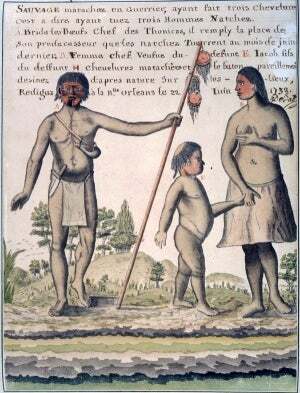
Tunica Trace Byway tells the story of the Tunica-Biloxi Tribe and their rich history. Although the tribe has played an important role in the development of Louisiana; however, the tribes origins trace back to the lower Mississippi Delta Valley. The Tunica-Biloxi Tribe first encountered European explorers in 1541, when they met the Spanish conquistador Hernando de Soto during his expedition in search of gold. Later, around 1699, the Tunica people encountered French explorers and settlers. Their encounter marked the beginning of a long-term alliance.
Historically, the Tunica-Biloxi Tribe is known for being fierce warriors and skilled traders. In the early eighteenth century, around 1706, the Tunica migrated from Mississippi to Louisiana and attacked the Houma Tribe. The Houma tribe were settled in St. Francisville at the time. After the attack, the Tunica gained control of the land in St. Francisville. They wanted better trading access with the French. When the French explored Louisiana during the 1700s, they encountered several hostile tribes. Around this time, the French also experienced tensions with British slave traders.
In their search for Native allies, the French formed a friendship with the Tunica people. They agreed to provide commodities such as salt, horses, and metal tools in exchange for diplomacy and military support.The alliance between the Tunica and the French lasted for sixty-four years, from 1699 until France ceded the land to Spain in 1763. The Spanish later honored the established alliance between the French and the Tunica-Biloxi Tribe. As a result, the Tunica-Biloxi Tribe fought alongside the Spanish and helped defeat the British during the Battle of Baton Rouge in 1779.
Tunica Trace Byway served as a multipurpose route in southeastern Louisiana and was a major trading path for Native Americans. In addition, it helped explorers and settlers travel between Louisiana and Mississippi. Most importantly, the route connected different communities and cultures. Tunica Trace Byway is also known for its hidden treasure. In 1968, one of the largest archaeological discoveries related to the byway occurred. A guard on duty at the Louisiana State Penitentiary discovered a cemetery dating back to the 1700s. The burial site belonged to the Tunica-Biloxi Tribe. Within the burial grounds, archaeologists found an abundance of brass, iron, kettles, skillets, axes, hoes, bottles, pottery, glass beads, and European ceramics. After studying the artifacts, researchers concluded that many of the items came from trade along Tunica Trace.
Today, Tunica Trace Byway is one of the most fascinating historical sites in St. Francisville, Louisiana. It represents a pathway to preserving Native American, American, French, and Spanish heritage.
Files
File #2118: [Untitled]
The Tunica Biloxi Tribe “Tunica People.” Tunica Language Project, 6 Nov. 2014, tunica.wp.tulane.edu/about/about-the-tunica-people/.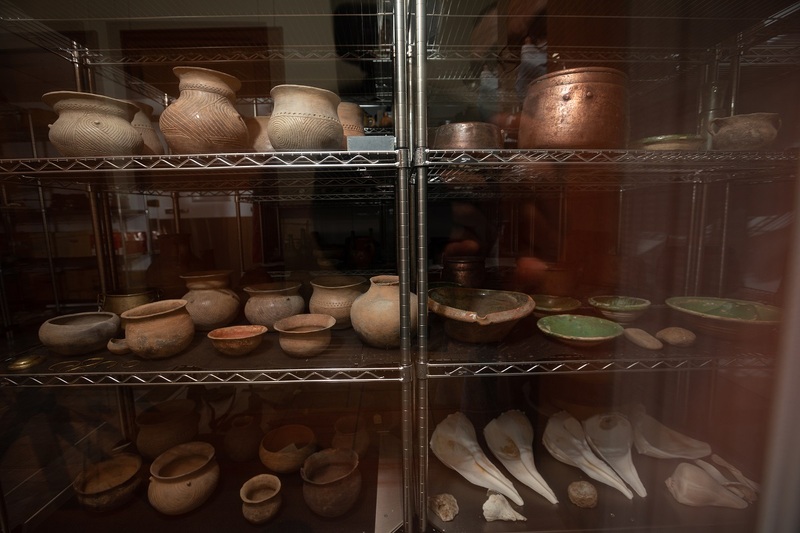
File #2115: [Untitled]
Native and European trade and ceremonial goods sit side by side in storage at the Tunica-Biloxi Cultural and Educational Resource Center. Photo by Brian Pavlich https://64parishes.org/tunica-treasure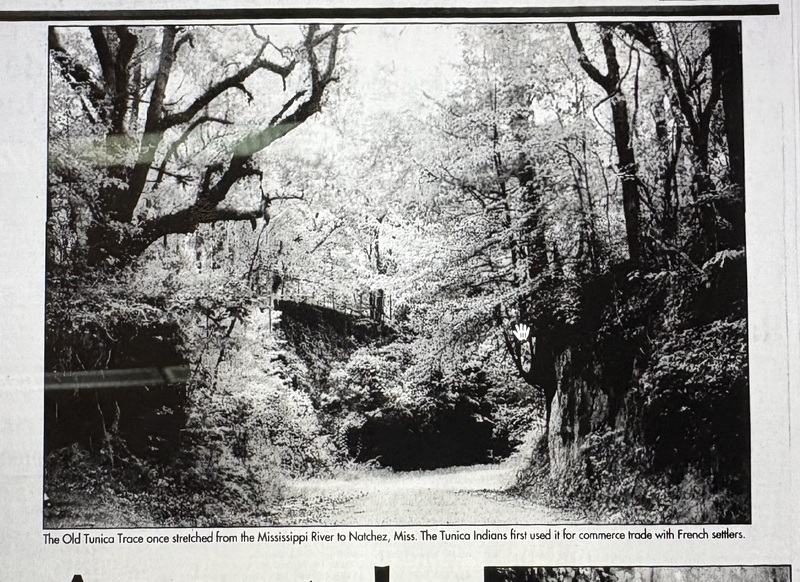
File #2116: [Untitled]
The Old Tunica Trace Road that stretched from the Mississippi River to Nachez, Miss. The Tunic Indians first used it for commerce trade with French Settlers. https://www.newspapers.com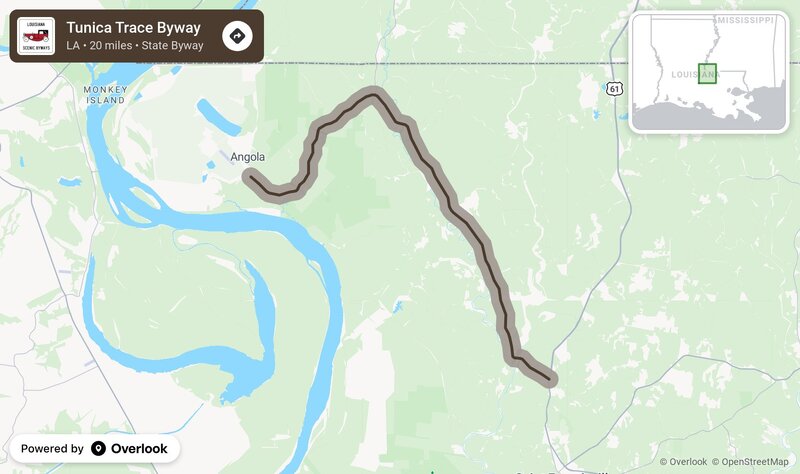
File #2117: [Untitled]
Map of Tunica Trace Byway https://nsbfoundation.com/sb/tunica-trace-byway/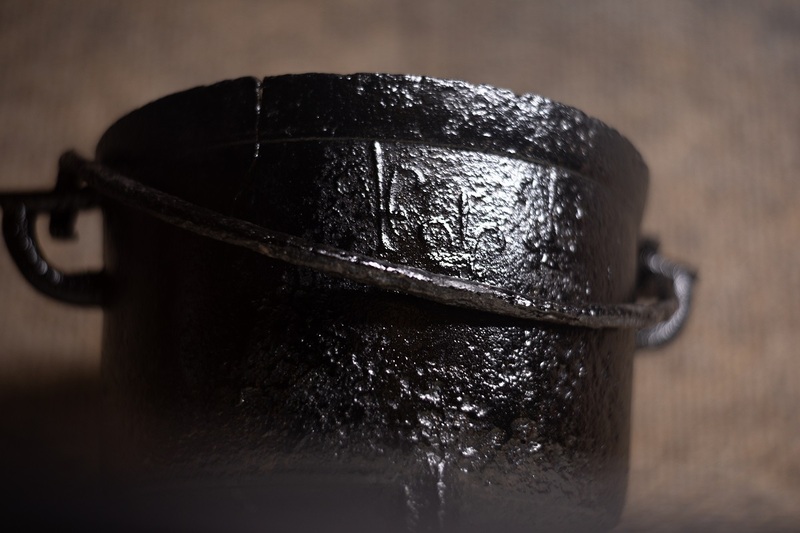
File #2119: [Untitled]
Fleur-de-lis designs are barely discernible on this iron pot. Photo by Brian Pavlich https://64parishes.org/tunica-treasure