Saint Tammany: The Native American Leader Behind Louisiana's Unique Parish: How a Lenni Lenape Chief Inspired St. Tammany’s Name
When people hear the name St. Tammany Parish, they might assume it was named after a Catholic saint, like many other parishes in Louisiana. However, the “Saint” in St. Tammany is not connected to the Catholic Church at all. Instead, the parish is named after a Native American leader called Tamanend, also known as Tammany, who became a symbol of peace, freedom, and early American identity.
Text
Saint Tammany is one of the most unusual figures in American history. Unlike traditional saints recognized by the Catholic Church, Saint Tammany was actually a Native American leader of the Lenni Lenape people, also known as the Delaware tribe. He lived during the late 1600s in the region that is now Pennsylvania, New Jersey, and Delaware. His real name was Tamanend, but over time, Americans began calling him Tammany. His transformation from a historical figure into a symbolic “saint” reveals how early Americans constructed national identity through myth, memory, and selective storytelling.
Tamanend was known for being wise and peaceful. He is most remembered for his relationship with William Penn, the founder of Pennsylvania. When Penn arrived in North America, he hoped to build fair and peaceful relationships with Native Americans. Tamanend was one of the leaders who made agreements with him. These agreements later became powerful emblems of cooperation between Native Americans and European settlers. Early writers described Tamanend as calm, fair, and honorable.
As years passed, Tamanend’s story grew larger than life; he became almost legendary in American culture. After the American Revolution, the new nation wanted heroes who were not connected to Britain. Before independence, many colonists celebrated British figures like St. George. But after breaking away from Britain, Americans wanted their own national icons. Tamanend became a perfect choice. He represented harmony, fairness, and a connection to the American land. Calling him “Saint Tammany” was not religious. Instead, it was a symbolic way to honor him as a national hero.
In the late 1700s and early 1800s, groups were formed in his honor. One of the most famous was Tammany Hall in New York City. At first, this group, also known as Tammany Society, celebrated American independence and used Native American imagery in its meetings. Members even celebrated “St. Tammany’s Day.” However, over time, Tammany Hall became known for political corruption and unfair practices. Even though the organization later developed a controversial reputation, its original purpose was to honor Tamanend as a representation of American identity.
In 1810, St. Tammany Parish was officially created in Louisiana and named after Tamanend. This is especially interesting because Louisiana has a strong Catholic history, and most of its parishes are named after Catholic saints. St. Tammany is different. According to the St. Tammany Parish Library, the “Saint” in its name is not Catholic-related. It comes from the American tradition of honoring Tamanend as a symbolic saint of the new nation. This makes the parish unique within the state.
Today, Tammany Parkway, a portion of U.S. Highway 190 in St. Tammany Parish, continues to carry his name. Even though Tamanend never lived in Louisiana, his reputation spread across the country. His name came to represent unity, harmony, and pride in American independence.
However, the story of Saint Tammany also shows some contradictions in American history. Early Americans admired Tamanend and used him as a symbol of freedom and fairness. At the same time, Native American tribes across the country faced displacement and unfair treatment as the United States expanded westward. While Tamanend was honored in name, many Native Americans did not receive the same respect in reality. This creates an important reminder that history can be both inspiring and complicated.
It is also important to remember that much of what we know about Tamanend comes from stories passed down over time. Historical records about his life are limited, and some details may have been exaggerated. Still, there is strong evidence that he was a respected Lenni Lenape leader who supported peaceful relationships with colonists. His treaty with William Penn became a lasting emblem of cooperation, even though later relationships between Native Americans and settlers were often marked by conflict.
Saint Tammany was not a traditional saint but a Native American leader who became a powerful figure in early American culture. Tamanend was admired for his peaceful leadership and his role in building relationships with colonists. After the American Revolution, Americans adopted him as a representation of national pride and independence. Although the title “Saint” was symbolic and not religious, it showed how deeply he was respected. St. Tammany Parish in Louisiana carries his name as a reminder of this unique history. His story helps connect local Louisiana history to the larger story of how America created its national identity, while also demonstrating how historical memory and mythmaking can reshape real individuals into lasting national legends.
Files
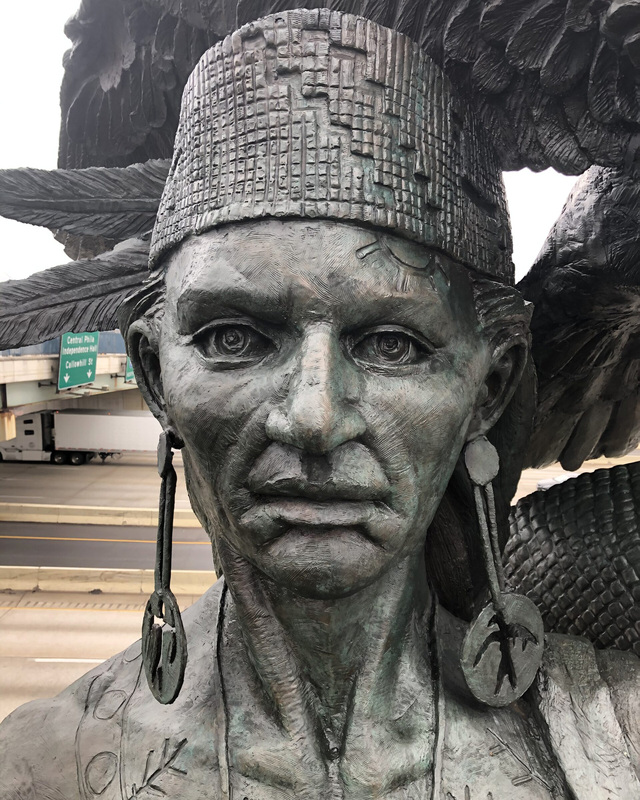
Tamanend
Close-up faceshot of Tamanend statue | Source: Association for Public Art https://www.associationforpublicart.org/artwork/tamanend/ | Date: Created in 1994, Installed in 1995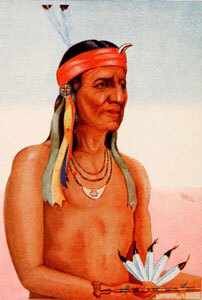
Chief Tamanend
Modern depiction of Tamanend | Source: The History Files https://www.historyfiles.co.uk/FeaturesAmericas/NorthNative_TribalLeaders01_Tamanend.htm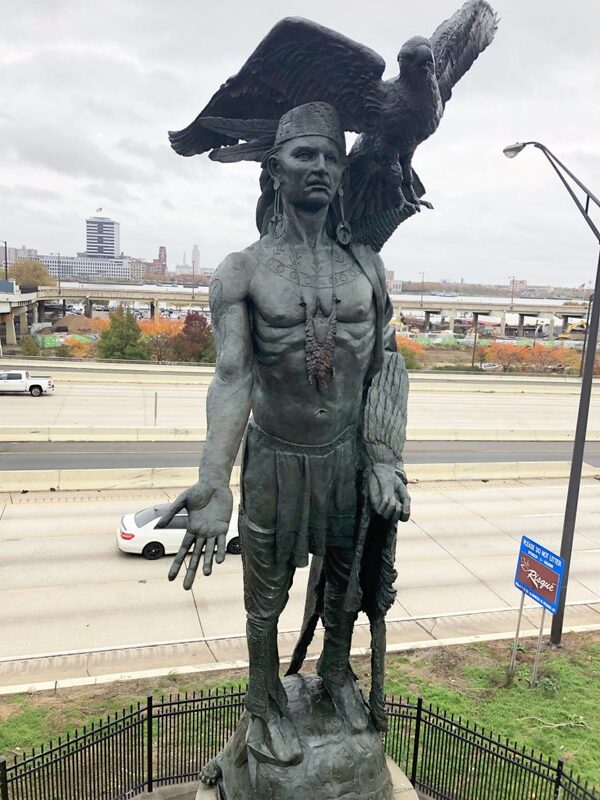
Tamanend
Full sculpture after conservation treatment. | Source: Association for Public Art https://www.associationforpublicart.org/artwork/tamanend/ | Date: Created in 1994, Installed in 1995