Site 5: Louisiana Hose House — Responding to the 1865 Strike: A House for Hoses and for Meetings Too
A labor strike during Christmas of 1865 threw all port trades into turmoil and impacted the cotton industry tremendously. Shipmasters and stevedores met at the Louisiana Hose House to discuss the screwmen's demands.
Text
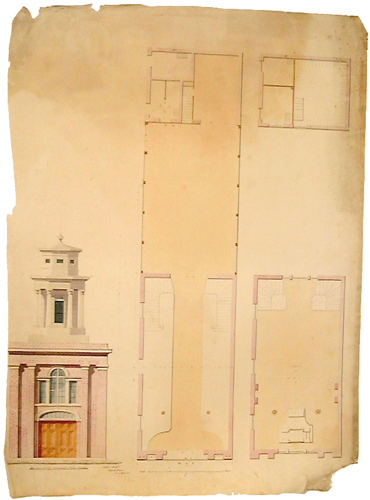
The Louisiana Hose House was located on the corner of Carondelet and Perdido Streets. It was a large, two-story brick fire station with a composition roof and wooden construction around the back. The façade of the Louisiana Hose Company featured an elliptical arch entrance for the station’s steam fire engine. A beautiful, columned octagonal cupola surmounted the fire house. The Louisiana Hose Company shared a wall with a wagon repository.
In December 1865, a meeting at the Louisiana Hose House, at the corner of Carondelet and Perdido Streets, brought together shipmasters and stevedores frustrated by a strike of New Orleans screwmen. The screwmen, who compressed cotton into ships’ holds, had walked off the job demanding higher wages. Shipmasters complained that the demands were excessive, while stevedores argued that the workers had given no warning, leaving them unable to fulfill shipping contracts negotiated at the old wage rates. The screwmen saw things differently. Unpredictable employment often left them working only two or three days a week, even during their busiest season. Higher wages, they argued, were a necessity. The meeting at the Hose House revealed a growing conflict between waterfront workers and their employers, one that would shape labor relations along the New Orleans waterfront for decades.
The dispute at the Louisiana Hose House reflected a conflict that remains familiar today. Employers worried about rising labor costs and disrupted business, while workers struggled with unpredictable hours and wages that made earning a living difficult. More than 160 years later, the same questions persist: What constitutes a fair wage, who bears the burden of economic uncertainty, and how much power should workers have in determining the conditions of their employment? The three blocks across the street housed numerous cotton businesses, a testament to the importance of the cotton trade in New Orleans. Hotels, boarding houses, repair shops, office buildings, Wells Fargo, and the Louisiana State Lottery buildings were a part of the neighborhood.
Today, the area houses as much a variety of businesses as it did 175 years ago. The streets are no longer cobbled as they were in the 19th century. The landscape has changed from the bottom up; modern paved roads surround the foundations for a variety of buildings. The beautifully engineered Louisiana Hose House is no longer there. It its place is the Hancock Whitney Center, home to the Whitney Hancock bank and financial center.
Files
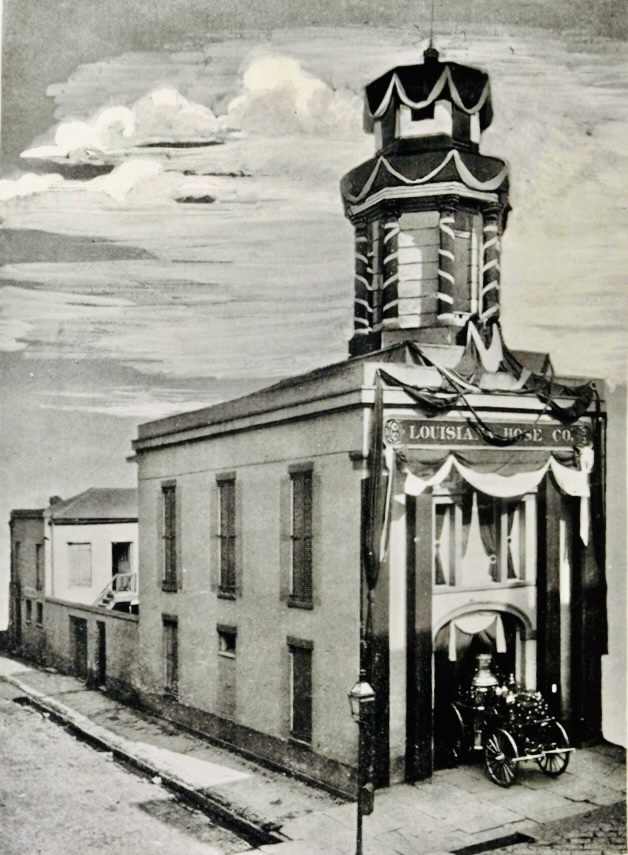
The Original Hose House
Architects created beautifully constructed fire stations in 19th century New Orleans. Shipmasters used the Louisiana Hose House to hold several meetings about members of the Screwmen's Benevolent Association and how to handle their strike demands. | Source: The Louisiana Room, The University of Louisiana at Lafayette | Date: September 25, 2022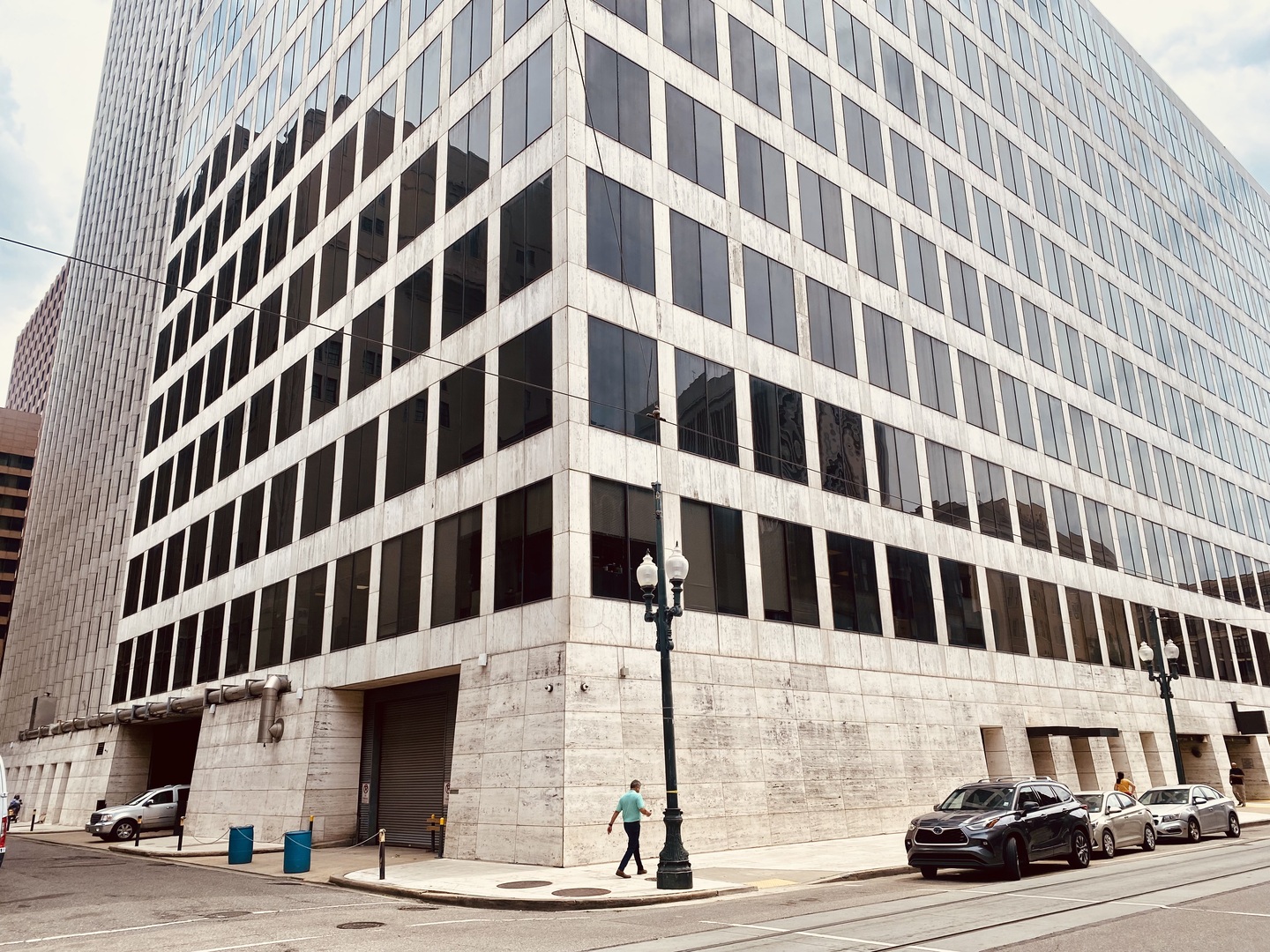
Now a Tower
The Louisiana Hose House no longer exists. In its place now stands the towering Whitney Hancock Bank complex. | Source: Laura M. Hughes | Date: September 7, 2022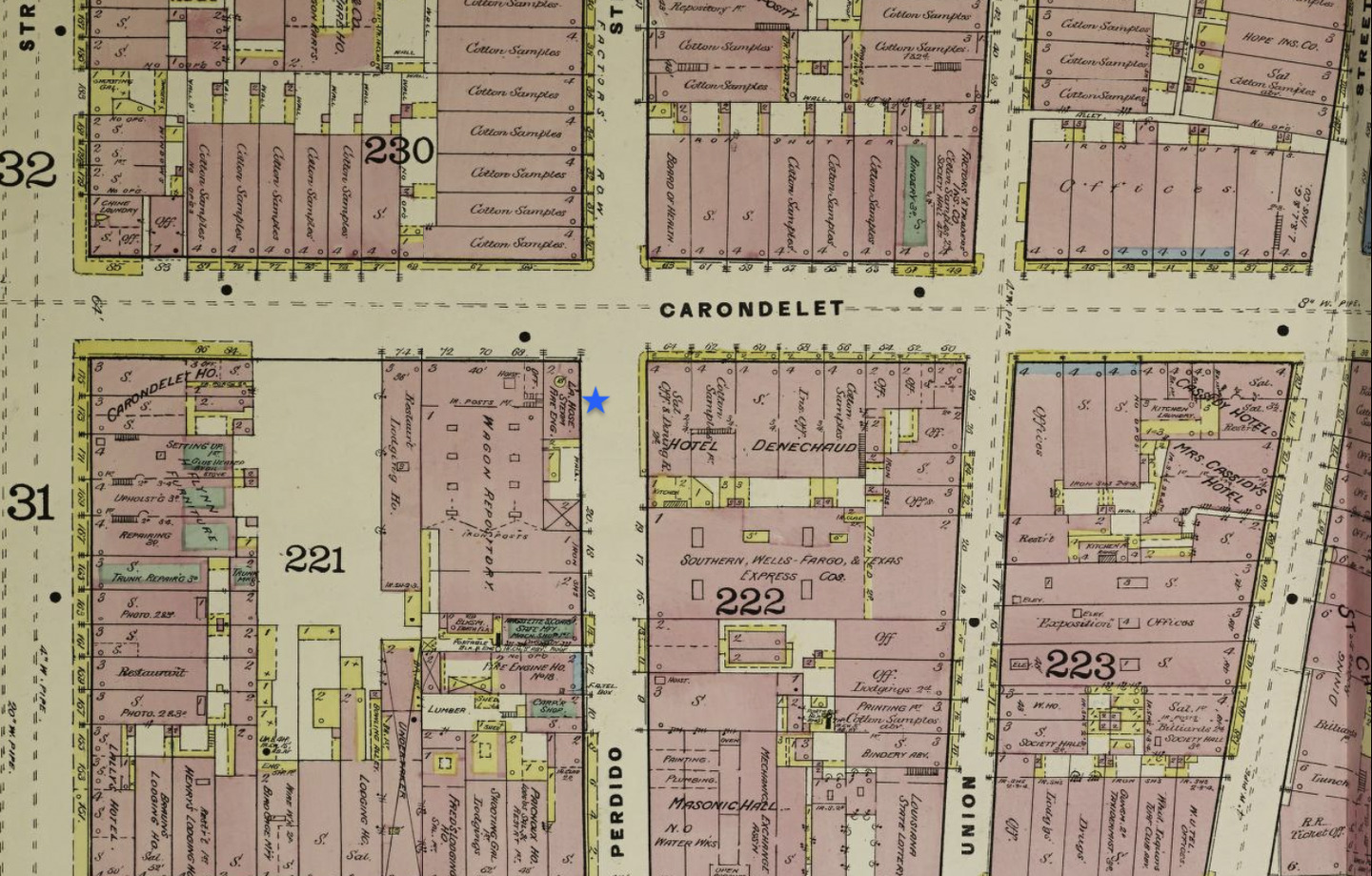
The Block in 1885
The Louisiana Hose House, also known locally as the Louisiana Hose Steam Fire Engine, is flagged with a blue star. Sanborn maps are interesting and valuable to anyone interested in urban development or those who simply wish to know, "what used to be." They contain a wealth of information. | Source: Library of Congress | Date: 1885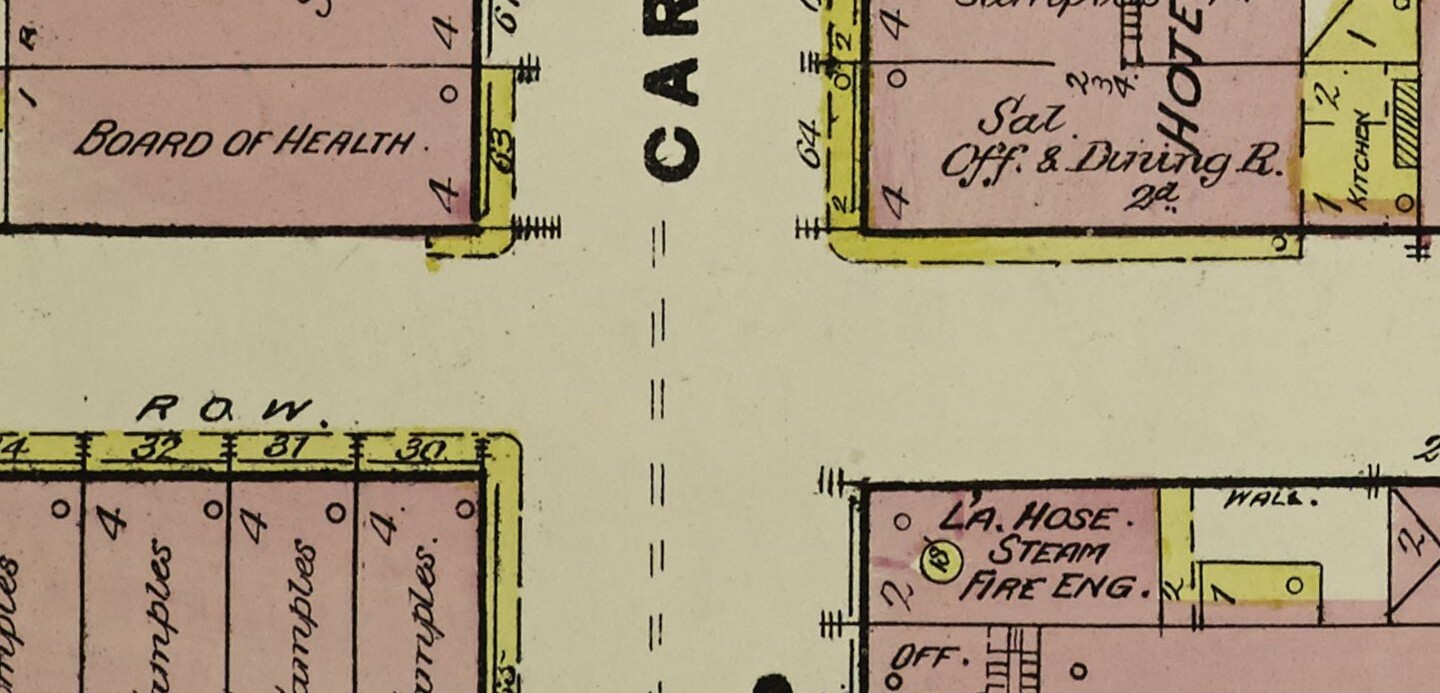
File #2359: [Untitled]
File #2360: [Untitled]
Map
New Orleans, LA 70139