Site 6: Second to Seventh Streets — The 1894 Attack on Black Screwmen's Tools: Masked Men Raid Ships
On October 26, 1894, 200 men gathered under the cover of night and descended on the port in New Orleans. Some wore handkerchiefs to obscure their faces. Others wore false beards and masks. Armed with Winchester rifles, they overpowered the watchmen who guarded the ships docked at the riverfront between Seventh and Second Streets.
Text
It was relatively easy for members of the Screwmen's Benevolent Association to gain the monopoly on their trade. They were, after all, truly indispensable. After the end of the Civil War, however, it became much harder for them to remain at the top. They now had competition from Black screwmen, a group comprised of freedmen and free men of color. The fight reached a fever pitch in October 1894 when stevedores had no choice but to employ Black screwmen because there were not enough White screwmen to fulfill contracts with the shipmasters. Little did anyone know that after the raid on these ships, the violence would only get worse.
White screwmen swiftly and quietly overpowered the watchmen stationed in front of the Constance, a steamship moored at the head of Seventh Street. While they held the watchmen at gunpoint, the rest of the men boarded the ship and threw overboard every tool that the Black screwmen needed to do their work, including ninety-six screwjacks. The 170-pound screw jacks were the Black screwmen’s guarantee that they could provide for their families. The screw jack represented food on their children's plates and a roof over their heads. As their tools disappeared beneath the dark, muddy waters, so did their relative financial security.
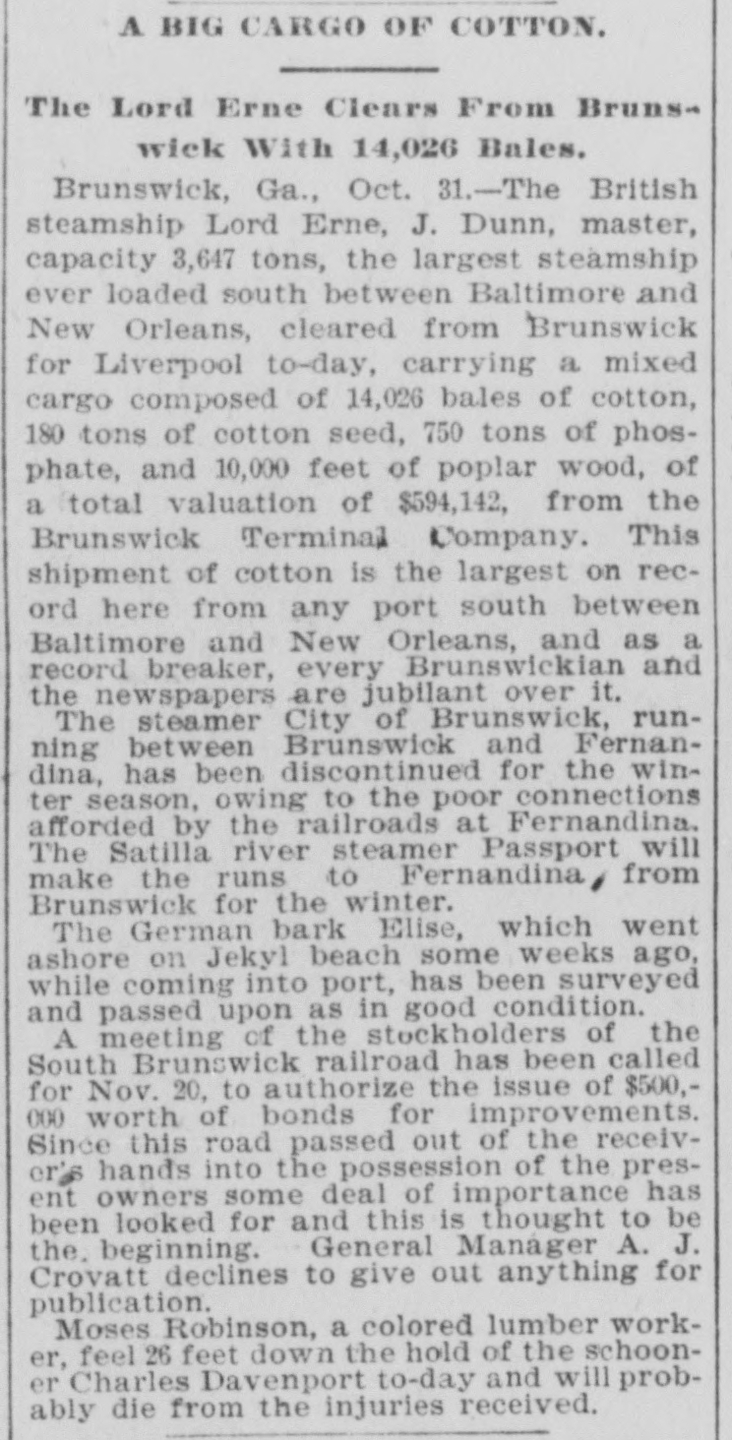
As White screwmen raided the Constance, more men boarded the Oceanian, docked at the head of Sixth Street, the Castledale, docked at the head of Fifth Street, the Lord Erne, docked at the head of Third Street, and the Delano, docked at the head of First Street. Members of the Screwmen's Benevolent Association conducted a very calculated and coordinated attack on the livelihoods of Black screwmen.
Every square inch of New Orleans is steeped in history, even spaces that aren't officially recognized as historic areas. This is especially true of the stretch of land along the riverfront.
The drive down Tchoupitoulas along the Mississippi isn't particularly breathtaking. In fact, it's anything but. Unlike the Garden District, no mansions resembling tiered, frosted wedding cakes peak out from behind splendid oak trees, hibiscuses, or bougainvillea. No brightly colored shotgun houses with gingerbread house-styled woodwork brighten up the morning commute.
Instead, a long, grey weather-worn floodwall blocks all views of the Mississippi River. What's on the other side of the wall isn't visually stimulating either. Industrial warehouses and acres of shipping containers are hardly a feast for the eyes. But in this case, it's not the physical that is valuable. Knowing what happened beyond the wall has intrinsic value and provides a tangible connection with our history. The stories that emerge contribute to our broader understanding of our shared past.
Files
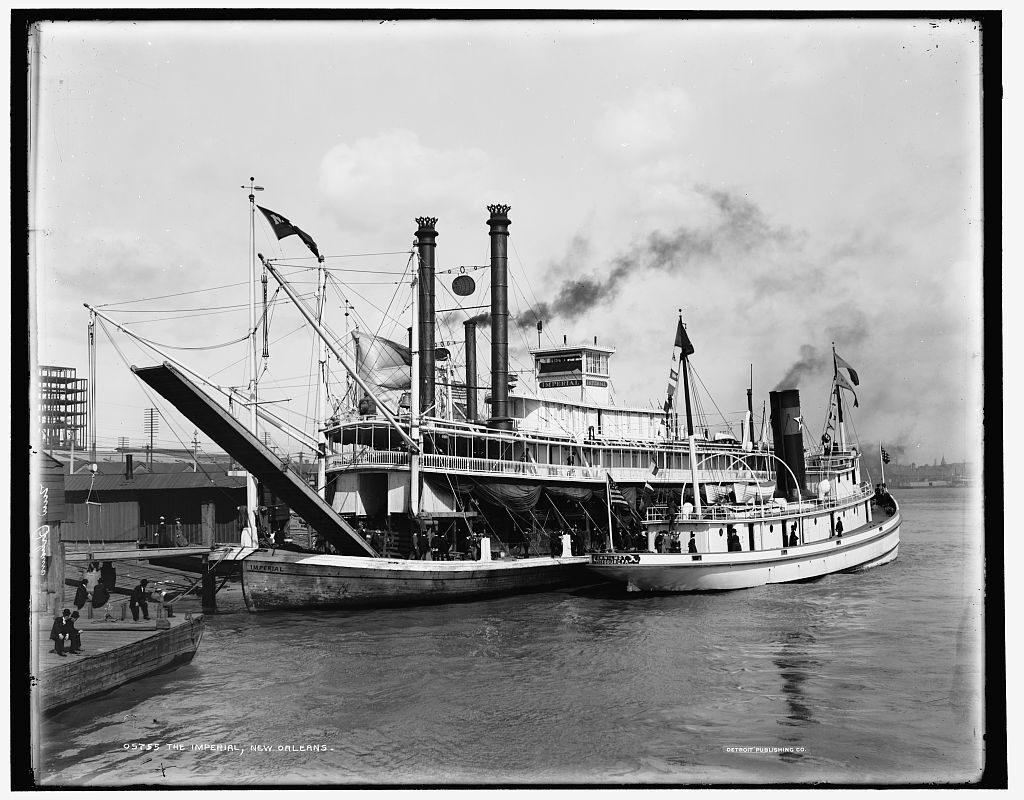
Steamship Imperial
The Imperial is one of the ships that the white screwmen boarded to attack the black screwmen. This photo of the ship at New Orleans corresponds to the time of the labor conflict and riot in 1894. | Source: Detroit Publishing Co., Publisher. Imperial, New Orleans, The. New Orleans United States Louisiana, None. [Between 1890 and 1901] Photograph. https://www.loc.gov/item/2016798501/.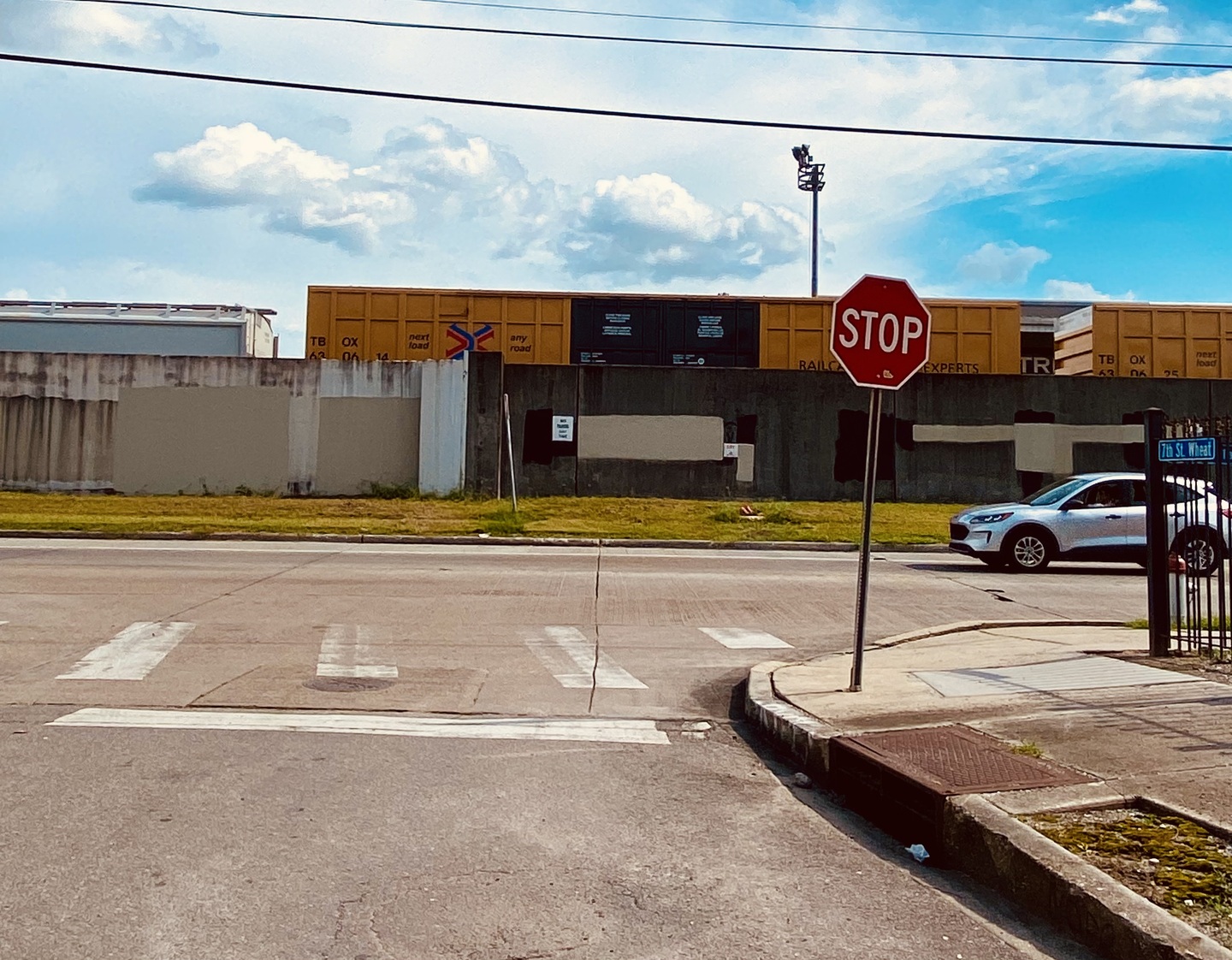
The Constance
The steamship, Constance, was docked at the head of Seventh Street, on the other side of the flood wall. | Source: Laura M. Hughes | Date: September 7, 2022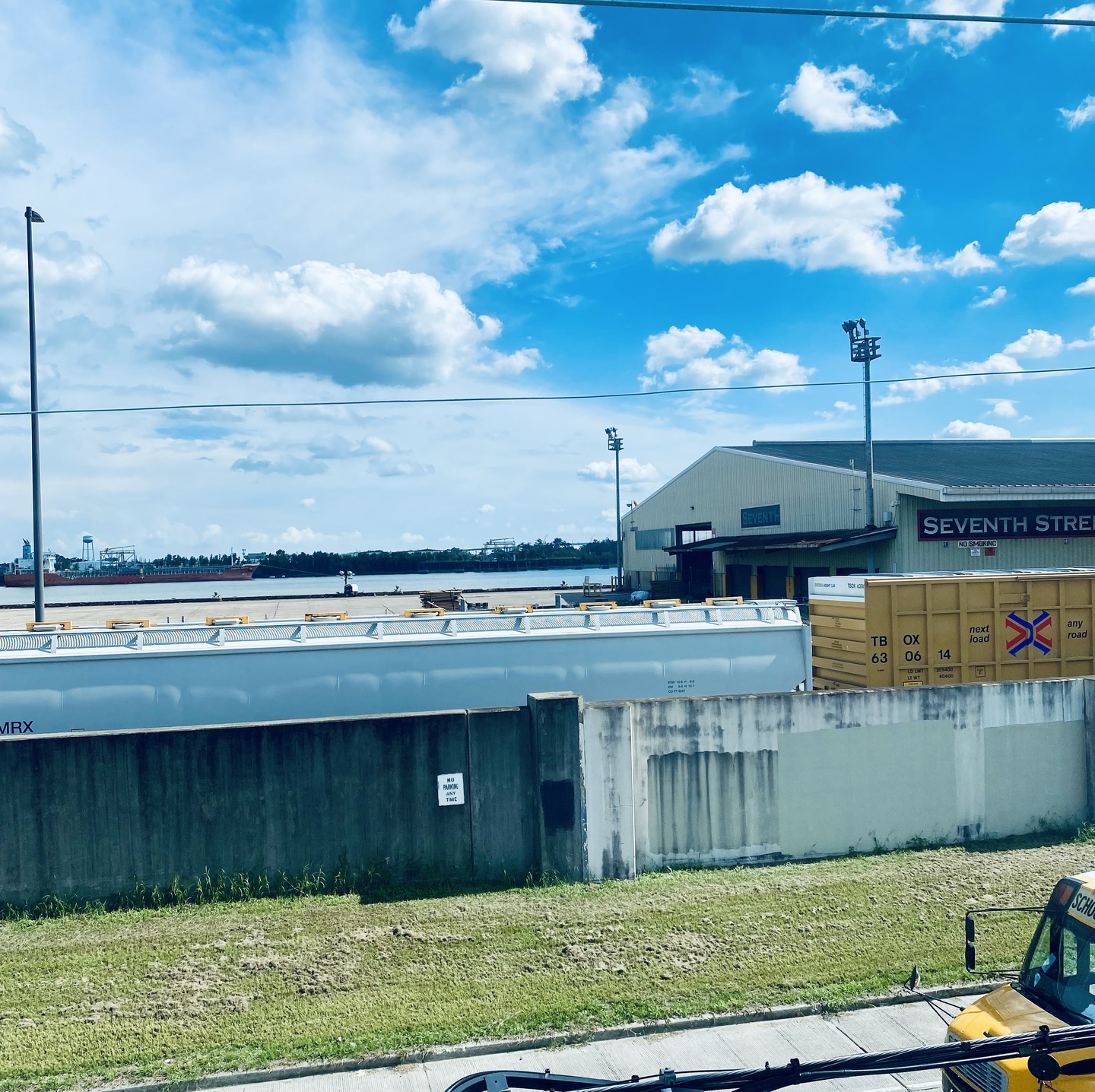
Above the Wall
A peek over the flood wall from the view of the second-story of a local business. One can see the river where the Constance was docked. | Source: Laura M. Hughes | Date: September 7, 2022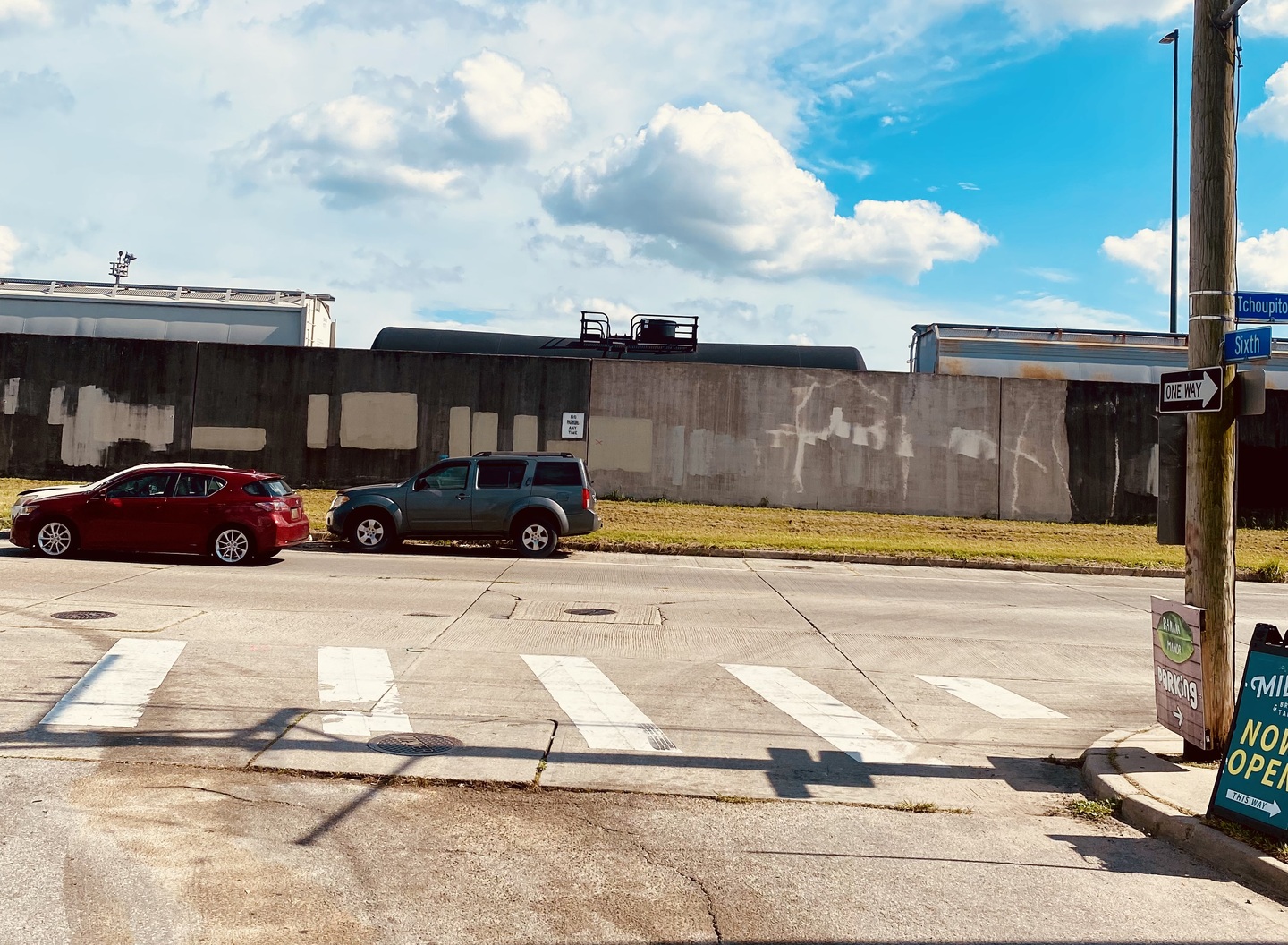
Sixth at the River
During the time of the riot, the ship's captain docked The Oceanien at the head of Sixth Street. | Source: Laura M. Hughes | Date: September 7, 2022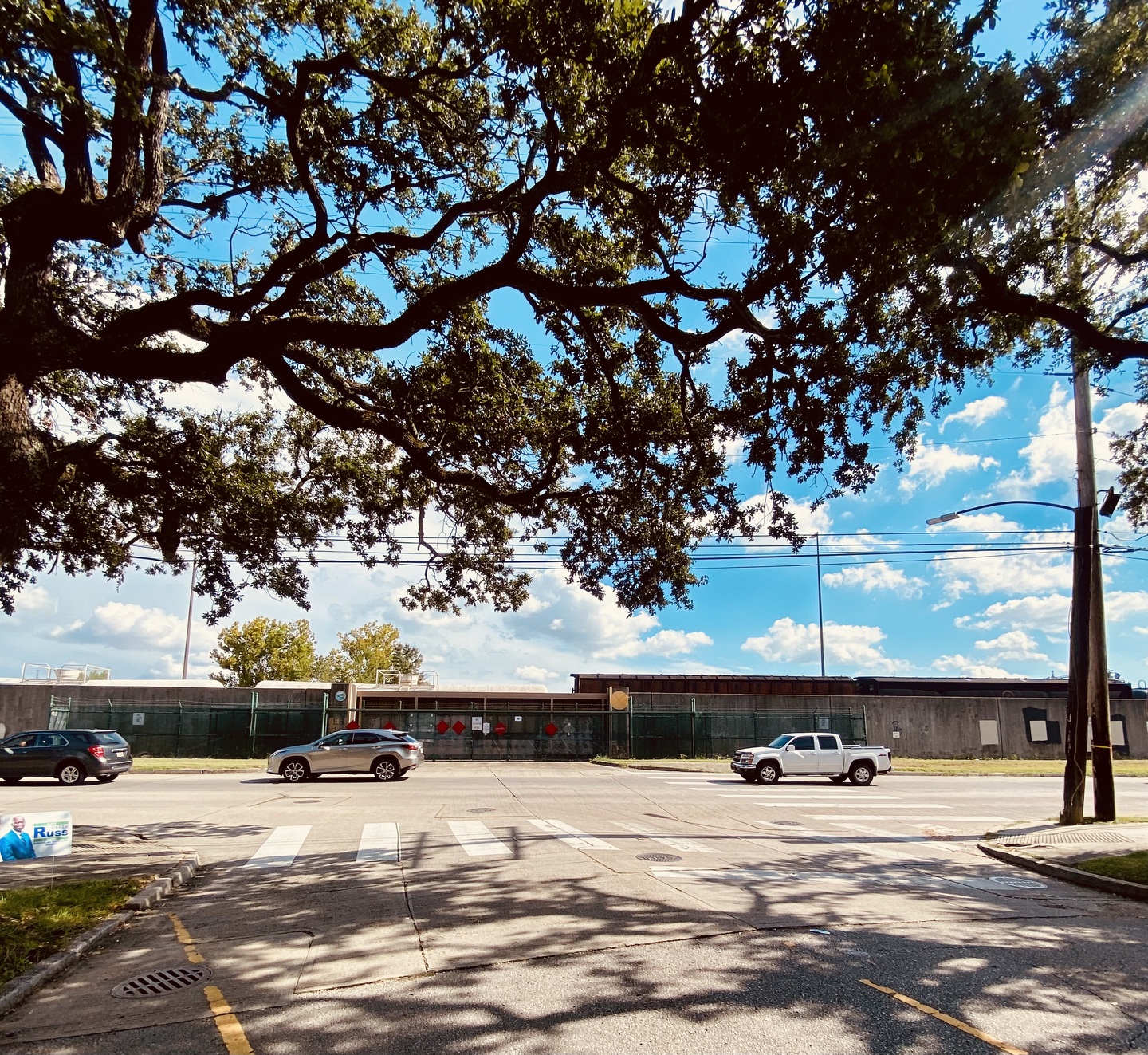
Through the Boughs
During the screwmen's riot, The Castledale, a steamship, was moored at the head of Fifth Street. Today, a beautiful live oak tree watches over this stretch of road. | Source: Laura M. Hughes | Date: September 7, 2022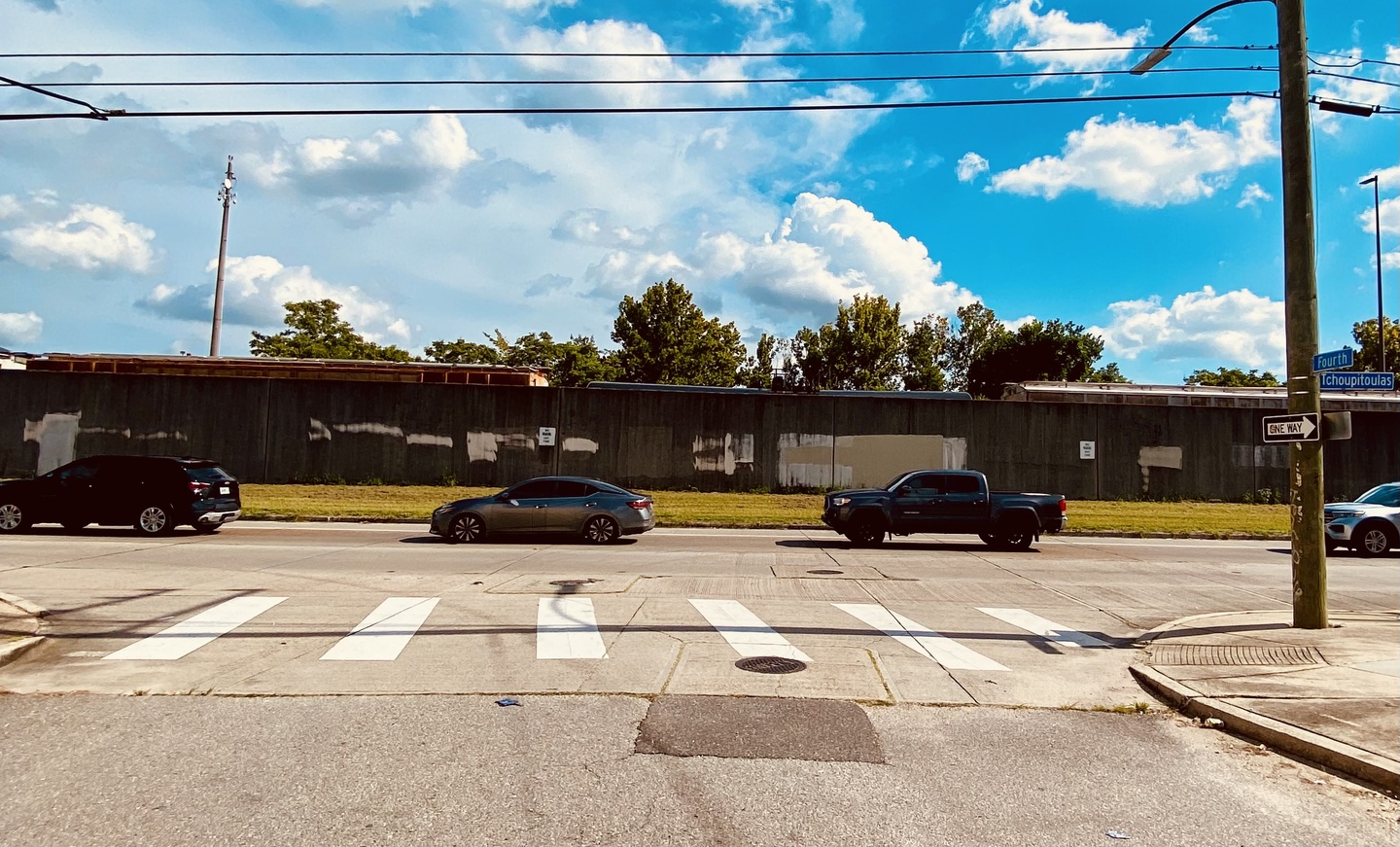
File #1170: [Untitled]
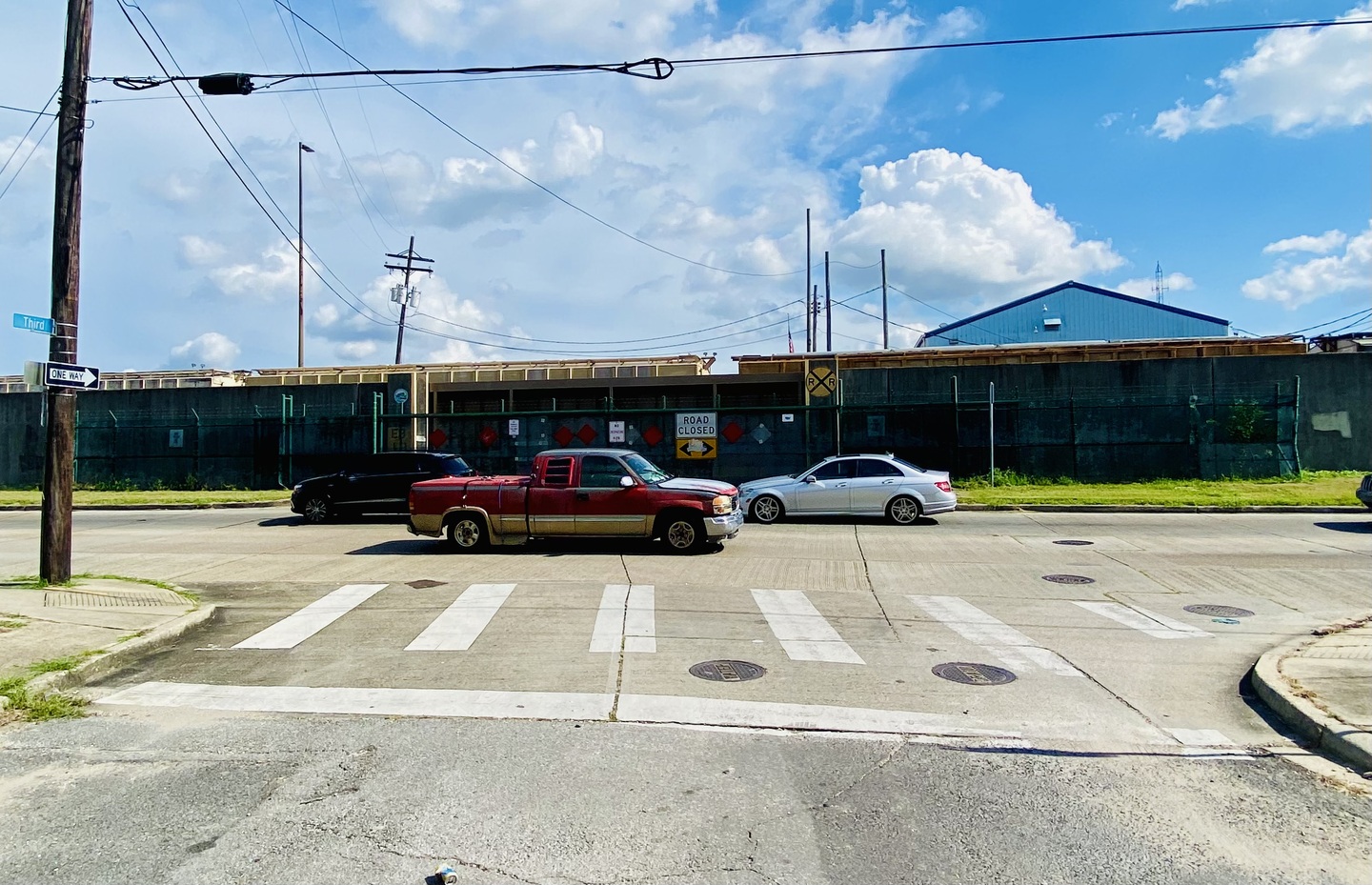
Moored at Third Street
In 1894, shipmasters moored the Lord Erne at the head of Fourth Street. | Source: Laura M. Hughes | Date: September 7, 2022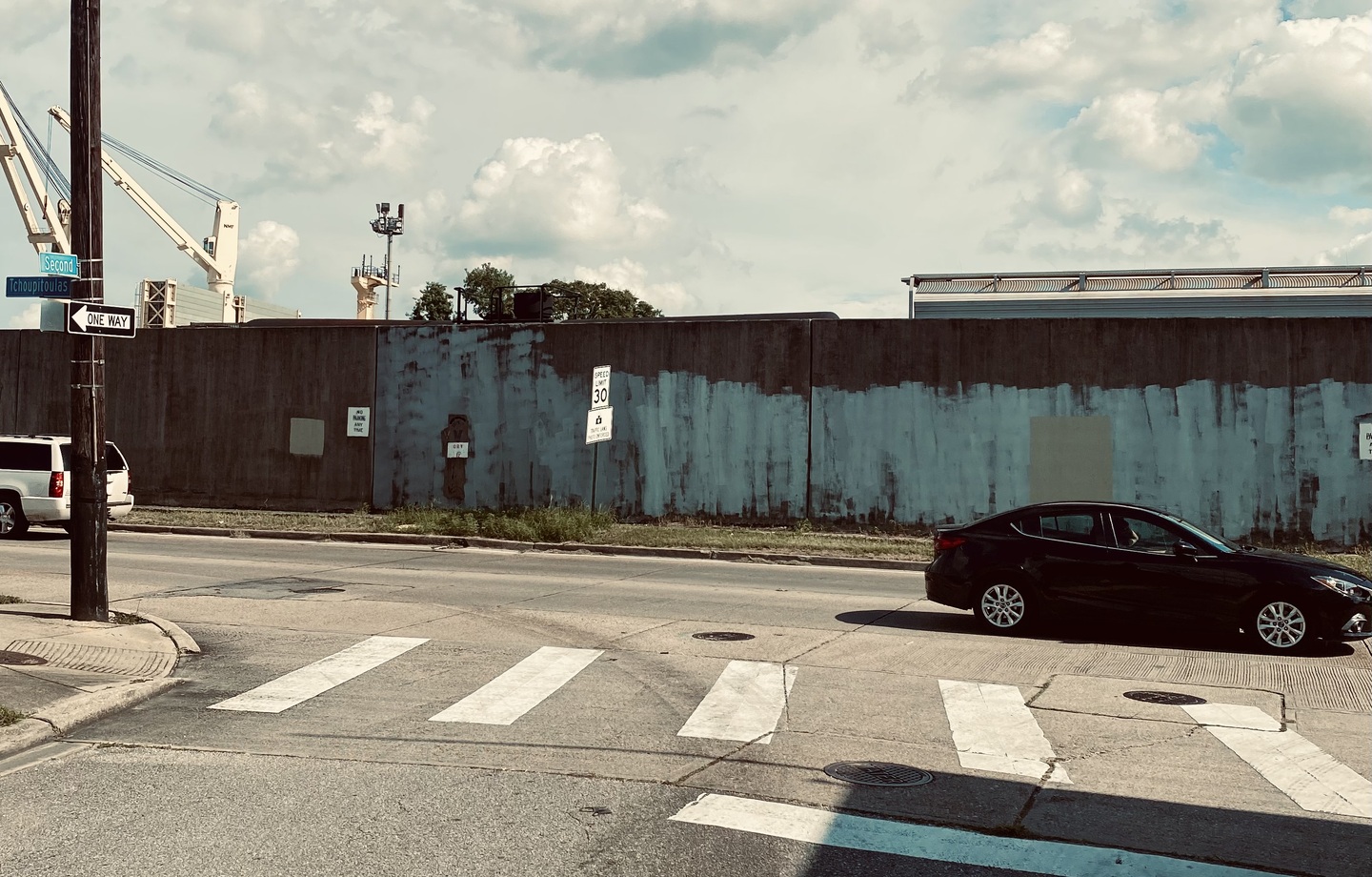
A Look at Second Street
In 1894, ship crews docked the Imperial at the head of Second Street. It was here that white screwmen embarked onto the steamship and destroyed the screwjacks of Black screwmen. | Source: Laura M. Hughes | Date: September 7, 2022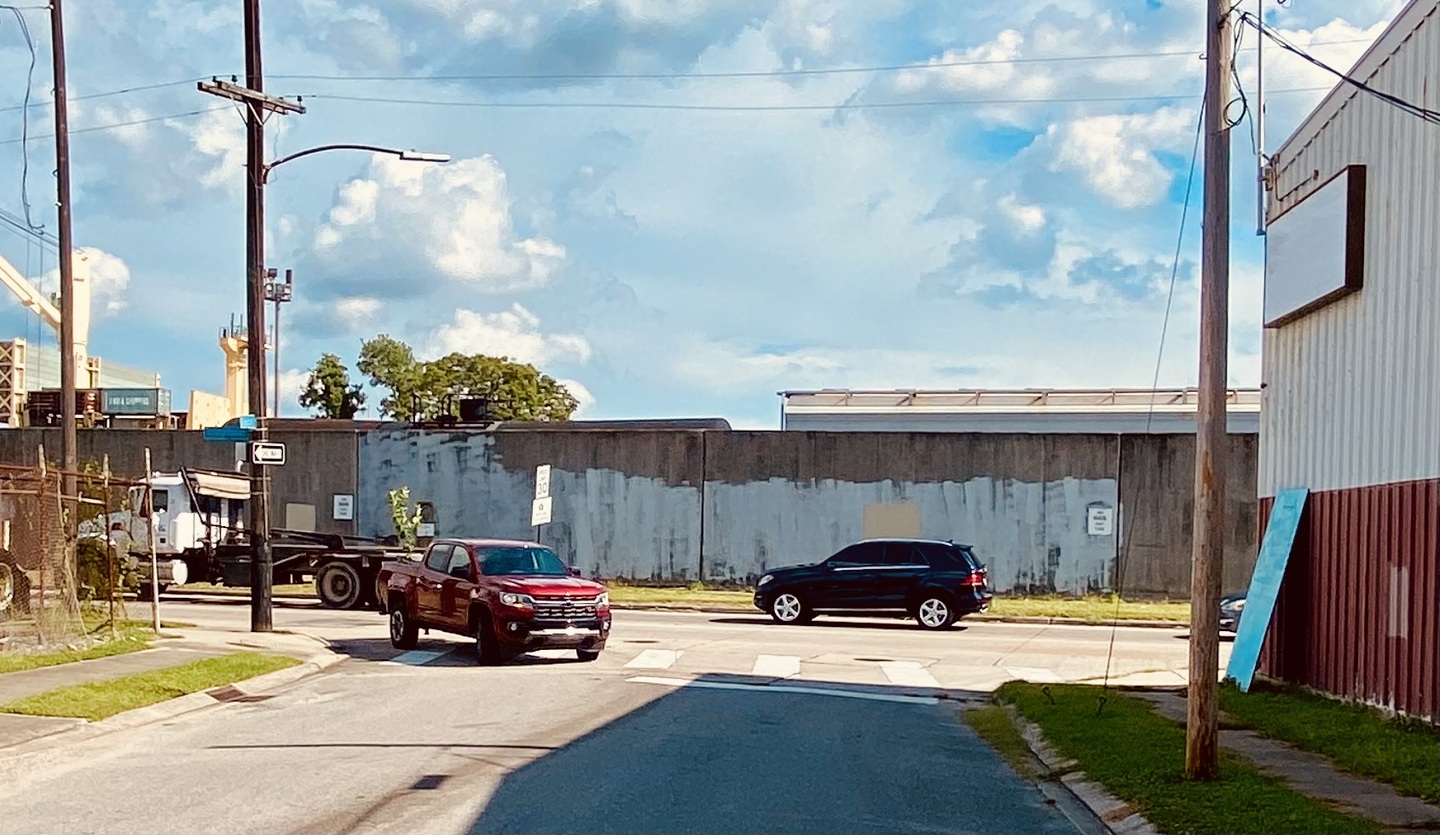
First at the Wall
In 1894, crewmembers docked the Delano steamship on the Mississippi River at the head of First Street. It was here the white screwmen coordinated a viscious and deliberate attack on the livelihoods and lives of Black screwmen. | Source: Laura M. Hughes | Date: September 7, 2022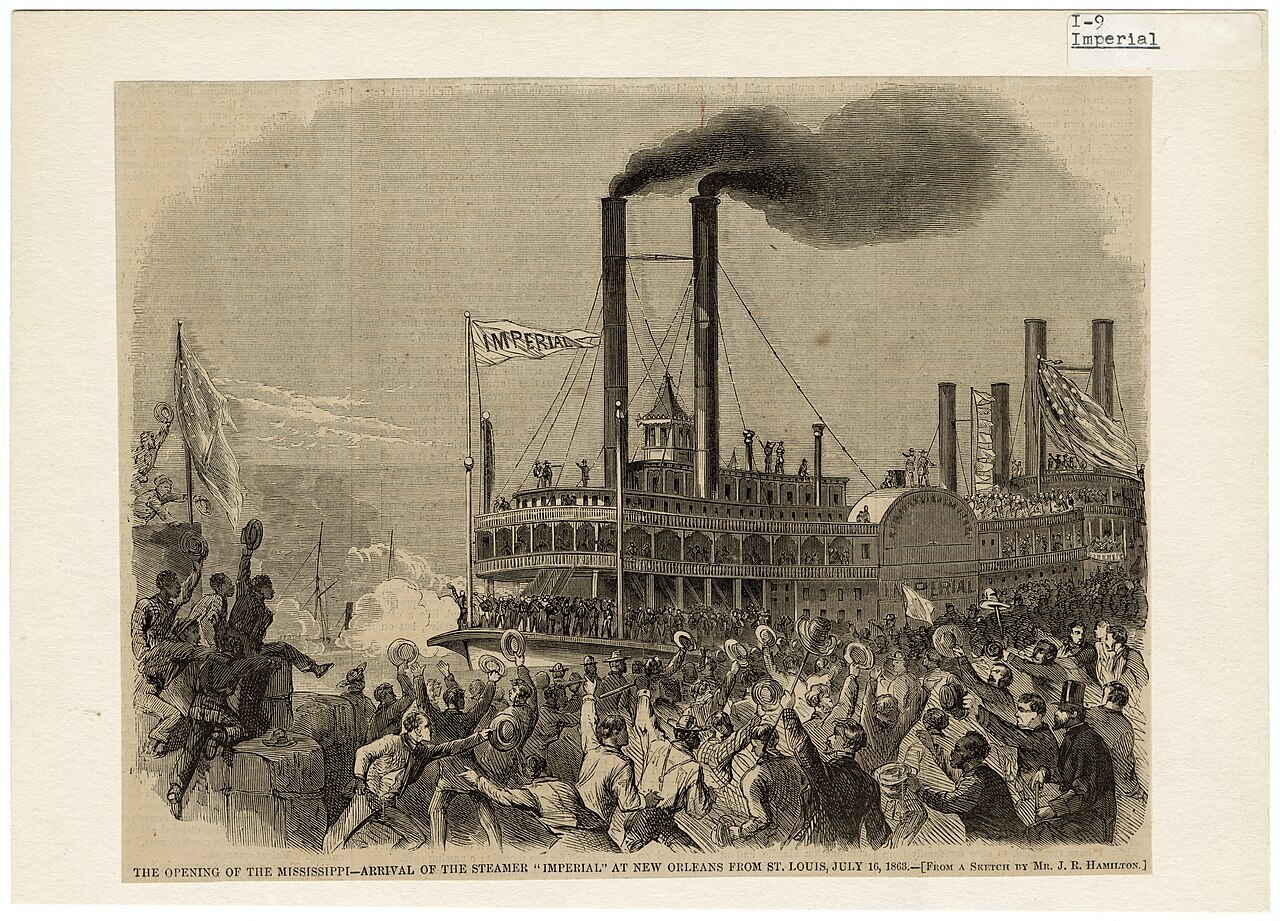
Steamer Imperial arriving in New Orleans to a crowd of celebrators.
Harpers Weekly - Horizontal black and white print shows an illustration of the steamboat Imperial arriving in New Orleans from St. Louis. A crowd of people are celebrating. The caption reads, "The Opening of the Mississippi--Arrival of the Steamer 'Imperial' at New Orleans from St. Louis, July 16, 1863--[From a sketch by Mr. J. R. Hamilton.]" | Source: https://commons.wikimedia.org/wiki/File%3ASteamer_Imperial_arriving_in_New_Orleans_to_a_crowd_of_celebrators._-_DPLA_-_496815d0e37cc6d8790fc25a656eba31.jpg?utm_source=chatgpt.com | Date: 1863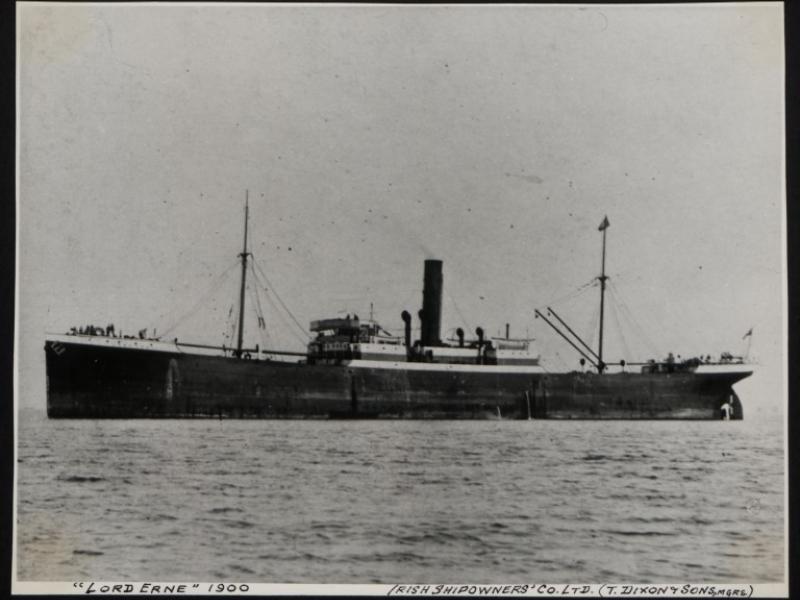
Lord Erne - Steam Ship
On October 31, 1895, this ship sailed from Brunswick, Georgia, for Liverpool with an enormous cargo including 14,028 bales of cotton. The newspaper called her the largest steamship then loaded in the South between Baltimore and New Orleans. | Source: https://www.liverpoolmuseums.org.uk/artifact/photograph-of-lord-erne-t-dixon-and-sons