KANE: Of Sugarcane (and Sports): How to Sack a Station Manager
Text
On October 9, 1960, Franklin’s Hanson Memorial Tigers played against New Iberia’s Catholic Panthers in a high school football game. The Franklin area was convinced that the Tigers would win despite the expected difficulty Catholic High posed. Indeed, the game was close—the Tigers beat the Panthers in a 19-16 win under the watchful eyes of a record 4,000 fans (1). Yet, the question remains: what fanfare played into this intensity between two rival Acadiana high schools? The answer can be found in New Iberia’s local radio station KANE. KANE was founded in 1946 and named after the great amount of sugarcane that grew in the area. One of the station’s hallmarks that continues today is its coverage of high school sports, including football, basketball, and baseball (2). This legacy can be seen in the events surrounding the 1960 Hanson-Catholic football game. On October 1, Hanson High vowed in the St. Mary and Franklin Banner-Tribune that they were going to give the Panthers “an old-fashioned licking” when they would play each other on Sunday (3). Three days before the game, on October 6, members of the Hanson Booster Club stormed KANE and held station manager, Don Bonin, at gunpoint with muskets. The raiders proceeded to air pro-Hanson High messages and “a number of challenges” towards the Catholic Panthers (4). The pre-game attack continued when, on the day of the game, Hanson staged a motorcade through New Iberia. Tiger fans waved flags and signs to show their support and rile up the Panthers on their own turf. Hanson’s antics culminated during the actual game with players like halfback Ronnie Hebert, who scored the two touchdowns for the Tigers and secured a victory for the team and gave the Panthers their first loss of the season (5). This episode in KANE’s history, other than showing the ridiculous and potentially dangerous lengths that some schools may go to in showing support for their team, is a reminder of one of the ways people listen to sports: through the radio. Whether providing play-by-plays or rallying support for a team, both locally and nationally, media like the radio amplifies the connection that sports provide to a community.
1. "Ronnie Hebert's 95-yard jaunt gives Hanson Tigers 19-16 win," The St. Mary and Franklin Banner-Tribune, October 11, 1960, newspapers.com. 2. Jeff Boggs, interview by author, KANE, April 8, 2022. 3. The St. Mary and Franklin Banner-Tribune, October 1, 1960, newspapers.com. 4. The St. Mary and Franklin Banner-Tribune, October 8, 1960, newspapers.com.
5. "Ronnie Hebert's 95-yard jaunt gives Hanson Tigers 19-16 win," The St. Mary and Franklin Banner-Tribune, October 11, 1960, newspapers.com.
Files
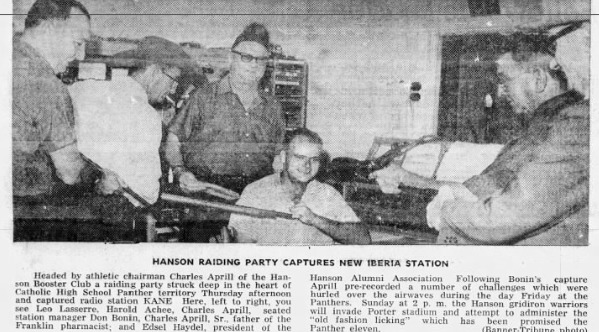
Sacking the Station Manager
Hanson High School’s booster club “raided” KANE before a football game with rival Catholic High School. KANE’s station manager, Don Bonin, is seated. | Source: St. Mary and Franklin Banner-Tribune, October 8, 1960, newspapers.com.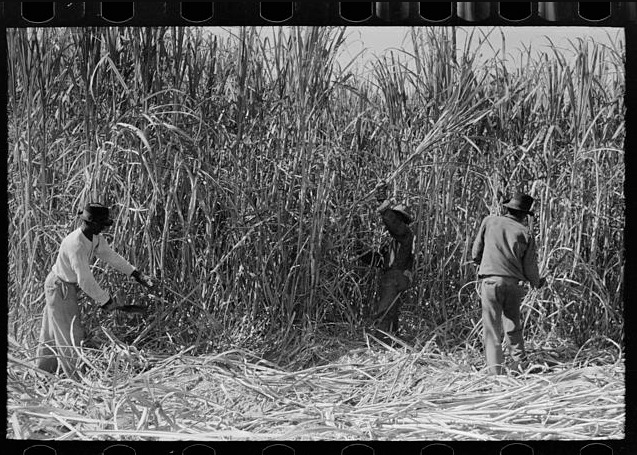
Namesake of the Station
A 1938 photograph of three men cutting sugarcane in New Iberia. | Source: "Untitled photo, possibly related to: Cutting sugarcane near New Iberia, Louisiana." Farm Security Administration/Office of War Information Black-and-White Negatives. www.loc.gov/pictures/collection/fsa/item/2017738405/.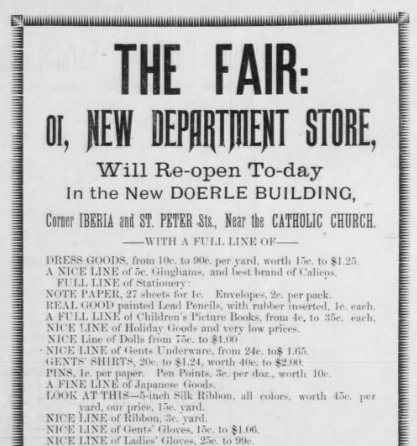
From Store to Station, Part 1
The building KANE resided in on 101 West St. Peter Street was a former department store called "The Fair" and was operated by Eugene Nettles in the late 1800s. | Source: The Weekly Iberian, December 15, 1894, newspapers.com.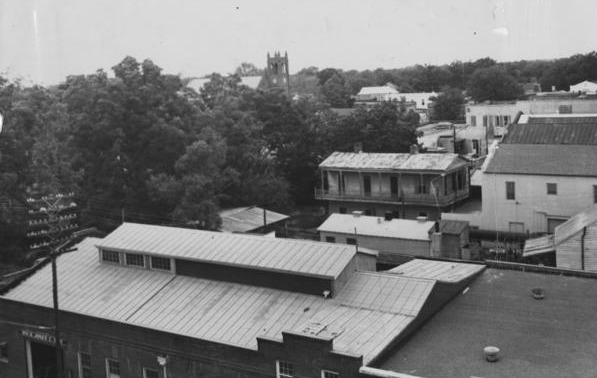
Where St. Peter's Is
Aerial photo of New Iberia taken before 1953. KANE would be in the white building nearest to St. Peter’s church, diagonal with the bell tower. | Source: Louisiana Digital Library.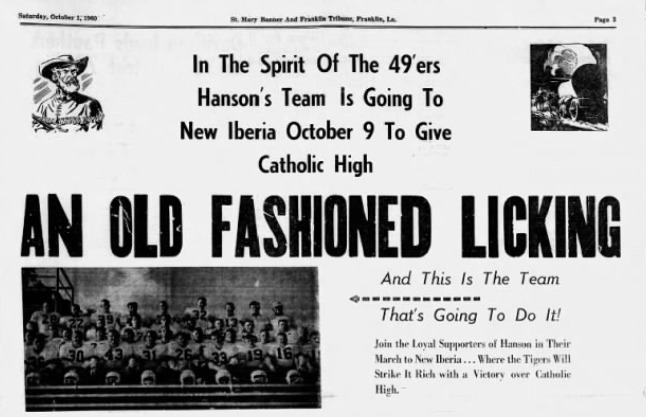
Fighting Words
A newspaper spread dedicated to the Hanson-Catholic game in which Hanson promised the rival team an "old-fashioned licking." | Source: St. Mary and Franklin Banner-Tribune, October 1, 1960, newspapers.com.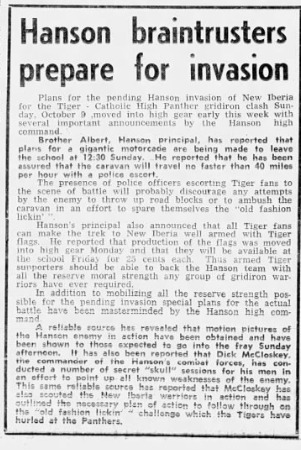
The Hanson Invasion of New Iberia
An article detailing Hanson's plans of a motorcade on the day of the game. It is also one of the many war metaphors used to describe the Hanson-Catholic game. | Source: St. Mary and Franklin Banner-Tribune, October 4, 1960, newspapers.com.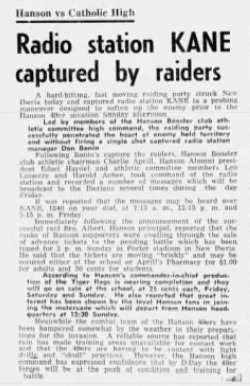
KANE Captured
An article detailing the capturing of KANE by Hanson High Booster Club members. | Source: St. Mary and Franklin Banner-Tribune, October 6, 1960, newspapers.com.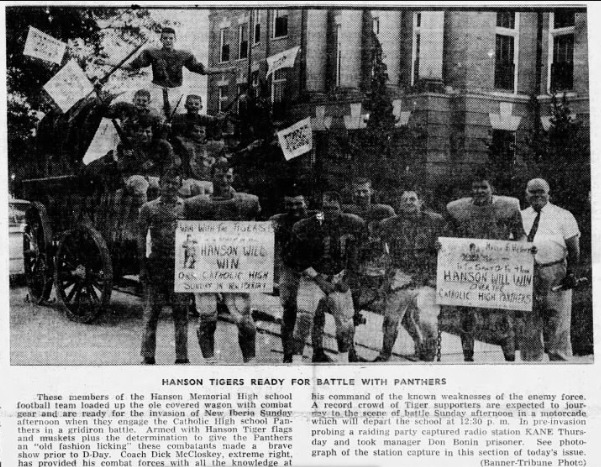
That's One Way to Do It
A photograph of Hanson High preparing the motorcade before gameday as Hanson football players hold signs and muskets. | Source: St. Mary and Franklin Banner-Tribune, October 8, 1960, newspapers.com.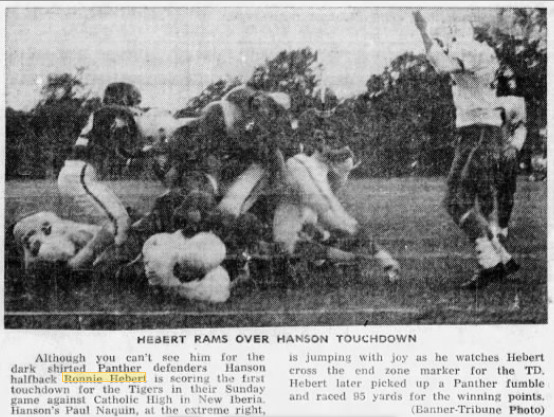
A Tiger Touchdown
Photograph of halfback Ronnie Hebert scoring Hanson's first touchdown of the game. | Source: St. Mary and Franklin Banner-Tribune, October 11, 1960, newspapers.com.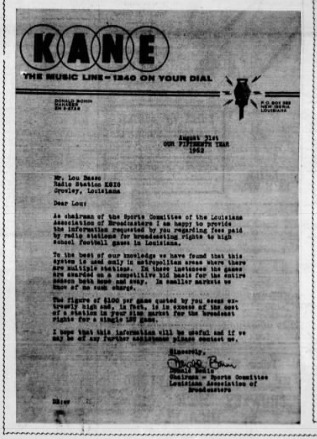
Manager and Chairman
A letter from KANE's station manager and chairman of the Sports Committee of the Louisiana Association of Broadcasters, Don Bonin, to KSIG manager, Lou Basso, about KSIG purchasing broadcasting rights for LSU football games. | Source: Crowley Post-Signal, September 5, 1962, newspapers.com.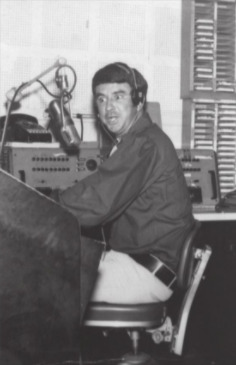
So That's Where It Comes From
Alton “Skip” Broussard was a disc jockey at KANE before working at WTIX in New Orleans. UL’s current mascot comes from Broussard’s moniker for himself, “Ragin’ Cajun.” | Source: Nelwyn Hebert, Images of America: Iberia Parish (Charleston, SC: Arcadia Publishing, 2012), 80.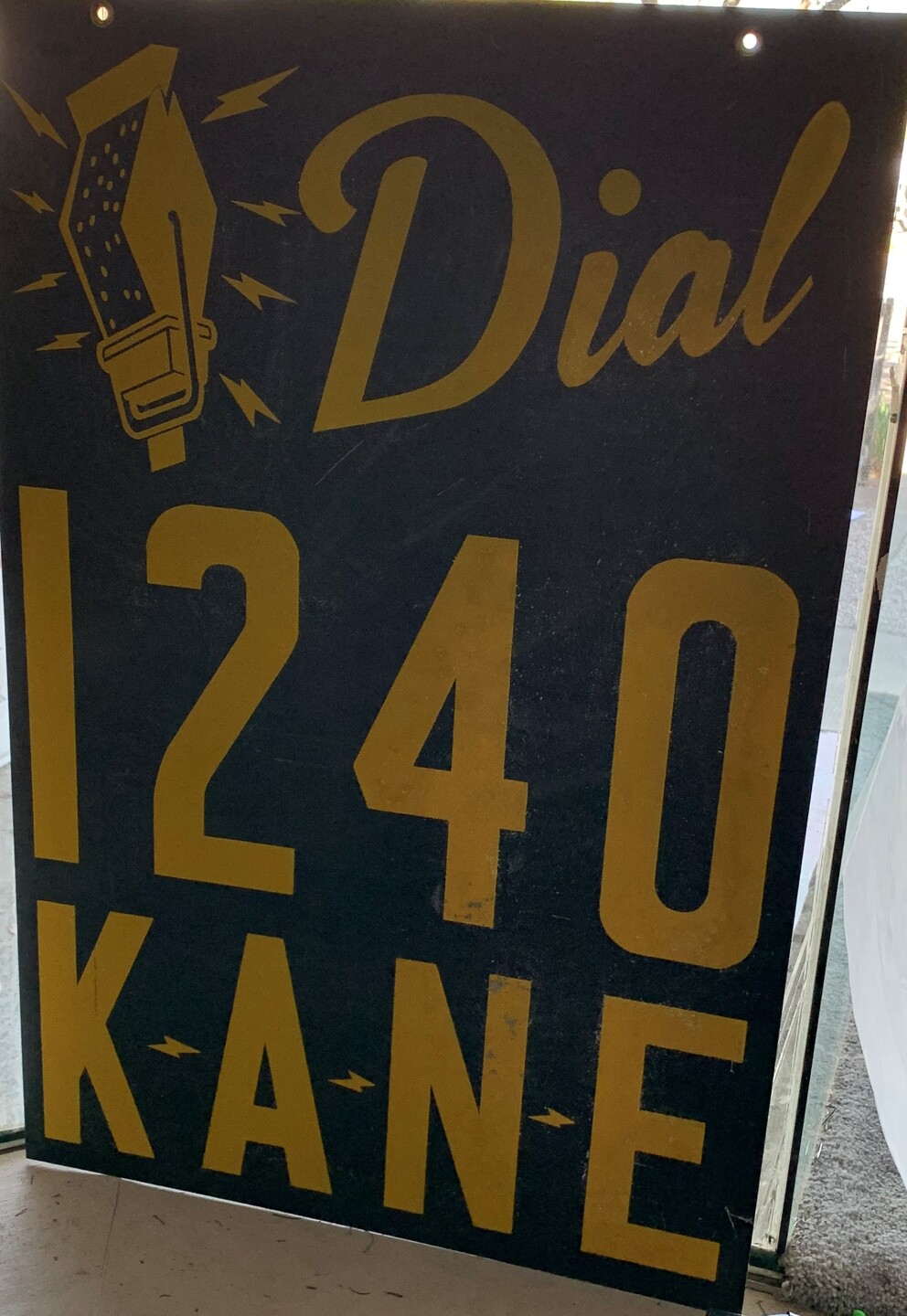
KANE Sign
A metal sign advertising KANE's frequency from while the station was on St. Peter Street for the second time between 1953 and 1968. | Source: Courtesy of Jeff Boggs at KANE.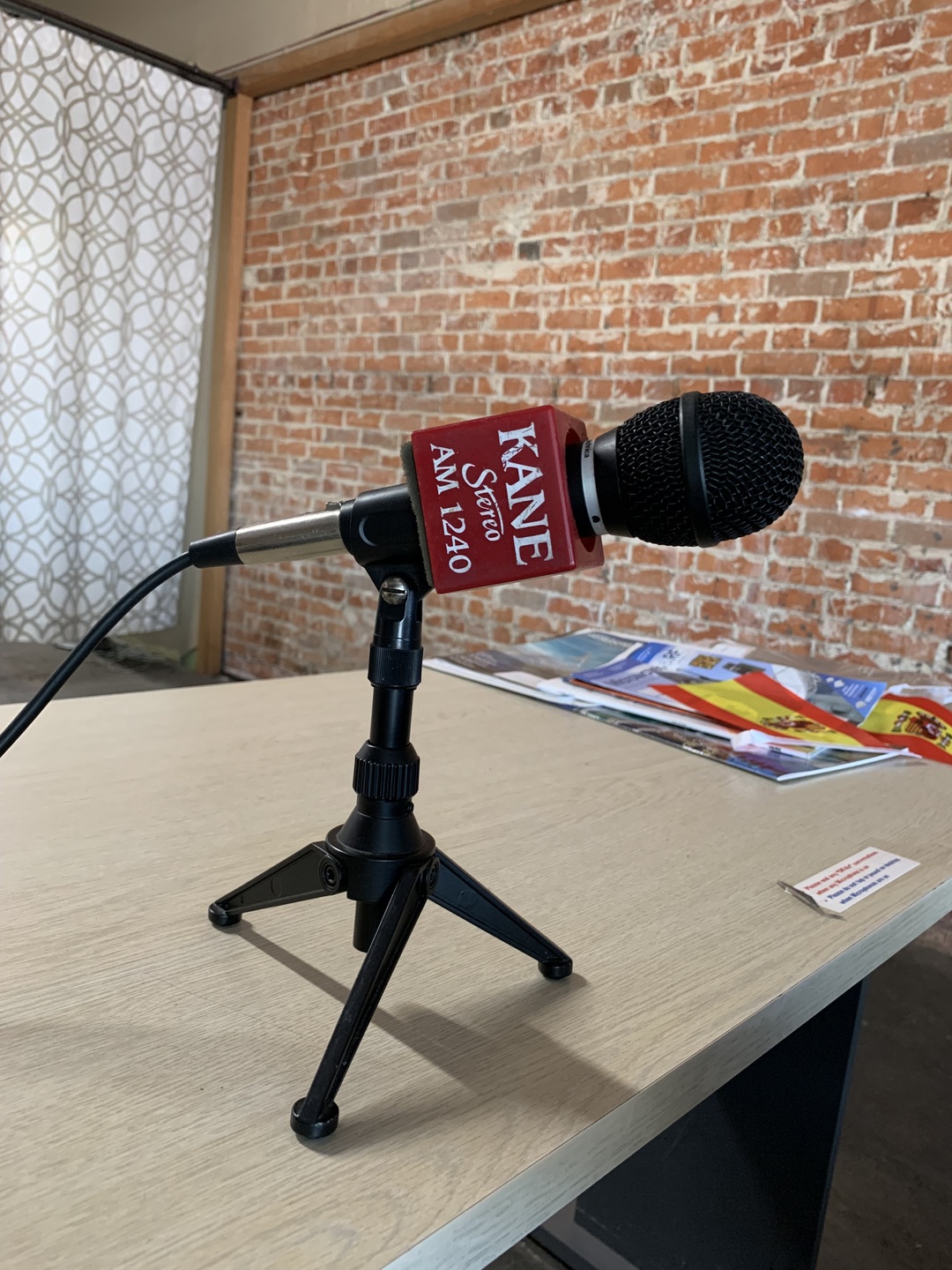
KANE You Hear It
Photograph of a microphone at KANE studios. | Source: Photographed by Lindsey DeLaughter. | Date: 2022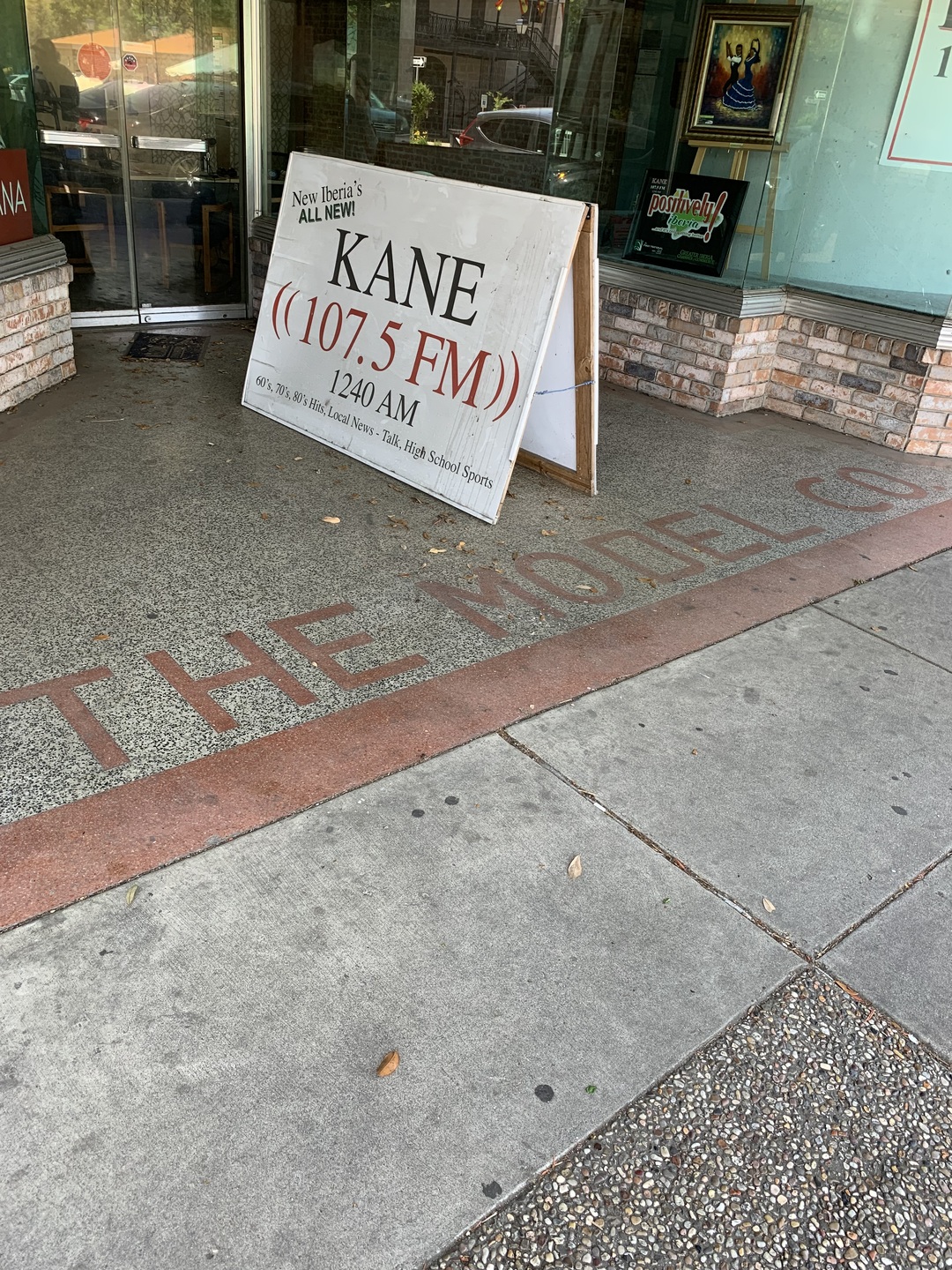
From Store to Station, Part 2
Photograph of the entrance of KANE's current West Main Street location. The Model Company was the name of the men's clothing store that had occupied the building before the station. | Source: Photographed by Lindsey DeLaughter. | Date: 2022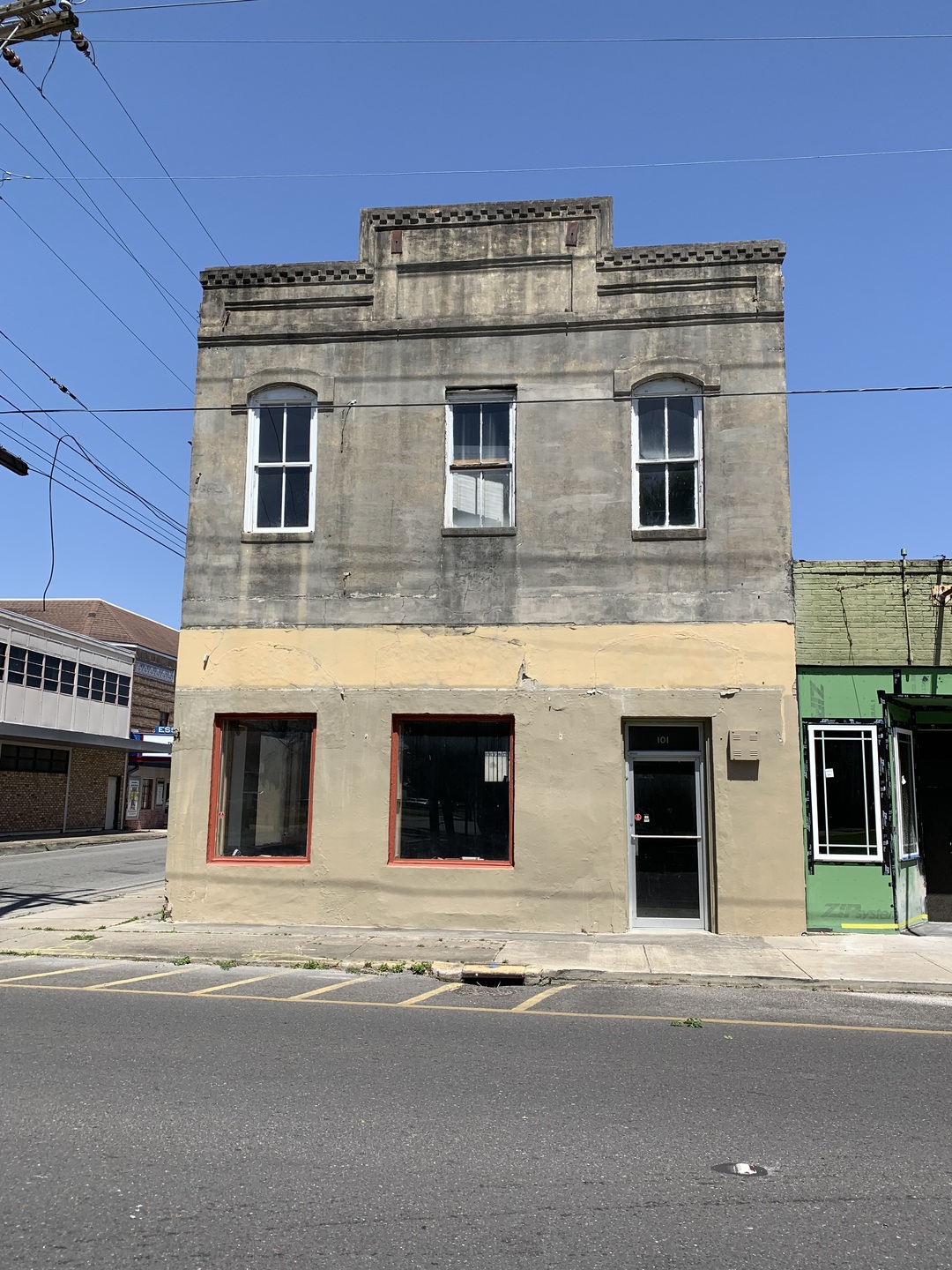
KANE You Remember
The front of the former KANE building on West St. Peter Street in 2022. | Source: Photographed by Lindsey DeLaughter.