<?xml version="1.0" encoding="UTF-8"?>
<feed xmlns="http://www.w3.org/2005/Atom">
  <title type="text">Acadiana Historical</title>
  <updated>2026-10-11T20:30:56+00:00</updated>
  <generator uri="http://framework.zend.com" version="1.12.20">Zend_Feed_Writer</generator>
  <link rel="alternate" type="text/html" href="https://mail.acadianahistorical.org/"/>
  <link rel="self" type="application/atom+xml" href="https://mail.acadianahistorical.org/items/browse?output=rss2"/>
  <id>https://mail.acadianahistorical.org/</id>
  <author>
    <name>Acadiana Historical</name>
    <uri>https://mail.acadianahistorical.org</uri>
  </author>
  <link rel="hub" href="https://pubsubhubbub.appspot.com/"/>
  <entry>
    <title type="html"><![CDATA[Site 7: First to Third Streets — The 1894 Waterfront Riot: Murder Comes to the Levee]]></title>
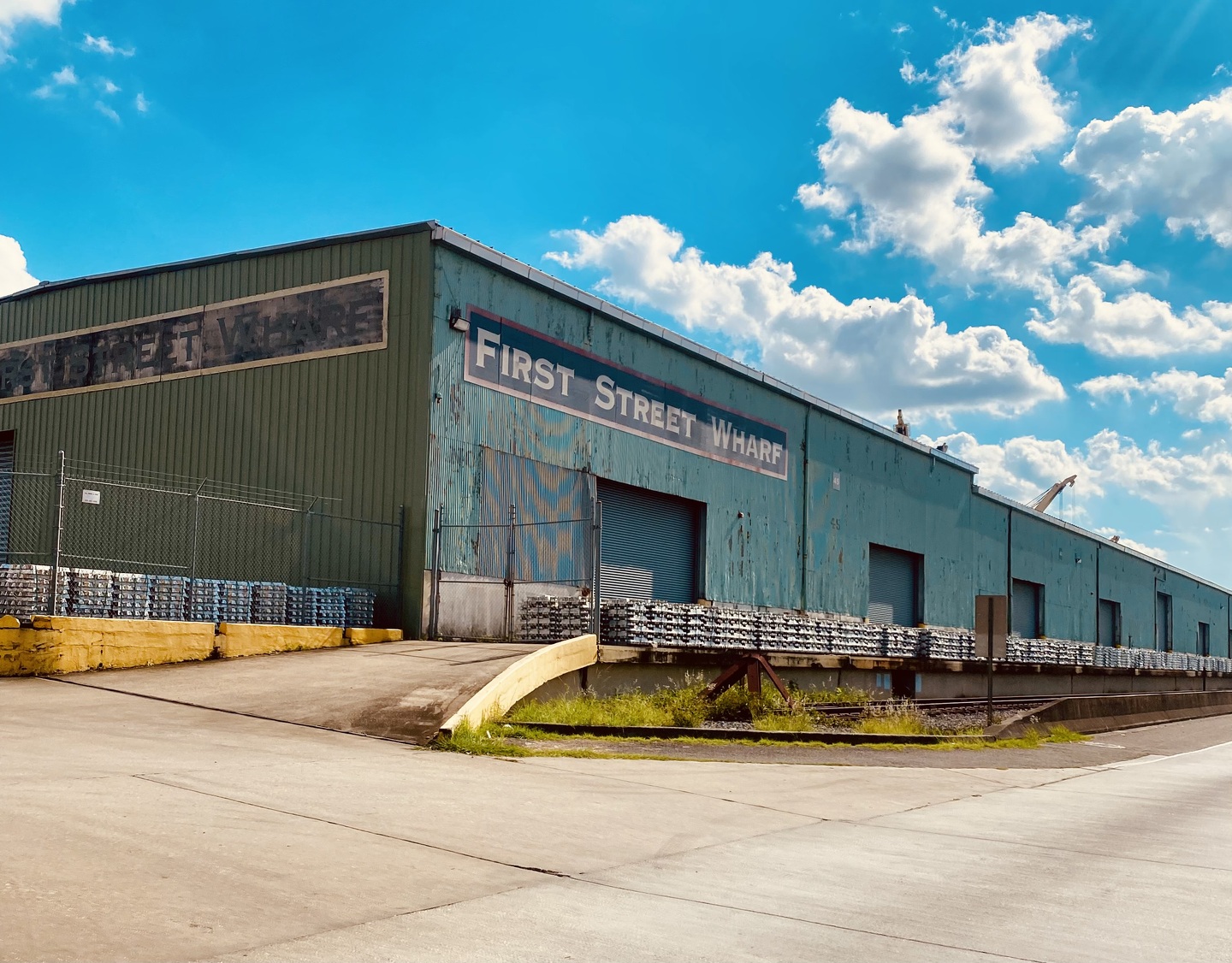
    <summary type="html"><![CDATA[<p><strong><em>Gun smoke mingled with steam rising from smokestacks of British ships docked along the levee. Rifle shots replaced the usual sounds of the port. The rattling of carts and longshoremen singing shanteys to lighten the tedious nature of the day's work went silent. In their place were the screams of victims who tried to escape the onslaught.</em></strong></p><img src="https://mail.acadianahistorical.org/files/fullsize/1bc72113152abd1862c74cd922cf57dc.jpg" alt="Where It All Happened" /><br/><p>Imagine being so fearful for your life that your only chance to save yourself is to jump into a powerful river--even though you can't swim.</p><p>Despite the vandalism experienced on October 26, 1894, agents expected Black screwmen to continue loading cotton with borrowed tools. Although shipping bosses appealed to Mayor John Fitzgerald and the chief of police to provide protection, only 10 men showed up to work. The rest stayed away due to the large number of White screwmen lurking in the vicinity. The few Black men who decided to resume working would regret it. </p><p>Around 2:30 on the afternoon of October 27, members of the Screwmen's Benevolent Association, armed with Winchester rifles and stones, initiated a violent attack on the Black screwmen who gathered on the quay. The White screwmen made no effort to conceal their crimes. They fired more than 100 rounds while the policemen stood "idly by, like interested spectators."</p><p>Reports claim that the mob, "swooped down on the negroes with imprecations on thier lips and the desire for blood in their hearts." There was a large, open space at the head of First Street where the <i>Delano </i>was docked. It was in this area where the Black screwmen rushed off the ship and tried to find safety. Reporters from the <i>Times Picayune </i>describe them being "followed by a howling mob, who were indiscriminately shooting in all directions." </p><p>Men had no other choice but to dive off the deck of the ship, drowning in the rushing waters below. Randolph Blackwell was shot in the leg, arm, and thigh. Andrew Holmes, a Black man, 40 years of age, attempted to flee from the scene "at a good run" when White screwmen "emtied their pistols at him." </p><p>It is unknown how many Black screwmen jumped overboard and drowned. The newspaper stated that, "We won't know until the [river] gives up its dead."</p><p><em><strong><a href="https://mail.acadianahistorical.org/items/show/185">For more (including 7 images) view the original article</a></strong></em></p>]]></summary>
    <published>2022-11-10T01:05:18+00:00</published>
    <updated>2026-10-11T20:30:56+00:00</updated>
    <link rel="alternate" type="text/html" href="https://mail.acadianahistorical.org/items/show/185"/>
    <id>https://mail.acadianahistorical.org/items/show/185</id>
    <author>
      <name>Laura M. Hughes</name>
    </author>
  </entry>
  <entry>
    <title type="html"><![CDATA[Site 6: Second to Seventh Streets — The 1894 Attack on Black Screwmen&#039;s Tools: Masked Men Raid Ships]]></title>
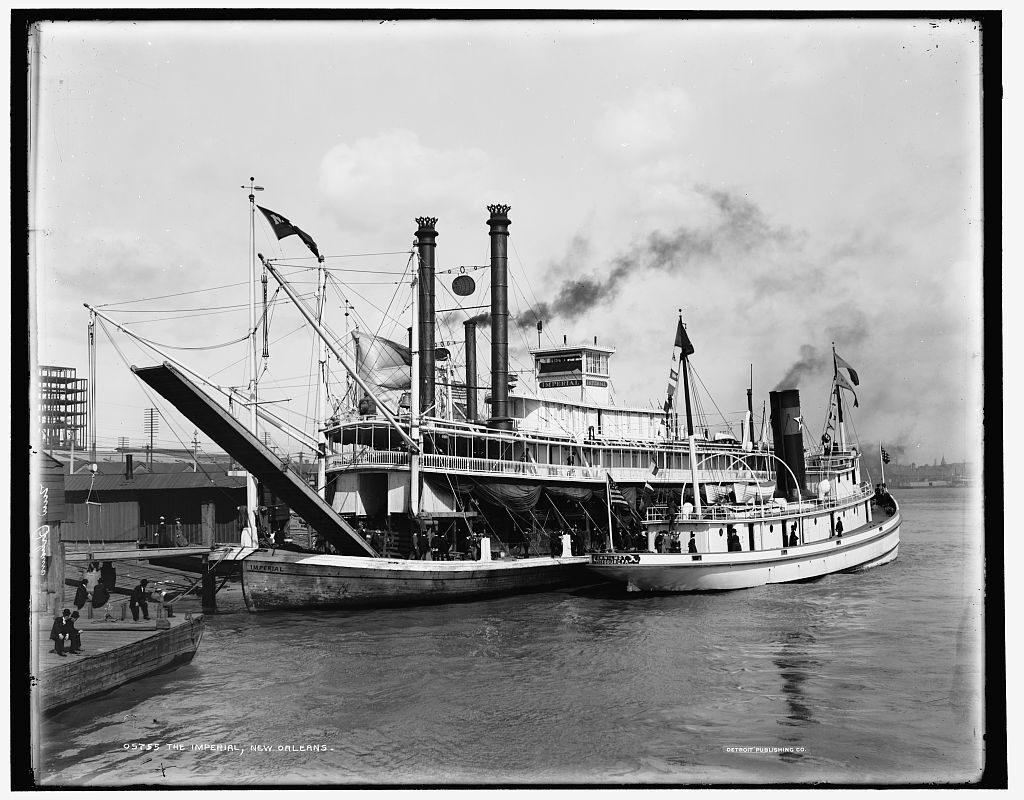
    <summary type="html"><![CDATA[<p><strong><em>On October 26, 1894, 200 men gathered under the cover of night and descended on the port in New Orleans. Some wore handkerchiefs to obscure their faces. Others wore false beards and masks. Armed with Winchester rifles, they overpowered the watchmen who guarded the ships docked at the riverfront between Seventh and Second Streets.</em></strong></p><img src="https://mail.acadianahistorical.org/files/fullsize/6e1aa6400cc676ea325a2f822398bade.jpg" alt="Steamship Imperial" /><br/><p>It was relatively easy for members of the Screwmen's Benevolent Association to gain the monopoly on their trade. They were, after all, truly indispensable. After the end of the Civil War, however, it became much harder for them to remain at the top. They now had competition from Black screwmen, a group comprised of freedmen and free men of color. The fight reached a fever pitch in October 1894 when stevedores had no choice but to employ Black screwmen because there were not enough White screwmen to fulfill contracts with the shipmasters. Little did anyone know that after the raid on these ships, the violence would only get worse.</p><p>White screwmen swiftly and quietly overpowered the watchmen stationed in front of the <i>Constance, </i>a steamship moored at the head of Seventh Street. While they held the watchmen at gunpoint, the rest of the men boarded the ship and threw overboard every tool that the Black screwmen needed to do their work, including ninety-six screwjacks. The 170-pound screw jacks were the Black screwmen’s guarantee that they could provide for their families. The screw jack represented food on their children's plates and a roof over their heads. As their tools disappeared beneath the dark, muddy waters, so did their relative financial security. </p><p>As White screwmen raided the <i>Constance, </i>more men boarded the <i>Oceanian</i>, docked at the head of Sixth Street, the <i>Castledale</i>, docked at the head of Fifth Street, the <i>Lord Erne, </i>docked at the head of Third Street, and the <i>Delano</i>, docked at the head of First Street. Members of the Screwmen's Benevolent Association conducted a very calculated and coordinated attack on the livelihoods of Black screwmen. </p><p>Every square inch of New Orleans is steeped in history, even spaces that aren't officially recognized as historic areas. This is especially true of the stretch of land along the riverfront.</p><p>The drive down Tchoupitoulas along the Mississippi isn't particularly breathtaking. In fact, it's anything but. Unlike the Garden District, no mansions resembling tiered, frosted wedding cakes peak out from behind splendid oak trees, hibiscuses, or bougainvillea. No brightly colored shotgun houses with gingerbread house-styled woodwork brighten up the morning commute.</p><p>Instead, a long, grey weather-worn floodwall blocks all views of the Mississippi River. What's on the other side of the wall isn't visually stimulating either. Industrial warehouses and acres of shipping containers are hardly a feast for the eyes. But in this case, it's not the physical that is valuable. Knowing what happened beyond the wall has intrinsic value and provides a tangible connection with our history. The stories that emerge contribute to our broader understanding of our shared past.</p><p><em><strong><a href="https://mail.acadianahistorical.org/items/show/184">For more (including 12 images) view the original article</a></strong></em></p>]]></summary>
    <published>2022-11-07T03:00:58+00:00</published>
    <updated>2026-10-11T20:30:36+00:00</updated>
    <link rel="alternate" type="text/html" href="https://mail.acadianahistorical.org/items/show/184"/>
    <id>https://mail.acadianahistorical.org/items/show/184</id>
    <author>
      <name>Laura M. Hughes</name>
    </author>
  </entry>
</feed>