<?xml version="1.0" encoding="UTF-8"?>
<feed xmlns="http://www.w3.org/2005/Atom">
  <title type="text">Acadiana Historical</title>
  <updated>2026-05-07T23:17:44+00:00</updated>
  <generator uri="http://framework.zend.com" version="1.12.20">Zend_Feed_Writer</generator>
  <link rel="alternate" type="text/html" href="https://mail.acadianahistorical.org/"/>
  <link rel="self" type="application/atom+xml" href="https://mail.acadianahistorical.org/items/browse?output=rss2"/>
  <id>https://mail.acadianahistorical.org/</id>
  <author>
    <name>Acadiana Historical</name>
    <uri>https://mail.acadianahistorical.org</uri>
  </author>
  <link rel="hub" href="https://pubsubhubbub.appspot.com/"/>
  <entry>
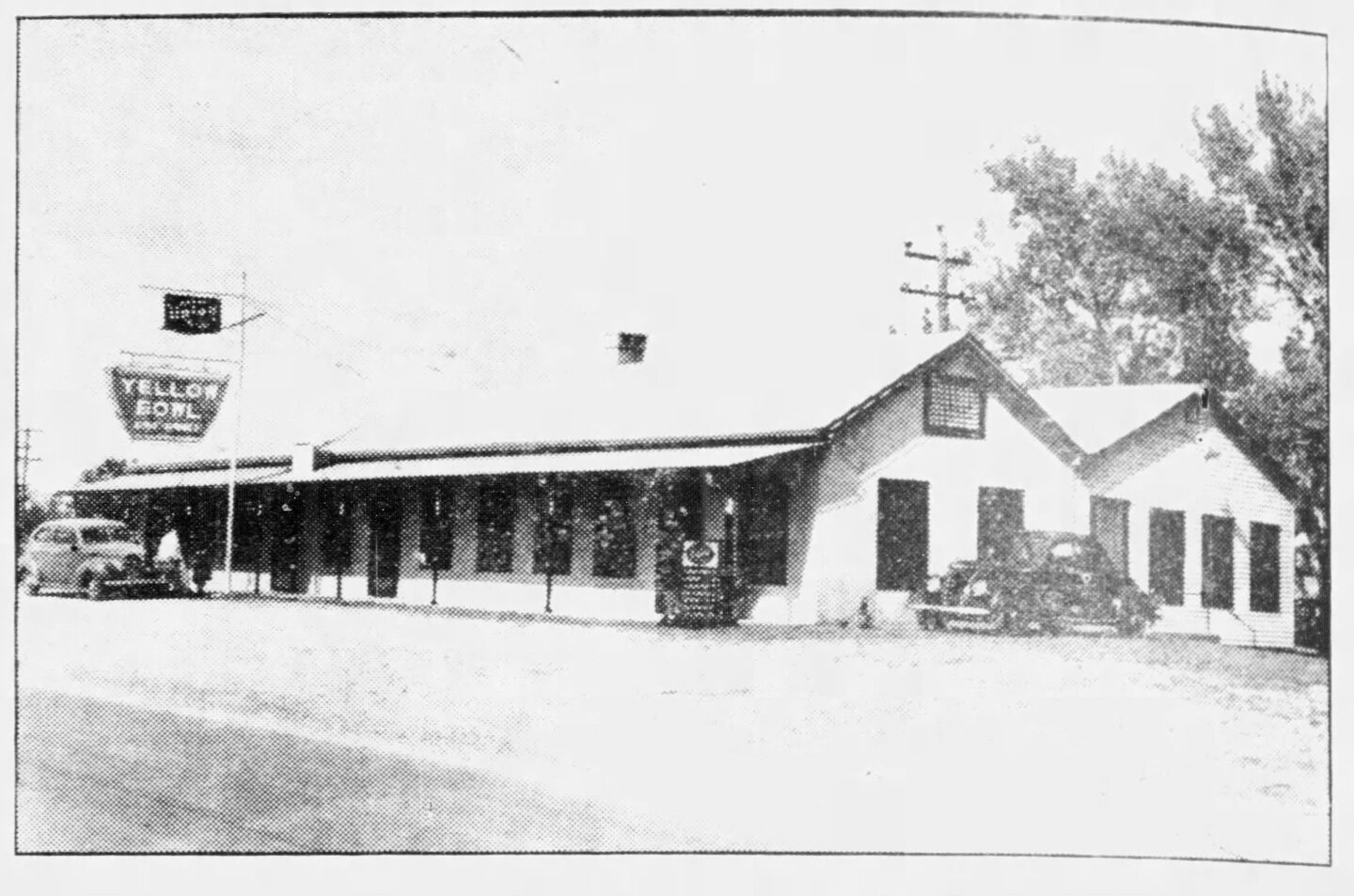
    <title type="html"><![CDATA[Yellow Bowl Restaurant: I&#039;m on a seafood diet!]]></title>
    <summary type="html"><![CDATA[<p><strong><em>After being open for ninety-five years, the Yellow Bowl continues its story by serving up the best Cajun food found in Jeanerette using local ingredients and original recipes dating back to 1953. </em></strong></p><img src="https://mail.acadianahistorical.org/files/fullsize/6d0f72f1b3cff726317449bccd9a88dd.jpg" alt="Back in the &quot;Old Days&quot;" /><br/><p>The Yellow Bowl was established in 1927 by a local woman, known as Mrs. Scanton, “as a bus stop for the Greyhound bus line” , formally known as Teche bus lines.  However, this information is rivaled with the details found in Dennis Covington’s article in Southern Living. Covington states that, the Yellow Bowl was “’Originally a tea house for sugarcane planters who lived in area mansions,’” providing visitors an atmosphere similar to a country retreat.  It is also up for debate on how Mrs. Scanton developed the name “Yellow Bowl”. According to the Franklin Banner, “One story is that during the initial excavation, the builders came across one of the huge kettles used in making a boucherie or jambalaya [and it] was painted a bright yellow.” On another hand, it is believed that “the word ‘Bowl’ was used as a code word for places that served alcohol during prohibition.” Places throughout the south were known as “green bowls” and “red bowls”, and it is possible that this one location was considered a “yellow bowl”.  After being open for ninety-five years, we still don’t have a definitive answer to many of these statements. One undisputed claim is that the restaurant is situated in its original location between Franklin and Jeanerette, LA on the old Highway 90 “which is today known as Highway 182.”  In 1953, Tony and Margaret Roberts purchased the Yellow Bowl to “move the lowly crawfish onto restaurant tables of Louisiana.”  Since then, the Yellow Bowl has been a family owned and operated business serving up the finest Cajun cuisine in Jeanerette. Their recipes date back to 1953 when Tony and Margaret became the owners of the Yellow Bowl, and everything is made daily from scratch to provide a “truly authentic Cajun fare.”  Some of the featured dishes are crawfish etouffee, seafood platters, chicken dinners, baked spaghetti, and chicken and oyster gumbo.  Even though Tony and Margaret Roberts’ goal was to specialize in crawfish, their most popular dish is their seafood gumbo which was recognized in the winter issue of Southern Living in 1992. Dennis Covington notes that the Yellow Bowl’s seafood gumbo was a top contender after the different ones he tasted throughout Southern Louisiana. He stated that “The ingredients were fresh, the stock smooth and rich. The color was amber, the taste not too hot. No one seasoning dominated. The normally strong flavors of shrimp and okra had melted into the whole. And the gumbo was served right out of the pot --- not reconstituted, as in many restaurants.”  While enjoying their delicious seafood options, guests can also spend time dancing the night away to the music playing on the dance floor that was added in.  If you are looking to enjoy some delicious seafood in a historic and fun location, the Yellow Bowl may the right place for you!</p><p><em><strong><a href="https://mail.acadianahistorical.org/items/show/156">For more (including 5 images&#32;&amp;&#32;1 audio file) view the original article</a></strong></em></p>]]></summary>
    <published>2022-04-25T13:11:11+00:00</published>
    <updated>2026-03-04T22:42:48+00:00</updated>
    <link rel="alternate" type="text/html" href="https://mail.acadianahistorical.org/items/show/156"/>
    <id>https://mail.acadianahistorical.org/items/show/156</id>
    <author>
      <name>Claire Bordelon</name>
    </author>
  </entry>
  <entry>
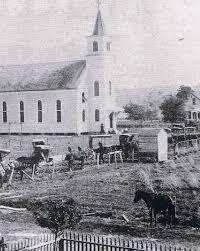
    <title type="html"><![CDATA[Willkommen in Roberts Cove: St. Leo IV Catholic Church]]></title>
    <summary type="html"><![CDATA[<p><strong><em>Learn how Germans found their way to Roberts Cove. </em></strong></p><img src="https://mail.acadianahistorical.org/files/fullsize/11ea7807778680a37e2363c417cdbed1.jpg" alt="St. Leo IV 1900s " /><br/><p>In the words of Fr. Keith L Vincent, a previous pastor of St. Leo IV, “Hidden treasure lies just three miles from busy Interstate-10…Signs 500 feet before and after the church say ‘Roberts Cove,’ but this is all…” (Kondert, ix). The Germans have been tucked away in French Louisiana, but why? For the same reason the Acadians were exiled from Nova Scotia, their religion (Kondert, xi). A priest, Fr. Peter Leonard Thevis, was the first to come to Louisiana from Germany in 1867. It took him ten years to find a place of his own, but when he did he sent for his family to come by ship from Germany. A Benedictine missionary helped to build the first church. He bought land in Robert’s Cove for a monastery, but a church was built instead. </p><p>The church, St. Leo IV, started many traditions that still happen today. One of these traditions happens on the Feast of St. Nicholas, which is December 6th, every year. Families a part of the Roberts Cove community will leave their shoes out on their front porch. St. Nicholas and Santa Claus will come visit their house and leave little candies for them in their shoes. There are events throughout the year that the Roberts Cove community will have to keep their traditions and culture alive. The church will be the center of Roberts Cove for many years to come.</p><p><em><strong><a href="https://mail.acadianahistorical.org/items/show/19">For more (including 3 images&#32;&amp;&#32;1 audio file) view the original article</a></strong></em></p>]]></summary>
    <published>2018-04-26T14:59:11+00:00</published>
    <updated>2026-03-04T22:42:45+00:00</updated>
    <link rel="alternate" type="text/html" href="https://mail.acadianahistorical.org/items/show/19"/>
    <id>https://mail.acadianahistorical.org/items/show/19</id>
    <author>
      <name>Sophia Verret</name>
    </author>
  </entry>
  <entry>
    <title type="html"><![CDATA[Who Dare the Hoodoo Lady : Julia Brown ]]></title>
    <summary type="html"><![CDATA[<img src="https://mail.acadianahistorical.org/files/fullsize/77b4eb976751d91aa86f63b451c8bdcd.jpg" alt="[Untitled]" /><br/><p>In Acadiana’s St. John parish, Julia Brown was a Hoodoo priestesses lived in a very small town called Frenier surrounded by Manchac Swamp. “In the town Julia was known for her charms and her curses, as well as for singing eerie songs with her guitar on her porch (Lovejoy).” People went to her often but started to take her for granted, and after a while they noticed Julia’s change of change of character. “She started to scare the ungrateful locals by predicting when terrible things were about to happen to them (Matthews).” She also knew that her death was near and so she spent her last days on her porch singing, “One day I’m gonna die, and I’m gonna take all of you with me (Scott).”  Soon everyone found out what she meant.</p><p>On September 29, 1915 Julia died and the town gathered together to bury her. As they were putting her casket into the ground heavy hurricane rains interrupted forcing them back into their homes. It wiped out the entire town and proved that Julia’s ranting was all truth as there were no survivors. Today the grounds of Frenier is a mass grave hunted by Julia brown. 						</p><p><em><strong><a href="https://mail.acadianahistorical.org/items/show/59">For more (including 4 images) view the original article</a></strong></em></p>]]></summary>
    <published>2018-04-30T21:16:02+00:00</published>
    <updated>2026-03-04T22:42:47+00:00</updated>
    <link rel="alternate" type="text/html" href="https://mail.acadianahistorical.org/items/show/59"/>
    <id>https://mail.acadianahistorical.org/items/show/59</id>
    <author>
      <name>Alyssa Dottery</name>
    </author>
  </entry>
  <entry>
    <title type="html"><![CDATA[Tunica Trace Memorial Byway : A Route To Treasure]]></title>
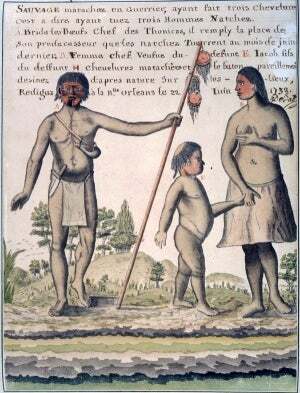
    <summary type="html"><![CDATA[<p><strong><em>Within the historic area of St. Francisville, Louisiana, Tunica Trace Byway, one of the oldest roads in the state of Louisiana, serves as a pathway of cultural preservation and heritage.</p></strong></p><img src="https://mail.acadianahistorical.org/files/fullsize/f637f712d6f160f8d1d67c2a9f78b82c.jpg" alt="[Untitled]" /><br/><p>
</p><p>Tunica Trace Byway is one of the oldest roads in Louisiana that holds deep historical significance. Located in St. Francisville, it represents the area’s commitment to historical preservation. For decades the byway has been known as Angola Road. The route was officially renamed in 1988 to honor the Tunica-Biloxi Tribe and recognize their contributions to the history of Louisiana and the United States.</p><p>The twenty-mile scenic byway follows Louisiana Highway 66. It begins in northern St. Francisville and extends to the Louisiana State Penitentiary (Angola). Along the way, travelers pass through approximately six thousand acres of land within the Tunica Hills Wildlife Area.This route offers a view of Louisiana that differs from the stereotypical image of the state’s landscape. Instead, travelors experience Louisiana's rolling hills, waterfalls, forests, wildlife, and vast greenery. </p><p>Tunica Trace Byway tells the story of the Tunica-Biloxi Tribe and their rich history. Although the tribe has played an important role in the development of Louisiana; however, the tribes origins trace back to the lower Mississippi Delta Valley. The Tunica-Biloxi Tribe first encountered European explorers in 1541, when they met the Spanish conquistador Hernando de Soto during his expedition in search of gold. Later, around 1699, the Tunica people encountered French explorers and settlers. Their encounter marked the beginning of a long-term alliance. </p><p>Historically, the Tunica-Biloxi Tribe is known for being fierce warriors and skilled traders. In the early eighteenth century, around 1706, the Tunica migrated from Mississippi to Louisiana and attacked the Houma Tribe. The Houma tribe were settled in St. Francisville at the time. After the attack, the Tunica gained control of the land in St. Francisville. They wanted better trading access with the French. When the French explored Louisiana during the 1700s, they encountered several hostile tribes. Around this time, the French also experienced tensions with British slave traders.</p><p>In their search for Native allies, the French formed a friendship with the Tunica people. They agreed to provide commodities such as salt, horses, and metal tools in exchange for diplomacy and military support.The alliance between the Tunica and the French lasted for sixty-four years, from 1699 until France ceded the land to Spain in 1763. The Spanish later honored the established alliance between the French and the Tunica-Biloxi Tribe. As a result, the Tunica-Biloxi Tribe fought alongside the Spanish and helped defeat the British during the Battle of Baton Rouge in 1779. </p><p>Tunica Trace Byway served as a multipurpose route in southeastern Louisiana and was a major trading path for Native Americans. In addition, it helped explorers and settlers travel between Louisiana and Mississippi. Most importantly, the route connected different communities and cultures. Tunica Trace Byway is also known for its hidden treasure. In 1968, one of the largest archaeological discoveries related to the byway occurred. A guard on duty at the Louisiana State Penitentiary discovered a cemetery dating back to the 1700s. The burial site belonged to the Tunica-Biloxi Tribe. Within the burial grounds, archaeologists found an abundance of brass, iron, kettles, skillets, axes, hoes, bottles, pottery, glass beads, and European ceramics. After studying the artifacts, researchers concluded that many of the items came from trade along Tunica Trace. </p><p>Today, Tunica Trace Byway is one of the most fascinating historical sites in St. Francisville, Louisiana. It represents a pathway to preserving Native American, American, French, and Spanish heritage.</p><p><em><strong><a href="https://mail.acadianahistorical.org/items/show/281">For more (including 5 images&#32;&amp;&#32;1 audio file) view the original article</a></strong></em></p>]]></summary>
    <published>2026-02-10T20:39:51+00:00</published>
    <updated>2026-03-17T05:12:48+00:00</updated>
    <link rel="alternate" type="text/html" href="https://mail.acadianahistorical.org/items/show/281"/>
    <id>https://mail.acadianahistorical.org/items/show/281</id>
    <author>
      <name>Jaquala Hebert </name>
    </author>
  </entry>
  <entry>
    <title type="html"><![CDATA[Tiger Tracks: SSG Robert &quot;Pete&quot; Sweat Memorial Highway : Louisiana Highway 10 ]]></title>
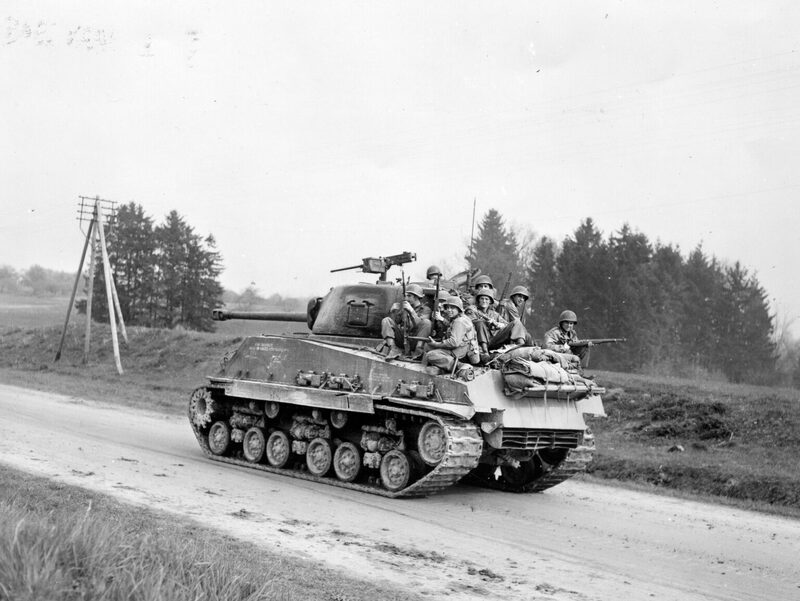
    <summary type="html"><![CDATA[<p><strong><em>Louisiana Memorial Highway number 113 is a portion of Louisiana highway 10 that runs until the location of the Occupy II Baptist Church in Pitkin, Louisiana and is designated as the SSG Robert “Pete” Sweat Memorial Highway as of August 15, 2011.</em></strong></p><img src="https://mail.acadianahistorical.org/files/fullsize/51916a5384d9a48ccc5f89c06f789820.jpg" alt="Infantrymen catching a ride on a tank " /><br/><p><span>        SSG Robert E “Pete” Sweat was born to William Ephriam and Rosetta Perkins Sweat on October 28, 1920, on a farm in Pitkin, Louisiana. </span><span>He grew up assisting his father in their fields until his early 20s at the start of WWII. He trained at Fort Benning, Georgia, and was assigned to the 10</span><span>th</span><span> Armored Division of the 54</span><span>th</span><span> Infantry Regiment of the United States, also known as the “Tiger Division.” The 10</span><span>th</span><span> Armored Division was inactivated shortly after the war but operated under General George S. Patton in France. </span>
<span>     After receiving training with his division in September of 1944, Sweat and his squadmates ravaged the Germans in France, taking hundreds of Nazi prisoners. In the Ardennes Forest on December 16, 1944, the 10</span><span>th</span><span> Armored Division served as support for their comrades, mobilizing to Bastogne and the Bulge in Luxembourg. It is unsure where Sweat ended up during the Battle of the Bulge, but he survived this German counteroffensive and what ended up being the largest and deadliest battle fought by the U.S. in WWII. </span>
<span>     The next battle that Sweat and the 10</span><span>th</span><span> Armored Division would see was one at Heilbronn, a small city in southern Germany on the Neckar River, which was an important supply center for the German soldiers. The U.S. took the city and moved southward to Crailsheim, which is believed to be one of the most difficult battles of the war where the Germans would not let up. </span><span>This battle would last a few days, but Sweat’s life would come to an end on April 5, 1945. As enemy artillery fire hit targets and bullets whizzed through the air, one of Sweat’s squadmates was wounded in the line of fire. He swooped down to rescue him but was killed while returning to cover. </span>
<span>     The After Action report for April 1-5</span><span>th</span><span>, 1945 read “The enemy fought a delaying action entirely, using minefields covered by artillery and anti-tank weapons. Bridges were blown and artillery sighted in on important junctions and crossroads. Small arms fire ranged from light to moderate chiefly employed on outskirts of towns. Enemy tanks were in the area but moved about constantly. Towns which we occupied received light to moderate shelling to impede our progress. Results of Operations: 161 PoW captured, two 20mm. flak guns, four anti-tank guns, four trucks, two command cars and one prime mover captured or destroyed.”</span>
<span>      According to Sweat’s great nephew, who found a letter, Sweat was listed as “missing in action” on that date, but it became the official date of death for the family. </span><span>One of his nieces, Connie Britt, told The Leesville Daily Leader “the family attempted to find more information through the military records, but a 1973 fire at the National Personnel Records Center destroyed millions of files, including many of those relating to Sweat. ‘All they could tell us was that he was killed in action.’” </span>
<span>       After his death, the Allies won the war, and Sweat received a Purple Heart and two Silver Stars, the third-highest honor military personnel can receive. He is buried at Lorraine American Cemetery in St. Avold (Moselle), France. </span>
<span>      The SSG Robert "Pete" Sweat Memorial Highway was introduced by Representative Dorothy Sue Hill and signed by Governor Bobby Jindal. The Representative presented Sweat’s two sisters Mittie and Jean Cloud with a replica of the highway sign.</span></p><p><em><strong><a href="https://mail.acadianahistorical.org/items/show/279">For more (including 10 images, 1 audio file,&#32;&amp;&#32;1 video) view the original article</a></strong></em></p>]]></summary>
    <published>2025-05-06T01:30:20+00:00</published>
    <updated>2026-03-04T22:42:51+00:00</updated>
    <link rel="alternate" type="text/html" href="https://mail.acadianahistorical.org/items/show/279"/>
    <id>https://mail.acadianahistorical.org/items/show/279</id>
    <author>
      <name>Kallie R. Barron </name>
    </author>
  </entry>
  <entry>
    <title type="html"><![CDATA[Thousands of German POWs in Acadiana During WWII: German POWs Helped with Severe Labor Shortages During WWII<br />
]]></title>
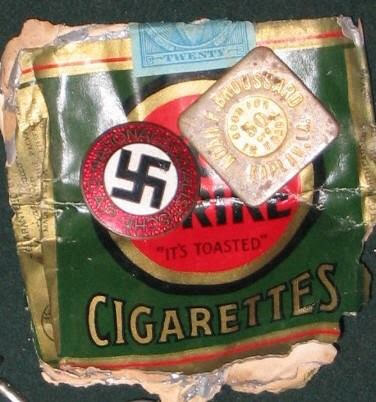
    <summary type="html"><![CDATA[<p><strong><em>	Many of us are unaware that during WWII the US was housing over 425,000 enemy POWs (mostly Germans) in over 500 camps spread over 46 states.  Over 2,000 of them were here in Acadiana, in side camps located in Youngsville, St. Martinsville, Rayne, and Kaplan.  A temporary labor program was created to help replace the lost labor from those who were fighting overseas, and many farmers took advantage of that program.</p><p>Surprisingly, the Nazis, who were about one-fifth of the German population, had to be segregated from the average German soldier because they would intimidate them not to cooperate with US officials.  Generally, the German POWs were peaceful and did not believe in Hitler or his war, and some were even from other countries being forced to fight.  Many of these soldiers eventually became friends with their new farmer employers.    	</p><p>A few wild stories surfaced, like the farmer who bought his prisoners steaks in a nightclub because they weren’t being fed enough to do manual labor, or the POWs  who would somehow “slip out” of camp to have a few hours “R&R” with local gals, or the POW who was given a machine gun and told to “guard the base” while the “real” guards enjoyed a Christmas party.  No matter the rumors, what is certain is that after the war some POWs corresponded with their farmer families, some returned with their own families to visit many years later, and some stayed and made families of their own here in Acadiana. </em></strong></p><img src="https://mail.acadianahistorical.org/files/fullsize/fef6fed48b3452b212e7abae36bcb78a.jpg" alt="A swasika on a German POW&#039;s pack of cigarettes." /><br/><p>	Many of us have older relatives, perhaps a grandfather, a dad, or a great uncle who fought overseas during WWII, but many of us are unaware that at the time the US was housing over 425,000 enemy POWs (mostly Germans, but also Italians and a few Japanese) in over 500 camps spread out over 46 states.  The majority of prisoners were housed in the South in order to conserve fuel in the winter, and over 2000 of them were housed right here in Acadiana. While the major camps in Louisiana included those at Fort Polk, Ruston, and Livingston, there were smaller area camps in places like Youngsville, St. Martinsville, Rayne, Kaplan, Geuydan, Eunice, Franklin, Melville, and Thibodeaux.  A temporary labor program was created to help replace the lost labor from those who were fighting overseas, and many area farmers took advantage of that program. </p><p>In Kaplan, the camp was located on the north side of town and was completed by October of 1944.  It was bordered on the east by Highway 35, on the south by Bert St., on the west by Dick St., and on the north by an AVRI canal.  Each area camp had a watchtower on each corner and a high fence with barbed-wire surrounding the entire complex.  Every morning the POWs would be marched to a main street meeting point where they could be claimed by area farmers or anyone, for that matter, who needed extra labor.  Women were told not to be around at this time.  In Kaplan, many prisoners were chosen to work in the fields, while others were put on rice trucks to work at the mills or in warehouses.  </p><p>There were a few humorous stories that surfaced from the POWs being housed in Acadiana.  In one, a certain manager of a rice mill named Cliff was in charge of transporting the prisoners to and from the mill each day.  One day, Cliff had to leave early and forgot to make arrangements to return the prisoners.  At the end of the day, the workers went home, and a bookkeeper named Lillian finally realized that she was the last one with the prisoners.  She knew she had to bring them back, so she attempted to communicate for them to get onto the back of the truck the best she could, and she drove them across town to the camp.  When she entered the gates, the prisoners seemed to be in a rush to get off the truck.  Suddenly, several guards drew their weapons, pointing them right at Lillian, continually shouting orders for her to leave immediately.  She tried to explain what had happened with the mix-up at the mill, but guards kept shouting loud, angry commands to get out of the camp all the while pointing several rifles at her.  She finally managed to get the truck into gear and leave the compound. Lillian said she never had a chance to explain what had happened; she commented that the guards were much more difficult to handle than the prisoners. </p><p>According to one story in The Daily Advertiser which quoted Bayou Stalags by Schott & Foley, there were also a few wild rumors going around, like the POWs in Franklin who managed to slip out the camp for a few hours in order to have romantic meetings with the gals in town, or of grateful farmers who would treat the prisoners to steak dinners at a St. Martinsville nightclub even though this was strictly against the rules.  Supposedly, the conditions were so relaxed in Gueydan that some of the guards put one of the POWs on guard duty with a machine gun in a watchtower so that they could go enjoy the Christmas party.  </p><p>Generally speaking, the POWs were considered to be well mannered and polite.  This was possible only after the hard-core Nazis (who made up about a fifth the Germans) were segregated from the rest of the German soldiers and were no longer able to intimidate them not to comply with the Americans.  The average German soldier did not believe in Hitler or his war, and many of them were from neighboring countries being forced to fight for Germany.  Most of them were peace loving individuals, and some of them were given certain privileges: those who were Catholic, for example, were allowed to worship. Many of the farmers and their families grew close with the POWs and kept in contact through correspondence, exchanging gifts, etc. Some have even returned for visits with their families for a reunion years after the war.   There are also accounts of prisoners who decided to stay in this area after the war, or for some who sent for loved ones to settle here with them.  There is a Mr. Bornmann who remained in Kaplan after the war who eventually married Elizabeth Rome from Kaplan.  They have a son named Robert James.  </p><p><em><strong><a href="https://mail.acadianahistorical.org/items/show/52">For more (including 7 images&#32;&amp;&#32;1 audio file) view the original article</a></strong></em></p>]]></summary>
    <published>2018-04-26T15:58:24+00:00</published>
    <updated>2026-03-04T22:42:47+00:00</updated>
    <link rel="alternate" type="text/html" href="https://mail.acadianahistorical.org/items/show/52"/>
    <id>https://mail.acadianahistorical.org/items/show/52</id>
    <author>
      <name>Rusty Chastant</name>
    </author>
  </entry>
  <entry>
    <title type="html"><![CDATA[Thomas M. Alexander Memorial Highway: A man who risked his life for others. ]]></title>
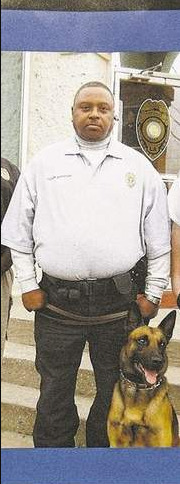
    <summary type="html"><![CDATA[<p><strong><em>A fallen law enforcement officer who is honored. </em></strong></p><img src="https://mail.acadianahistorical.org/files/fullsize/b93df3eb8bce4a5506b7b4d2526ae43a.jpg" alt="[Untitled]" /><br/><p>Sergeant Thomas M. Alexander died in the line of duty. On September 11th, 2010, police received a 911 alert for a home invasion. The resident was outside the city limits for the Rayville Police department, but Sgt. Alexander was the closest to the scene so he took the call. The person who called 911 was home alone when she heard glass shatter. When Sgt. Alexander arrived at the scene, he made sure the victim was safe and went inside to apprehend the suspects. When he got to the back room, he approached the closest where he was shot four times. Richland Parish Sheriff Charles McDonald stated in 2010 that, “ He was ambushed. He told the victim to run. He basically saved her life.” Three suspects were arrested. Robert J. Walker of Rayville was arrested at the scene. He was found hiding under a bed in the home. Two hours after the shooting, Anthony D. Oatis of Monroe was arrested. The final suspect, Richard L. Long Jr. of Monroe was arrested the next day. All three suspects were booked into the Richland Parish Detention Center on first-degree murder of a police officer and aggravated burglary charges.</p><p>Sgt. Alexander served for a total of twenty-years on the police force. His first seven years of duty was with the Richland Parish Sheriff's Office and the final thirteen years was with the Rayville Police Department. Many of his fellow policemen miss him very deeply. On September 13th 2010, “The News-Star” paper, out of Monroe, Louisiana, interviewed a few people days after the death of Sgt. Alexander. Rayville Police Chief, Willie Robinson, worked with Sgt. Alexander for over thirty years. He says that, “This time ain’t easy. Tommy was like a son to me, he’ll be greatly missed, I promise. He died a hero.” </p><p>In 2013, the Louisiana Department of Transportation and Development officially named a section of Louisiana Highway 80 in Rayville, Louisiana “Thomas M. Alexander Memorial Highway”. The section of highway is from the intersection of Bob’s Lane and Highway 80 and stretches east to the intersection of Orchard Lane and Highway 80. This section is approximately three miles long. The memorial highway passes through downtown Rayville, Louisiana. HB No.171 was presented to the Louisiana House of Representatives. It stated that, “Designates a portion of La. Highway 80 in Richland Parish, from its intersection with Bob's Lane east to its intersection with Orchard Lane, as the "Thomas M. Alexander Memorial Highway". A section of this dedicated road is also by where Sgt. Alexander lost his life, while saving others.</p><p><em><strong><a href="https://mail.acadianahistorical.org/items/show/315">For more (including 4 images) view the original article</a></strong></em></p>]]></summary>
    <published>2026-03-30T19:59:01+00:00</published>
    <updated>2026-05-07T23:17:44+00:00</updated>
    <link rel="alternate" type="text/html" href="https://mail.acadianahistorical.org/items/show/315"/>
    <id>https://mail.acadianahistorical.org/items/show/315</id>
    <author>
      <name>Ian Harrington</name>
    </author>
  </entry>
  <entry>
    <title type="html"><![CDATA[The Veranda Hotel&#039;s Journey Through Fires, Violence, and Modernization: The Evolution of Abbeville&#039;s Historic Landmark]]></title>
    <summary type="html"><![CDATA[<p><strong><em>Born from a courthouse construction project in 1845, the Veranda Hotel evolved into a bustling hub for traveling professionals during the nineteenth century. The hotel embodied growth and development until it was replaced by the modern Audrey Hotel in 1928. Today, its legacy endures as a symbol of progress and continuity for Abbeville, Louisiana.</em></strong></p><img src="https://mail.acadianahistorical.org/files/fullsize/57ee60fbfb15a8b7daa02575b77c5e6a.jpg" alt="The Veranda Hotel " /><br/><p>Construction of the Veranda Hotel began in 1845 as a courthouse by Catholic priest and founder of Abbeville, Père Antoine Désiré Mégret. The hotel underwent a tumultuous journey of evolution and transformation, marked by fires, acts of violence, and eventual modernization.</p><p>Construction of the courthouse was interrupted in 1848 during a legal dispute over the location of the parish seat. After Père Megret died in 1853, Joseph Gallet purchased the building and opened it as the Veranda Hotel. The hotel quickly became a hub for traveling professionals, including dentists, salesmen, and jurors.</p><p>Incidents of violence were not isolated to the hotel; they constituted significant events in the town's history. Notable among these was the 1874 duel between Sheriff G.B. Shaw and State Representative Paulin Fontelieu, which followed a disagreement in the Veranda coffee shop. Another incident occurred in 1876 involving the shooting of Carl G. Schneider by Frank R. King over a dispute concerning fraudulent land transactions. Additionally, there was the near-deadly stabbing of Veranda proprietor Joseph Bouriague by a rival hotel owner, Theodule Theriot, in 1889.</p><p>Fires also plagued the Veranda Hotel, with a blaze in 1917 requiring renovations. The following year, the Flu Epidemic of 1918 took its toll, claiming the life of Maria Lydia Boudreaux, daughter of proprietress Desire Trahan. Economic strains resulting from the epidemic affected the hotel and other businesses throughout Abbeville. </p><p>By 1927, the police jury saw a need for a new hotel with modern amenities, so they decided to replace the Veranda Hotel with a more contemporary establishment. The Veranda Hotel was demolished, and construction began on the new Audrey Hotel, which opened in 1928 under the ownership of J.B. Miller. </p><p>On the day of the grand opening, The <em>Abbeville Meridional</em> reported, “The opening of the Audrey Hotel, today, after nearly eight months of patient waiting, marks an epoch in the development of Abbeville and Vermilion Parish. And it may be truthfully said that the completion of this splendid building is of special interest to all classes: agricultural, industrial, and commercial – representing as it does, a new era in the economic and social life of the community.” The Audrey Hotel symbolized progress and economic growth for Abbeville, boasting modern amenities like an elevator and hosting glamorous parties and events in the rooftop garden.</p><p>However, the hotel's prosperity was short-lived, as post-World War II economic challenges led to its eventual closure in the early 1960s. Today, the Veranda and Audrey Hotels remain a valuable part of Abbeville's history. The former Audrey Hotel stands as Abbeville City Hall. The building is a testament to the city's continuity and transformation, from its humble origins as a courthouse to its height as a bustling hotel and, finally, to its current role as a seat of municipal governance.</p><p><em><strong><a href="https://mail.acadianahistorical.org/items/show/211">For more (including 8 images&#32;&amp;&#32;1 audio file) view the original article</a></strong></em></p>]]></summary>
    <published>2024-04-02T01:20:54+00:00</published>
    <updated>2026-03-04T22:42:49+00:00</updated>
    <link rel="alternate" type="text/html" href="https://mail.acadianahistorical.org/items/show/211"/>
    <id>https://mail.acadianahistorical.org/items/show/211</id>
    <author>
      <name>Sean M. Grappe</name>
    </author>
  </entry>
  <entry>
    <title type="html"><![CDATA[The Story of Father Charles M. Menard: The Apostle of Bayou Lafourche]]></title>
    <summary type="html"><![CDATA[<p><strong><em>A chain is as strong as its weakest link, and the legacy of Fr. Menard showed that his failure to reform the Catholic faith in Acadiana ended up preserving the Acadians' Catholic faith by his own death.</em></strong></p><img src="https://mail.acadianahistorical.org/files/fullsize/a602e4f72d57555d394680b449c14e8d.jpg" alt="Charles M. Menard" /><br/><p>One significant feature of the history of Acadiana was the struggle for practicing the Catholic faith. In 1713, the British captured Acadia and required the Acadians to swear allegiance to the British Crown and convert to Anglicanism from Catholicism. When the Acadians refused to swear allegiance and abandon their Catholic faith, the British exiled them from Nova Scotia. The Acadians eventually established their new home across the southern section of Louisiana as Spain ruled over Louisiana at the time and held sympathy for the Acadians based on their shared Catholic faith. However, the Acadians had to establish Catholic parishes so they may be able to practice their Catholic faith by participating in Mass. The French cleric Father Charles M. Menard would be responsible for aiding in establishing Catholic parishes across Lafourche parish for the Acadians.</p><p>In 1842, Fr. Menard worked as a priest at St. Joseph’s in Thibodeaux, and he decided to reform the Catholic faith in Lafourche parish based on the lukewarm faith of his parishioners, where some of his parishioners did not practice their faith well, such as conducting independent baptisms apart from the parish. He helped establish St. Philomena Church in Labadieville, and he helped establish Catholic schools in Thibodeaux, though the schools did not last long. However, the yellow-fever epidemic, a hurricane, and the Civil War deteriorated the Acadians’ Catholic faith. Although it appeared that Fr. Menard’s works were fruitless, many Acadians, especially in Thibodeaux, mourned for him after his death in 1886, showing his impression among them.</p><p><em><strong><a href="https://mail.acadianahistorical.org/items/show/159">For more (including 5 images&#32;&amp;&#32;1 audio file) view the original article</a></strong></em></p>]]></summary>
    <published>2022-04-27T08:38:18+00:00</published>
    <updated>2026-03-04T22:42:48+00:00</updated>
    <link rel="alternate" type="text/html" href="https://mail.acadianahistorical.org/items/show/159"/>
    <id>https://mail.acadianahistorical.org/items/show/159</id>
    <author>
      <name>Matthew D. Mayer</name>
    </author>
  </entry>
  <entry>
    <title type="html"><![CDATA[The Steamboat Warehouse: Full Steam Ahead!]]></title>
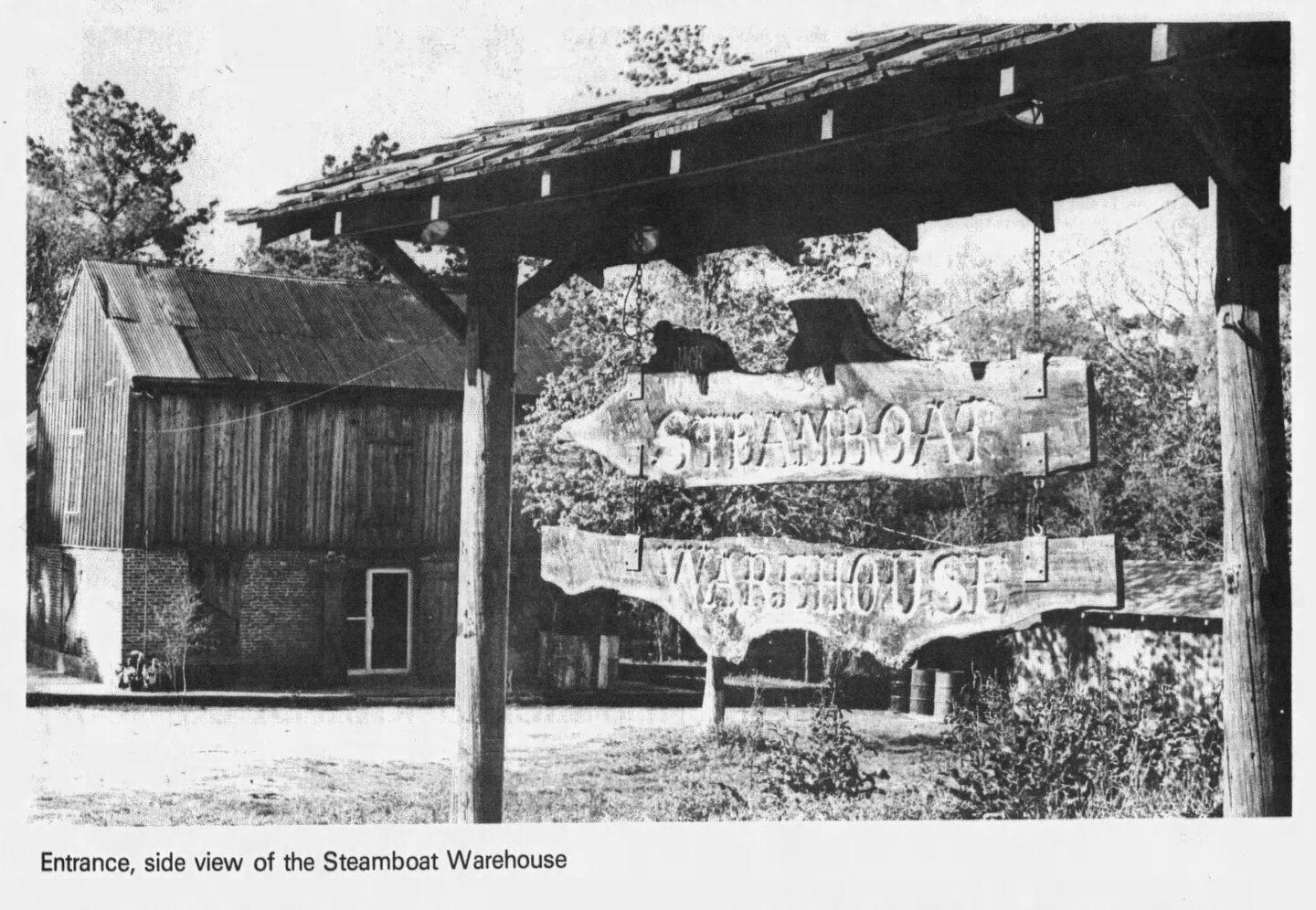
    <summary type="html"><![CDATA[<p><strong><em>A warehouse built in the 1800s as a pit stop for steamboats going to and from New Orleans still continues its story today in the form of a restaurant that caters to locals and visitors from around the world.</em></strong></p><img src="https://mail.acadianahistorical.org/files/fullsize/6dd08b56b6ef31d440c82adc139823af.jpg" alt="Come on in!" /><br/><p>The steamboat warehouse started construction in 1819 and opened its doors in 1823 along the banks of Bayou Courtableau in the small, port town of Washington, LA, established in 1720.  The warehouse was originally a docking location for “steamboats carrying passengers and cargo”  and “a gathering place for travelers, cotton brokers, steamboat mean, and roustabouts.”  After the last steamboat left Washington in 1900, the warehouse was converted into a feed mill and eventually a general store.  Following the encouragement from his wife “’Rusty’”, Jack Womack purchased the warehouse in 1976 from Ruth Fontenot to create a restaurant where locals and tourists could gather to enjoy Louisiana-style dining.  In 1977, Womack had the warehouse restored with the help of his building contractor, Sebe Pierrel, and tried to keep as much of the original warehouse preserved. The Steamboat Warehouse still contains the same “bricks in the walls and on the floor” and cypress beams that “were felled, pit-sawed, and trimmed with local foot axes” after they floated down Bayou Courtableau hundreds of years ago.  Preserving as many original features as possible led to Womack winning first place in the Business for Beauty Program which had more than 3,000 contestants entered.  Memorabilia surrounds the entire restaurant and guests are greeted with framed pages from the Opelousas Gazette written in the 1840s, lanterns hanging from the beams, and encased tickets showing the prices of items listed from over one hundred years ago.  Guests have a variety of authentic Louisiana food to choose from like “paddle-wheel potatoes, hush puppies, and garlic grits” that pair well with their steak or seafood entrees.  Their delicious menu even landed the Steamboat Warehouse with awards like the best Cajun cuisine, étouffée, seafood platter, steak, and yams all throughout Acadiana.  Since its establishment almost 200 years ago, the Steamboat Warehouse continues to provide a historic and appetizing experience for all guests that step through their doors and hopefully will continue to do so for many years to come. </p><p><em><strong><a href="https://mail.acadianahistorical.org/items/show/141">For more (including 11 images&#32;&amp;&#32;1 audio file) view the original article</a></strong></em></p>]]></summary>
    <published>2022-03-31T18:32:04+00:00</published>
    <updated>2026-03-04T22:42:48+00:00</updated>
    <link rel="alternate" type="text/html" href="https://mail.acadianahistorical.org/items/show/141"/>
    <id>https://mail.acadianahistorical.org/items/show/141</id>
    <author>
      <name>Claire Bordelon</name>
    </author>
  </entry>
  <entry>
    <title type="html"><![CDATA[The Southern Louisiana Saint: A story of Charlene Richard ]]></title>
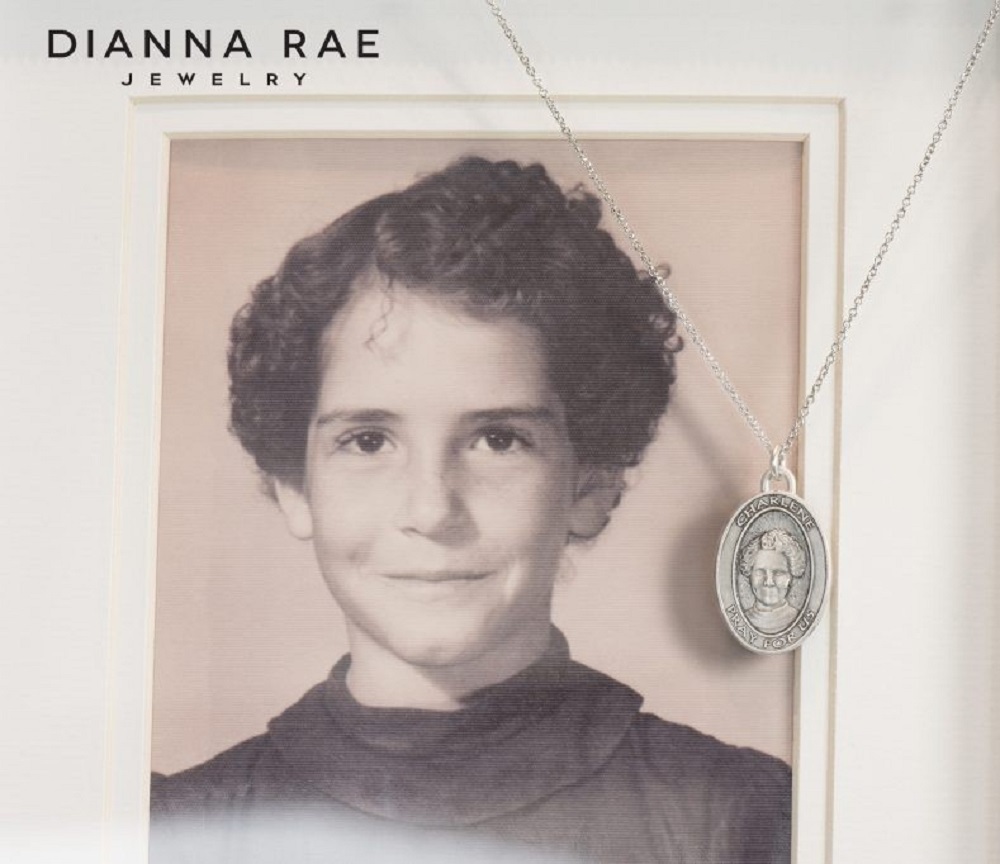
    <summary type="html"><![CDATA[<p><strong><em>An ordinary girl, with an extraordinary faith.  </em></strong></p><img src="https://mail.acadianahistorical.org/files/fullsize/32d91f1b3a288200c9a63fab38379644.jpg" alt="Charlene Richard. " /><br/><p>“O.K., Father who am I to suffer for today?” were the words of Charlene Richard, a 12-year old girl from Church Point, Louisiana.  A seemingly normal young lady who would find herself stricken with acute lymphatic leukemia.  For most, the painful diagnosis would be a time of fear and unease, however, for Charlene, acceptance was easy.</p><p>As a child of God, Charlene did what all normal children did in the year of 1959: she went to school and church and spent time with friends.  Yet, she wanted more out of her religious life.  She would ask her grandmother to teach her how to pray and she was always more active within the church.  Following her diagnosis, Charlene tapped into her deep religious connections and she found salvation.  During her stay at Our Lady of Lourdes Hospital in Lafayette, Charlene offered up her suffering for others and she prayed for the sick to be healed or the lost to be found by God.</p><p>On the 11th of August, Charlene passed away, yet her memory and her intercession live on.  Many people who knew Charlene in the last two weeks of her life, claim that she was truly a saint.  The “little Cajun saint.”  It is reported that all the people Charlene actively prayed for during her time of illness, were healed of their illness or converted to Catholicism.  Today, many people still pray for Charlene’s intercession and for those who believe in the power of prayer, often they will find those prayers are answered.  </p><p><em><strong><a href="https://mail.acadianahistorical.org/items/show/76">For more (including 3 images&#32;&amp;&#32;1 audio file) view the original article</a></strong></em></p>]]></summary>
    <published>2018-05-05T18:31:37+00:00</published>
    <updated>2026-03-04T22:42:47+00:00</updated>
    <link rel="alternate" type="text/html" href="https://mail.acadianahistorical.org/items/show/76"/>
    <id>https://mail.acadianahistorical.org/items/show/76</id>
    <author>
      <name>Nina M. Hoffpauir </name>
    </author>
  </entry>
  <entry>
    <title type="html"><![CDATA[The Show Must Go On: The Story of the Grand Opera House of the South]]></title>
    <summary type="html"><![CDATA[<img src="https://mail.acadianahistorical.org/files/fullsize/19f2aaa59ee517b77ee65a5772a5f10b.jpg" alt="Grand Opera House of the South, 1913" /><br/><p>In the year 1901, David E. Lyons built a theatre in downtown Crowley.  It is estimated that the entire 33,000 square foot building priced out at approximately 18,000 dollars. The original name for this theater is debated, but the terms, “the opera house” (according to The Crowley Post Signal article by Crystal Istre) and “The Grand” (according to the Grand Opera House of the South’s official website) are two names that can be found in the oldest records. Regardless of the name, the theater was used predominately for live performances in its first years, before the era of silent films became popular and took the stages by storm. In the year 1920, The Crowley Elk Lodge purchased the theater from Lyons.</p><p>Following the silent film heyday and the Great Depression, The Grand was forced to shut its doors in 1940. It unfortunately sat empty for 69 years. Contrary to reasonable suspicion, the theater itself was preserved well. In 1999,  John Lazar Gielen and his family purchased the building. The Gielen family owned it until the year 2004, when they donated it to the newly founded 501c3 “Grand Opera House of the South”. Over time, and with overwhelming support from local, state, and federal historical preservation organizations, the GOHS was able to give the building 4.5 million dollars worth of repairs and improvements. They were even able to reopen in 2008. (GOHS website)</p><p>The Crowley Post Signal told the story originally written by the Crowley Daily Signal on an esteemed guest appearance in 1921. The story consists of how the New York Yankees, spearheaded by the famed Babe Ruth came to Crowley to play a game of baseball. The Grand and the nearby Acadia theater both played films that starred the great bambino in honor of the special visit. The Grand went one step further though. They made an advertisement with Babe Ruth on it indicating that he will be making a special appearance during the screening. Throngs of people flocked into the Grand to see him. Unfortunately, there is no evidence that Babe Ruth actually showed up. It was likely much to the disappointment of the theatergoers, but nevertheless made for a very lucrative day for the box office at the Grand. With that said, it should be noted that The Crowley Post Signal wrote another story in 2014 indicating that Babe Ruth’s autograph is</p><p>clearly written on the walls. Given this, it muddies the waters and makes it much more difficult to truly know if the renowned baseball player actually made an appearance. </p><p>All in all, the GOHS is a story of revival and hope for theater and showbiz of days gone by. </p><p>Uknown author, http://www.thegrandoperahouse.org/what-we-do “History of the Grand Opera House” unknown date</p><p>Crystal Istre The Crowley Post Signal “Crowley’s Opera House” https://www.newspapers.com/image/ 470680235/?match=1&terms=“Crowley’s%20Opera%20House”%20 Page 18 April 11, 2004 </p><p>Mire, Ann and Quibodeaux, Meghan S. The Crowley Post Signal “Dave E. Lyons’ ‘Grand’ Vision” https://www.newspapers.com/image/487418641/?match=1&terms=“Dave%20E. %20Lyons’%20‘Grand’%20Vision” page 6 also responsible for both black and white pictures 6, August 17, 2014</p><p>Picture of clipping regarding New York Yankees: Unknown author, The Crowley Post Signal, Wednesday March 16, 1921, page 1. https://www.newspapers.com/image/226469717/?match=1 </p><p>In color photos taken by C.E. Richard with photographer in March 2024</p><p><em><strong><a href="https://mail.acadianahistorical.org/items/show/237">For more (including 5 images&#32;&amp;&#32;1 audio file) view the original article</a></strong></em></p>]]></summary>
    <published>2024-05-02T23:56:41+00:00</published>
    <updated>2026-03-04T22:42:50+00:00</updated>
    <link rel="alternate" type="text/html" href="https://mail.acadianahistorical.org/items/show/237"/>
    <id>https://mail.acadianahistorical.org/items/show/237</id>
    <author>
      <name>Acadiana Historical</name>
    </author>
  </entry>
  <entry>
    <title type="html"><![CDATA[The Resurrection of Darby Plantation: Darby Plantation is Reborn into a Beautiful Golf Club Community Development]]></title>
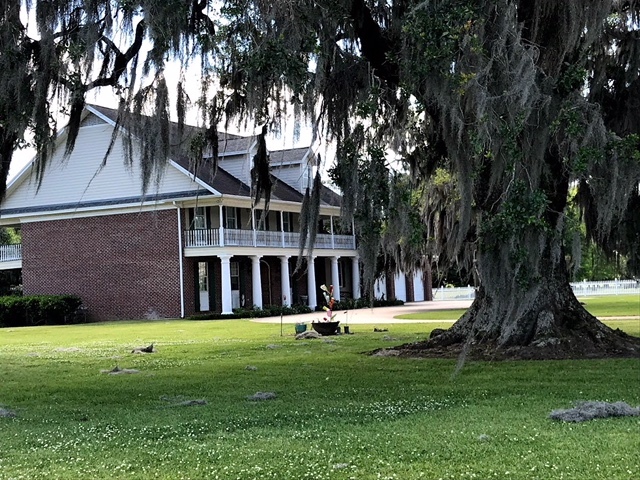
    <summary type="html"><![CDATA[<p><strong><em>	One of the majestic gems that once graced the Spanish Lake area of New Iberia, Darby Plantation was built in 1813 by Louis St. Marc Darby and was an excellent example of the rural Louisiana colonial architecture that is found in large homes in the Teche region.  Spanish Lake, at the time the home was built, was twice as large as it is today; it was drained and reformed during a drainage project over the years.  While the home was not as elaborately detailed as many formal plantation homes on the Mississippi River, it was nonetheless a beautiful giant among the enormous branches of live oaks and miles of sugar cane fields.  </p><p>During the Civil War, Union troops stormed the home with horses, demolishing its contents, and this seemed to be the beginning of the end of the homestead since the plantation was never able to recover financially.  Reluctantly its property was sold off, a portion at a time, to pay off its debts. The home was occupied until the late 1960s, but it was in poor condition and was donated to the Attakapas Historical Society in 1970.  Plans were in the works to restore the home and use it as a museum, but it was tragically destroyed by fire in 1979.  </p><p>The original Darby Plantation was placed on the National Registry of Historic Places in 1973.  It has since been fully rebuilt as a private residence, the owners taking great care to use the original plans and footprint, and use whatever bricks that had survived the fire.  Also, a beautiful golf course and luxury home development called Squirrel Run has been built on the property surrounding the home.  As a result, many more individuals are now better able to enjoy the beautiful surroundings of the old plantation home.</p></strong></p><img src="https://mail.acadianahistorical.org/files/fullsize/070a0eaea2f0b5f2176ca0d4c0ca92af.jpg" alt="A modern replica of the Darby Plantation Home (which is a private residence) used the original plans and footprint of the old home which was destroyed by fire in 1979." /><br/><p>           Considered to be one of the most famous paintings by the celebrated Cajun painter, George Rodgrigue, the Aioli Dinner features a group of men sitting around a large table set for a meal under the shade of a large live oak tree in the early 1900s.  The men present belong to a gourmet society, a group of friends from the community that met monthly on a Saturday afternoon in order to pause for fellowship and camaraderie, and they are being served by some women and younger men surrounding them.  In the background of the painting is a large home identified as Darby Plantation which is located just north of New Iberia, and although this particular gathering did not actually take place on its grounds, Rodgrigue chose to paint Darby Plantation into the picture because it was one of the only sites of the dinner that was still standing, although it was in poor condition.  When he finished the painting in 1969, the home was unoccupied and in disrepair, and in ten short years, it would tragically be destroyed by fire. Yet, the home has a colorful history that is preserved and remembered, in part, by being immortalized in Rodrigue's painting.  </p><p>Originally known as Coteau, Darby Plantation was one of four large homes near Spanish Lake in the early 1800s.  It was built in 1813 by Louis St. Marc Darby and was at one time considered to be one of the oldest structures in New Iberia.  Louis’ grandfather, a wealthy English immigrant, arrived in the US in 1719, and in 1737 he married a native of France and settled in New Iberia.  The home was built on property inherited by Louis' father, Jean-Baptiste St. Marc Darby.  The home was built for Louis’ wife, Felicite de St. Amant, and had remained in the family for over 150 years.  </p><p>During the Civil War, Union troops rode horses inside the house, demolishing its contents, and this seemed to be the beginning of the decline of the homestead.  The owners never seemed to be able to completely recover from ongoing financial problems, and the surrounding croplands were reluctantly sold off, parts at a time until finally, all that remained was the home itself.  The property continued to be occupied until the late 1960s and was eventually donated to the Attakapas Historical Society in 1970. Plans were in the works to fully restore the home and use it as a museum, but since the fire in 1979, updated plans have had to settle on building a replica of the original home incorporating the bricks that still remained.  </p><p>Darby Plantation was once considered to be an excellent example of the rural Louisiana colonial architecture that is found in large homes of the Teche region.  While many such homes may lack the elaborate detailing of other formal plantation homes, they still remain a graceful, yet practical addition to the old, moss-covered live oaks surrounded by fields of crops.   </p><p>The home had two stories with open galleries on the front, side, and part of the back.  The front gallery at the time of its donation was dilapidated, the side gallery was in fair condition, and the back gallery had been removed.  The lower level was of solid brick which was plastered on both sides.  The flooring on the lower level was once marble tile but was packed ground when last examined.  The upper level used a French style of construction known as “briquet entre poteaux,” and was made of heavy cypress with full and cut brick filling the spaces between the posts.  This was covered in plaster for the inner walls, and with cypress siding on the exterior upper level.  The home had a gabled roof that extended over the galleries.  The roof of the upper and side galleries was supported by a colonnade of columns made of masonry on the lower floor and wood on the upper.  There was a staircase going to the upper gallery on the front side.  There are also three underground cisterns that project about three feet from ground level.   </p><p>Darby Plantation was placed on the National Registry of Historic Places in 1973.  After the tragic fire in 1979, it was bought by Mr. Perry Sagura, a local architect who rebuilt it as close to the original plans and footprint as possible while, at the same time, still having the conveniences of a modern home.  In addition, a beautiful golf course and luxury home development called Squirrel Run have been built on the property that once belonged to the plantation. </p><p><em><strong><a href="https://mail.acadianahistorical.org/items/show/51">For more (including 15 images&#32;&amp;&#32;1 audio file) view the original article</a></strong></em></p>]]></summary>
    <published>2018-04-26T15:50:53+00:00</published>
    <updated>2026-03-04T22:42:46+00:00</updated>
    <link rel="alternate" type="text/html" href="https://mail.acadianahistorical.org/items/show/51"/>
    <id>https://mail.acadianahistorical.org/items/show/51</id>
    <author>
      <name>Rusty Chastant</name>
    </author>
  </entry>
  <entry>
    <title type="html"><![CDATA[The Real Christian: The Story of Auguste Robert &quot;Nonco&quot; Pelafigue]]></title>
    <summary type="html"><![CDATA[<p><strong><em>Performing miracles does not make one a saint, but it is to love as Christ Jesus loves that makes one a saint.</em></strong></p><img src="https://mail.acadianahistorical.org/files/fullsize/90cd3be8c4dac9280292d26a59c65872.jpg" alt="Auguste Robert &quot;Nonco&quot; Pelafigue" /><br/><p>The town of Arnaudville was a deeply Catholic area in Southern Louisiana, but the citizens would come to recognize a local layman as a saint. Auguste Robert Pelafigue was first born in Beaucens, France. He later settled in Arnaudville the year after his birth. He would become a teacher at Arnaudville’s Little Flower Catholic School later in his life. He was very active in the community,  producing plays and pageants for the schoolchildren. He would also teach the schoolchildren catechism for free, even the black children, despite the presence of racial segregation. When he worked for the Apostleship of Prayer League of the Sacred Heart, he would hand out the league's leaflets to the citizens of Arnaudville. Even during rainy or cold days, he would continue to hand out the leaflets, stating that he would use the harsh environment as penance for sinners to convert and release souls from Purgatory.</p><p>Bishop Jules Benjamin Jeanmard of the Diocese of Lafayette, Louisiana granted Pelafigue a papal decree for his Christian service in the town of Arnaudville. However, Pelafigue’s life came to an end in 1977, and his body was put to rest in Mausoleum 1 of St. John Francis Regis Catholic Church. His grave became a pilgrimage site for the residents of Arnaudville to pay him respect for his Christian service among the town’s schoolchildren. In 2020, Bishop Douglas J. Deshotel opened Pelafigue’s cause for canonization.</p><p><em><strong><a href="https://mail.acadianahistorical.org/items/show/110">For more (including 7 images&#32;&amp;&#32;1 audio file) view the original article</a></strong></em></p>]]></summary>
    <published>2022-03-03T22:37:30+00:00</published>
    <updated>2026-03-04T22:42:47+00:00</updated>
    <link rel="alternate" type="text/html" href="https://mail.acadianahistorical.org/items/show/110"/>
    <id>https://mail.acadianahistorical.org/items/show/110</id>
    <author>
      <name>Matthew D. Mayer</name>
    </author>
  </entry>
  <entry>
    <title type="html"><![CDATA[The Oldest House in Lafayette Parish is Circa 1790. : The seventh generation of the Arceneaux family still lives in The Arceneaux House, circa 1790.  ]]></title>
    <summary type="html"><![CDATA[<p><strong><em>If one were to visit Vermillionville today, they would see what is known as the Beaubassin House which is incorrectly dated as 1840.  In reality, it is much, much older, from as early as 1790, and its twin, known as the Arceneaux House, which is identical in its layout and construction, was built at the same time and is still occupied by members of the seventh generation of the Arceneaux family.  </em></strong></p><img src="https://mail.acadianahistorical.org/files/fullsize/448e92523e6b5e2a6b06e4782a35da7a.jpg" alt="A seventh-generation member of the Arceneaux family lives in the Arceneaux House, circa 1790." /><br/><p>The Beaubassin House and the Arceneaux House were built by two brothers, Pierre and Louis Arceneaux, the two sons of Louis Penault Arceneaux.  The father came to Lafayette Parish in 1765 and is believed to be the inspiration for the character Gabriel in Longfellow's famous poem, "Evangeline."  Louis Penault and his two sons helped each other in building both houses, and they were built near each other on adjoining properties at Beau Bassin Ridge just east of Carencro around 1790.  In 1838 the descendants of the younger son, Louis, moved the Arceneaux House by mules and logs to its present location about five miles southeast near Louis Arceneaux Road to be nearer to some cattle operations.  The Arceneaux House differs from the Beaubassin House because it now has a large hallway in the center of the home which was added to adjoin the two halves of the house after it was moved.    Both homes are made of cypress, have boussillage insulation (a mud and moss mixture), and have an attic that can be used as an upstairs area.  The Arceneaux Home also differs in that it is also still occupied by the seventh generation of the Arceneaux family.  Extensive additions were made to it to make it into a modern, functional home.  The original part of the home is registered with the National Registry of Historic Places as Circa 1790.  The father's home which was much older than these two homes was unfortunately struck by lightning and destroyed by fire several years after his two sons homes were built.</p><p><em><strong><a href="https://mail.acadianahistorical.org/items/show/53">For more (including 7 images&#32;&amp;&#32;1 audio file) view the original article</a></strong></em></p>]]></summary>
    <published>2018-04-26T16:02:20+00:00</published>
    <updated>2026-03-04T22:42:47+00:00</updated>
    <link rel="alternate" type="text/html" href="https://mail.acadianahistorical.org/items/show/53"/>
    <id>https://mail.acadianahistorical.org/items/show/53</id>
    <author>
      <name>Rusty Chastant</name>
    </author>
  </entry>
  <entry>
    <title type="html"><![CDATA[The Old Wooden Church: St. Gabriel Church]]></title>
    <summary type="html"><![CDATA[<p><strong><em>18th Century Church</em></strong></p><img src="https://mail.acadianahistorical.org/files/fullsize/82a824b26acc6290b5f9709993d18377.jpg" alt="[Untitled]" /><br/><p>St. Gabriel church is a roman catholic church located in the St. Gabriel perish. This church was built in 1769 by Father Dagobert. This church is considered to be one of the oldest, if not the oldest, standing wooden churches in the region. St. Gabriel church played a big role in shaping the religion in the region and was an important church for many Acadians who found a safe haven in southern Louisiana. This church has been dismantled and moved several times throughout its history, and the original location of the church is now in the Mississippi river. Although the church has been moved numerous times, the original French, colonial church structure still remains intact and gives the church a unique feature. This historic church is still standing and still hosts mass to continue to spread the catholic faith within the region.</p><p><em><strong><a href="https://mail.acadianahistorical.org/items/show/50">For more (including 1 video) view the original article</a></strong></em></p>]]></summary>
    <published>2018-04-26T15:50:11+00:00</published>
    <updated>2026-03-04T22:42:46+00:00</updated>
    <link rel="alternate" type="text/html" href="https://mail.acadianahistorical.org/items/show/50"/>
    <id>https://mail.acadianahistorical.org/items/show/50</id>
    <author>
      <name>Nicholas DeLucia</name>
    </author>
  </entry>
  <entry>
    <title type="html"><![CDATA[The Old Jesuit Church: The St. Charles College]]></title>
    <summary type="html"><![CDATA[<p><strong><em>The College Turned Church</em></strong></p><img src="https://mail.acadianahistorical.org/files/fullsize/e8c1b9e24f17cbfcd5d656a999502e61.jpg" alt="The Old St. Charles Church" /><br/><p>St. Charles College was established in 1837 in St. Charles parish, which is the third oldest parish in the Diocese of Lafayette. The site of the church was first purchased in 1819 by Bishop Louis William Dobourg for $10,000. In 1838 the church was officially built, and in the beginning the church was built and staffed by numerous Jesuit brothers who felt the need for a Jesuit following within the area. The first purpose of this building was not a church, but instead a school for young boys and men that wanted to learn about the catholic religion. At its peak the school enrolled 128 students in one year.  As the church entered the 20th century, still a school at this time, it burned down in a fire and had to be rebuilt to what we see today. At this same time the school was transitioning from a school, to a college that only focused on training men into Jesuit priest and brothers. At the peak of this college, the school enrolled about 120 people (50 Jesuit priest and 40 juniors in training). This continued until 1972, when the college finally transformed into a church where people come and complete spiritual exercises in attempt to strengthen their faith. Due to this transition the college officially renamed the building from St. Charles College to what it is today, The Jesuit Spirituality Center. </p><p><em><strong><a href="https://mail.acadianahistorical.org/items/show/17">For more (including 2 images) view the original article</a></strong></em></p>]]></summary>
    <published>2018-04-26T14:56:21+00:00</published>
    <updated>2026-03-04T22:42:45+00:00</updated>
    <link rel="alternate" type="text/html" href="https://mail.acadianahistorical.org/items/show/17"/>
    <id>https://mail.acadianahistorical.org/items/show/17</id>
    <author>
      <name>Nicholas DeLucia</name>
    </author>
  </entry>
  <entry>
    <title type="html"><![CDATA[The Old Cajun Church: St. Jacques de Cabahannoce Catholic Church ]]></title>
    <summary type="html"><![CDATA[<p><strong><em>The Church Under The River</em></strong></p><img src="https://mail.acadianahistorical.org/files/fullsize/f9744d7189915115d1739ee279779a61.jpg" alt="[Untitled]" /><br/><p>The St. Jacques de Cabahannoce Catholic Church was established in 1757. The original location of the church is now in the Mississippi river, and the actual church structure that was moved numerous times has been swept away by the Mississippi river throughout the years. Prior to being swept away by the river, this church was the hub for Cajun immigrants who were exiled from the north. The location of the original church was built right next to the Mississippi river and many of these Cajun people felt a connection to the church and the river, by which many of these Cajuns used to escape the north using boat. This church helped spread the catholic faith within the region and also helped many Acadians feel more comfortable when they first settled the area. Although the church’s structure is gone, remnants of the church and cemetery still remain at the current location. The current location can be visited or viewed by anybody who would be interested in learning about the historic site. As a service to the church the perish built St. James Church at a location very close to the last known spot of St. Jacques de Cabahnnoce church.   </p><p><em><strong><a href="https://mail.acadianahistorical.org/items/show/72">For more view the original article</a></strong></em></p>]]></summary>
    <published>2018-05-05T15:59:26+00:00</published>
    <updated>2026-03-04T22:42:47+00:00</updated>
    <link rel="alternate" type="text/html" href="https://mail.acadianahistorical.org/items/show/72"/>
    <id>https://mail.acadianahistorical.org/items/show/72</id>
    <author>
      <name>Nicholas DeLucia</name>
    </author>
  </entry>
  <entry>
    <title type="html"><![CDATA[The Miracle that Paved the Way to Sainthood: Academy of the Sacred Heart - Grand Coteau, LA]]></title>
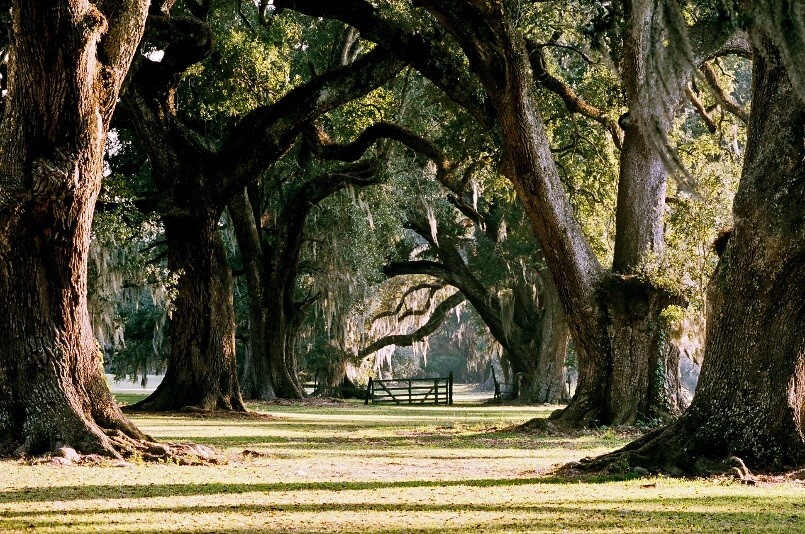
    <summary type="html"><![CDATA[<p><strong><em>The first miracle in North America ratified by the Vatican happened in a small town in south Louisiana.</em></strong></p><img src="https://mail.acadianahistorical.org/files/fullsize/3303090a011f97355a292b7e23f4d188.jpg" alt="Oaks Connecting the Academy and St. Charles College" /><br/><p>Situated in the quiet beauty of Grand Coteau is a historic school which attracts talented female scholars both from Louisiana and around the world. Established by the Religious of the Sacred Heart in the early 1800s, the Academy has remained in existence for nearly two hundred years—longer than any of the over 200 schools run by the order (“One Hundred” 6). What began as a simple convent in a remote area has since grown into a beautiful school with a history that has earned it national recognition (“One Hundred” 6). In 1866, seventeen-year-old Mary Wilson, a postulant in the Sacred Heart order, lay dying of cancer at the Academy. The sisters at the Academy began a novena asking Blessed John Berchmans for his intercession; on the ninth day, Mary Wilson was visited by John Berchmans and immediately cured of her illness. This miracle was ratified by the Vatican and was used as one of the two required miracles needed for canonization of St. John Berchmans (Sibille 4). A small shrine and chapel are located in the room where St. John Berchmans appeared to Mary Wilson, and the all-boys school, a counterpart to the girls’ Academy, is named after St. John Berchmans in honor of this miracle.</p><p><em><strong><a href="https://mail.acadianahistorical.org/items/show/62">For more (including 4 images&#32;&amp;&#32;1 audio file) view the original article</a></strong></em></p>]]></summary>
    <published>2018-05-02T20:26:02+00:00</published>
    <updated>2026-03-04T22:42:47+00:00</updated>
    <link rel="alternate" type="text/html" href="https://mail.acadianahistorical.org/items/show/62"/>
    <id>https://mail.acadianahistorical.org/items/show/62</id>
    <author>
      <name>Briley Higginbotham</name>
    </author>
  </entry>
  <entry>
    <title type="html"><![CDATA[The Many Faces of a Store: Store to Museum]]></title>
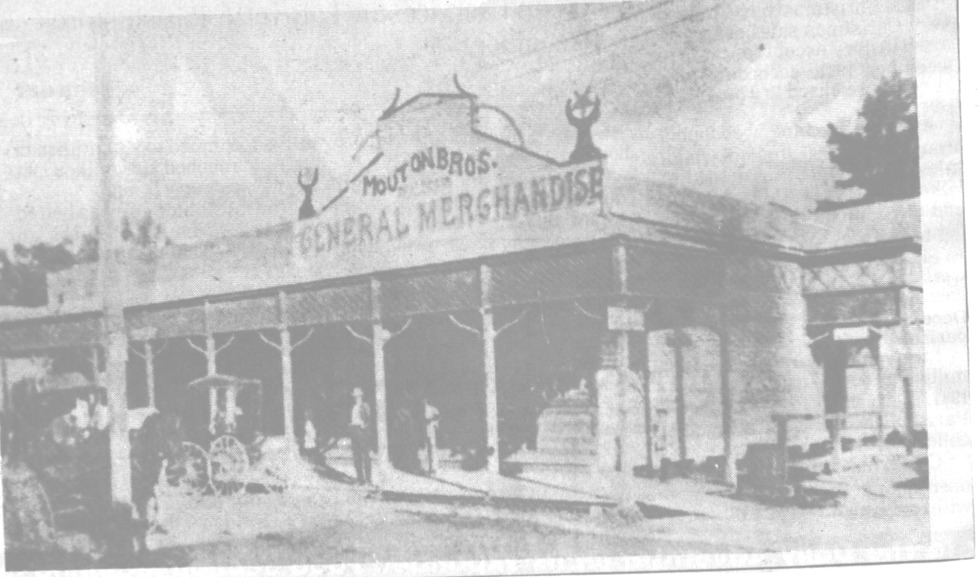
    <summary type="html"><![CDATA[<p><strong><em>Like in many towns anywhere in the world, buildings can take on different faces throughout their lives.</em></strong></p><img src="https://mail.acadianahistorical.org/files/fullsize/7722e59641e3a77d2b3f4bec85b2f0d9.jpg" alt="Mouton Brothers: General Merchandise Store" /><br/><p>LOCATION: LAFAYETTE, LAFAYETTE PARISH, LA </p><p>COORDINATES: 30.225685, -92.018216 (433 JEFFERSON ST.)</p><p>STATUS: REPLACED</p><p>Like in many towns anywhere in the world, buildings can take on different faces throughout their lives. Lafayette is no exception and one such building built by three Mouton brothers, was one of the first general stores in Lafayette. It was aptly named “Mouton Bros.: General Merchandise,” and what made them unique was that they billed their customers on an annual basis.  In 1916 Maurice Heymann bought the general store and changed it into the largest department store in Lafayette until 1937.  Heymann was an extremely influential businessman from New Orleans and many stores he bought or built in Lafayette still bear the Heymann name.  Heymann is most known for the development of the Heymann Oil Center in 1952, which turned the city of Lafayette into a booming place. Today the building takes on the face of the Lafayette Science Museum.  </p><p><em><strong><a href="https://mail.acadianahistorical.org/items/show/55">For more (including 5 images&#32;&amp;&#32;1 audio file) view the original article</a></strong></em></p>]]></summary>
    <published>2018-04-26T19:25:08+00:00</published>
    <updated>2026-03-04T22:42:47+00:00</updated>
    <link rel="alternate" type="text/html" href="https://mail.acadianahistorical.org/items/show/55"/>
    <id>https://mail.acadianahistorical.org/items/show/55</id>
    <author>
      <name>Rachel Blomquist</name>
    </author>
  </entry>
  <entry>
    <title type="html"><![CDATA[The Man Wolf : Rougarou]]></title>
    <summary type="html"><![CDATA[<img src="https://mail.acadianahistorical.org/files/fullsize/903be85d5357eb50db8cd9a4ec44e3fb.jpg" alt="Manchac Swamp" /><br/><p>In Manchac Swamp, in Louisiana St. John parish, the Rougarou is a popular folklore similar to bigfoot. However, it’s a man who shapeshifts and looks tall and animal like. “It is most often described as having a human body with the head of a wolf or dog, with glowing red eyes and razor sharp teeth (Nadel).”  It’s birth place is France and around the time of the Middle Ages its story was used to keep curious children from playing around in the woods. Though, over time the story changed when the french traveled to southwest Louisiana.</p><p>Darcia Naydel said in her article The Rougarou: Louisiana's Cajun Werewolf that some viewed the idea of Rougarou as a genetic disorder that is turned on by a trigger. After the human body enlarges and crave fresh raw meat which is scary because someone you walk by or live next to everyday could be this beast. Many tourist visit Manchac Swamp and report that they would often hear a growl or howl in the distance. Since wolves are not common in the swamp many come conclude that it is the Rougarou lurking and roaming around the area. </p><p><em><strong><a href="https://mail.acadianahistorical.org/items/show/60">For more (including 4 images) view the original article</a></strong></em></p>]]></summary>
    <published>2018-04-30T21:20:48+00:00</published>
    <updated>2026-03-04T22:42:47+00:00</updated>
    <link rel="alternate" type="text/html" href="https://mail.acadianahistorical.org/items/show/60"/>
    <id>https://mail.acadianahistorical.org/items/show/60</id>
    <author>
      <name>Alyssa Dottery</name>
    </author>
  </entry>
  <entry>
    <title type="html"><![CDATA[The Lost Treasure of the Tunica Tribe]]></title>
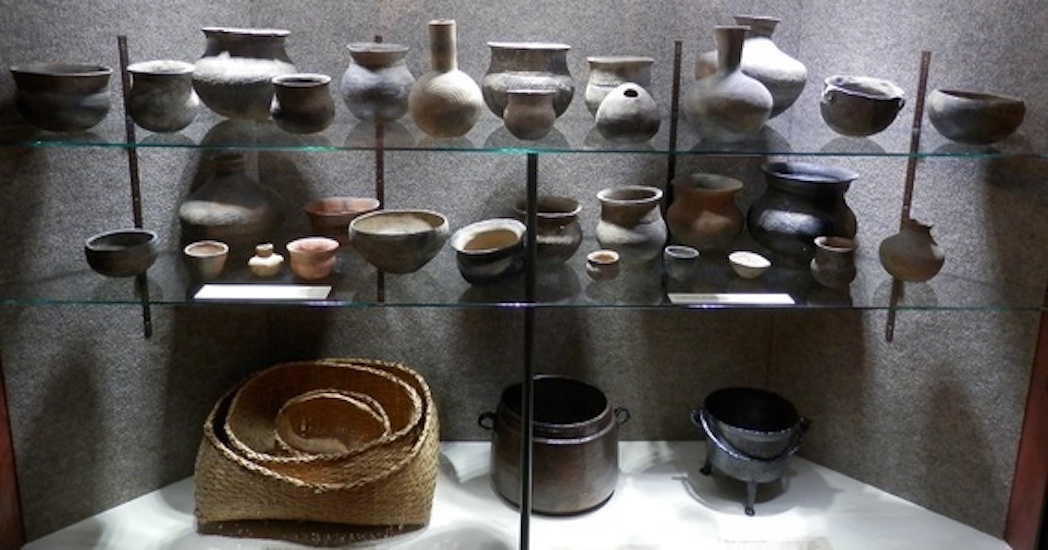
    <summary type="html"><![CDATA[<p><strong><em>The Tunica Treasure contained thousands of artifacts the tribe made themselves or traded for. </em></strong></p><img src="https://mail.acadianahistorical.org/files/fullsize/fd2638eddfac57489e284d1809ec7c69.jpg" alt="Tunica Treasure Today" /><br/><p>The Tunica Treasure is a once lost treasure from the Tunica-Biloxi tribe. The treasure moved across Louisiana over many years and was lost after the chief who owned it died. The treasure includes musket parts, iron tools, jewelry, French and tribal pottery, and over 200,000 European trade beads. The beads are more than half of all the beads ever found in the southeastern United States. </p><p>When Tunica Chief Cahura-Joligo was killed in 1731 in a raid by the Natchez Indians, he was buried alongside hundreds of other Tunica and their prized possessions. The site remained a mystery until 1968, when an Angola Prison guard, Leonard Charrier, went out with a metal detector at the Old Trudeau Plantation in West Feliciana parish. He discovered the grave site and treasure, then decided to dig the graves and keep all of the treasure to himself, destroying the sacred burial site. Charrier stored all of the treasures in his home and eventually attempted to sell the collection but could never provide proof of ownership, therefore a sale was never finalized. When Charrier filed a suit to claim ownership, the Tunica-Biloxi had become federally recognized due to the treasures link to the tribe and filed a countersuit. The Tunica-Biloxi would win the case and take possession of the treasure. The tribe rushed for donations and was able to raise enough money to restore them then put the artifacts into a museum in Marksville in 2011, where the treasure sits today. </p><p><em><strong><a href="https://mail.acadianahistorical.org/items/show/35">For more (including 4 images) view the original article</a></strong></em></p>]]></summary>
    <published>2018-04-26T15:32:04+00:00</published>
    <updated>2026-03-04T22:42:46+00:00</updated>
    <link rel="alternate" type="text/html" href="https://mail.acadianahistorical.org/items/show/35"/>
    <id>https://mail.acadianahistorical.org/items/show/35</id>
    <author>
      <name>Ryan LeBlanc</name>
    </author>
  </entry>
  <entry>
    <title type="html"><![CDATA[The Lost Town of Morrisonville ]]></title>
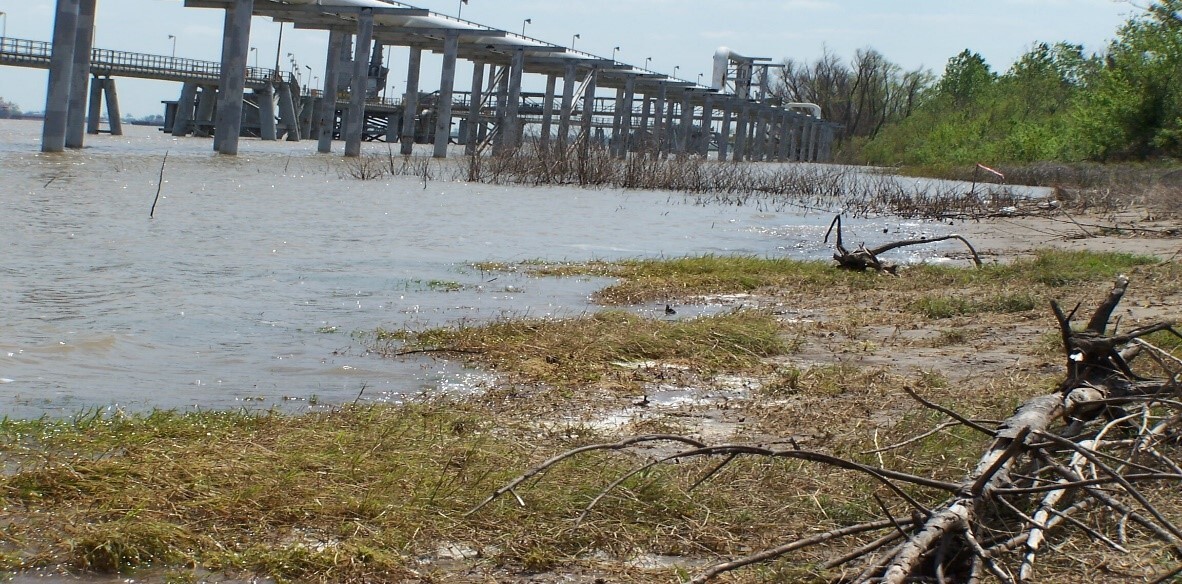
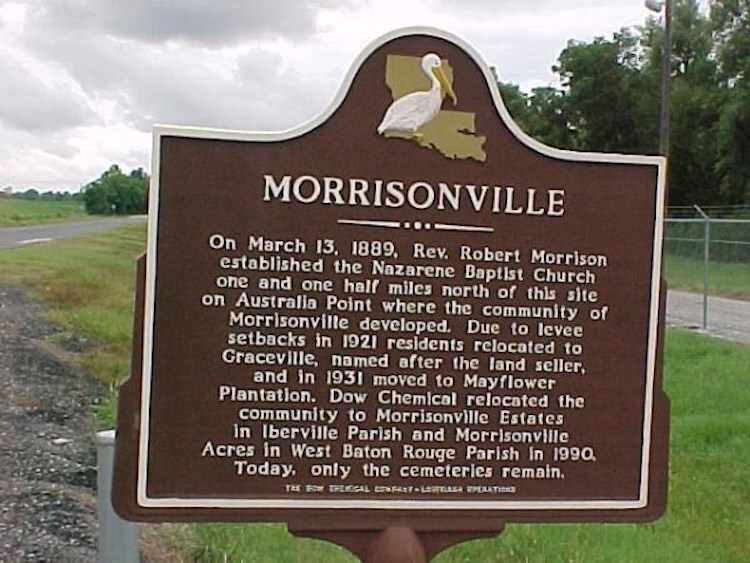
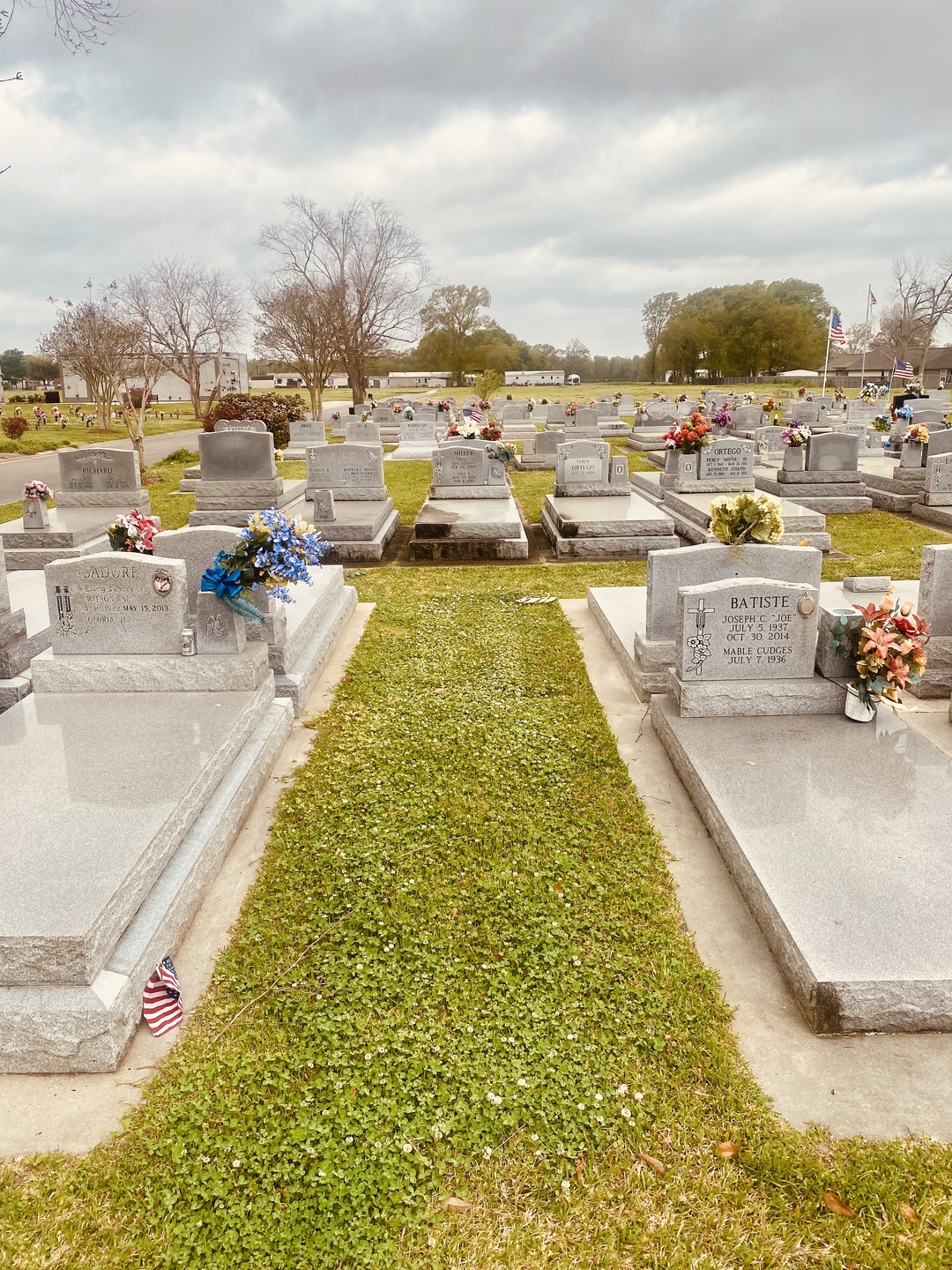
    <summary type="html"><![CDATA[<p><strong><em>The small, historic town of Morrisonville in Iberville Parish is not only lost to its past residences but also to history.</em></strong></p><img src="https://mail.acadianahistorical.org/files/fullsize/562f3b7d1a8a1c20409a07e8b51ea110.jpg" alt="Morrisonville&#039;s Marker" /><br/><p>LOCATION: PLAQUEMINE, IBERVILLE PARISH, LA</p><p>COORDINATES: 30.322331, -91.227700 (Nazarene Baptist’s Cemetery)</p><p>STATUS: LOST</p><p>The small, historic town of Morrisonville in Iberville Parish is not only lost to its past residences but also to history. Morrisonville was one of the oldest towns in the area as freed slaves had started it during the end of the Civil War.  Along the 85 miles between Baton Rouge and New Orleans, seats 75 of the largest plants in the U.S.  In 1958 the Dow Chemical Company moved to Plaquemine, but eventually its waste produce became a problem and they began to buy out land in the 1980s.  Morrisonville had no choice to leave come 1989 when there was a major groundwater contamination.  Today all that is left is a historical marker and the Nazarene Baptist’s cemetery.  </p><p><em><strong><a href="https://mail.acadianahistorical.org/items/show/29">For more (including 3 images&#32;&amp;&#32;1 audio file) view the original article</a></strong></em></p>]]></summary>
    <published>2018-04-26T15:19:23+00:00</published>
    <updated>2026-03-04T22:42:45+00:00</updated>
    <link rel="alternate" type="text/html" href="https://mail.acadianahistorical.org/items/show/29"/>
    <id>https://mail.acadianahistorical.org/items/show/29</id>
    <author>
      <name>Rachel Blomquist</name>
    </author>
  </entry>
  <entry>
    <title type="html"><![CDATA[The Lost History of Uncle Sam Plantation]]></title>
    <summary type="html"><![CDATA[<p><strong><em>The once large plantation is completely gone from the land today</em></strong></p><img src="https://mail.acadianahistorical.org/files/fullsize/95f51d2255b672839933ec752fc8a9bf.jpg" alt="Uncle Sam Plantation Main House" /><br/><p>The Uncle Sam Plantation is a demolished plantation in Convent, Louisiana. The plantation was one of the most extensive sugar cane plantations in its time. Uncle Sam Plantation was originally known as Constancia Plantation prior to 1864. It was established after the War of 1812 by Colonel Joseph Constance, but it was acquired by Pierre Auguste Samuel Fagot of La Rochelle, France in 1829. When Fagot died, he left the plantation to his widow and was run by his son-in-law Lucien Malus. They both died in the 1870’s and the property went to Jules and Camille Jacobs, who had married the daughters of Malus. </p><p>The plantation had many buildings during its time including the main house, slave quarters, mills, and even a slave hospital. The entire property was around 1300 acres. The plantation store was also an integral part of the plantation operation along with sugar cane production and processing as it engaged in commerce with the plantation laborers as well as others in the community. The main house was gutted by a fire in 1849 but the outside was saved and rebuilt. </p><p>In 1940 the Mississippi River was encroaching the levee in the front yard of the plantation. The house was eventually demolished but some structures still stood. Today the brick foundations of a slave hospital, sugar mill, sugar house, and one unidentified house remain. The demolition caused much of its history to be lost but some can still be found today. </p><p><em><strong><a href="https://mail.acadianahistorical.org/items/show/49">For more (including 3 images) view the original article</a></strong></em></p>]]></summary>
    <published>2018-04-26T15:48:21+00:00</published>
    <updated>2026-03-04T22:42:46+00:00</updated>
    <link rel="alternate" type="text/html" href="https://mail.acadianahistorical.org/items/show/49"/>
    <id>https://mail.acadianahistorical.org/items/show/49</id>
    <author>
      <name>Ryan LeBlanc</name>
    </author>
  </entry>
  <entry>
    <title type="html"><![CDATA[The Legendary Carencro Raceways: From Dirt to the Derby]]></title>
    <summary type="html"><![CDATA[<p><strong><em>On Friday nights we would make a supper—a free supper—and people would enter their horses. After Cajuns have a few beers, their horses are faster and the women are prettier.” The celebrated Don Stemman, owner of Carencro Raceways, 1968-1973.  </em></strong></p><img src="https://mail.acadianahistorical.org/files/fullsize/e909aad86d39432ad898d6f50753510f.jpg" alt="Between the Graves" /><br/><p>The site where Carencro Raceways once stood is now a place of quiet reflection. The soft, green lawn with its neatly kept graves serves as a place of remembrance. It's hard to imagine that a famed bush track existed where Evangeline Memorial Gardens currently stands. Evidence of the serene landscape’s history surfaces from time to time; a groundskeeper on the property proclaims that they still find remnants of the races when digging a new grave. Old beer bottles and bottle tops emerge in the freshly dug dirt. </p><p>Acadiana’s unsanctioned race tracks were famous throughout North America. So much so that in 1977, Walter Matthau filmed "Casey’s Shadow", a film about a “down-and-out Cajun trainer with a big dream,” in honor of the tracks' legacies. A match race in Matthau's 1977 movie, heralded as “one of the best racing movies of all time,” was filmed at Carencro Raceways. </p><p>Races at unsanctioned tracks were the highlight of the week and a major social event. Entire families would turn out on Sundays throughout the year, as there was no specific racing season. “It was a standard thing every Sunday. You came to the bush track and that was your pastime,” said Harris Desormeaux, world-renowned jockey, Kent Desormeaux’s father. Fred Girouard, the longtime maître d at Evangeline Downs, confirms the social component of bush track racing in an interview, stating “On Sunday, boy, people would come from all over. Nobody had much, and sometimes you’d see five families coming in one car.” </p><p>Racing in Acadiana was exciting and unique. Cajuns raced quarter horses instead of thoroughbreds. But what truly made racing in Acadiana different from the rest of the country were the jockeys. The riders were primarily boys, most as young as 6 or 7 years old. The smaller and lighter, the better. It is because riders started racing at such an early age that Louisiana has produced more winning jockeys than any other state in North America. Racing legends such as Calvin Borel, Robby Albarado, Shane Sellers, Kent Desormeaux, Eddie Delahoussaye, and Joe Talamo cut their teeth on the unsanctioned tracks and credit sites like Carencro Raceways to their meteoric rise in the racing world.</p><p><em><strong><a href="https://mail.acadianahistorical.org/items/show/145">For more (including 10 images) view the original article</a></strong></em></p>]]></summary>
    <published>2022-03-31T23:24:11+00:00</published>
    <updated>2026-03-04T22:42:48+00:00</updated>
    <link rel="alternate" type="text/html" href="https://mail.acadianahistorical.org/items/show/145"/>
    <id>https://mail.acadianahistorical.org/items/show/145</id>
    <author>
      <name>Laura M. Hughes</name>
    </author>
  </entry>
  <entry>
    <title type="html"><![CDATA[The Larose Link: An Underrated Connection]]></title>
    <summary type="html"><![CDATA[<p><strong><em>In October of 1961, the small town of Larose was met with an unusual kind of festivity. Jimmie Davis, a country-gospel singer turned Governor of Louisiana sang the popular songs "You Are My Sunshine" and “Peace in the Valley”, replete with his own backup vocal group known as the Plainsmen. Following this, ribbons were cut, and Jimmie & his wife rode in an open top convertible to the nearby high school football stadium, with the town of Larose parading all the way with him. All of this was to celebrate the opening of the newly built West Larose Bridge, known also as the Larose Link. </em></strong></p><img src="https://mail.acadianahistorical.org/files/fullsize/6a61365e1d32f17125eb8361e694e323.jpg" alt="The Larose Link During the Day" /><br/><p>The small Louisiana town of Larose began as a sugar plantation founded by Octave Harang in 1846. Harang had a canal dug from Bayou Lafourche to Lake Salvador which connected the plantation to New Orleans markets. As the town grew, it eventually got its own unofficial postmaster under the administration of Joseph Larose (actually of Portuguese descent rather than French). From this man comes the town’s name. Later, in the 1940s, the US Army Corps of Engineers would complete the Gulf Intracoastal Waterway (or GIWW), of which the canal originally dug by Octave Harang would be only a small part. This waterway and Bayou Lafourche intersect and create “4 corners”, which forms the heart of the town of Larose.</p><p>The Larose Link itself began its construction in 1959 under Gov. Earl Long but was completed in 1961 under Gov. Jimmie Davis. Gov. Davis, who had a successful career as a country-gospel singer before he became governor, only grew in popularity during his initial term. Davis not only continued to sing and perform on the campaign trail, he also pursued acting as well. Traveling as far as Nashville and Hollywood, he was sometimes criticized as Louisiana’s “absentee governor”. Perhaps most significant of Davis’ contributions to Larose and Louisiana was his popularization of the song “You Are My Sunshine”. Performing this song at the inauguration of the opening of the West Larose Bridge, this song would eventually be made into Louisiana’s official state song.</p><p>Gov. Jimmie Davis' version of the song can be heard here. https://www.youtube.com/watch?v=z1NfVi6SM3Q
Something that Bayou Lafourche and the GIWW both have in common is they are lifelines for the community of Larose. In addition to being a big reason that the community was born in the first place, these waterways still support Larose by bringing economy and industry to and through the town. In the past, this was mostly agriculture, but today it is chiefly the oil and gas industry which uses the town’s waterways. For example, North American Shipbuilding is headquartered in Larose and builds many different vessels for the energy industry, ultimately bringing much needed jobs to the area. Much of the product moving along the Gulf coast uses the GIWW, and so too does much of the oil and gas industry pass through Larose using Bayou Lafourche. In this way, Larose is a small hub for industry in the area. For the Larose Link’s part, the bridge serves as the most vital connection for the town and its people to cross these vital waterways. Stitching the divide across the GIWW, the Larose Link proves itself to be an underrated connection, both in the history and the present life of Larose.</p><p><em><strong><a href="https://mail.acadianahistorical.org/items/show/255">For more (including 8 images&#32;&amp;&#32;1 video) view the original article</a></strong></em></p>]]></summary>
    <published>2025-03-11T00:41:31+00:00</published>
    <updated>2026-03-04T22:42:50+00:00</updated>
    <link rel="alternate" type="text/html" href="https://mail.acadianahistorical.org/items/show/255"/>
    <id>https://mail.acadianahistorical.org/items/show/255</id>
    <author>
      <name>Hoby Serrette</name>
    </author>
  </entry>
  <entry>
    <title type="html"><![CDATA[The Largest Plantation Ever Built: Belle Grove Plantation]]></title>
    <summary type="html"><![CDATA[<p><strong><em>One of the largest plantations to ever be built in Louisiana and in the South was the Belle Grove Plantation of White Castle.  This southern mansion was 62 feet high and 122 feet wide that contained seventy-five rooms.</em></strong></p><img src="https://mail.acadianahistorical.org/files/fullsize/eb23153fda5e0777581a3f8082daa616.jpg" alt=" Survey Plans for the second floor " /><br/><p>LOCATION: WHITE CASTLE, IBERVILLE PARISH, LA</p><p>COORDINATES: 30.185731, -91.120011</p><p>STATUS: LOST </p><p>One of the largest plantations to ever be built in Louisiana and in the South was the Belle Grove Plantation of White Castle.  This southern mansion was 62 feet high and 122 feet wide that contained seventy-five rooms. John Andrews, a sugar planter from Virginia, built Belle Grove in 1857. To make it stand out more, its colors were not standard white and green but pale lavender rose, blue and yellow. Eventually Andrews decided to sell Belle Grove and planter Henry Ware bought it. The Ware family was the last family to own this plantation and was forced to sell the home, as there had been a series of bad crops in the 1920s.  Unfortunately one night in 1952 a fire broke out and the beautiful plantation was lost to the flames. By 1958 the rest of it was bulldozed and now the Belle Grove subdivision is all that is left to remember Belle Grove Plantation.  </p><p><em><strong><a href="https://mail.acadianahistorical.org/items/show/20">For more (including 4 images&#32;&amp;&#32;1 audio file) view the original article</a></strong></em></p>]]></summary>
    <published>2018-04-26T15:01:17+00:00</published>
    <updated>2026-03-04T22:42:45+00:00</updated>
    <link rel="alternate" type="text/html" href="https://mail.acadianahistorical.org/items/show/20"/>
    <id>https://mail.acadianahistorical.org/items/show/20</id>
    <author>
      <name>Rachel Blomquist</name>
    </author>
  </entry>
  <entry>
    <title type="html"><![CDATA[The Iberian Masterpiece: St. Peter Catholic Church]]></title>
    <summary type="html"><![CDATA[<p><strong><em>Duperier Grounds</em></strong></p><img src="https://mail.acadianahistorical.org/files/fullsize/eefae6ed4eab678df3fd20ccfd3a68ab.jpg" alt="[Untitled]" /><br/><p>St. Peter Catholic Church was established in 1838 shortly after the surrounding area saw an influx of French immigrants who moved down from the north. The growing population yearned for a church and one local man named Frederick Duperier made it happen when he purchased, and then donated the land the church sits on to the community for the sole purpose of building a church. According to the records Mr. Duperier had one provision, that the church be visible from his home which has now ironically created a very picturesque alley between the main street and St. Peter’s street. In 1889 the construction of the new church was complete, and it wasn’t until 1951 that the modern day church was built after the second church had to be taken down. The current St. Peter Church is a large structure with a red brick façade that imitates a French Renaissance design that the local catholic community is very proud of.</p><p><em><strong><a href="https://mail.acadianahistorical.org/items/show/37">For more (including 2 images) view the original article</a></strong></em></p>]]></summary>
    <published>2018-04-26T15:34:42+00:00</published>
    <updated>2026-03-04T22:42:46+00:00</updated>
    <link rel="alternate" type="text/html" href="https://mail.acadianahistorical.org/items/show/37"/>
    <id>https://mail.acadianahistorical.org/items/show/37</id>
    <author>
      <name>Nicholas DeLucia</name>
    </author>
  </entry>
  <entry>
    <title type="html"><![CDATA[The Holy Lieutenant: The Story of Fr. Joseph Verbis Lafleur]]></title>
    <summary type="html"><![CDATA[<p><strong><em>"My place is with the men."</em></strong></p><img src="https://mail.acadianahistorical.org/files/fullsize/ef2085afb6a59ad37085cdb294332e7e.jpg" alt="Lt. Fr. Joseph &quot;Verbis&quot; Lafleur Statue" /><br/><p>Chaplains were religious guides that served in the army to provide spiritual relief to soldiers. In Opelousas, Louisiana, Fr. Joseph Verbis Lafleur, a parishioner of St. Landry Catholic Church, joined the U.S. Army during World War II as a chaplain. He would live in Albuquerque, New Mexico with his unit until moving to the Philippines. However, the Japanese began invading the Philippines, attacking the unit. When offered a safe landing in Australia to avoid another Japanese attack, Fr. Lafleur refused. Consequently, the Japanese captured Fr. Lafleur and his unit, placing them in a prison camp.</p><p>In the camp, Fr. Lafleur managed to offer Mass to his unit as well as assist the sick. One day, Fr. Lafleur decided to leave with the Japanese as a prison laborer, but the American army arrived, forcing the Japanese to put the laborers in a vessel. However, the vessel did not carry a P.O.W. flag, leading an American submarine to torpedo the ship. Although the prisoners wanted Fr. Lafleur to escape first, he refused so he could help everyone else escape first. Unfortunately, he did not make it out of the vessel. In 2007, St. Landry Catholic Church erected a monument dedicated to Fr. Lafleur for his heroism. Later, in 2020, Bishop Douglas J. Deshotel opened Fr. Lafleur’s cause for canonization, granting him the title “Servant of God.”</p><p><em><strong><a href="https://mail.acadianahistorical.org/items/show/91">For more (including 4 images&#32;&amp;&#32;1 audio file) view the original article</a></strong></em></p>]]></summary>
    <published>2022-02-18T03:18:32+00:00</published>
    <updated>2026-03-04T22:42:47+00:00</updated>
    <link rel="alternate" type="text/html" href="https://mail.acadianahistorical.org/items/show/91"/>
    <id>https://mail.acadianahistorical.org/items/show/91</id>
    <author>
      <name>Matthew D. Mayer</name>
    </author>
  </entry>
  <entry>
    <title type="html"><![CDATA[The History of Holy Ghost Catholic Church: All one in Christ Jesus]]></title>
    <summary type="html"><![CDATA[<p><strong><em>As the Lord can bring good out of evil, He can bring the largest black parish church in the country out of segregation.</em></strong></p><img src="https://mail.acadianahistorical.org/files/fullsize/8351ef740700c4e4f34610a07d5d93f6.jpg" alt="Holy Ghost Catholic Church" /><br/><p>Louisiana during the postbellum era instituted “black codes” that prevented black citizens from enjoying the same rights as white citizens. Eventually, “separate but equal” facilities came about to separate white citizens from black citizens, and many Christian communities created parishes exclusive to black Christians to prevent riots from white Christians. In Opelousas, LA came about Holy Ghost Catholic Church in 1921 to house the black Catholic community. Fr. James Hyland and the Holy Ghost Fathers would oversee the parishioners of the new black parish.</p><p>Originally, Mass for black Catholics was at a different time in St. Landry Catholic Church, which eventually transferred to a school auditorium. Soon, Holy Ghost School would emerge to support the schooling and religious education of the black congregants in 1921. Fr. Hyland wanted a building to do Mass for the black congregants, but many white citizens in Opelousas did not want there to be a black church near them. Unfortunate for them, Holy Ghost Catholic Church came about and became the largest black church in the U.S. The Pope even sent a delegate to the parish’s Holy Ghost School in 1925 based on his desire to oversee the Christian faith of black Catholics. Even after the end of segregation, the church continues to conduct Mass for the black community in Opelousas.</p><p><em><strong><a href="https://mail.acadianahistorical.org/items/show/151">For more (including 13 images&#32;&amp;&#32;1 audio file) view the original article</a></strong></em></p>]]></summary>
    <published>2022-04-12T09:48:37+00:00</published>
    <updated>2026-03-04T22:42:48+00:00</updated>
    <link rel="alternate" type="text/html" href="https://mail.acadianahistorical.org/items/show/151"/>
    <id>https://mail.acadianahistorical.org/items/show/151</id>
    <author>
      <name>Matthew D. Mayer</name>
    </author>
  </entry>
</feed>