Mount Zion Riverlake Cemetery: "To Lie With Those Who Have No Mark"
Text
One of the lost and forgotten cemeteries is maybe not so lost, but unfortunately becoming forgotten. The cemetery is famous but a search on Google maps reveals a simple word to describe this place: Graveyard. Upon further inspection, however, an entire world opens up. The cemetery is located in the small community of Oscar, Louisiana in Point Coupee Parish. Traveling down Louisiana Highway One, the road to the cemetery is barely visible. Once on the small, dirt road, it appears uninviting and you expect to see “No Trespassing” signs. The road is surrounded by sugarcane fields and about one mile down, a small tree covered area appears to the left. Inching closer, you can see the reflective white of the stones appearing through the trees. The cemetery appears taken care of and quite beautiful. Large oak trees shade most of the grounds and each are surrounded by beautiful, thick cast iron plants. Many of the sites look old and worn but several appear to have received a recent facelift. Some new, marble headstones sit next to the originals that were concrete and handwritten. The headstones speak of their owners as mothers, fathers, babies, soldiers, sports fans, and many other individualities. A particularly interesting headstone marks that of L. J. Johnson who died in 1924. The carved symbol above his name represents the Mosaic Templars of America (MTA). The MTA was founded in 1883 in Arkansas by two former slaves. For African Americans experiencing the Jim Crow South, times were tough and the MTA provided illness, death, and burial insurance to its members. The organization adopted its name from the Biblical story of Moses emancipating the Hebrew slaves. The local chapter name, number, and location are located at the bottom of the headstone.
One invisible disclosure within the cemetery of particular importance, is that the people buried there were either slaves or the descendants of slaves from Riverlake Plantation. The same house, built 200 years ago, still stands overlooking the cemetery. After emancipation, many former slaves stayed and worked on the grounds. Up until the 1980s, descendants still lived in the old slave quarters. They lived, they loved, they went to school, went to church, and still worked and lived on the property.
The cemetery’s most famous resident is that of Ernest J. Gaines, Louisiana’s own famous author who based most of his story’s setting and premise on Riverlake Plantation. Gaines is surrounded by many of his family and friends. His biggest fear was that the cemetery would disappear amongst the encroaching agriculture. He wanted to be buried there in hopes that his fame would draw attention to the place and those he was surrounded by were never forgotten. In the 1990s, Gaines and his wife created the Mount Zion Riverlake Cemetery Association in order to care for the cemetery. The association along with the University of Louisiana at Lafayette’s Ernest J. Gaines Center hosted and successfully carried out a cleanup of the cemetery every year. Unfortunately, due to Gaines’ passing, other association board member deaths, and COVID-19, the last cleanup occurred in October of 2019 and there has been no mention of new cleanup dates.
Mount Zion Riverlake Cemetery is hugely important to Acadiana history. Instead of being labeled generically, it should be remembered as an open-air museum of African American slaves and their descendants who lived and left an indelible mark that should never be forgotten.
Files

To Lie With Those Who Have No Mark
Headstone of Ernest J. Gaines | Date: March 23, 2022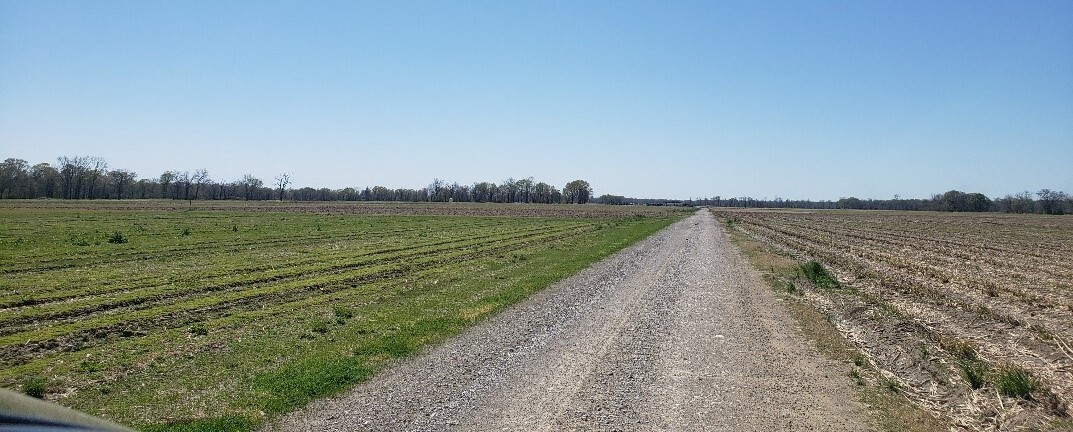
Desolate Way
The unnamed dirt road that leads to Mount Zion Riverlake Cemetery | Date: March 23, 2022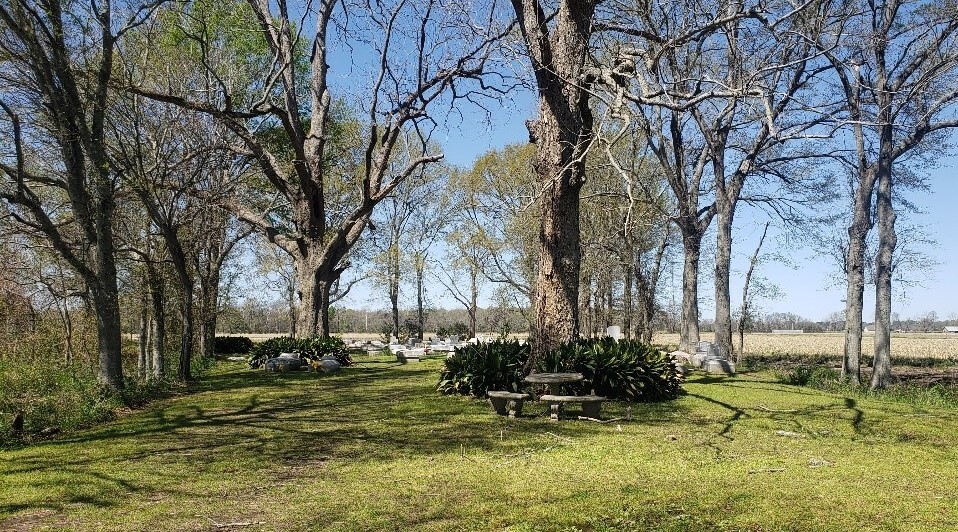
Zion’s Beginning
The view from the entrance to Mount Zion Riverlake Cemetery | Date: March 23, 2022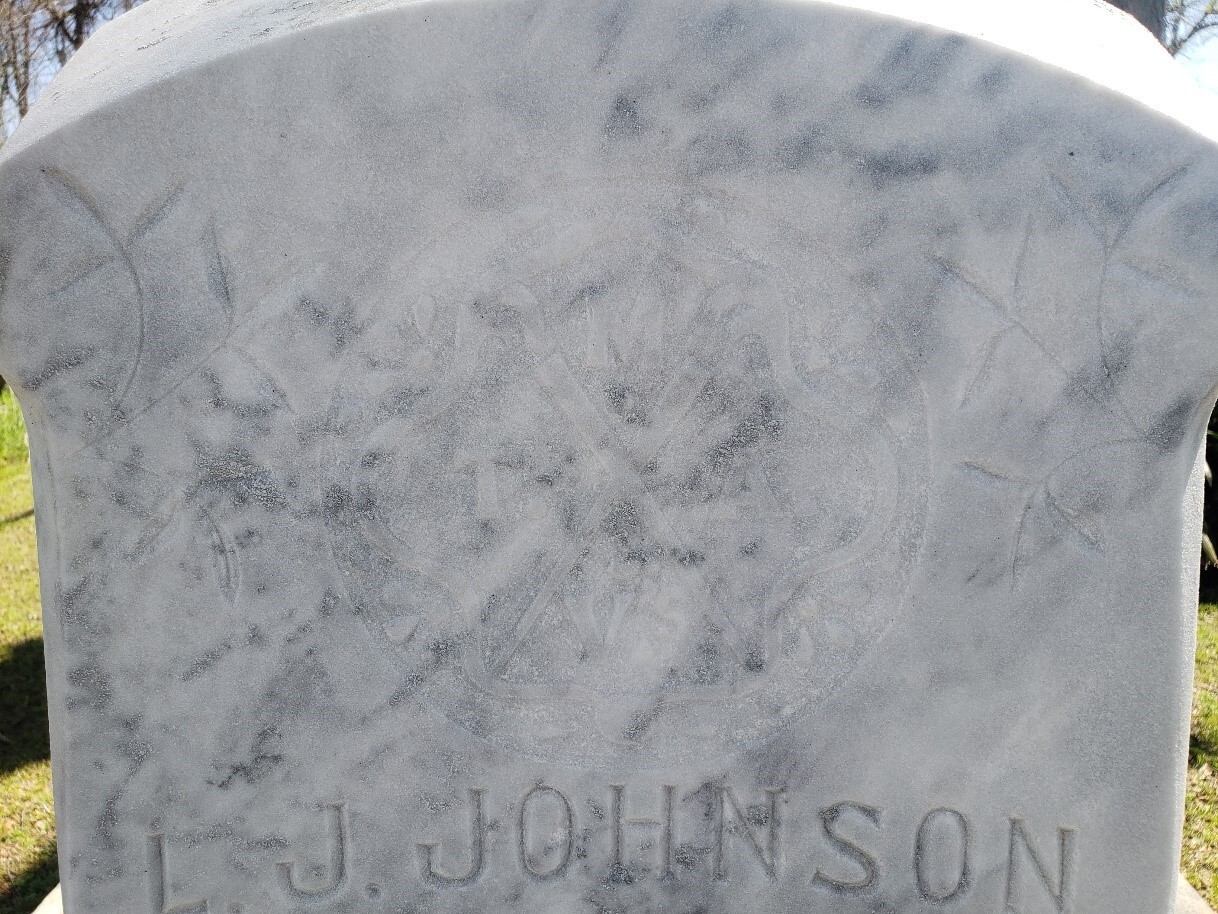
Symbols of Johnson
Headstone symbol for the Mosaic Templars of America | Date: March 23, 2022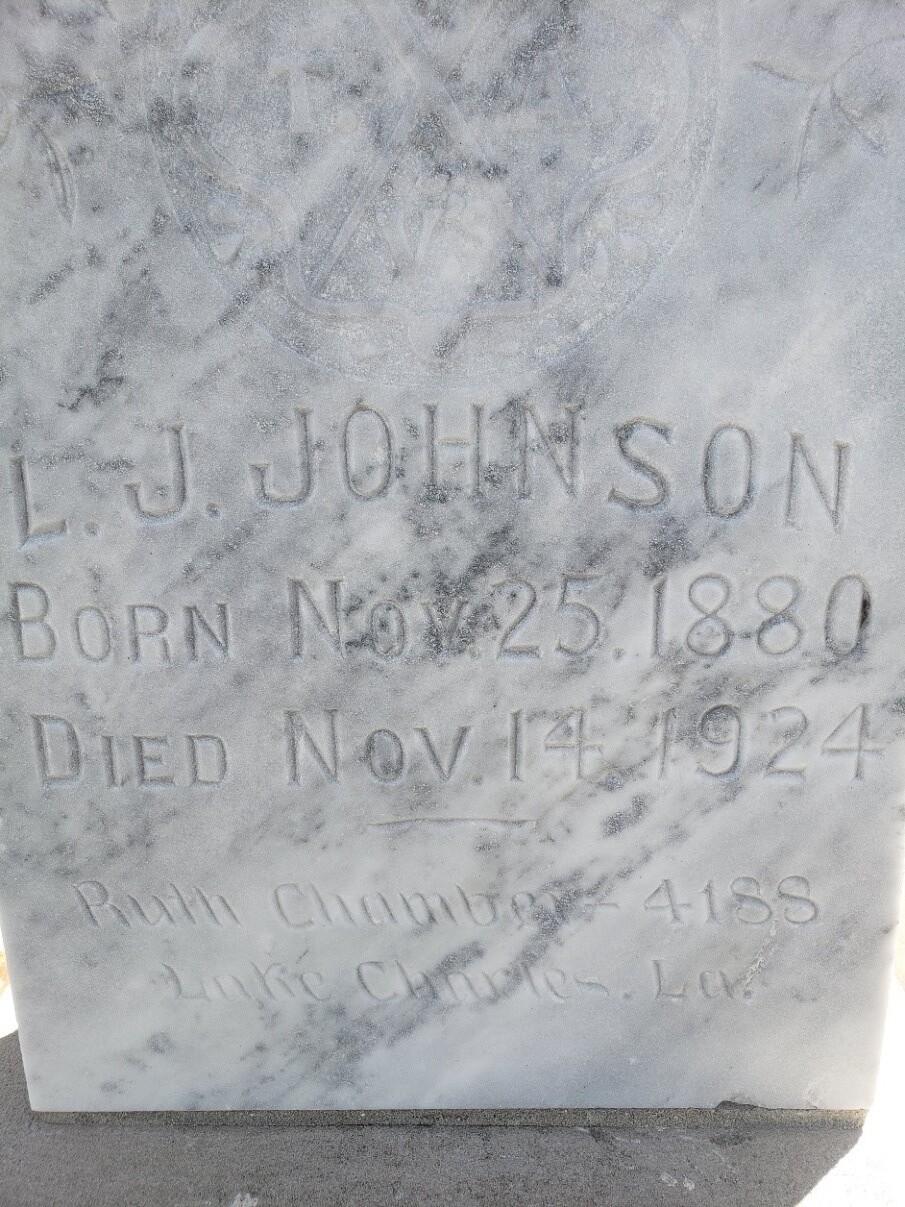
Mosaic Templars of America
L.J. Johnson's headstone, member of the Mosaic Templars of America. The local chapter's name, number, and location are located at the bottom of the headstone. | Date: March 23, 2022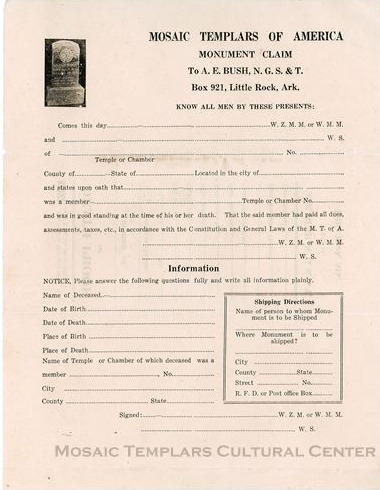
Monument Claim
Mosaic Templars of America members had to fill out this form to receive the specially marked headstone. | Source: Bush, A. E. and P. L. Dorman. History of the Mosaic Templars of America: Its Founders and Officials. Fayetteville, Arkansas: University of Arkansas Press, 2008. | Date: March 23, 2022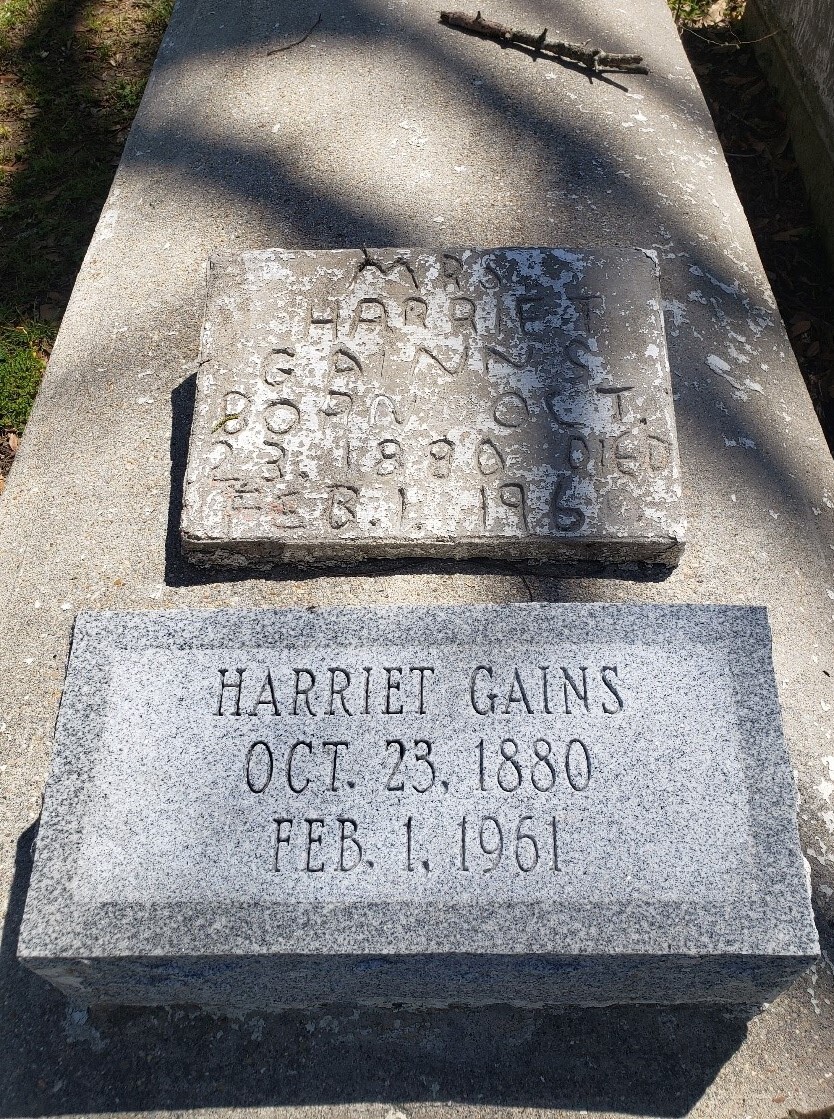
Harriet’s New Marker
The original handwritten marker of Harriet Gains' rests above the newer marble inscribed headstone. | Date: March 23, 2022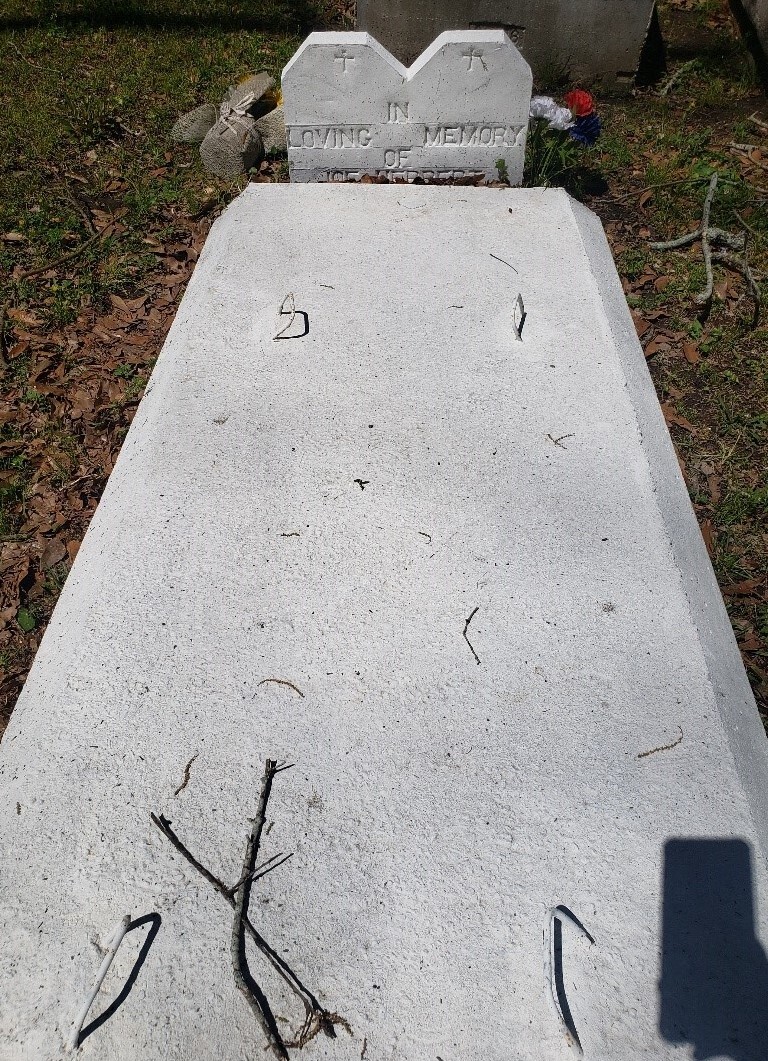
Special Shape for Joe
A heart-shaped headstone marks the grave of Joe Hebert. | Date: March 23, 2022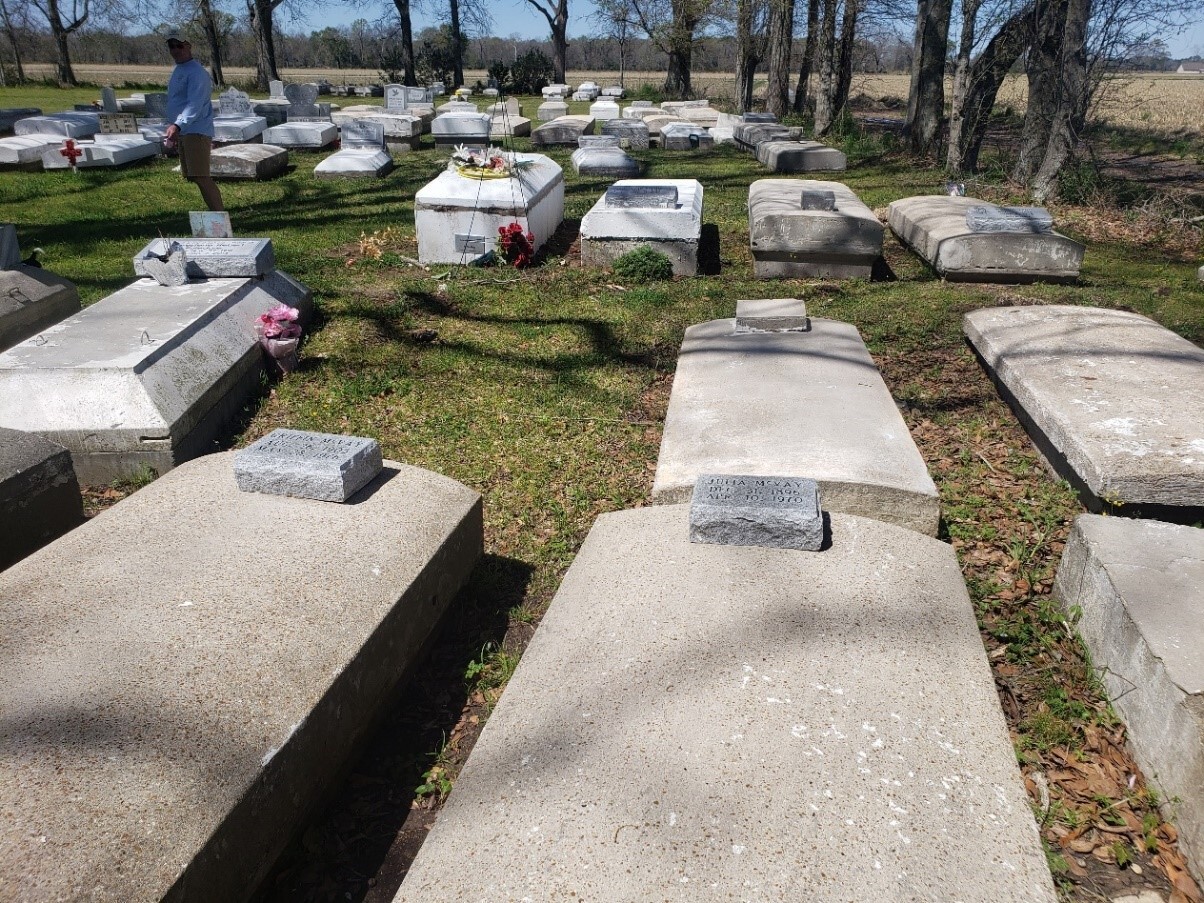
Resting Quietly Together, Forever
Multiple rows of gravesites mark the cemetery's grounds on a quiet and beautiful spring morning | Date: March 23, 2022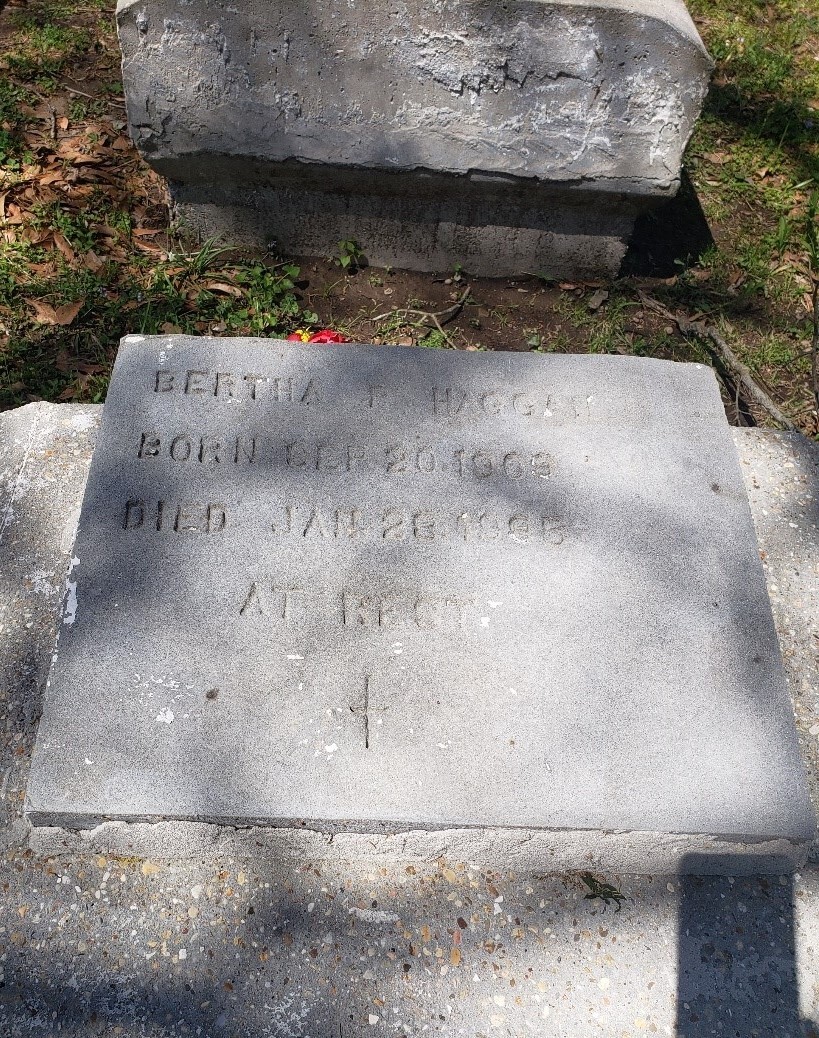
Bertha’s Place
A simple, stamped headstone with a lone cross marks Bertha Haggan's gravesite. | Date: March 23, 2022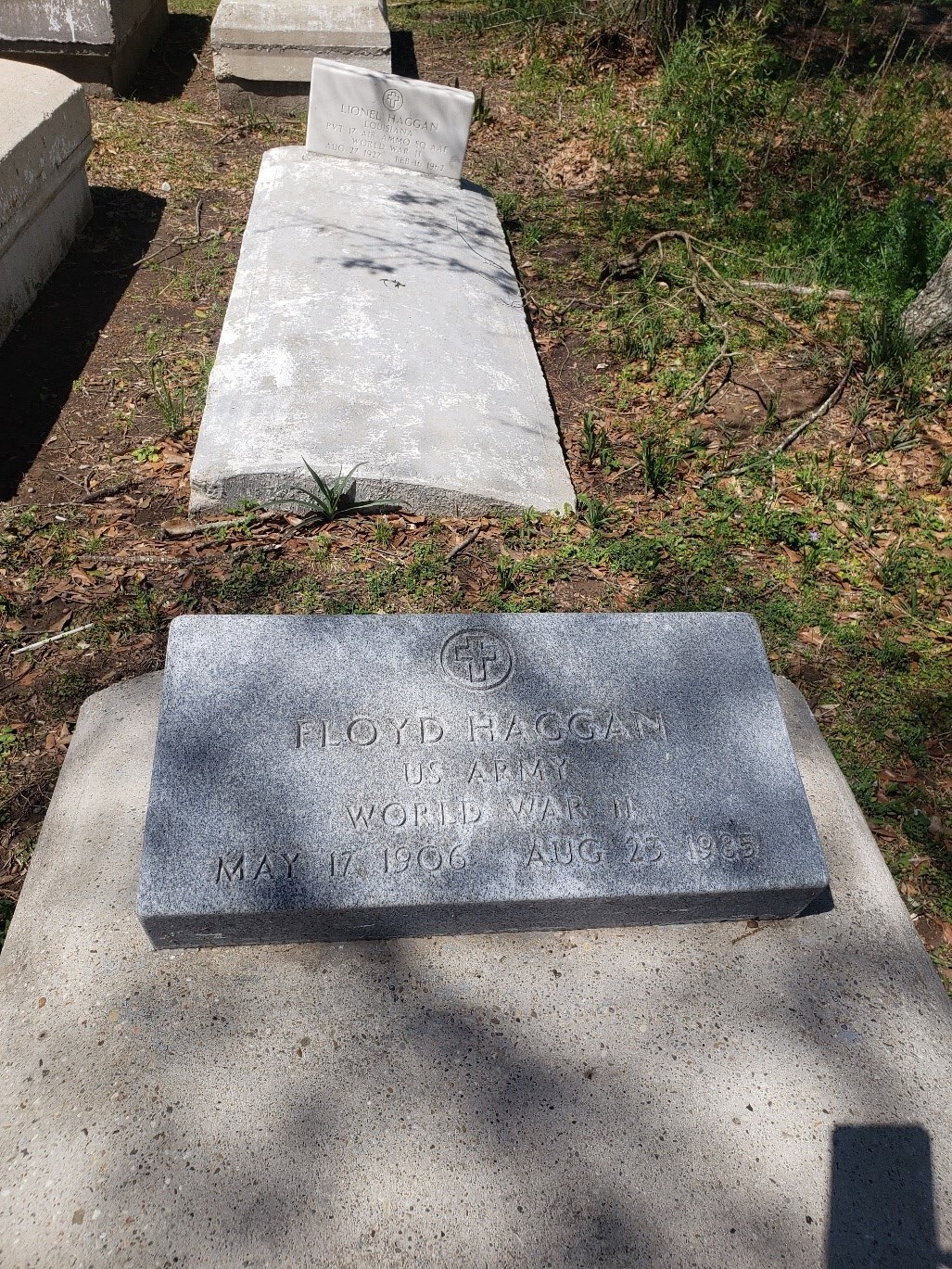
War Families
Father Floyd Haggan and son Lionel, both WWII veterans, are buried next to one another. | Source: Familysearch.org | Date: March 23, 2022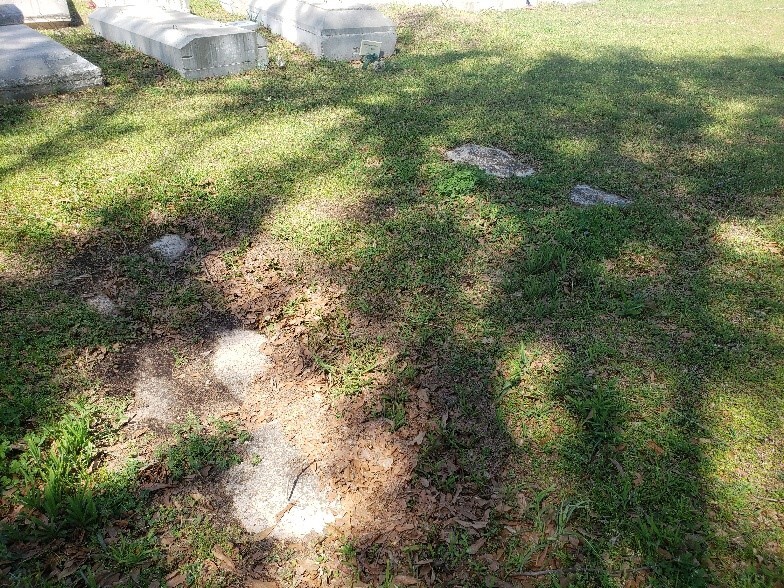
Sunken and Unknown
Although many sites are taken care of, there are some that time has forgotten. | Date: March 23, 2022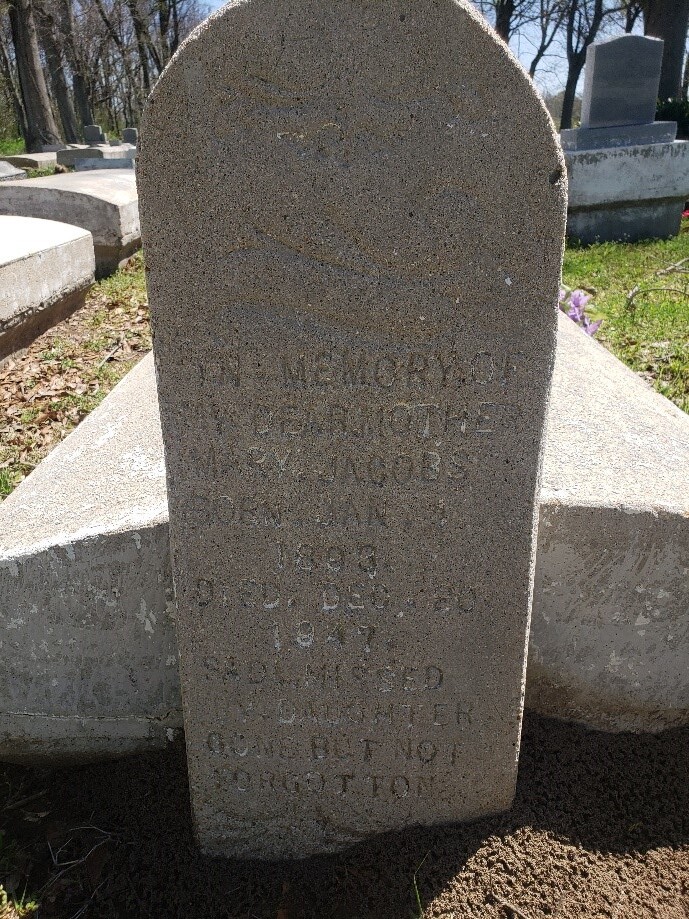
Dear Mother
A daughter clearly mourned for her mother, Mary Jacobs. | Date: March 23, 2022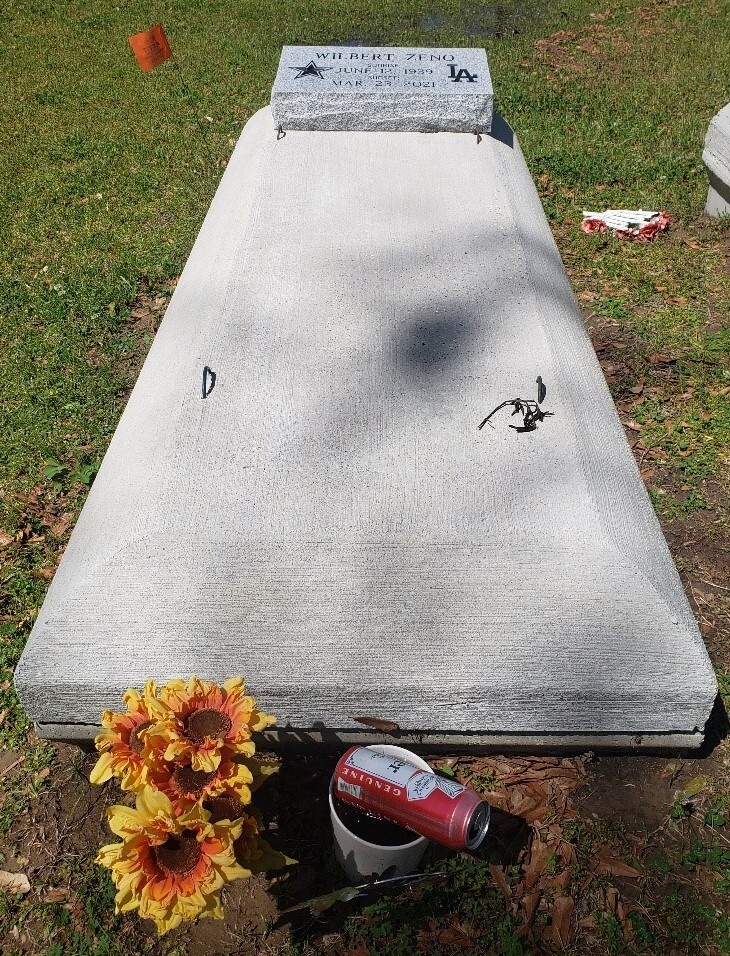
Sports Fan
Wilbert Zeno loved his Dallas Cowboys football and Los Angeles Dodgers baseball so much that their logos surround his name | Date: March 23, 2022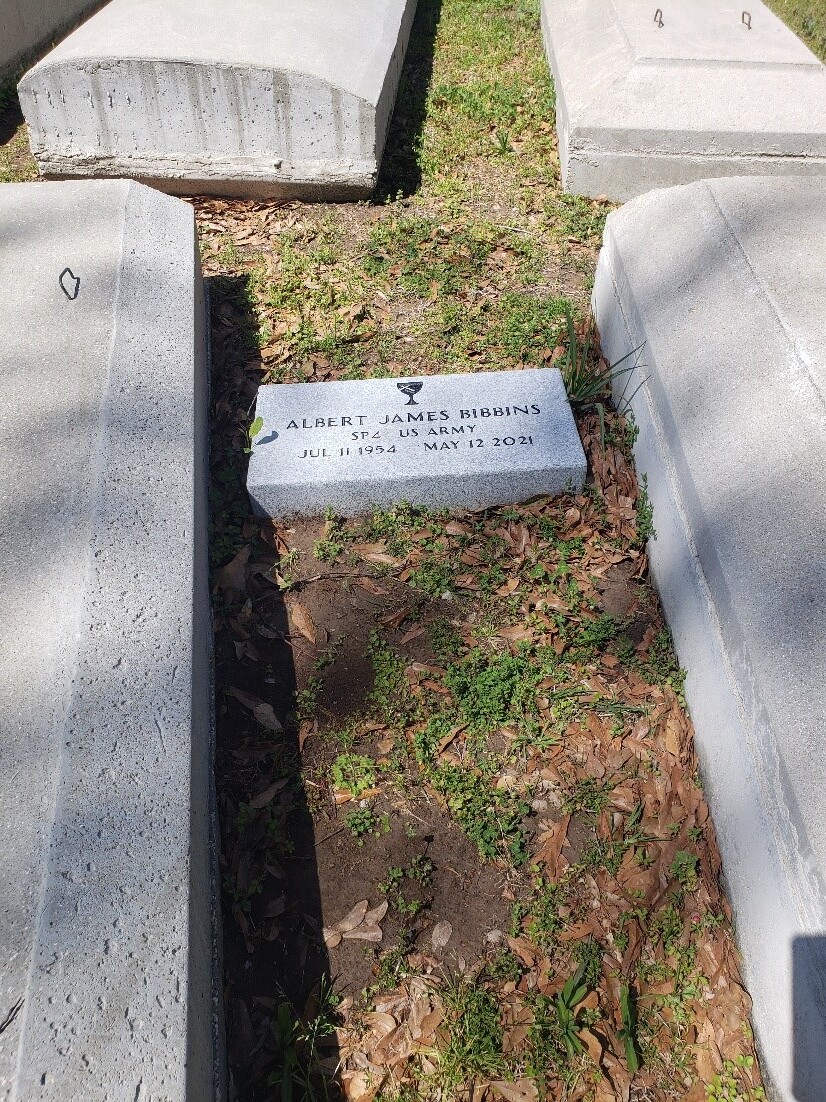
Albert and the Chalice
Many, like Albert Bibbins, have the chalice and cross as a symbol representing Christianity. | Date: March 23, 2022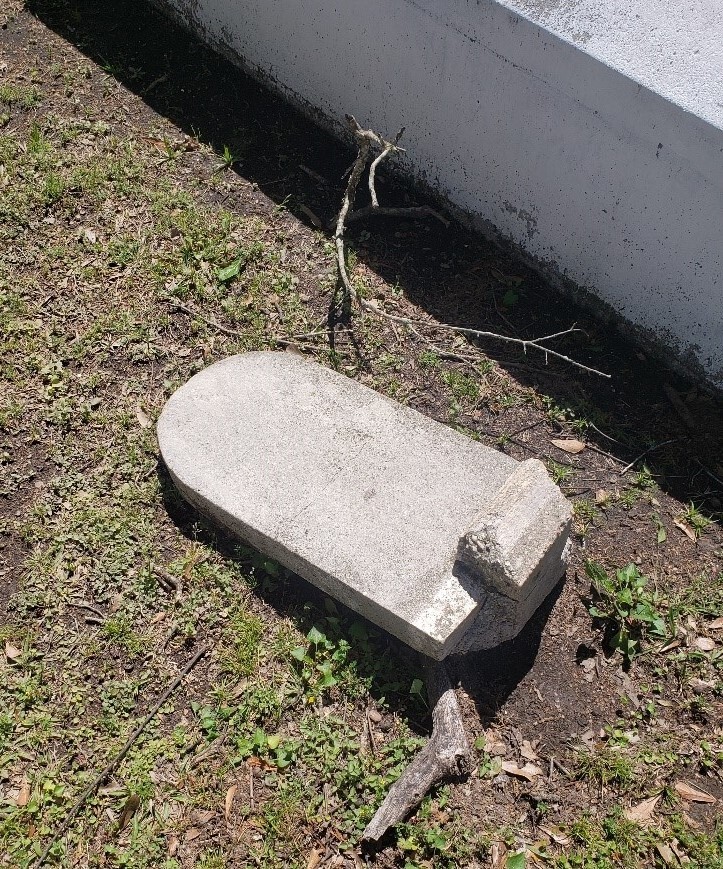
Broken and Unknown
Although the grounds are maintained, some headstones cannot yet be fixed. | Date: March 23, 2022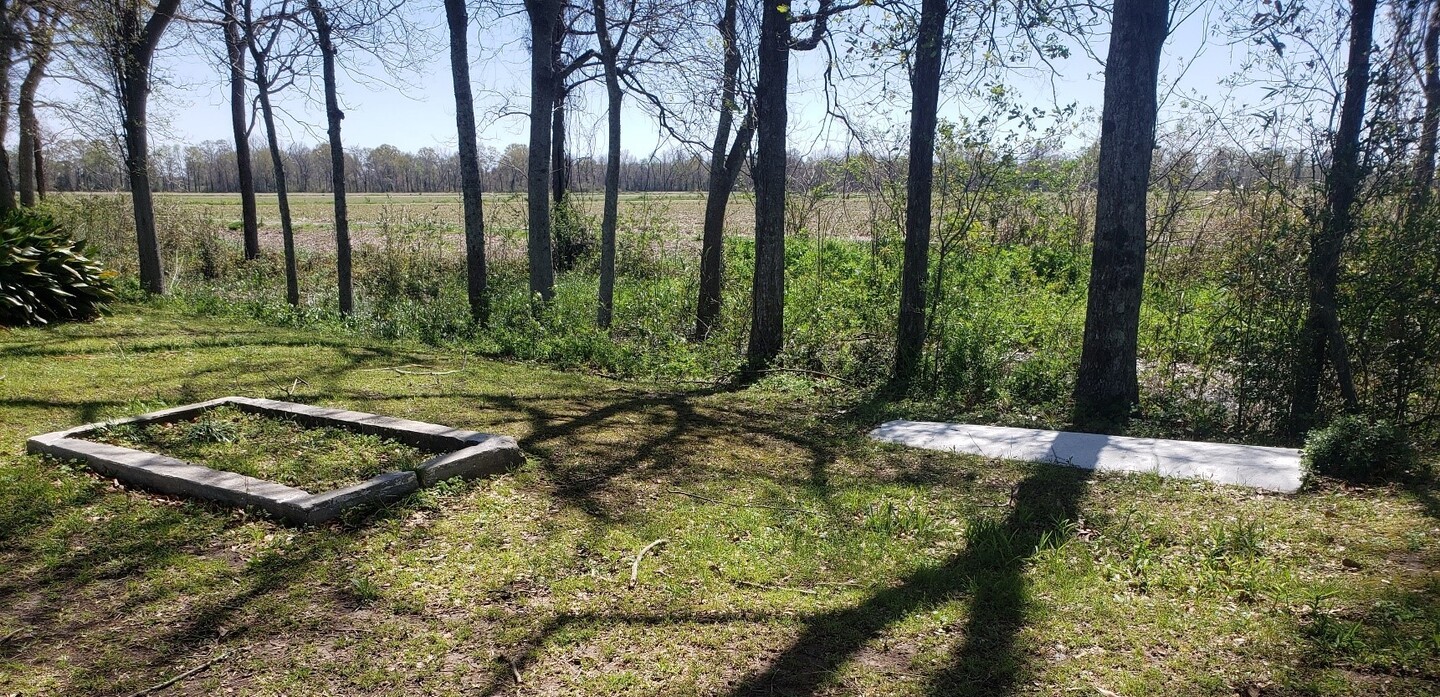
Lost to Time and the Elements
Unknown gravesites that have fallen away to weather and time | Date: March 23, 2022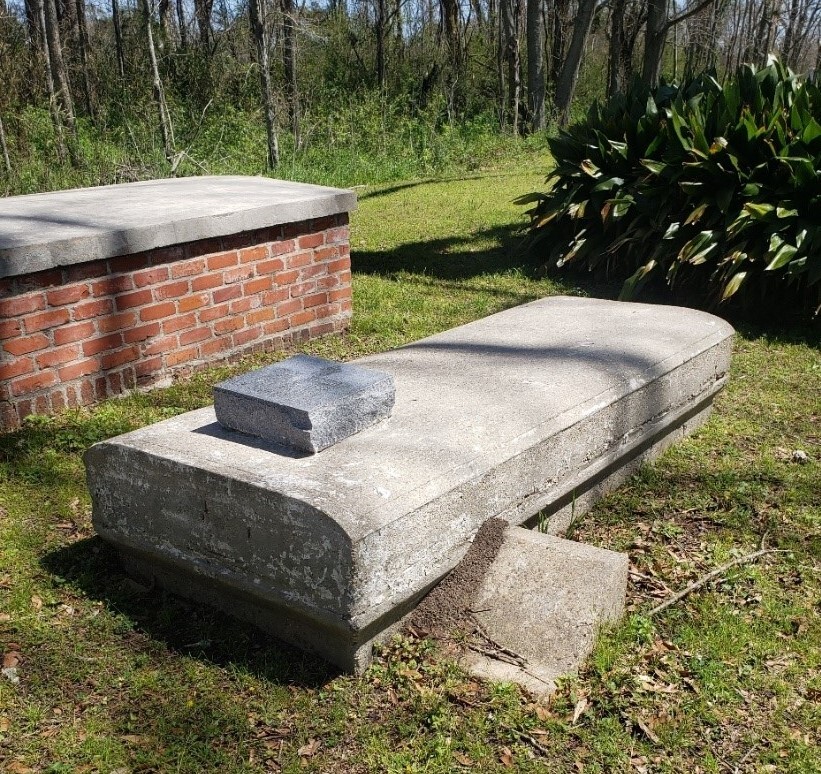
What Stone is This?
An unknown portion of concrete with the same shape lies next to multiple gravesites. | Date: March 23, 2022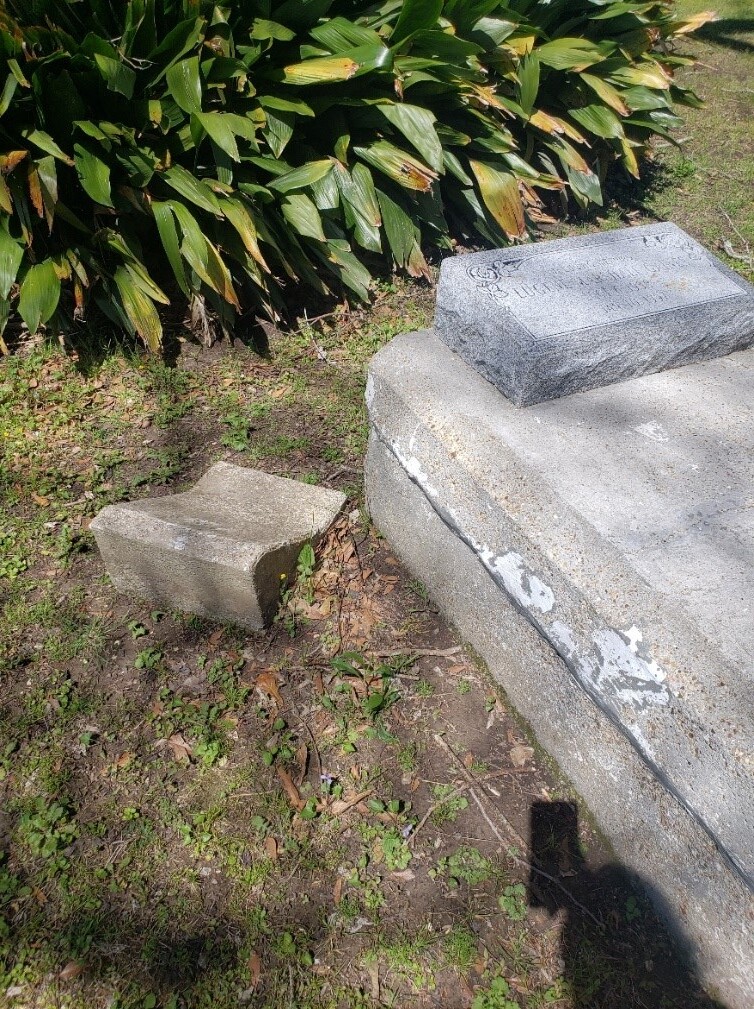
What Stone is This 2?
An unknown portion of concrete with the same shape lies next to multiple gravesites. | Date: March 23, 2022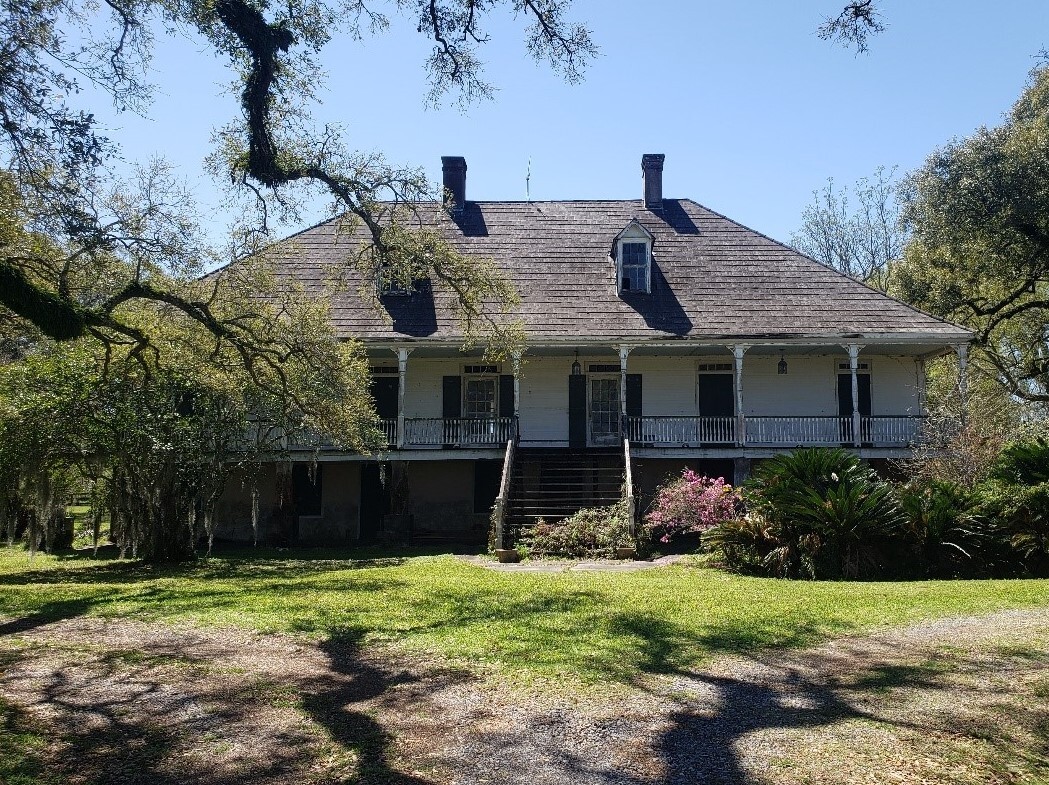
Remnants of Riverlake
Riverlake Plantation. Ernest Gaines, a descendant of Riverlake's slaves, grew up on the property and lived in the old slave quarters. | Date: March 23, 2022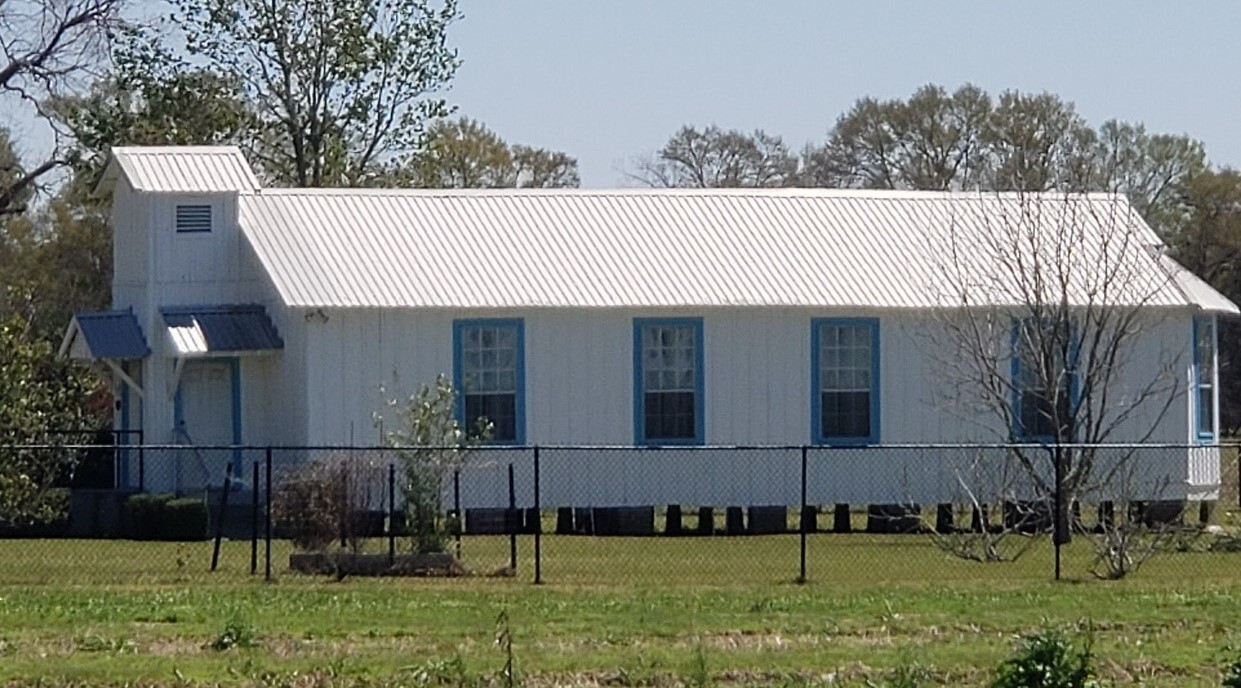
Saving a Piece of His History
As a child, Earnest Gaines attended this church and schoolhouse. He later restored the building and moved it onto his property not far from its original location. | Date: March 23, 2022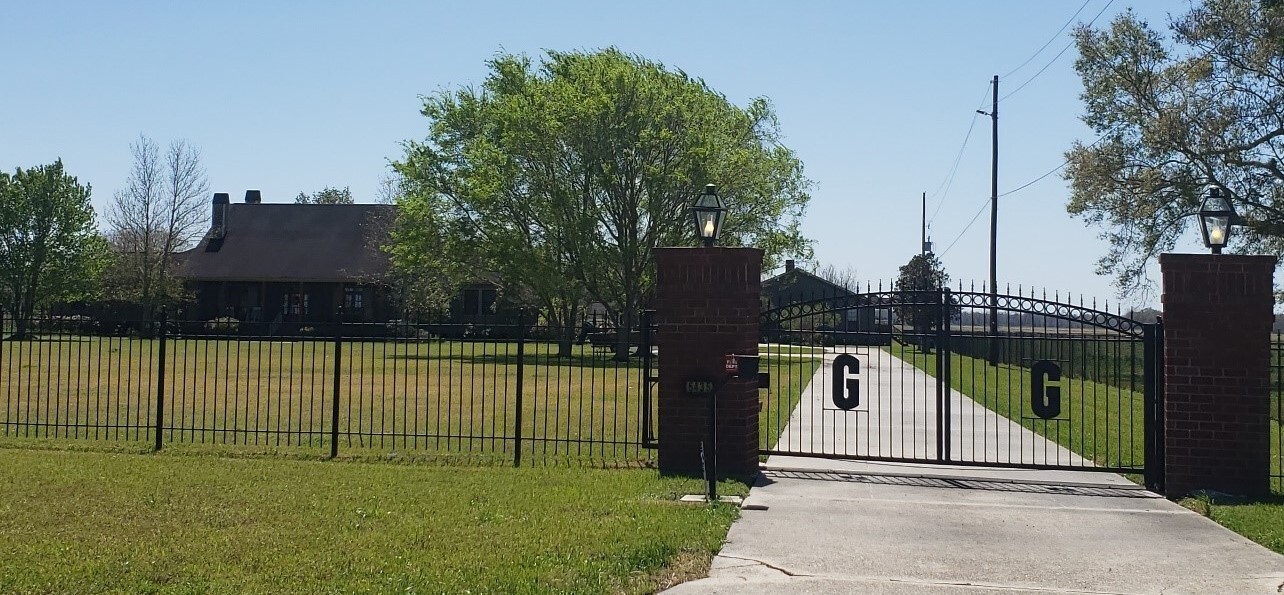
The Place for Birth and Death
Ernest Gaines was born into a family descended from slaves, and although his family was sharecroppers at the time, he grew up picking cotton in the very place he would later buy and build his final home. | Date: March 23, 2022