KVOL: Voice of Lafayette: Lafayette's Airwaves During World War II
Text
In 1935, the Evangeline Broadcasting Company was issued a license from the FCC for the creation of a radio station in Lafayette under the call sign KVOL (Voice of Lafayette). In late 1935, the station officially began broadcasting from the Evangeline Hotel on 300 Jefferson Street. The years during World War II, when KVOL was located at the Evangeline Hotel, were a crucial time for the young station. KVOL’s coverage of the war began when Hitler invaded Poland on September 1, 1939. One month later, a “series of citizenship talks” began by Southwestern Louisiana Institute faculty; promoting American values and an anti-fascist stance (1). Some of the topics for the talks were “Capitalism and Americanism,” “The Fascist System,” “Spiritual Side of Education for the Common Defense,” and “The Democratic Thought" (2). After the Japanese attack on Pearl Harbor on December 7, 1941, KVOL broadcasted President Franklin D. Roosevelt’s fireside chat on December 9, which announced the United States’ entrance into World War II. From that point on, KVOL aired a variety of programs that reflected Lafayette’s wartime efforts. KVOL broadcasted “Red Cross Roll Call Drive” programs beginning in November 1939. Throughout the war, the station aired war bond drives and a program for United China Relief. In 1942, KVOL assisted in “notifying persons to turn out lights” and remained in contact with an observation plane during a test blackout across Lafayette Parish (3). After the Battle of Guadalcanal in 1943, KVOL had battle veteran Captain Reid Taylor speak to promote the war bond salesmen group the Lafayette Parish Commandos. After the war, KVOL returned to normal operations, continuing to air its standard music and news hours. KVOL during World War II was one of many radio stations to support the national war effort in the local communities they serviced. From educational talks to war bond advertising, KVOL mobilized its airwaves to support its country in a time of global crisis. Footnotes:
1. “Dr. Ashburn to Speak Tonight in Legion Talks,” Daily Advertiser, Oct. 16, 1939, Newspapers.com. 2. “Dr. Ashburn,” Daily Advertiser, Oct. 16, 1939; “KVOL” Call Number: O 05 C, University Archives and Acadiana Manuscripts Collection, University of Louisiana at Lafayette, Lafayette, LA, accessed February 15, 2022.
3. “Blackout Over Parish Declared Big Success by Defense Heads,” Daily Advertiser, May 12, 1942, Newspapers.com.
Files
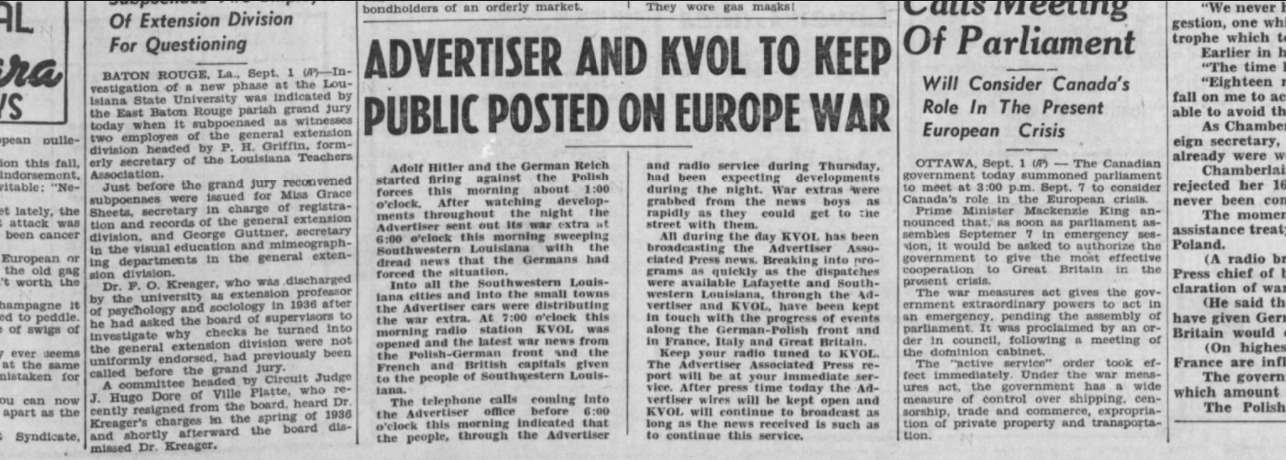
Invasion of Poland
An article published by the Lafayette newspaper, the Daily Advertiser, promoting the paper and KVOL's coverage of the invasion of Poland. | Source: "Advertiser And KVOL To Keep Public Posted On Europe War," Daily Advertiser, Sept. 1, 1939, Newspapers.com.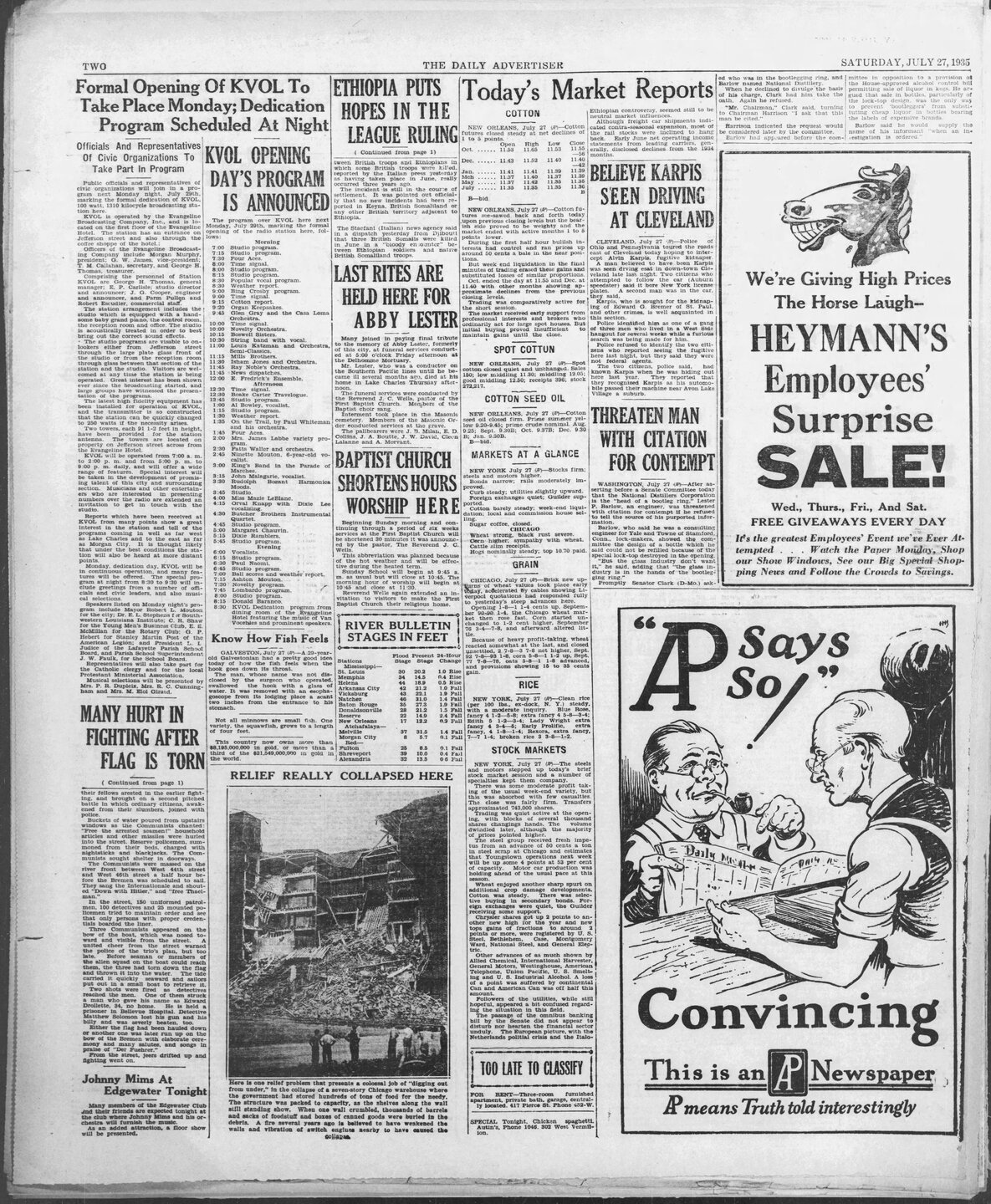
The Voice of Lafayette Is Heard
An article from the Daily Advertiser on July 27, 1935 about the opening of KVOL on July 29 with the station's first program. | Source: Newspapers.com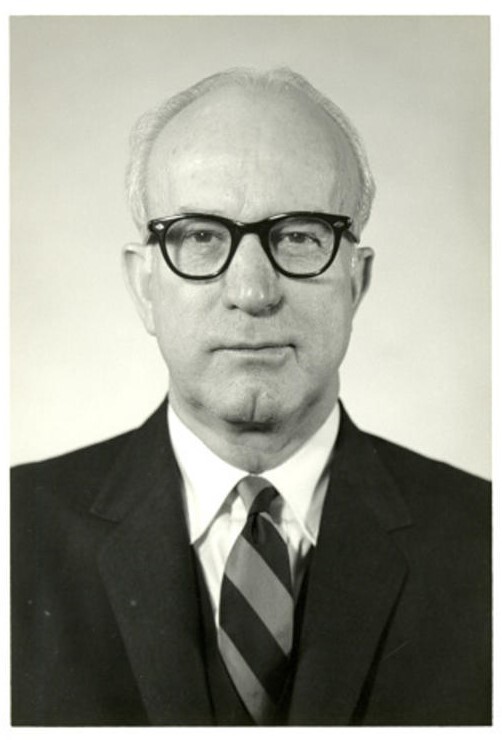
T.B. Lanford
T.B. Lanford was a member of the Evangeline Broadcasting Company and helped start many other radio stations in Louisiana along with KVOL. | Source: Louisiana Digital Library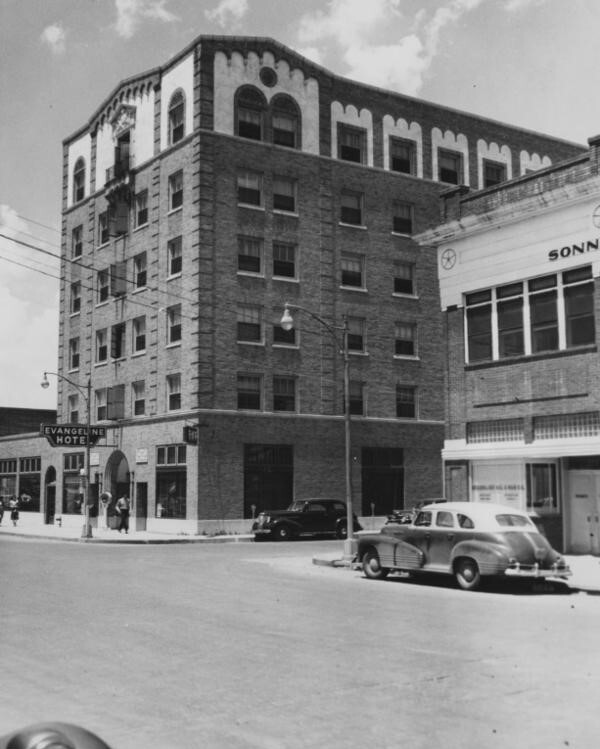
Evangeline Hotel
A picture of the Evangeline Hotel from the 1930s. KVOL's studio was located on the first floor in the back of the building (not visible in photo). | Source: Louisiana Digital Library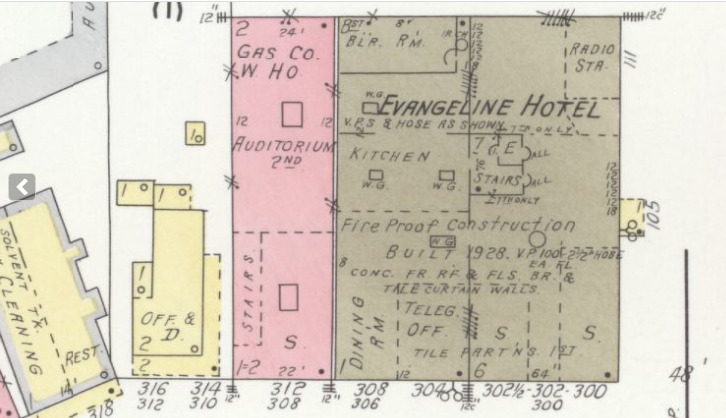
1940 Sanborn Fire Insurance Map
The Evangeline Hotel as depicted on a 1940 Sanborn Fire Insurance Map. KVOL's studio is on the upper right side of the image. | Source: Library of Congress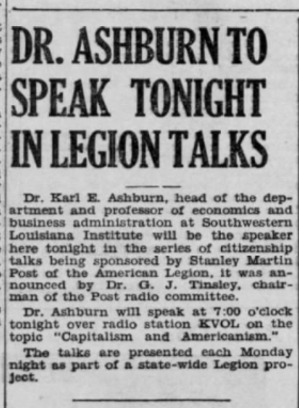
Citizenship Talks
An article from the Daily Advertiser on October 16, 1939 about the first "citizenship talk" with Dr. Karl E. Ashburn of the Southwestern Louisiana Institute. | Source: Newspapers.com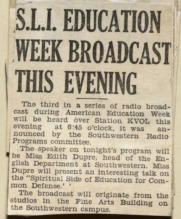
One Year Into the War
An article from the Daily Advertiser on November 6, 1940 about the talk "Spiritual Side of Education for Common Defense" given by Miss Edith Dupre of SLI. | Source: “KVOL,” Call Number: O 05 C, University Archives and Acadiana Manuscripts Collection, University of Louisiana at Lafayette, Lafayette, LA, accessed February 15, 2022.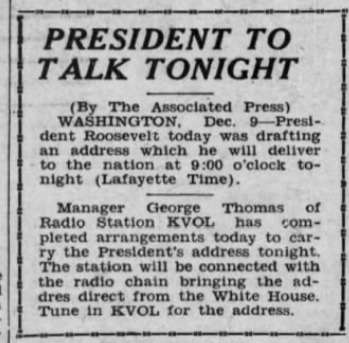
After the Date Which Will Live in Infamy
An article from the Daily Advertiser on December 9, 1941 announcing the President speaking across the nation and on KVOL. | Source: Newspapers.com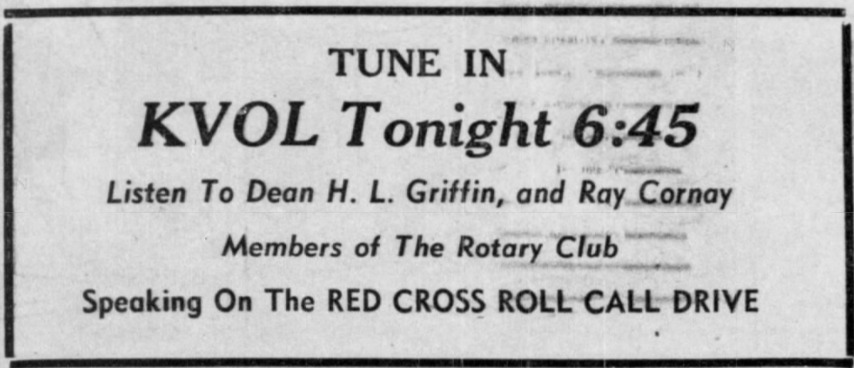
Red Cross Drive
An advertisement in the Daily Advertiser on November 10, 1941, with SLI Dean H.L. Griffin speaking on KVOL on behalf of the Red Cross Drive. | Source: Newspapers.com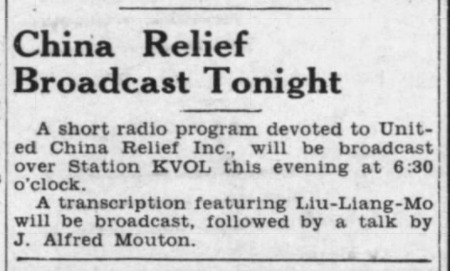
United China Relief
An advertisement in the Daily Advertiser on May 4, 1942 about a United China Relief broadcast. | Source: Newspapers.com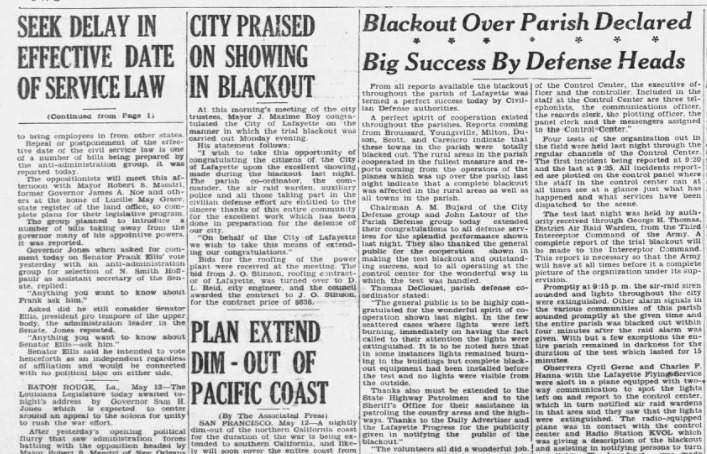
Lafayette Blackout
An article in the Daily Advertiser on May 12, 1942 on the success of the Lafayette Parish test blackout and KVOL's participation in it. | Source: Newspapers.com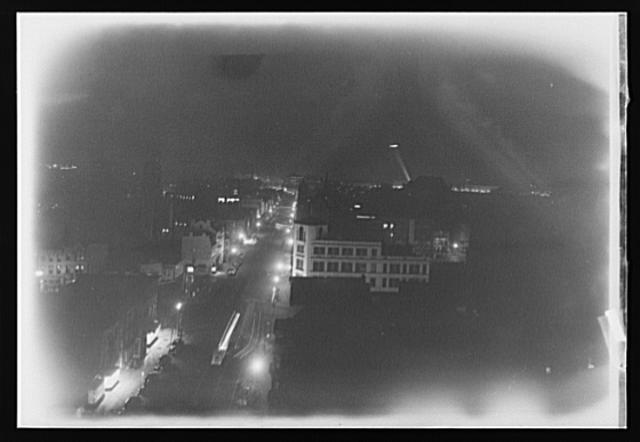
A City in Darkness
The Lafayette blackout was meant to prepare civilians in the event of an air raid. This image shows a test blackout in Washington, D.C. taken around 1943. | Source: "Washington, D.C. First test blackout from roof of Printcraft building," http://hdl.loc.gov/loc.pnp/fsa.8b12882. Farm Security Administration/Office of War Information Black-and-White Negatives, Library of Congress.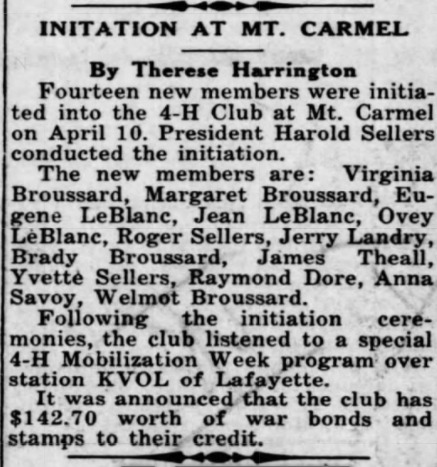
4-H Club and War Bonds
An advertisement in the Daily Advertiser on April 18, 1942 about the 4-H Club at Mt. Carmel listening to a "4-H Mobilization Week" program on KVOL. | Source: Newspapers.com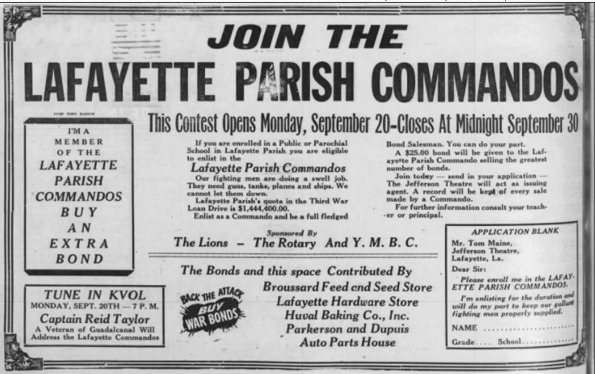
Veteran Speaker
An advertisement in the Daily Advertiser on September 18, 1943 about Captain Reid Taylor speaking on KVOL to promote the Lafayette Parish Commandos. | Source: Newspapers.com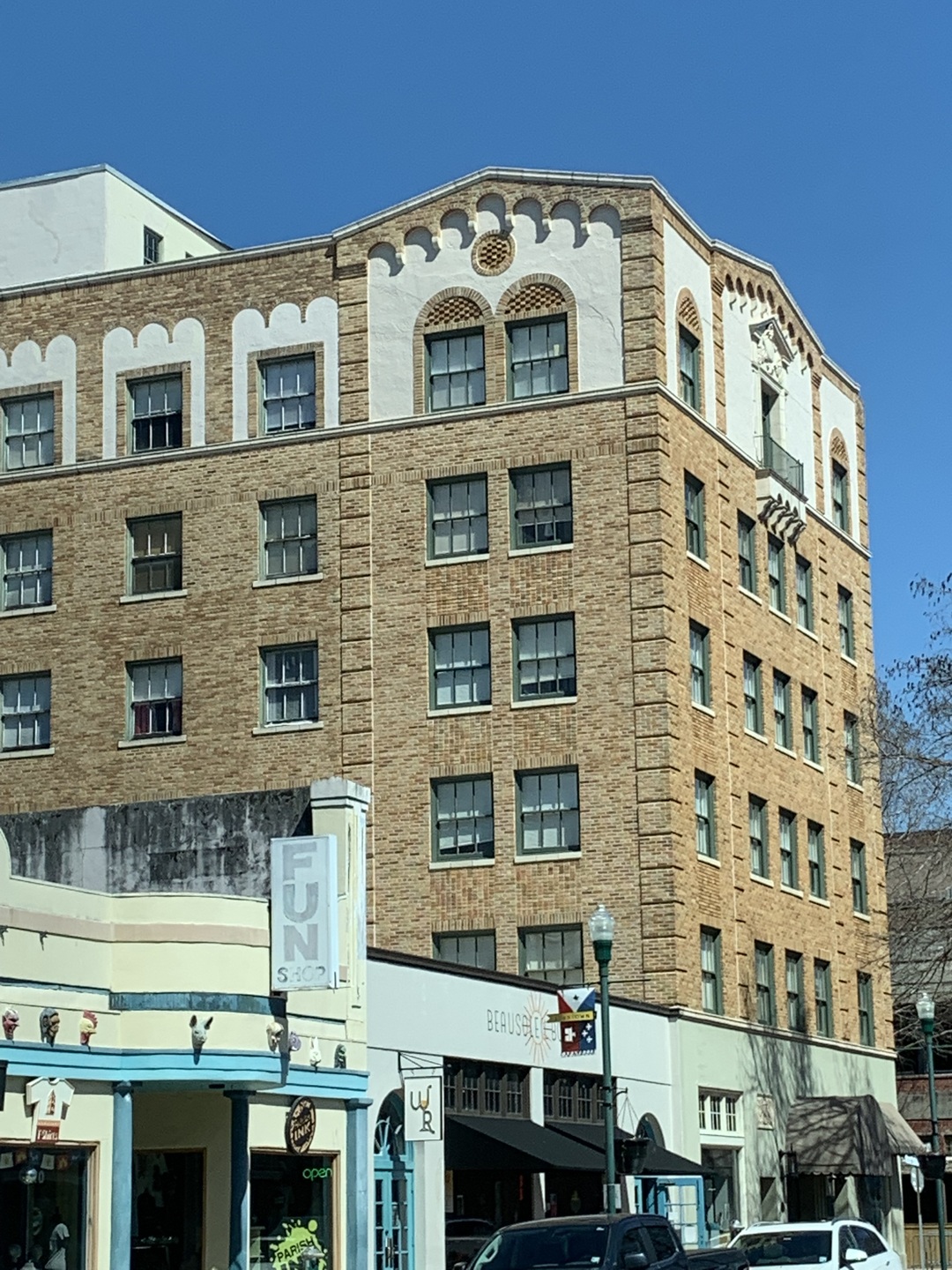
Evangeline Hotel Today
The Evangeline Hotel in 2022. | Source: Photographed by Lindsey DeLaughter