<?xml version="1.0" encoding="UTF-8"?>
<feed xmlns="http://www.w3.org/2005/Atom">
  <title type="text">Acadiana Historical</title>
  <updated>2026-03-04T22:42:47+00:00</updated>
  <generator uri="http://framework.zend.com" version="1.12.20">Zend_Feed_Writer</generator>
  <link rel="alternate" type="text/html" href="https://mail.acadianahistorical.org/"/>
  <link rel="self" type="application/atom+xml" href="https://mail.acadianahistorical.org/items/browse?output=rss2"/>
  <id>https://mail.acadianahistorical.org/</id>
  <author>
    <name>Acadiana Historical</name>
    <uri>https://mail.acadianahistorical.org</uri>
  </author>
  <link rel="hub" href="https://pubsubhubbub.appspot.com/"/>
  <entry>
    <title type="html"><![CDATA[Hey, Hey, Heymann Performing Arts Center: Hey man, Lafayette&#039;s first municipal auditorium turned into a theater!]]></title>
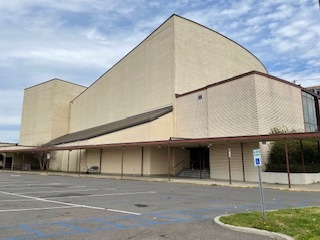
    <summary type="html"><![CDATA[<p><strong><em>The deeper insight into the Heymann family's legacy with the performing arts with their auditorium turned theater.</em></strong></p><img src="https://mail.acadianahistorical.org/files/fullsize/26442e30e46f17f01ca9a3cd1213d749.jpg" alt="Side view of theater" /><br/><p>Who knew one of Lafayette's most famous figures patronized the arts? The Heymann Performing Arts Center was originally Lafayette’s first municipal auditorium designed by architect A. Hays Town in 1957. Town built many of the most famous buildings in Lafayette and the Performing Arts Center combines his speciality for French Creole architecture with a more functional modernist style. </p><p>It was completed in 1960 and people were excited for new cultural events for the growing city. The Daily Advertiser played on the new experience for Lafayette’s citizens as they mentioned this, performing arts, as the American way to create a better society. The center hosted Broadway shows and it brought major cities’ acclaim to Lafayette. Since then, we see performances of ballets, concerts, and other celebrations. A parking lot hides the true beauty of the theater which boasts a professional stage and extensive setup for Lafayette to showcase its art prowess in dance, musicals, and plays. </p><p>The Heymann family has prided itself on giving back to the city’s community in the downtown area in oil and business acclaim, medical expertise, and the performing arts. The Heymann Performing Arts Center still faces challenges as many speculate on its future with theories on selling the theater. </p><p><em><strong><a href="https://mail.acadianahistorical.org/items/show/111">For more (including 3 images&#32;&amp;&#32;1 audio file) view the original article</a></strong></em></p>]]></summary>
    <published>2022-03-03T22:40:52+00:00</published>
    <updated>2026-03-04T22:42:47+00:00</updated>
    <link rel="alternate" type="text/html" href="https://mail.acadianahistorical.org/items/show/111"/>
    <id>https://mail.acadianahistorical.org/items/show/111</id>
    <author>
      <name>Thanh Vo</name>
    </author>
  </entry>
  <entry>
    <title type="html"><![CDATA[Abbey Players Play On Your Heartstrings: Abbey Players PLAYED their Part]]></title>
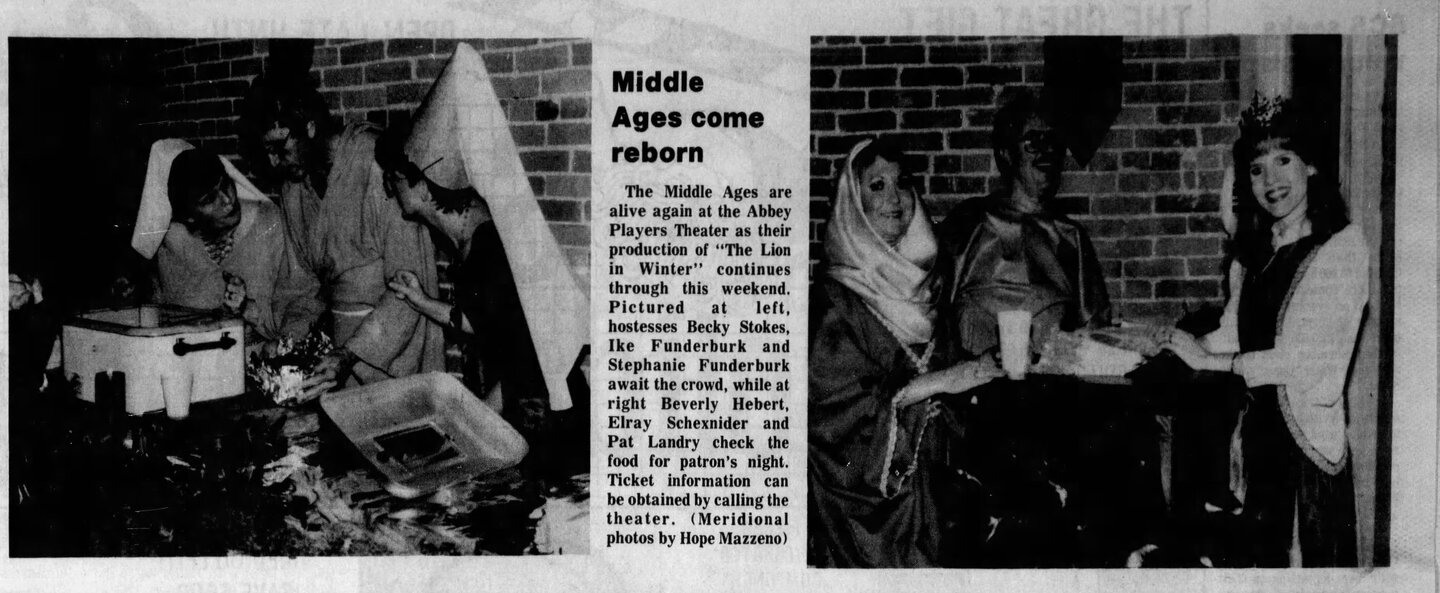
    <summary type="html"><![CDATA[<p><strong><em>A story about creatives who had very little funds yet still provided a performing arts community in Abbeville with a small secret for their theater.</em></strong></p><img src="https://mail.acadianahistorical.org/files/fullsize/ca01392eaea93f556e0ded3015291a5b.jpg" alt="Abbeville Meridional newspaper clipping (15 Dec 1983)" /><br/><p>Can a group of talented friends provide entertainment to the community? The story of the Abbey Players Theater begins with their first actors highly interested in the performing arts and so Ted and Lynette Winter Cessac and their partner, Dave Pierce formed the Abbey Players. The Abbey Players themselves were a non-profit acting group in 1976 moving around town in Abbeville performing plays like a standard troupe. Their local newspaper captured the heart of their performances and the Abbeville crowd loved the well-done performances each time. It showed how a ragtag team of performers could start something by continuing to practice small plays over and over. </p><p>The group rented many locations but they desired a stable venue rather than schools, banks, and small stages. </p><p>They featured in many instances for their local newspaper for outstanding performances and eventually placed an advertisement in November of 1980 for a more permanent location. They settled on a lumber mill, the Reaux Lumber Co., which was a saloom in the early 1900s and their public stage was set as they continued to perform for the city. They completely renovated the old warehouse with a stage, backstage, and fitting room as well as installing lights fixtures for their upcoming plays of “the Rainmaker”, “Cat on a Hot Tin Room”, and “The Man who Came to Dinner”. </p><p>The theater served hors d'oeuvres and champagne which became such a regular occurrence that it was cemented into their calling card as Patrons’ Night. The waiting area has multiple chairs and tables for a comfortable night out with friends to catch a lovely play. A little known fact about their current location is supposedly haunted and paranormal investigators visited the location where their investigation yielded sounds from a little ghost girl.</p><p><em><strong><a href="https://mail.acadianahistorical.org/items/show/109">For more (including 13 images&#32;&amp;&#32;1 audio file) view the original article</a></strong></em></p>]]></summary>
    <published>2022-03-03T22:35:11+00:00</published>
    <updated>2026-03-04T22:42:47+00:00</updated>
    <link rel="alternate" type="text/html" href="https://mail.acadianahistorical.org/items/show/109"/>
    <id>https://mail.acadianahistorical.org/items/show/109</id>
    <author>
      <name>Thanh Vo</name>
    </author>
  </entry>
</feed>