<?xml version="1.0" encoding="UTF-8"?>
<feed xmlns="http://www.w3.org/2005/Atom">
  <title type="text">Acadiana Historical</title>
  <updated>2026-03-04T22:42:48+00:00</updated>
  <generator uri="http://framework.zend.com" version="1.12.20">Zend_Feed_Writer</generator>
  <link rel="alternate" type="text/html" href="https://mail.acadianahistorical.org/"/>
  <link rel="self" type="application/atom+xml" href="https://mail.acadianahistorical.org/items/browse?output=rss2"/>
  <id>https://mail.acadianahistorical.org/</id>
  <author>
    <name>Acadiana Historical</name>
    <uri>https://mail.acadianahistorical.org</uri>
  </author>
  <link rel="hub" href="https://pubsubhubbub.appspot.com/"/>
  <entry>
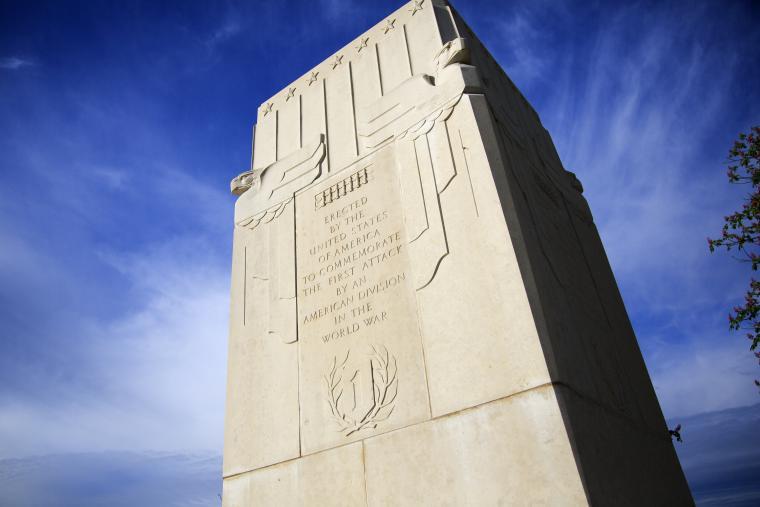
    <title type="html"><![CDATA[Cantigny American Monument: &quot;This was our first offensive, which had been ordered primarily for the purpose of its effect on the morale of the English and French armies.&quot; ~ Lt. Col. George C. Marshall]]></title>
    <summary type="html"><![CDATA[<p><strong><em>As the first American action in the Great War,  the victory at Cantigny provided a boost in moral for the Allied troops that spurred the Allies to victory.</em></strong></p><img src="https://mail.acadianahistorical.org/files/fullsize/57f644a1777f5089630723ca503e7aba.jpg" alt="Close-up of Cantigny American Monument" /><br/><p>Despite the American army bearing the higher number of total casualties, only 318 American soldiers lost their lives, while the Germans had 1,400 killed and over 250 taken as prisoners of war. Of the 318 Americans killed, five called Louisiana their home, one of whom was a St. Patrick native of St. James Parish, Lazzard Landry. Landry was only 17 years old when he joined the army and served in the 26th infantry until he was transferred to the 2nd Brigade Machine Gun Battalion in May 1918, the same day he was killed in action. </p><p>In a small park at the center of the small village of Cantigny resides a white marker overlooking the fields of local farms. The Cantigny American Monument was built by the American Battle Monument Commission in 1923 and was dedicated by Col. Robert R. McCormick on 9 August, 1937. Two sides of the marker bear inscriptions in French, while the opposite sides bear their translations in English, which read: “ERECTED BY THE UNITED STATES OF AMERICA TO COMMEMORATE THE FIRST ATTACK BY AN AMERICAN DIVISION IN THE WORLD WAR.” and “THE FIRST DIVISION UNITED STATES ARMY OPERATING UNDER THE X FRENCH CORPS CAPTURED THE TOWN OF CANTIGNY ON MAY 28 1918 AND HELD IT AGAINST NUMEROUS COUNTERATTACKS.” Nearby reside other American monuments including the 28th Infantry Regiment Monument, McCormick’s Cantigny Artillery Monument, and a monument to the First U.S. Division. </p><p>The first American offensive of the Great War occurred at the village of Cantigny. The village’s high ground position was crucial for the occupation of a German salient in the region. At 06:45  on 28 May, the U.S. First Division attacked the German line with the objective of removing them from the village. With an artillery barrage supporting them the 28th Infantry, two units of the 18th Infantry Regiment, three machine gun companies, and a company of engineers moved swiftly. French support by way of air cover, heavy artillery, flame throwers, and tanks helped the American troops advance on a two minute increment schedule, which allowed them to take the village within thirty minutes of launching the attack. This great achievement did not constitute the end of the battle however. German counter attacks lasted for three days, with bombardments that lasted all day long, attacks that were easily repulsed by American troops. All three days the American position was held, suffering a mere 1,603 casualties. Though often overshadowed by the importance of other battles along the Aisne salient, this battle is considered to be a turning point towards an allied victory.  </p><p><em><strong><a href="https://mail.acadianahistorical.org/items/show/165">For more (including 6 images&#32;&amp;&#32;1 audio file) view the original article</a></strong></em></p>]]></summary>
    <published>2022-04-28T19:48:47+00:00</published>
    <updated>2026-03-04T22:42:48+00:00</updated>
    <link rel="alternate" type="text/html" href="https://mail.acadianahistorical.org/items/show/165"/>
    <id>https://mail.acadianahistorical.org/items/show/165</id>
    <author>
      <name>Theresa Slovacek-Herrera</name>
    </author>
  </entry>
  <entry>
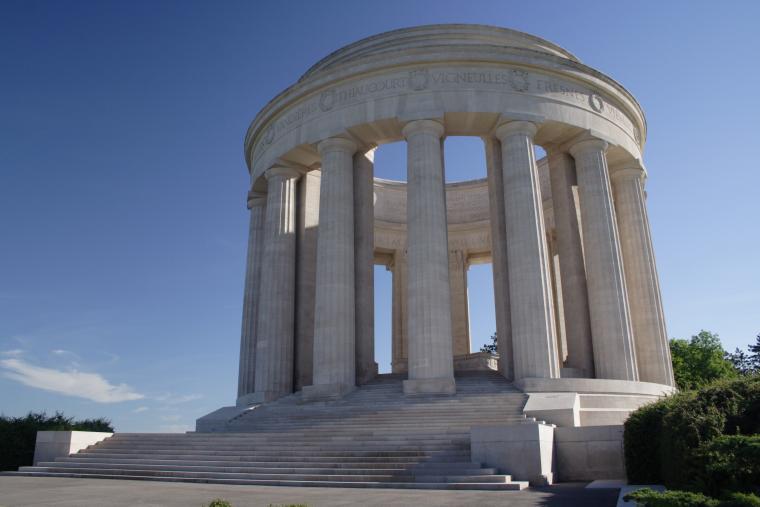
    <title type="html"><![CDATA[Montsec American Monument: “Don’t sweat over ’em Colonel. If they’re gonna get you, they’re gonna get you,” General Douglas MacArthur]]></title>
    <summary type="html"><![CDATA[<p><strong><em>An American monument to those who fell during the second most fatal battle in American history.</em></strong></p><img src="https://mail.acadianahistorical.org/files/fullsize/520759ddf3cde4931b61da4def090317.jpg" alt="Montsec American Monument in France" /><br/><p>The Men: Although over 4,000 American troops were lost in the Montsec salient over the course of the war, only two known soldiers hailed from Acadiana. Angel Duhon of Cameron and Eugene W. Rogillio of Rogillioville.  Duhon was only 22 when he enlisted in the Army, had fought at Veaux Castelle Vicxy, and was serving in Company D of the 23rd U.S. Infantry when he fell. Rogillio was 29 and fell during his only engagement during the war. Both of these men lost their lives on 12 September 1918. </p><p>The St. Mihiel region stands a doric temple that seems to have been transferred from another part of the world to come to rest atop a hill in the St. Mihiel region of northeastern France. The white rounded columns form a circular colonnade to which visitors climb via a wide stairway. At its center is a bronze observation table which illustrates the St. Mihiel salient and the operations which took place to recover the region. The monument was designed by Egerton Swartwout and erected by the American Battle Monuments Commission in the 1930s. A plaque near the steps up to the monument reads: </p><p>“THIS MONUMENT HAS BEEN ERECTED BY THE UNITED STATES OF AMERICA TO COMMEMORATE THE CAPTURE OF THE ST. MIHIEL SALIENT BY THE TROOPS OF HER FIRST ARMY AND TO RECORD THE SERVICES OF THE AMERICAN EXPEDITIONARY FORCES ON THE BATTLE FRONT IN THIS REGION AND ELSEWHERE IN LORRAINE AND ALSACE. IT STANDS AS A LASTING SYMBOL OF THE FRIENDSHIP AND COOPERATION BETWEEN THE FRENCH AND AMERICAN ARMIES.”</p><p>However during the Second World War, that region saw intense fighting once again and the monument was partially destroyed by American artillery in their attempt to rid the region of German troops. Efforts to restore the monument took place in 1948 and 1958.  </p><p>During the first year of the war in 1914 the German Army occupied the village of Montsec during the Battle of Flirey. The village was continuously occupied by German troops until 12 September 1918, when American troops under the command of General John Pershing launched an offensive on the St. Mihiel salient. The Americans, in tandem with the French attacked the salient on three sides, two American battalions to the South, the French Colonial Brigade at the apex of the salient, and both French and American corps to the west. General Pershing’s plan worked by enveloping the salient and forcing the reduced German manpower towards other allied forces. The battle for the Montsec region lasted for three days, and by 15 September, St. Mihiel had been recovered by Allied troops and 4,000 German POWs had been taken. The Battle of St. Mihiel also became the largest air operation of the war with nearly 1,500 Allied aircraft in service. Only nine units of the RAF were not subject to General Pershing’s command. The AEF also utilized its new tank force which consisted of two tank battalions, consisting of 144 American tanks, and an additional 275 French tanks, to provide support for advancing American artillery. The operation proceeded so smoothly that General Pershing actually ordered his troops to speed up the attack so they could move on to and prepare for other objectives in the upcoming Meuse-Argonne Offensive. Despite the AEF’s undeniable success, nearly 4,500 American troops were lost in battle, making it the second highest fatal casualty battles in American history, surpassed only by the Battle of the Bulge in 1944.</p><p><em><strong><a href="https://mail.acadianahistorical.org/items/show/164">For more (including 8 images&#32;&amp;&#32;1 audio file) view the original article</a></strong></em></p>]]></summary>
    <published>2022-04-28T19:30:31+00:00</published>
    <updated>2026-03-04T22:42:48+00:00</updated>
    <link rel="alternate" type="text/html" href="https://mail.acadianahistorical.org/items/show/164"/>
    <id>https://mail.acadianahistorical.org/items/show/164</id>
    <author>
      <name>Theresa Slovacek-Herrera</name>
    </author>
  </entry>
  <entry>
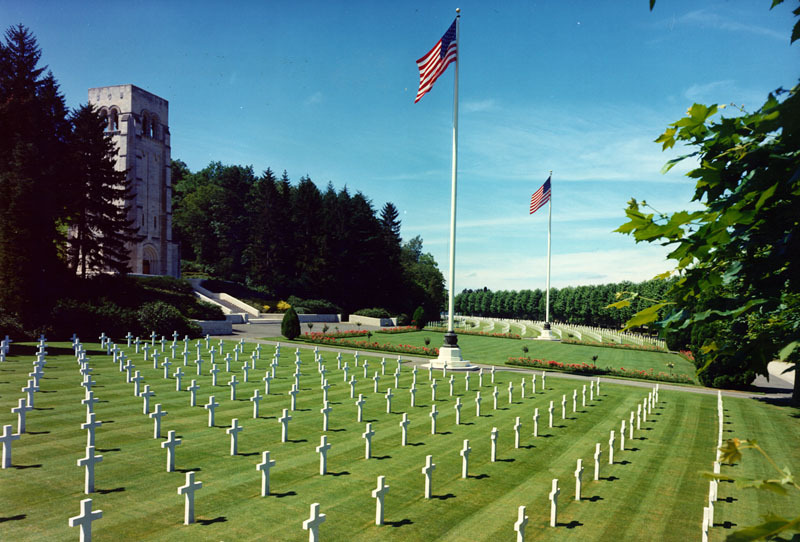
    <title type="html"><![CDATA[Aisne-Marne Cemetery and Memorial:  &quot;I never saw men charge to their death with finer spirit.&quot; ~Floyd Gibbons]]></title>
    <summary type="html"><![CDATA[<p><strong><em>A serene cemetery dotted with white crosses and Stars of David and a white chapel commemorate the loss of American soldiers who fell during the Aisne-Marne operation. </em></strong></p><img src="https://mail.acadianahistorical.org/files/fullsize/45d615fa16854ede4162d534c6d0483f.jpg" alt="Aisne-Marne American Cemetery: Site Overview" /><br/><p>The Second Battle of the Marne had incredibly high casualties with over 272,000 casualties within the space of three full days. Of these, only 12,000 were Americans who fell in battle. It is no surprise then that many of these men hailed from Acadiana. These men include: Horace Aucoin (Chataignier), Louis Bellard (Crowley), Joseph R. Businick (Lake Charles), John F. Clark (New Iberia), Murphy J. Cole (DeRidder), Henry H. Dalrymple (Midway), Claymile J. Darcy (Gray), Merritt B. Durham (Baton Rouge), Joseph C. Gaudin (Donaldsonville), Nick Gonzales (New Roads), Joseph A. Gregoire (Franklin), Cleopha P. Hebert (Cameron), Theodore Jacquet (New Iberia), Arthur Kennedy (Plaquimine), Adrien Kilbert (Convent), Sidney Manuel (Mamou), Laurence Miller (Plaquimine), Dorsle Richard (Cameron), and Isaac C. Savoie (Houma). </p><p>Isaac C. Savoie was 25 when he enlisted in the Army and served as an infantryman in both the 347th Infantry and the 23rd infantry, with which he was serving in Company E when he fell during the Second Battle of the Marne.</p><p>In the quiet French countryside, a sweeping cemetery speckled with white crosses and Stars of David now resides in silence on what was once one of the worst battlefields the world had ever seen. The Aisne-Marne Cemetery is the final resting place for almost 2,300 American soldiers. The 42.5 acre cemetery was designed and dedicated by the American Battle Monument Commission in 1937, and is located near the base of Belleau Wood. The cemetery is divided into two plots with the memorial chapel situated between them, each plot consisting of thirteen rows of graves. Of the 2,289 soldiers buried in these plots 250 remain unidentified.  </p><p>The Monument Chapel: Sitting where the front line had been dug, now between burial plots is a white Gothic Revival chapel with a distinguished bell tower that watches over the battlefield turned cemetery. The chapel is adorned with stain glass that features insignia of the Allied Forces and equipment, and provides a quiet space for reflection. Inscribed into the stone walls in large letters is: “THE NAMES RECORDED ON THESE WALLS ARE THOSE OF AMERICAN SOLDIERS WHO FOUGHT IN THIS REGION AND WHO SLEEP IN UNKNOWN GRAVES.” Beneath this salutation are 1,060 names of those who went missing during the various battles in this region. Some are accompanied by rosettes, indicating that the missing soldier had been found and identified. These names include a few Acadiana men. During the Second World War the cemetery and chapel came under fire and was damaged by heavy artillery. During post-war years the chapel was repaired, but the architect chose to leave one bullet hole near the entrance as a reminder of the fighting that took place in this region. </p><p>In an effort to distract Allied troops from their planned attack on Flanders, the Germans launched their last major offensive on the Marne. Beginning on 15 July, 1918 when German divisions attacked the French Army to the east and west of Reims. In the east, though the French artillery were reduced in number, they began an assault prior to the Germans planned bombardment, taking them by surprise. By the time the Germans had time to retaliate, the French lines were almost completely empty. Following the trenches the Germans found the bulk of the French army and, as they found out when they attacked the next morning, the bulk of French artillery. The attack to the west was much more successful beginning with a three hour bombardment which left the Allied forces scarce, until 17 July, when the British Expeditionary Force and 85,000 troops of the American Expeditionary Force came to reinforce the survivors. On 18 July, the Allied counterattack began when twenty-four French divisions, eight large American divisions, along with other Allied divisions attacked the enemy lines. Allied intelligence knew what the Germans plan of attack minute by minute, partially because the Americans fed the enemy false plans, and were able to deceive them. Allied troops attacked the exposed parts of enemy lines leaving them no choice but to retreat. On 20 July, German leadership ordered a retreat back to where their Spring Offensive had begun.  </p><p>The Second Battle of the Marne is considered to be the turning point in the war, which alerted German leadership to the idea that they would lose the war. Allied forces had captured 29,367 German troops and caused 168,000 casualties.</p><p><em><strong><a href="https://mail.acadianahistorical.org/items/show/162">For more (including 10 images&#32;&amp;&#32;1 audio file) view the original article</a></strong></em></p>]]></summary>
    <published>2022-04-28T18:55:09+00:00</published>
    <updated>2026-03-04T22:42:48+00:00</updated>
    <link rel="alternate" type="text/html" href="https://mail.acadianahistorical.org/items/show/162"/>
    <id>https://mail.acadianahistorical.org/items/show/162</id>
    <author>
      <name>Theresa Slovacek-Herrera</name>
    </author>
  </entry>
</feed>