<?xml version="1.0" encoding="UTF-8"?>
<feed xmlns="http://www.w3.org/2005/Atom">
  <title type="text">Acadiana Historical</title>
  <updated>2026-03-04T22:42:46+00:00</updated>
  <generator uri="http://framework.zend.com" version="1.12.20">Zend_Feed_Writer</generator>
  <link rel="alternate" type="text/html" href="https://mail.acadianahistorical.org/"/>
  <link rel="self" type="application/atom+xml" href="https://mail.acadianahistorical.org/items/browse?output=rss2"/>
  <id>https://mail.acadianahistorical.org/</id>
  <author>
    <name>Acadiana Historical</name>
    <uri>https://mail.acadianahistorical.org</uri>
  </author>
  <link rel="hub" href="https://pubsubhubbub.appspot.com/"/>
  <entry>
    <title type="html"><![CDATA[Hidden Town of Sherburne: Louisiana&#039;s Lumber Towns ]]></title>
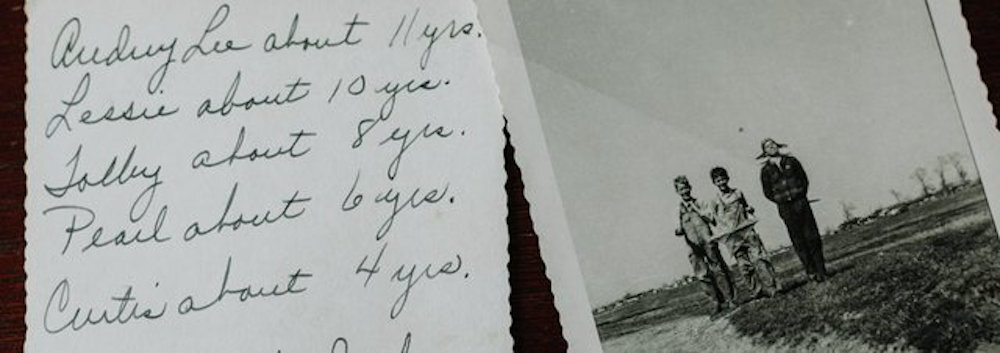
    <summary type="html"><![CDATA[<p><strong><em> Besides the name, the remains left of Sherburne are a few wooden frames of homes, steel equipment and a sawdust pile.    </em></strong></p><img src="https://mail.acadianahistorical.org/files/fullsize/087ffcc8037f39be2538e2e2ecfe5495.jpg" alt="Fletcher family children walking" /><br/><p>LOCATION: POINTE COUPEE PARISH, LA</p><p>COORDINATES: 30.462429, -91.714972</p><p>STATUS: FORGOTTEN AND LOST </p><p>In the 1880s the lumber business came to Louisiana and as the tracts of uncut forest were large, sawmills easily popped up, as the mill itself was able to continue running all day, maximizing the yield and money.  Of these sawmill towns that cropped up for Louisiana one was Sherburne along the Atchafalaya River.  When the lumber business began to dry up towards the end of the later 1800s, the town’s grocer Henry bought up land for farming and to build houses for farmers as the land was now cleared. Come 1939 the federal government ordered the town to move as the construction of the Morganza Spillway might flood the town. Today the Sherburne Wildlife Management Area in the Atchafalaya National Wildlife Refuge (NWR), named in honor of the town that was built there and forced to move, covers where the town stood.  Besides the name, the remains left of Sherburne are a few wooden frames of homes, steel equipment and a sawdust pile.     </p><p><em><strong><a href="https://mail.acadianahistorical.org/items/show/41">For more (including 3 images&#32;&amp;&#32;1 audio file) view the original article</a></strong></em></p>]]></summary>
    <published>2018-04-26T15:41:51+00:00</published>
    <updated>2026-03-04T22:42:46+00:00</updated>
    <link rel="alternate" type="text/html" href="https://mail.acadianahistorical.org/items/show/41"/>
    <id>https://mail.acadianahistorical.org/items/show/41</id>
    <author>
      <name>Rachel Blomquist </name>
    </author>
  </entry>
  <entry>
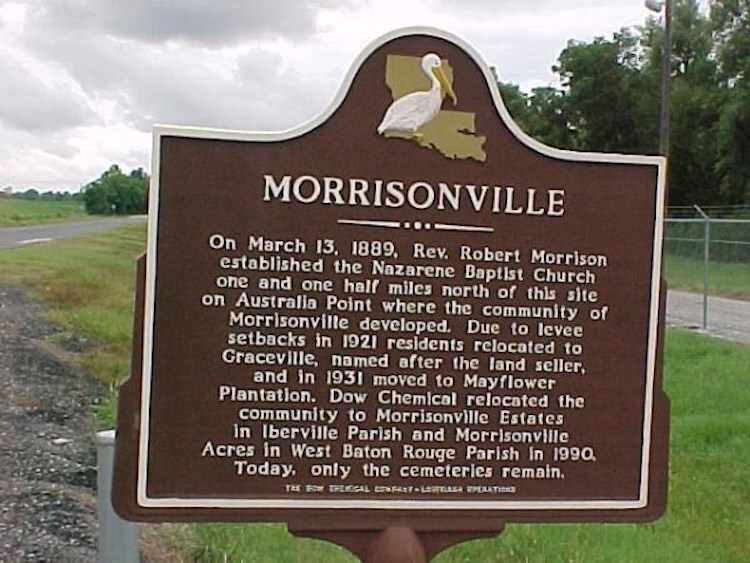
    <title type="html"><![CDATA[The Lost Town of Morrisonville ]]></title>
    <summary type="html"><![CDATA[<p><strong><em>The small, historic town of Morrisonville in Iberville Parish is not only lost to its past residences but also to history.</em></strong></p><img src="https://mail.acadianahistorical.org/files/fullsize/562f3b7d1a8a1c20409a07e8b51ea110.jpg" alt="Morrisonville&#039;s Marker" /><br/><p>LOCATION: PLAQUEMINE, IBERVILLE PARISH, LA</p><p>COORDINATES: 30.322331, -91.227700 (Nazarene Baptist’s Cemetery)</p><p>STATUS: LOST</p><p>The small, historic town of Morrisonville in Iberville Parish is not only lost to its past residences but also to history. Morrisonville was one of the oldest towns in the area as freed slaves had started it during the end of the Civil War.  Along the 85 miles between Baton Rouge and New Orleans, seats 75 of the largest plants in the U.S.  In 1958 the Dow Chemical Company moved to Plaquemine, but eventually its waste produce became a problem and they began to buy out land in the 1980s.  Morrisonville had no choice to leave come 1989 when there was a major groundwater contamination.  Today all that is left is a historical marker and the Nazarene Baptist’s cemetery.  </p><p><em><strong><a href="https://mail.acadianahistorical.org/items/show/29">For more (including 3 images&#32;&amp;&#32;1 audio file) view the original article</a></strong></em></p>]]></summary>
    <published>2018-04-26T15:19:23+00:00</published>
    <updated>2026-03-04T22:42:45+00:00</updated>
    <link rel="alternate" type="text/html" href="https://mail.acadianahistorical.org/items/show/29"/>
    <id>https://mail.acadianahistorical.org/items/show/29</id>
    <author>
      <name>Rachel Blomquist</name>
    </author>
  </entry>
  <entry>
    <title type="html"><![CDATA[The Largest Plantation Ever Built: Belle Grove Plantation]]></title>
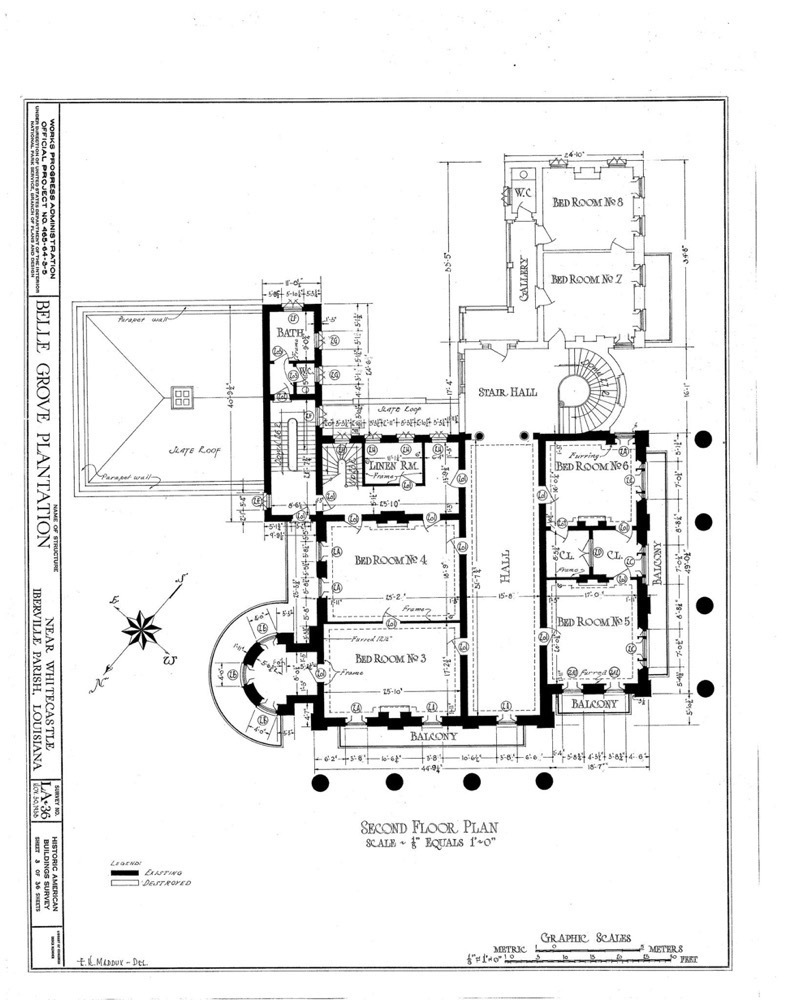
    <summary type="html"><![CDATA[<p><strong><em>One of the largest plantations to ever be built in Louisiana and in the South was the Belle Grove Plantation of White Castle.  This southern mansion was 62 feet high and 122 feet wide that contained seventy-five rooms.</em></strong></p><img src="https://mail.acadianahistorical.org/files/fullsize/eb23153fda5e0777581a3f8082daa616.jpg" alt=" Survey Plans for the second floor " /><br/><p>LOCATION: WHITE CASTLE, IBERVILLE PARISH, LA</p><p>COORDINATES: 30.185731, -91.120011</p><p>STATUS: LOST </p><p>One of the largest plantations to ever be built in Louisiana and in the South was the Belle Grove Plantation of White Castle.  This southern mansion was 62 feet high and 122 feet wide that contained seventy-five rooms. John Andrews, a sugar planter from Virginia, built Belle Grove in 1857. To make it stand out more, its colors were not standard white and green but pale lavender rose, blue and yellow. Eventually Andrews decided to sell Belle Grove and planter Henry Ware bought it. The Ware family was the last family to own this plantation and was forced to sell the home, as there had been a series of bad crops in the 1920s.  Unfortunately one night in 1952 a fire broke out and the beautiful plantation was lost to the flames. By 1958 the rest of it was bulldozed and now the Belle Grove subdivision is all that is left to remember Belle Grove Plantation.  </p><p><em><strong><a href="https://mail.acadianahistorical.org/items/show/20">For more (including 4 images&#32;&amp;&#32;1 audio file) view the original article</a></strong></em></p>]]></summary>
    <published>2018-04-26T15:01:17+00:00</published>
    <updated>2026-03-04T22:42:45+00:00</updated>
    <link rel="alternate" type="text/html" href="https://mail.acadianahistorical.org/items/show/20"/>
    <id>https://mail.acadianahistorical.org/items/show/20</id>
    <author>
      <name>Rachel Blomquist</name>
    </author>
  </entry>
</feed>