<?xml version="1.0" encoding="UTF-8"?>
<feed xmlns="http://www.w3.org/2005/Atom">
  <title type="text">Acadiana Historical</title>
  <updated>2026-03-04T22:42:49+00:00</updated>
  <generator uri="http://framework.zend.com" version="1.12.20">Zend_Feed_Writer</generator>
  <link rel="alternate" type="text/html" href="https://mail.acadianahistorical.org/"/>
  <link rel="self" type="application/atom+xml" href="https://mail.acadianahistorical.org/items/browse?output=rss2"/>
  <id>https://mail.acadianahistorical.org/</id>
  <author>
    <name>Acadiana Historical</name>
    <uri>https://mail.acadianahistorical.org</uri>
  </author>
  <link rel="hub" href="https://pubsubhubbub.appspot.com/"/>
  <entry>
    <title type="html"><![CDATA[Rich History at the Royal Tavern: Twenty years of Roy Gathe&#039;s legacy, the Royal Tavern]]></title>
    <summary type="html"><![CDATA[<p><strong><em>Nightlife in Acadiana was especially dynamic and rich with complicated history. Many dancehalls, prior to the 1960s, were segregated or even white only, though one particular dancehall that opened sometime in the late 1930s not only welcomed Black patrons, but was owned by a Black family.  In its early days, the Royal Tavern was regarded as a pinnacle of high-class entertainment in Lafayette. As the dancehall changed hands and became more established in the Lafayette community, vices of the night, including illegal alcohol sales, prostitution, violence, and narcotics changed the place the Royal Tavern held in the community. </em></strong></p><img src="https://mail.acadianahistorical.org/files/fullsize/20b325e8284894acaa4ee3926b7d976e.jpg" alt="Photo of the Royal Tavern. " /><br/><p>Decades ago, music and dance were the epitome of South Louisiana’s nightlife. People from various parishes would travel miles to go to the ultimate hub of music and dance, the Louisiana Danchall. While the total number of dancehalls that have existed in Louisiana is rather impossible to know, some dancehalls have become quite popular in contemporary life and historical attention, while others have been borderline lost to the ravages of time. One such dancehall, that many have forgotten, sat in the heart of Lafayette, Louisiana, the Royal Tavern.</p><p>The Royal Tavern’s true location is still to be determined, though records have placed it on the Carencro highway, 615 North College Avenue, and Gilman Road. Interestingly, it’s location at 615 North College Avenue is right where the University of Louisiana Lafayette’s soccer and track field are currently located. The bar was started by Mr. Roy Gathe of the prominent Gathe farming family. The bar seemingly began in 1938 or ’39, with the earliest record of the existence being an advertisement for a whiskey brand called Old Schenley. Patrons of the bar, in 1942, described the bar as “high-class entertainment” owing testament to Mr. Roy Gathe’s activism in the community and his business ingenuity, having even helped start Lafayette’s NAACP chapter. As a testament to the "high-class" nature of the dancehall, the Royal Tavern owned the first remote-controlled music box in the city. In 1943, Roy Gathe joined the military and the ownership changed hands, with the next owner being listed as Relic Dartez in 1952. Over the years, two other owners, Milton Cormier and Russel Malbreaux (both Black), would be named as operators of the location, involved in a multitude of scandals.
The first recorded scandal being a prostitution raid in 1950, where a total of fourteen women were arrested over five separate locations including the Royal Tavern. Under these new owners, several more police raids would prove successful in finding illegal substances and dealings. In 1951 and ’52, narcotics busts at the Royal Tavern resulted in the arrest of over twenty-six men and women, among which was owner Relic Dartez. After this date, Milton Cormier was recorded as the operator of the tavern. From 1953-56, under Milton Cormier’s gaze, violence and thievery plagued the Royal Tavern as three fights resulting in stabbings occurred, and a group of thieves broke in and stole $8-9 in cash and three cases of beer. Additionally, the Royal Tavern and Milton Cormier were fined $50 for operating and selling alcohol on a Sunday, against Sunday Law.
The last records of the Royal Tavern are in 1957 and ’59 when Russel Malbreaux was listed as the bar’s operator applying for a license to sell alcohol, and listed in the city directory. The Royal Tavern has a rich and colorful history as a respectable dancehall in the beginning, and a patron of illicit substances, sex work, and violence in its later years. This dynamic history is a prime example of night life in Acadiana and the place many dancehalls held in communities. People would flock to these locations to dance and relieve their stress, and often times that release would result in arrests and pain.</p><p><em><strong><a href="https://mail.acadianahistorical.org/items/show/218">For more (including 3 images&#32;&amp;&#32;1 audio file) view the original article</a></strong></em></p>]]></summary>
    <published>2024-04-04T00:16:04+00:00</published>
    <updated>2026-03-04T22:42:49+00:00</updated>
    <link rel="alternate" type="text/html" href="https://mail.acadianahistorical.org/items/show/218"/>
    <id>https://mail.acadianahistorical.org/items/show/218</id>
    <author>
      <name>Xian Maynor</name>
    </author>
  </entry>
  <entry>
    <title type="html"><![CDATA[Old City Hall: Lafayette&#039;s First City Hall and National Registered Historic Place]]></title>
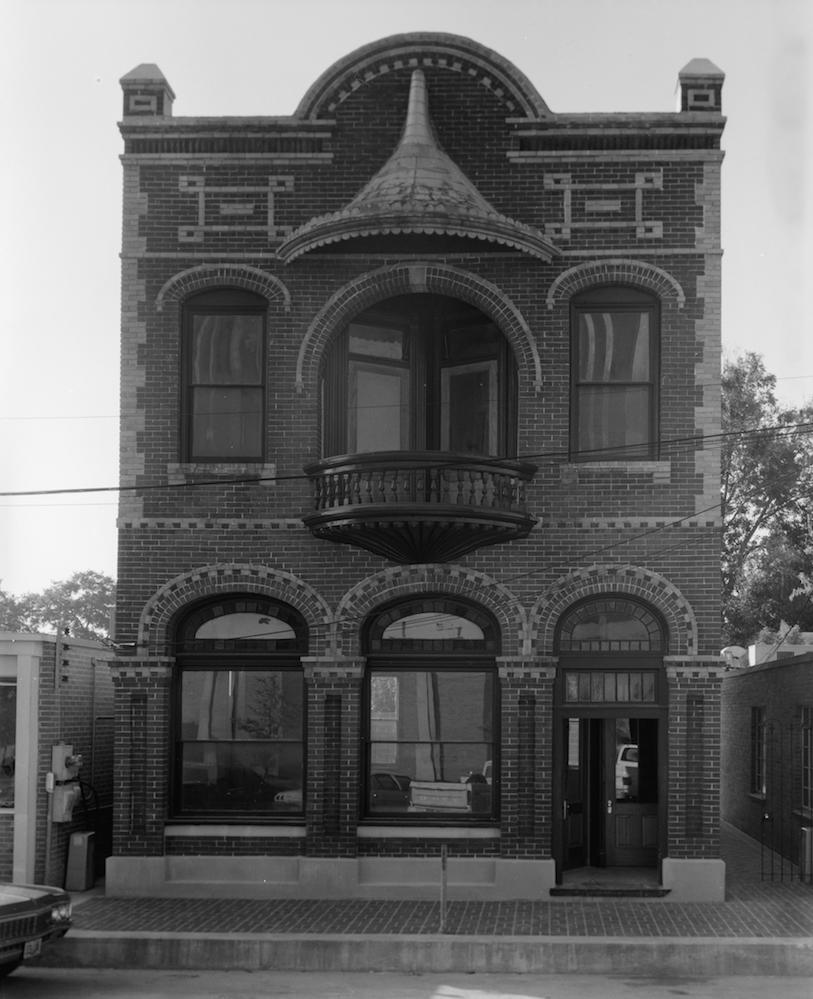
    <summary type="html"><![CDATA[<p><strong><em>One of the first buildings in the town of Lafayette to be on the National Register of Historic Places was, the affectionately nicknamed, Old City Hall.</em></strong></p><img src="https://mail.acadianahistorical.org/files/fullsize/1429932d0b1fb7ce2bbd4322bdde36f0.jpg" alt="1981 City Hall" /><br/><p>LOCATION: LAFAYETTE, LAFAYETTE PARISH, LA</p><p>COORDINATES: 30.222657, -92.020472 (217 W. MAIN ST. LAFAYETTE)</p><p>STATUS: FORGOTTEN </p><p>One of the first buildings in the town of Lafayette to be on the National Register of Historic Places was, the affectionately nicknamed, Old City Hall. It as built in 1898 to be the town’s first bank.  Built in the Rococo style, the building is two stories with colored glass windows and different sized bricks. In 1906, the town of Lafayette bought it and turned it into the city hall. It was the city hall for thirty-three years until 1939.  Then the building went through various owners before there was talk of having the building torn down.  However funds were gathered and the last people to stay in this building were the Council for the Development of French in Louisiana (CODOFIL) in the late 1990s. Since then the building has stood empty amongst it neighbors, waiting for a new owner. </p><p><em><strong><a href="https://mail.acadianahistorical.org/items/show/34">For more (including 4 images&#32;&amp;&#32;1 audio file) view the original article</a></strong></em></p>]]></summary>
    <published>2018-04-26T15:31:42+00:00</published>
    <updated>2026-03-04T22:42:46+00:00</updated>
    <link rel="alternate" type="text/html" href="https://mail.acadianahistorical.org/items/show/34"/>
    <id>https://mail.acadianahistorical.org/items/show/34</id>
    <author>
      <name>Rachel Blomquist</name>
    </author>
  </entry>
</feed>