<?xml version="1.0" encoding="UTF-8"?>
<feed xmlns="http://www.w3.org/2005/Atom">
  <title type="text">Acadiana Historical</title>
  <updated>2026-03-04T22:42:48+00:00</updated>
  <generator uri="http://framework.zend.com" version="1.12.20">Zend_Feed_Writer</generator>
  <link rel="alternate" type="text/html" href="https://mail.acadianahistorical.org/"/>
  <link rel="self" type="application/atom+xml" href="https://mail.acadianahistorical.org/items/browse?output=rss2"/>
  <id>https://mail.acadianahistorical.org/</id>
  <author>
    <name>Acadiana Historical</name>
    <uri>https://mail.acadianahistorical.org</uri>
  </author>
  <link rel="hub" href="https://pubsubhubbub.appspot.com/"/>
  <entry>
    <title type="html"><![CDATA[Hurricanes Batter Cameron Parish Cemeteries: Little Chenier Attempts to Defy the Storms]]></title>
    <summary type="html"><![CDATA[<img src="https://mail.acadianahistorical.org/files/fullsize/265ee6f94a20375b82a024271802568c.jpg" alt="Overview of Little Chenier" /><br/><p>One of the lost and forgotten cemeteries is Little Chenier Cemetery in Creole, Cameron Parish. Located on Big Burn Road off the main Little Chenier Road, the cemetery is small but in an easily accessed clearing. The area is known for hunting camps and is easily evident with the large pile of bird carcasses on the opposite side of the road. Past hurricanes have damaged the area, and Little Chenier is no exception. A metal fence at one point marked the cemetery boundary, but now only a few posts and the gate remain.</p><p>The cemetery does not look cared for, although some of the headstones look as though they were replaced recently. Two headstones are marked with “Smith Woodard Lake Charles LA.” Upon further research, I spoke with the owner of the now Bourque Smith Woodard Memorials, and for over half a century, the business has helped clean up hurricane-hit cemeteries along the Gulf Coast. Since FEMA started providing financial assistance to hurricane hit cemeteries, other companies have jumped on board and even specialize in cemetery disruption consulting. </p><p>Several headstones are handwritten, one is curiously outside the original fence, and one has famous relations. Victoria Broussard lived to be 101 years old and had a very famous second cousin, Abraham Lincoln. Although Victoria never met her famous cousin, it is still amazing how Lincoln’s family ties travel to south Louisiana; disturbing to think that these famous associations might never be known because of a lack of upkeep. Think about how many have already been lost.</p><p><em><strong><a href="https://mail.acadianahistorical.org/items/show/177">For more (including 12 images&#32;&amp;&#32;1 audio file) view the original article</a></strong></em></p>]]></summary>
    <published>2022-05-06T07:56:06+00:00</published>
    <updated>2026-03-04T22:42:48+00:00</updated>
    <link rel="alternate" type="text/html" href="https://mail.acadianahistorical.org/items/show/177"/>
    <id>https://mail.acadianahistorical.org/items/show/177</id>
    <author>
      <name>Tanya Greene</name>
    </author>
  </entry>
  <entry>
    <title type="html"><![CDATA[Mount Zion Riverlake Cemetery: &quot;To Lie With Those Who Have No Mark&quot;]]></title>
    <summary type="html"><![CDATA[<img src="https://mail.acadianahistorical.org/files/fullsize/9b577bfc16ed6e6b91b7e161ce7dcd83.jpg" alt="To Lie With Those Who Have No Mark" /><br/><p>One of the lost and forgotten cemeteries is maybe not so lost, but unfortunately becoming forgotten. The cemetery is famous but a search on Google maps reveals a simple word to describe this place: Graveyard. Upon further inspection, however, an entire world opens up. The cemetery is located in the small community of Oscar, Louisiana in Point Coupee Parish. Traveling down Louisiana Highway One, the road to the cemetery is barely visible. Once on the small, dirt road, it appears uninviting and you expect to see “No Trespassing” signs. The road is surrounded by sugarcane fields and about one mile down, a small tree covered area appears to the left. Inching closer, you can see the reflective white of the stones appearing through the trees. The cemetery appears taken care of and quite beautiful. Large oak trees shade most of the grounds and each are surrounded by beautiful, thick cast iron plants. Many of the sites look old and worn but several appear to have received a recent facelift. Some new, marble headstones sit next to the originals that were concrete and handwritten. The headstones speak of their owners as mothers, fathers, babies, soldiers, sports fans, and many other individualities. A particularly interesting headstone marks that of L. J. Johnson who died in 1924. The carved symbol above his name represents the Mosaic Templars of America (MTA). The MTA was founded in 1883 in Arkansas by two former slaves. For African Americans experiencing the Jim Crow South, times were tough and the MTA provided illness, death, and burial insurance to its members. The organization adopted its name from the Biblical story of Moses emancipating the Hebrew slaves. The local chapter name, number, and location are located at the bottom of the headstone.</p><p>One invisible disclosure within the cemetery of particular importance, is that the people buried there were either slaves or the descendants of slaves from Riverlake Plantation. The same house, built 200 years ago, still stands overlooking the cemetery. After emancipation, many former slaves stayed and worked on the grounds. Up until the 1980s, descendants still lived in the old slave quarters. They lived, they loved, they went to school, went to church, and still worked and lived on the property. </p><p>The cemetery’s most famous resident is that of Ernest J. Gaines, Louisiana’s own famous author who based most of his story’s setting and premise on Riverlake Plantation. Gaines is surrounded by many of his family and friends. His biggest fear was that the cemetery would disappear amongst the encroaching agriculture. He wanted to be buried there in hopes that his fame would draw attention to the place and those he was surrounded by were never forgotten. In the 1990s, Gaines and his wife created the Mount Zion Riverlake Cemetery Association in order to care for the cemetery. The association along with the University of Louisiana at Lafayette’s Ernest J. Gaines Center hosted and successfully carried out a cleanup of the cemetery every year. Unfortunately, due to Gaines’ passing, other association board member deaths, and COVID-19, the last cleanup occurred in October of 2019 and there has been no mention of new cleanup dates. </p><p>Mount Zion Riverlake Cemetery is hugely important to Acadiana history. Instead of being labeled generically, it should be remembered as an open-air museum of African American slaves and their descendants who lived and left an indelible mark that should never be forgotten.</p><p><em><strong><a href="https://mail.acadianahistorical.org/items/show/170">For more (including 22 images&#32;&amp;&#32;1 audio file) view the original article</a></strong></em></p>]]></summary>
    <published>2022-05-05T08:12:28+00:00</published>
    <updated>2026-03-04T22:42:48+00:00</updated>
    <link rel="alternate" type="text/html" href="https://mail.acadianahistorical.org/items/show/170"/>
    <id>https://mail.acadianahistorical.org/items/show/170</id>
    <author>
      <name>Tanya Greene</name>
    </author>
  </entry>
  <entry>
    <title type="html"><![CDATA[Aisne-Marne Cemetery and Memorial:  &quot;I never saw men charge to their death with finer spirit.&quot; ~Floyd Gibbons]]></title>
    <summary type="html"><![CDATA[<p><strong><em>A serene cemetery dotted with white crosses and Stars of David and a white chapel commemorate the loss of American soldiers who fell during the Aisne-Marne operation. </em></strong></p><img src="https://mail.acadianahistorical.org/files/fullsize/45d615fa16854ede4162d534c6d0483f.jpg" alt="Aisne-Marne American Cemetery: Site Overview" /><br/><p>The Second Battle of the Marne had incredibly high casualties with over 272,000 casualties within the space of three full days. Of these, only 12,000 were Americans who fell in battle. It is no surprise then that many of these men hailed from Acadiana. These men include: Horace Aucoin (Chataignier), Louis Bellard (Crowley), Joseph R. Businick (Lake Charles), John F. Clark (New Iberia), Murphy J. Cole (DeRidder), Henry H. Dalrymple (Midway), Claymile J. Darcy (Gray), Merritt B. Durham (Baton Rouge), Joseph C. Gaudin (Donaldsonville), Nick Gonzales (New Roads), Joseph A. Gregoire (Franklin), Cleopha P. Hebert (Cameron), Theodore Jacquet (New Iberia), Arthur Kennedy (Plaquimine), Adrien Kilbert (Convent), Sidney Manuel (Mamou), Laurence Miller (Plaquimine), Dorsle Richard (Cameron), and Isaac C. Savoie (Houma). </p><p>Isaac C. Savoie was 25 when he enlisted in the Army and served as an infantryman in both the 347th Infantry and the 23rd infantry, with which he was serving in Company E when he fell during the Second Battle of the Marne.</p><p>In the quiet French countryside, a sweeping cemetery speckled with white crosses and Stars of David now resides in silence on what was once one of the worst battlefields the world had ever seen. The Aisne-Marne Cemetery is the final resting place for almost 2,300 American soldiers. The 42.5 acre cemetery was designed and dedicated by the American Battle Monument Commission in 1937, and is located near the base of Belleau Wood. The cemetery is divided into two plots with the memorial chapel situated between them, each plot consisting of thirteen rows of graves. Of the 2,289 soldiers buried in these plots 250 remain unidentified.  </p><p>The Monument Chapel: Sitting where the front line had been dug, now between burial plots is a white Gothic Revival chapel with a distinguished bell tower that watches over the battlefield turned cemetery. The chapel is adorned with stain glass that features insignia of the Allied Forces and equipment, and provides a quiet space for reflection. Inscribed into the stone walls in large letters is: “THE NAMES RECORDED ON THESE WALLS ARE THOSE OF AMERICAN SOLDIERS WHO FOUGHT IN THIS REGION AND WHO SLEEP IN UNKNOWN GRAVES.” Beneath this salutation are 1,060 names of those who went missing during the various battles in this region. Some are accompanied by rosettes, indicating that the missing soldier had been found and identified. These names include a few Acadiana men. During the Second World War the cemetery and chapel came under fire and was damaged by heavy artillery. During post-war years the chapel was repaired, but the architect chose to leave one bullet hole near the entrance as a reminder of the fighting that took place in this region. </p><p>In an effort to distract Allied troops from their planned attack on Flanders, the Germans launched their last major offensive on the Marne. Beginning on 15 July, 1918 when German divisions attacked the French Army to the east and west of Reims. In the east, though the French artillery were reduced in number, they began an assault prior to the Germans planned bombardment, taking them by surprise. By the time the Germans had time to retaliate, the French lines were almost completely empty. Following the trenches the Germans found the bulk of the French army and, as they found out when they attacked the next morning, the bulk of French artillery. The attack to the west was much more successful beginning with a three hour bombardment which left the Allied forces scarce, until 17 July, when the British Expeditionary Force and 85,000 troops of the American Expeditionary Force came to reinforce the survivors. On 18 July, the Allied counterattack began when twenty-four French divisions, eight large American divisions, along with other Allied divisions attacked the enemy lines. Allied intelligence knew what the Germans plan of attack minute by minute, partially because the Americans fed the enemy false plans, and were able to deceive them. Allied troops attacked the exposed parts of enemy lines leaving them no choice but to retreat. On 20 July, German leadership ordered a retreat back to where their Spring Offensive had begun.  </p><p>The Second Battle of the Marne is considered to be the turning point in the war, which alerted German leadership to the idea that they would lose the war. Allied forces had captured 29,367 German troops and caused 168,000 casualties.</p><p><em><strong><a href="https://mail.acadianahistorical.org/items/show/162">For more (including 10 images&#32;&amp;&#32;1 audio file) view the original article</a></strong></em></p>]]></summary>
    <published>2022-04-28T18:55:09+00:00</published>
    <updated>2026-03-04T22:42:48+00:00</updated>
    <link rel="alternate" type="text/html" href="https://mail.acadianahistorical.org/items/show/162"/>
    <id>https://mail.acadianahistorical.org/items/show/162</id>
    <author>
      <name>Theresa Slovacek-Herrera</name>
    </author>
  </entry>
  <entry>
    <title type="html"><![CDATA[The Legendary Carencro Raceways: From Dirt to the Derby]]></title>
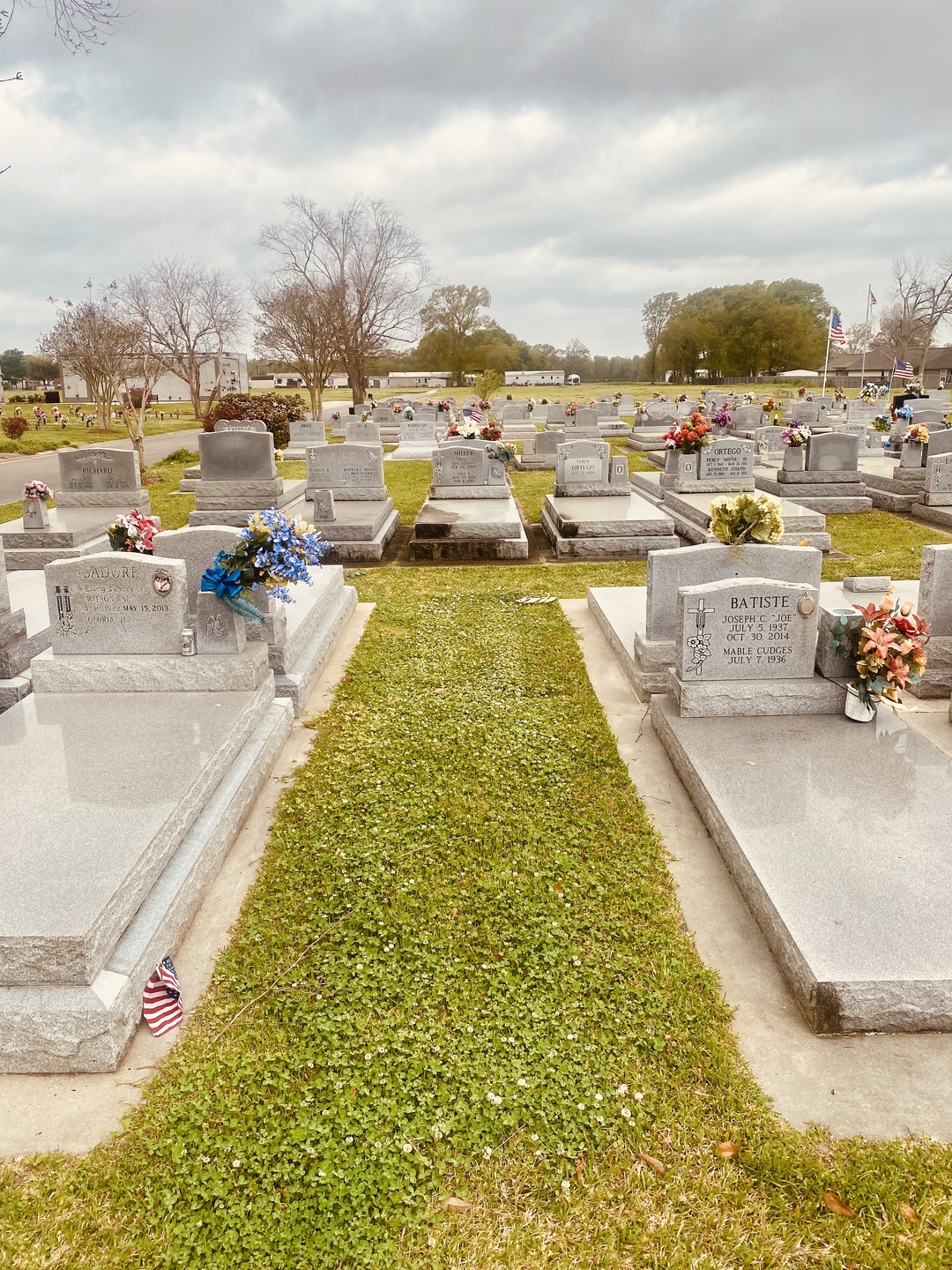
    <summary type="html"><![CDATA[<p><strong><em>On Friday nights we would make a supper—a free supper—and people would enter their horses. After Cajuns have a few beers, their horses are faster and the women are prettier.” The celebrated Don Stemman, owner of Carencro Raceways, 1968-1973.  </em></strong></p><img src="https://mail.acadianahistorical.org/files/fullsize/e909aad86d39432ad898d6f50753510f.jpg" alt="Between the Graves" /><br/><p>The site where Carencro Raceways once stood is now a place of quiet reflection. The soft, green lawn with its neatly kept graves serves as a place of remembrance. It's hard to imagine that a famed bush track existed where Evangeline Memorial Gardens currently stands. Evidence of the serene landscape’s history surfaces from time to time; a groundskeeper on the property proclaims that they still find remnants of the races when digging a new grave. Old beer bottles and bottle tops emerge in the freshly dug dirt. </p><p>Acadiana’s unsanctioned race tracks were famous throughout North America. So much so that in 1977, Walter Matthau filmed "Casey’s Shadow", a film about a “down-and-out Cajun trainer with a big dream,” in honor of the tracks' legacies. A match race in Matthau's 1977 movie, heralded as “one of the best racing movies of all time,” was filmed at Carencro Raceways. </p><p>Races at unsanctioned tracks were the highlight of the week and a major social event. Entire families would turn out on Sundays throughout the year, as there was no specific racing season. “It was a standard thing every Sunday. You came to the bush track and that was your pastime,” said Harris Desormeaux, world-renowned jockey, Kent Desormeaux’s father. Fred Girouard, the longtime maître d at Evangeline Downs, confirms the social component of bush track racing in an interview, stating “On Sunday, boy, people would come from all over. Nobody had much, and sometimes you’d see five families coming in one car.” </p><p>Racing in Acadiana was exciting and unique. Cajuns raced quarter horses instead of thoroughbreds. But what truly made racing in Acadiana different from the rest of the country were the jockeys. The riders were primarily boys, most as young as 6 or 7 years old. The smaller and lighter, the better. It is because riders started racing at such an early age that Louisiana has produced more winning jockeys than any other state in North America. Racing legends such as Calvin Borel, Robby Albarado, Shane Sellers, Kent Desormeaux, Eddie Delahoussaye, and Joe Talamo cut their teeth on the unsanctioned tracks and credit sites like Carencro Raceways to their meteoric rise in the racing world.</p><p><em><strong><a href="https://mail.acadianahistorical.org/items/show/145">For more (including 10 images) view the original article</a></strong></em></p>]]></summary>
    <published>2022-03-31T23:24:11+00:00</published>
    <updated>2026-03-04T22:42:48+00:00</updated>
    <link rel="alternate" type="text/html" href="https://mail.acadianahistorical.org/items/show/145"/>
    <id>https://mail.acadianahistorical.org/items/show/145</id>
    <author>
      <name>Laura M. Hughes</name>
    </author>
  </entry>
  <entry>
    <title type="html"><![CDATA[St. Mary Parish Fields Overtaking Cemeteries: Raising Cane Around Midway]]></title>
    <summary type="html"><![CDATA[<img src="https://mail.acadianahistorical.org/files/fullsize/53cde5fb89e45145390582db06f94685.jpg" alt="Steel Crosses Bend to Weather and Time" /><br/><p>One of the forgotten cemeteries is Midway Cemetery located in Franklin, St. Mary Parish. Located right alongside State Route 317, most would miss this small treasure. Midway is little maintained, and the newest burial was conducted in 2011. Noted features are the makeshift crosses in place of headstones. Some simply have initials, others have a cross and what appears to be hanging hooks, along with a marble or concrete headstone. Many of Midway’s inhabitants were local farmers with large families. Nettie Hillard, 79, died in 1971 and left behind eight children, fifty-seven grandchildren, and thirty-nine great-grandchildren. Although Acadiana has strong Catholic roots, Mrs. Hillard and her family were Baptist farmers. Multiple denominations in the early twentieth century in Acadiana had many commonalities to include large families to help on the farms.</p><p>Midway is one of many forgotten cemeteries not properly cared for by religious customs, family, or otherwise. The site’s location shows the history of a farming community of Baptists with Acadian roots. </p><p>Cemeteries like Midway, not situated next to its respective church, are more likely to fall into disrepair. Midway is an open-air museum of Cajun Baptist, farming family history and should not be forgotten.</p><p><em><strong><a href="https://mail.acadianahistorical.org/items/show/140">For more (including 13 images&#32;&amp;&#32;1 audio file) view the original article</a></strong></em></p>]]></summary>
    <published>2022-03-28T01:28:15+00:00</published>
    <updated>2026-03-04T22:42:48+00:00</updated>
    <link rel="alternate" type="text/html" href="https://mail.acadianahistorical.org/items/show/140"/>
    <id>https://mail.acadianahistorical.org/items/show/140</id>
    <author>
      <name>Tanya G. Greene</name>
    </author>
  </entry>
  <entry>
    <title type="html"><![CDATA[Local Ghost Stories Give Hookman Cemetery its Name: Death to the Hookman!]]></title>
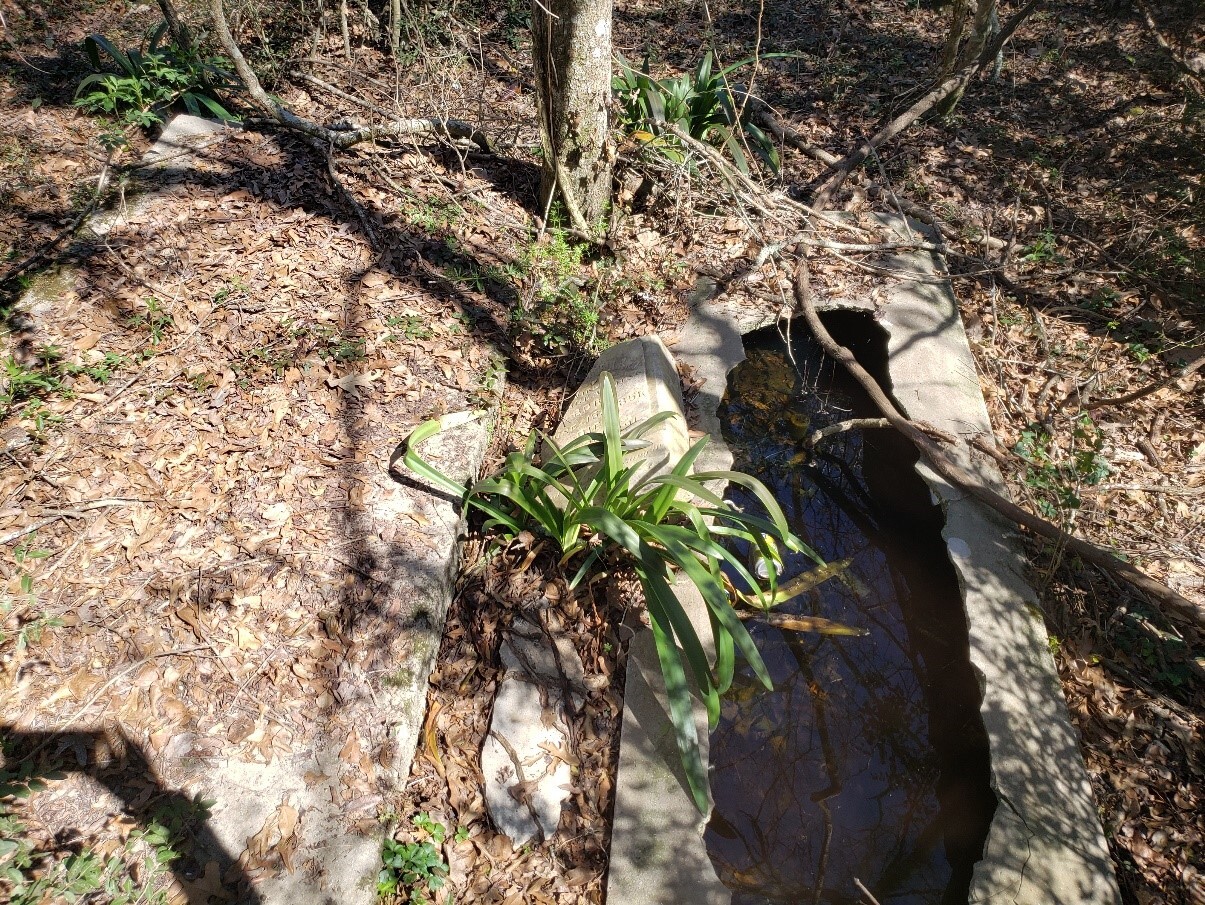
    <summary type="html"><![CDATA[<p><strong><em>Hookman Cemetery began as a peaceful journey's end but turned into a lover's lane horror story and finally to forgotten lore.</em></strong></p><img src="https://mail.acadianahistorical.org/files/fullsize/f59b557bdce8bb27a0344f81aed12bf0.jpg" alt="Broken and Abandoned" /><br/><p>An interesting tale arises concerning a lost and forgotten cemetery named Hookman in Rayne, Acadia Parish. Located on a sharp turn off a gravel road known as Ohlenforst, the only access is a small ATV beaten path and through a small clearing. A total of seven graves scatter the grounds although multiple headstones are partially buried and indiscernible. One site, broken open to the elements, is filled with water and trash. The newest headstone, placed in 1934, clearly shows an abandoned cemetery. Although referred to as Hookman Cemetery, the name resulted from a lover’s lane ghost story concerning a man with a hook. Eventually, the name stuck. Local newspaper clippings reveal the latest burial of Lee Anding and referred to the burial site as McClellan (McClelland) Cemetery. The obituary stated Anding died at the Anding homestead and was a farmer who left behind seven adult children. All but one, Charles Robertson, buried in the cemetery is either a McClelland or an Anding. Census records in 1910 indicate that the McClelland and Anding families lived next door to one another. The history points to a small, family locale cemetery not called Hookman Cemetery, but McClelland Cemetery. The grounds are an open-air Acadian farming family history museum that should be remembered instead of forgotten.</p><p><em><strong><a href="https://mail.acadianahistorical.org/items/show/86">For more (including 7 images&#32;&amp;&#32;1 audio file) view the original article</a></strong></em></p>]]></summary>
    <published>2022-02-18T01:30:53+00:00</published>
    <updated>2026-03-04T22:42:47+00:00</updated>
    <link rel="alternate" type="text/html" href="https://mail.acadianahistorical.org/items/show/86"/>
    <id>https://mail.acadianahistorical.org/items/show/86</id>
    <author>
      <name>Tanya G. Greene</name>
    </author>
  </entry>
</feed>