<?xml version="1.0" encoding="UTF-8"?>
<feed xmlns="http://www.w3.org/2005/Atom">
  <title type="text">Acadiana Historical</title>
  <updated>2026-03-04T22:42:50+00:00</updated>
  <generator uri="http://framework.zend.com" version="1.12.20">Zend_Feed_Writer</generator>
  <link rel="alternate" type="text/html" href="https://mail.acadianahistorical.org/"/>
  <link rel="self" type="application/atom+xml" href="https://mail.acadianahistorical.org/items/browse?output=rss2"/>
  <id>https://mail.acadianahistorical.org/</id>
  <author>
    <name>Acadiana Historical</name>
    <uri>https://mail.acadianahistorical.org</uri>
  </author>
  <link rel="hub" href="https://pubsubhubbub.appspot.com/"/>
  <entry>
    <title type="html"><![CDATA[Give Me Liberty: A brief history of the historic Liberty Theatre in downtown Eunice]]></title>
    <summary type="html"><![CDATA[<p><strong><em>Through fire and storm, the Liberty Theatre stands as an historic example of entertainment and community for the people of Eunice</em></strong></p><img src="https://mail.acadianahistorical.org/files/fullsize/70944d1a1fadd8e0d79d394aba121172.jpg" alt="First Talking Picture at Liberty Theatre in Eunice" /><br/><p>The Liberty Theatre in Eunice, Louisiana, has a rich history spanning from its founding in 1920 to its closure in 1982 and subsequent revival in 1987. J. Claude Keller and A. F. McGee partnered to establish the theatre, aiming to create a premier entertainment venue in the state. McGee purchased a prime lot in the town center for the venture, incorporating it under the Liberty Theatre Company, which would later become the Liberty Amusement Company.
From its early days, the Liberty Theatre gained a reputation for excellence, attracting patrons with a diverse array of entertainment, including vaudeville shows, films, music, and community events. Despite operating in a segregated environment, the theatre welcomed guests of all races, solidifying its status as a cultural hub.
In 1924, the theatre relocated to a larger building, expanding its capacity and amenities. Renovations continued over the years, with the addition of modern technology like Vitaphone equipment, cinemascope, stereophonic sound systems, modern cushioned chairs, and air conditioning, ensuring a top-notch experience for audiences.
The Liberty Theatre remained a beloved institution in Eunice for over five decades, but not without challenges. In 1924, the theater changed locations to its current location on Park Avenue and Second Street in downtown Eunice. Later, the theater would experience expensive disasters. In 1952, a fire broke out in the production room that caused $25,000 in damages and put the theatre out of commission for two weeks. In 1972, the theatre fell victim to violent storms that resulted in the water-cooling tower above caving in through the ceiling resulting in $2,500 in damages. Still, the theatre continued to thrive despite hardship. Even in 1982, when the theatre closed its doors to give room to the Queen Cinema also operated by the Liberty Amusement Company, the community rallied together to preserve its legacy. The Eunice City Council purchased the building and initiated a restoration project, culminating in its grand reopening in 1987.
The theatre's revival was a testament to the community's dedication to preserving its cultural heritage. Volunteers and donations poured in to support the renovation efforts, culminating in a grand reopening ceremony attended by a large crowd. Additionally, the theatre attracted international audiences, with tourists voyaging from Britain and France to see the shows presented there. Some of the most popular events at the theatre were the annual anniversary parties held there. At these parties, the Liberty Theatre would even offer prizes to people who attended, including free tickets and cash prizes, and on the 28<sup>th</sup> anniversary, even a Shetland pony.
Throughout its history, the Liberty Theatre played a pivotal role in the cultural life of Eunice, attracting audiences from near and far with its diverse programming. From vaudeville shows to film screenings and community events, the theatre provided entertainment for people of all interests and backgrounds.
Despite its complicated past, including segregation and financial struggles, the Liberty Theatre remained a beacon of culture and unity in Eunice. Its revival in 1987 symbolized the community's resilience and commitment to preserving its heritage for future generations to enjoy.</p><p><em><strong><a href="https://mail.acadianahistorical.org/items/show/238">For more (including 6 images&#32;&amp;&#32;1 audio file) view the original article</a></strong></em></p>]]></summary>
    <published>2024-05-03T03:42:21+00:00</published>
    <updated>2026-03-04T22:42:50+00:00</updated>
    <link rel="alternate" type="text/html" href="https://mail.acadianahistorical.org/items/show/238"/>
    <id>https://mail.acadianahistorical.org/items/show/238</id>
    <author>
      <name>Xian C. Maynor</name>
    </author>
  </entry>
  <entry>
    <title type="html"><![CDATA[Slim&#039;s Y-Ki-Ki: Zydeco&#039;s Highs and Lows in Opelousas]]></title>
    <summary type="html"><![CDATA[<p><strong><em>Once the heart of Opelousas nightlife, learn about the highs and lows of zydeco's favorite dancehall, Slim's Y-Ki-Ki and the club it used to be!</em></strong></p><img src="https://mail.acadianahistorical.org/files/fullsize/f5f2d4bc694c33187b77c624766f7db4.jpg" alt="Annexation Meeting in Opelousas" /><br/><p>In 2016, after an alleged 69 years of business, a dancehall once deemed the zydeco hotspot of the world, closed. Following a change in patrons’ behavior and attendance, St. Landry Parish’s weakening grasp on zydeco, and sharp increases in band prices, Anthony “Tony” Gradney, owner of Slim’s Y-Ki-Ki, made the hard decision to close doors permanently. The bar was originally owned and operated by Tony Gradney’s parents, Arnold “Slim” Gradney and Irene Pratt Gradney, who were both persons of color. In a 2004 newspaper piece written by Stephanie Kirk, Kirk notes the origin of the name “Slim’s Y-Ki-Ki” writing, “Slims took on the elder Gradney’s (Arnold “Slim” Gradney) name and interest. The second half of the club’s name ‘Y-Ki-Ki,’ came from Slim’s interest in Hawaii.” On October 16th, 1940, Arnold was drafted into the military. It is possible, though unverified, that his military experience took him to Hawaii where he gained the interest that led to his Club’s name.
In works by Herman Fuselier and journalist Stephanie Kirk, Slim’s allegedly started either in 1947 or 1949, though other evidence seems to counter those dates. In 1957, ten years after Slim’s earliest alleged start date, Arnold “Slim” Gradney, the original owner and founder of Slim’s Y-Ki-Ki, applied for a license to sell beer at the Murray Hill Club located in the same location as Slim’s. It is not until three years later, in 1960, that Arnold is witnessed applying for a license under the business Slim’s Y-Ki-Ki. The story gets even more interesting decades later, following an anniversary party and a statement from the owner. In the early spring of 1999, Slim's Y-Ki-Ki held a celebration for its 40th Year Anniversary. If that anniversary is accurate, that would put the start of Slim's Y-Ki-Ki in 1959, not ‘47 or ‘49. Five years later, in December of 2004, Anthony told reporters, "My daddy said Clifton Chenier was the first artist to perform at Slim's, in the early 1960s," and in the same newspaper column, Stephanie Kirk writes, "Slims was a rock 'n' roll club that began catering to zydeco lovers in the 1960s, just as the music genre began to thrive in St. Landry Parish." It would seem that Arnold Gradney originally opened the Murray Hill Club, a rock 'n' roll club, and turned that club into the legendary zydeco dancehall following local music trends. Though there still exists reasonable doubt, there were clearly some details about Slim's Y-Ki-Ki's origin that were yet to be fully explored.
Slim’s Y-Ki-Ki was not only a worldwide beacon of zydeco, it, and its owner Arnold, were a pillar of the community. Unlike many dancehalls between the 1940's and 1990's, Slim's Y-Ki-Ki welcomed patrons of all races and had both Black and white guests grooving to the music together. The dancehall hosted public events, fundraisers, union rallies, holiday celebrations, marriage receptions, festival kickoffs, and even family reunions. These events ranged from a policemen's ball for the Colored Police Athletic Association to a Fontenot family reunion, and even included a city meeting protesting an Opelousas annexation ordinance. One consistent detail in all of these events, however, was music. Slim's Y-Ki-Ki boasted an impressive list of performers, many of which started their careers there. The sounds of Clifton Chenier, Beau Jocques, John Delafose and the Eunice Playboys, Rockin' Sidney, and so many more rocked the walls and shook the roof of Slim's. The famous dancehall even hosted multiple documentary films, including an HBO documentary titled "Finding the Grove" that featured 7-year-old Guyland Ledet playing the accordion and captivating the audience with such awe, there was a brief moment where people stopped dancing. 
Eventually, Slim's Y-Ki-Ki was laid to rest. Pressure from Lafayette and New Orleans began siphoning both zydeco players and enjoyers, and the new sound that began to fill the dancehall's wooden floors and open walls was silence. Slim's, which for decades hosted a packed house three to four nights a week, was lucky to have a large crowd even one night. Yet absence and losing business was not the only nail in the coffin. Anthony, when questioned on his decision to close the hall, noted increased band rates (often around $3500 or more) and unruly crowds helped affirm his choices in shutting down. Anthony is quoted saying, "It's a younger crowd and a lot of disrespect. They'll take off their shirt and want to dance with no shirt. It's not like it used to be with the older people....You're under four hours of nothing but stress now." Rather than try to keep it running until there's nothing left in the business or him, Anthony preferred to close it sooner and let the good memories sit forefront in peoples' minds.
The story of Slim’s Y-Ki-Ki is not shiny or explosive. It is not a story of particular grandeur that sets it apart from the rest of the world. Instead, Slim’s Y-Ki-Ki and its history is one of humility and community. Countless musicians, ranging from part-time players who no one knows to multiple grammy award winners to documentary subjects, played this dancehall. With every musician, Slim’s Y-Ki-Ki gained another story and gained more renown as newspapers referencing the dancehall’s legendary status. Festival kickoffs, holiday parties, wedding receptions, community fundraisers, political rallies, family reunions, all held within the walls of this historic business that now exists only in memory. To this day, people from all over Acadiana still reminisce on their personal stories related to the club, thinking back to the fun, dancing, and music that filled the air and lifted spirits.</p><p><em><strong><a href="https://mail.acadianahistorical.org/items/show/234">For more (including 9 images&#32;&amp;&#32;1 audio file) view the original article</a></strong></em></p>]]></summary>
    <published>2024-04-22T22:18:04+00:00</published>
    <updated>2026-03-04T22:42:50+00:00</updated>
    <link rel="alternate" type="text/html" href="https://mail.acadianahistorical.org/items/show/234"/>
    <id>https://mail.acadianahistorical.org/items/show/234</id>
    <author>
      <name>Xian C. Maynor</name>
    </author>
  </entry>
  <entry>
    <title type="html"><![CDATA[Rich History at the Royal Tavern: Twenty years of Roy Gathe&#039;s legacy, the Royal Tavern]]></title>
    <summary type="html"><![CDATA[<p><strong><em>Nightlife in Acadiana was especially dynamic and rich with complicated history. Many dancehalls, prior to the 1960s, were segregated or even white only, though one particular dancehall that opened sometime in the late 1930s not only welcomed Black patrons, but was owned by a Black family.  In its early days, the Royal Tavern was regarded as a pinnacle of high-class entertainment in Lafayette. As the dancehall changed hands and became more established in the Lafayette community, vices of the night, including illegal alcohol sales, prostitution, violence, and narcotics changed the place the Royal Tavern held in the community. </em></strong></p><img src="https://mail.acadianahistorical.org/files/fullsize/20b325e8284894acaa4ee3926b7d976e.jpg" alt="Photo of the Royal Tavern. " /><br/><p>Decades ago, music and dance were the epitome of South Louisiana’s nightlife. People from various parishes would travel miles to go to the ultimate hub of music and dance, the Louisiana Danchall. While the total number of dancehalls that have existed in Louisiana is rather impossible to know, some dancehalls have become quite popular in contemporary life and historical attention, while others have been borderline lost to the ravages of time. One such dancehall, that many have forgotten, sat in the heart of Lafayette, Louisiana, the Royal Tavern.</p><p>The Royal Tavern’s true location is still to be determined, though records have placed it on the Carencro highway, 615 North College Avenue, and Gilman Road. Interestingly, it’s location at 615 North College Avenue is right where the University of Louisiana Lafayette’s soccer and track field are currently located. The bar was started by Mr. Roy Gathe of the prominent Gathe farming family. The bar seemingly began in 1938 or ’39, with the earliest record of the existence being an advertisement for a whiskey brand called Old Schenley. Patrons of the bar, in 1942, described the bar as “high-class entertainment” owing testament to Mr. Roy Gathe’s activism in the community and his business ingenuity, having even helped start Lafayette’s NAACP chapter. As a testament to the "high-class" nature of the dancehall, the Royal Tavern owned the first remote-controlled music box in the city. In 1943, Roy Gathe joined the military and the ownership changed hands, with the next owner being listed as Relic Dartez in 1952. Over the years, two other owners, Milton Cormier and Russel Malbreaux (both Black), would be named as operators of the location, involved in a multitude of scandals.
The first recorded scandal being a prostitution raid in 1950, where a total of fourteen women were arrested over five separate locations including the Royal Tavern. Under these new owners, several more police raids would prove successful in finding illegal substances and dealings. In 1951 and ’52, narcotics busts at the Royal Tavern resulted in the arrest of over twenty-six men and women, among which was owner Relic Dartez. After this date, Milton Cormier was recorded as the operator of the tavern. From 1953-56, under Milton Cormier’s gaze, violence and thievery plagued the Royal Tavern as three fights resulting in stabbings occurred, and a group of thieves broke in and stole $8-9 in cash and three cases of beer. Additionally, the Royal Tavern and Milton Cormier were fined $50 for operating and selling alcohol on a Sunday, against Sunday Law.
The last records of the Royal Tavern are in 1957 and ’59 when Russel Malbreaux was listed as the bar’s operator applying for a license to sell alcohol, and listed in the city directory. The Royal Tavern has a rich and colorful history as a respectable dancehall in the beginning, and a patron of illicit substances, sex work, and violence in its later years. This dynamic history is a prime example of night life in Acadiana and the place many dancehalls held in communities. People would flock to these locations to dance and relieve their stress, and often times that release would result in arrests and pain.</p><p><em><strong><a href="https://mail.acadianahistorical.org/items/show/218">For more (including 3 images&#32;&amp;&#32;1 audio file) view the original article</a></strong></em></p>]]></summary>
    <published>2024-04-04T00:16:04+00:00</published>
    <updated>2026-03-04T22:42:49+00:00</updated>
    <link rel="alternate" type="text/html" href="https://mail.acadianahistorical.org/items/show/218"/>
    <id>https://mail.acadianahistorical.org/items/show/218</id>
    <author>
      <name>Xian Maynor</name>
    </author>
  </entry>
  <entry>
    <title type="html"><![CDATA[Hurricanes Batter Cameron Parish Cemeteries: Little Chenier Attempts to Defy the Storms]]></title>
    <summary type="html"><![CDATA[<img src="https://mail.acadianahistorical.org/files/fullsize/265ee6f94a20375b82a024271802568c.jpg" alt="Overview of Little Chenier" /><br/><p>One of the lost and forgotten cemeteries is Little Chenier Cemetery in Creole, Cameron Parish. Located on Big Burn Road off the main Little Chenier Road, the cemetery is small but in an easily accessed clearing. The area is known for hunting camps and is easily evident with the large pile of bird carcasses on the opposite side of the road. Past hurricanes have damaged the area, and Little Chenier is no exception. A metal fence at one point marked the cemetery boundary, but now only a few posts and the gate remain.</p><p>The cemetery does not look cared for, although some of the headstones look as though they were replaced recently. Two headstones are marked with “Smith Woodard Lake Charles LA.” Upon further research, I spoke with the owner of the now Bourque Smith Woodard Memorials, and for over half a century, the business has helped clean up hurricane-hit cemeteries along the Gulf Coast. Since FEMA started providing financial assistance to hurricane hit cemeteries, other companies have jumped on board and even specialize in cemetery disruption consulting. </p><p>Several headstones are handwritten, one is curiously outside the original fence, and one has famous relations. Victoria Broussard lived to be 101 years old and had a very famous second cousin, Abraham Lincoln. Although Victoria never met her famous cousin, it is still amazing how Lincoln’s family ties travel to south Louisiana; disturbing to think that these famous associations might never be known because of a lack of upkeep. Think about how many have already been lost.</p><p><em><strong><a href="https://mail.acadianahistorical.org/items/show/177">For more (including 12 images&#32;&amp;&#32;1 audio file) view the original article</a></strong></em></p>]]></summary>
    <published>2022-05-06T07:56:06+00:00</published>
    <updated>2026-03-04T22:42:48+00:00</updated>
    <link rel="alternate" type="text/html" href="https://mail.acadianahistorical.org/items/show/177"/>
    <id>https://mail.acadianahistorical.org/items/show/177</id>
    <author>
      <name>Tanya Greene</name>
    </author>
  </entry>
  <entry>
    <title type="html"><![CDATA[Mount Zion Riverlake Cemetery: &quot;To Lie With Those Who Have No Mark&quot;]]></title>
    <summary type="html"><![CDATA[<img src="https://mail.acadianahistorical.org/files/fullsize/9b577bfc16ed6e6b91b7e161ce7dcd83.jpg" alt="To Lie With Those Who Have No Mark" /><br/><p>One of the lost and forgotten cemeteries is maybe not so lost, but unfortunately becoming forgotten. The cemetery is famous but a search on Google maps reveals a simple word to describe this place: Graveyard. Upon further inspection, however, an entire world opens up. The cemetery is located in the small community of Oscar, Louisiana in Point Coupee Parish. Traveling down Louisiana Highway One, the road to the cemetery is barely visible. Once on the small, dirt road, it appears uninviting and you expect to see “No Trespassing” signs. The road is surrounded by sugarcane fields and about one mile down, a small tree covered area appears to the left. Inching closer, you can see the reflective white of the stones appearing through the trees. The cemetery appears taken care of and quite beautiful. Large oak trees shade most of the grounds and each are surrounded by beautiful, thick cast iron plants. Many of the sites look old and worn but several appear to have received a recent facelift. Some new, marble headstones sit next to the originals that were concrete and handwritten. The headstones speak of their owners as mothers, fathers, babies, soldiers, sports fans, and many other individualities. A particularly interesting headstone marks that of L. J. Johnson who died in 1924. The carved symbol above his name represents the Mosaic Templars of America (MTA). The MTA was founded in 1883 in Arkansas by two former slaves. For African Americans experiencing the Jim Crow South, times were tough and the MTA provided illness, death, and burial insurance to its members. The organization adopted its name from the Biblical story of Moses emancipating the Hebrew slaves. The local chapter name, number, and location are located at the bottom of the headstone.</p><p>One invisible disclosure within the cemetery of particular importance, is that the people buried there were either slaves or the descendants of slaves from Riverlake Plantation. The same house, built 200 years ago, still stands overlooking the cemetery. After emancipation, many former slaves stayed and worked on the grounds. Up until the 1980s, descendants still lived in the old slave quarters. They lived, they loved, they went to school, went to church, and still worked and lived on the property. </p><p>The cemetery’s most famous resident is that of Ernest J. Gaines, Louisiana’s own famous author who based most of his story’s setting and premise on Riverlake Plantation. Gaines is surrounded by many of his family and friends. His biggest fear was that the cemetery would disappear amongst the encroaching agriculture. He wanted to be buried there in hopes that his fame would draw attention to the place and those he was surrounded by were never forgotten. In the 1990s, Gaines and his wife created the Mount Zion Riverlake Cemetery Association in order to care for the cemetery. The association along with the University of Louisiana at Lafayette’s Ernest J. Gaines Center hosted and successfully carried out a cleanup of the cemetery every year. Unfortunately, due to Gaines’ passing, other association board member deaths, and COVID-19, the last cleanup occurred in October of 2019 and there has been no mention of new cleanup dates. </p><p>Mount Zion Riverlake Cemetery is hugely important to Acadiana history. Instead of being labeled generically, it should be remembered as an open-air museum of African American slaves and their descendants who lived and left an indelible mark that should never be forgotten.</p><p><em><strong><a href="https://mail.acadianahistorical.org/items/show/170">For more (including 22 images&#32;&amp;&#32;1 audio file) view the original article</a></strong></em></p>]]></summary>
    <published>2022-05-05T08:12:28+00:00</published>
    <updated>2026-03-04T22:42:48+00:00</updated>
    <link rel="alternate" type="text/html" href="https://mail.acadianahistorical.org/items/show/170"/>
    <id>https://mail.acadianahistorical.org/items/show/170</id>
    <author>
      <name>Tanya Greene</name>
    </author>
  </entry>
  <entry>
    <title type="html"><![CDATA[St. Mary Parish Fields Overtaking Cemeteries: Raising Cane Around Midway]]></title>
    <summary type="html"><![CDATA[<img src="https://mail.acadianahistorical.org/files/fullsize/53cde5fb89e45145390582db06f94685.jpg" alt="Steel Crosses Bend to Weather and Time" /><br/><p>One of the forgotten cemeteries is Midway Cemetery located in Franklin, St. Mary Parish. Located right alongside State Route 317, most would miss this small treasure. Midway is little maintained, and the newest burial was conducted in 2011. Noted features are the makeshift crosses in place of headstones. Some simply have initials, others have a cross and what appears to be hanging hooks, along with a marble or concrete headstone. Many of Midway’s inhabitants were local farmers with large families. Nettie Hillard, 79, died in 1971 and left behind eight children, fifty-seven grandchildren, and thirty-nine great-grandchildren. Although Acadiana has strong Catholic roots, Mrs. Hillard and her family were Baptist farmers. Multiple denominations in the early twentieth century in Acadiana had many commonalities to include large families to help on the farms.</p><p>Midway is one of many forgotten cemeteries not properly cared for by religious customs, family, or otherwise. The site’s location shows the history of a farming community of Baptists with Acadian roots. </p><p>Cemeteries like Midway, not situated next to its respective church, are more likely to fall into disrepair. Midway is an open-air museum of Cajun Baptist, farming family history and should not be forgotten.</p><p><em><strong><a href="https://mail.acadianahistorical.org/items/show/140">For more (including 13 images&#32;&amp;&#32;1 audio file) view the original article</a></strong></em></p>]]></summary>
    <published>2022-03-28T01:28:15+00:00</published>
    <updated>2026-03-04T22:42:48+00:00</updated>
    <link rel="alternate" type="text/html" href="https://mail.acadianahistorical.org/items/show/140"/>
    <id>https://mail.acadianahistorical.org/items/show/140</id>
    <author>
      <name>Tanya G. Greene</name>
    </author>
  </entry>
  <entry>
    <title type="html"><![CDATA[Local Ghost Stories Give Hookman Cemetery its Name: Death to the Hookman!]]></title>
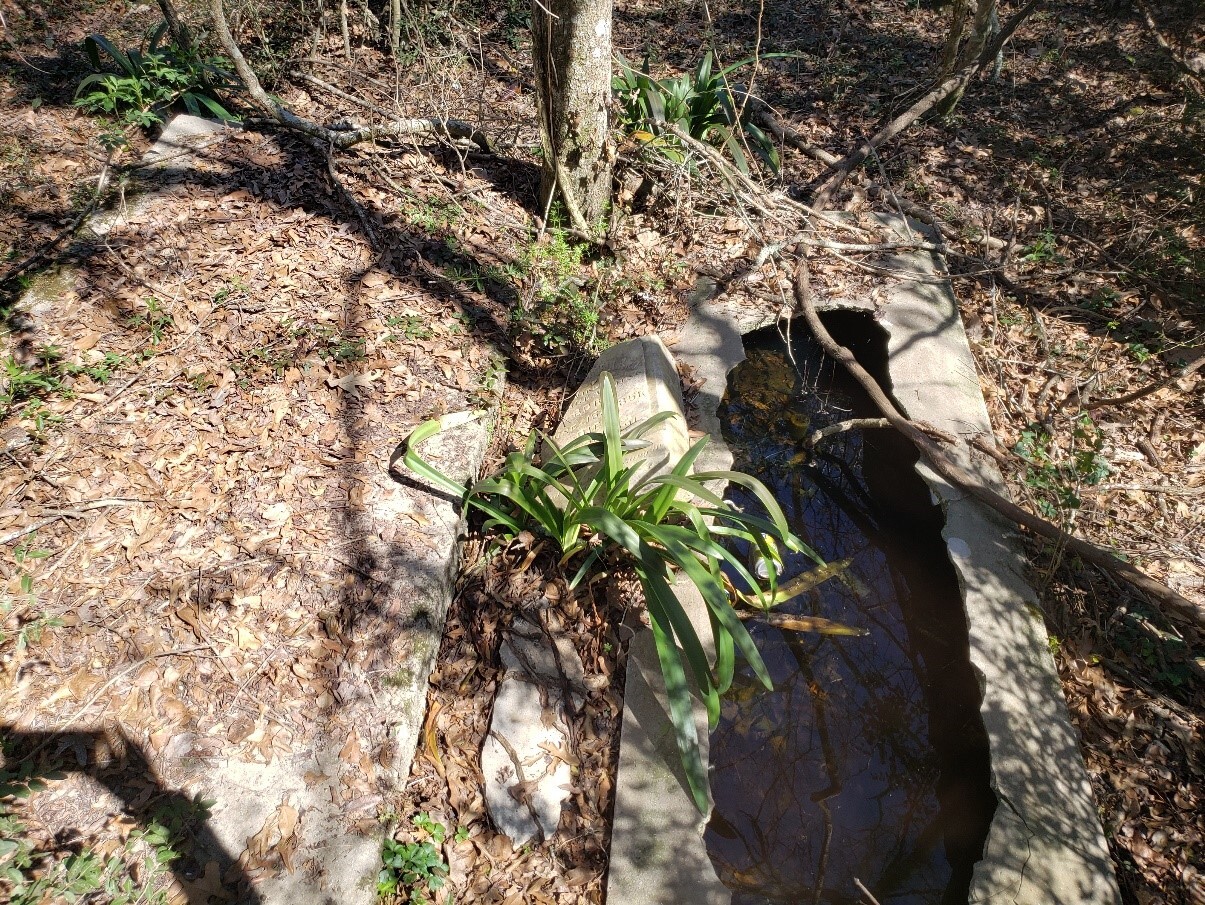
    <summary type="html"><![CDATA[<p><strong><em>Hookman Cemetery began as a peaceful journey's end but turned into a lover's lane horror story and finally to forgotten lore.</em></strong></p><img src="https://mail.acadianahistorical.org/files/fullsize/f59b557bdce8bb27a0344f81aed12bf0.jpg" alt="Broken and Abandoned" /><br/><p>An interesting tale arises concerning a lost and forgotten cemetery named Hookman in Rayne, Acadia Parish. Located on a sharp turn off a gravel road known as Ohlenforst, the only access is a small ATV beaten path and through a small clearing. A total of seven graves scatter the grounds although multiple headstones are partially buried and indiscernible. One site, broken open to the elements, is filled with water and trash. The newest headstone, placed in 1934, clearly shows an abandoned cemetery. Although referred to as Hookman Cemetery, the name resulted from a lover’s lane ghost story concerning a man with a hook. Eventually, the name stuck. Local newspaper clippings reveal the latest burial of Lee Anding and referred to the burial site as McClellan (McClelland) Cemetery. The obituary stated Anding died at the Anding homestead and was a farmer who left behind seven adult children. All but one, Charles Robertson, buried in the cemetery is either a McClelland or an Anding. Census records in 1910 indicate that the McClelland and Anding families lived next door to one another. The history points to a small, family locale cemetery not called Hookman Cemetery, but McClelland Cemetery. The grounds are an open-air Acadian farming family history museum that should be remembered instead of forgotten.</p><p><em><strong><a href="https://mail.acadianahistorical.org/items/show/86">For more (including 7 images&#32;&amp;&#32;1 audio file) view the original article</a></strong></em></p>]]></summary>
    <published>2022-02-18T01:30:53+00:00</published>
    <updated>2026-03-04T22:42:47+00:00</updated>
    <link rel="alternate" type="text/html" href="https://mail.acadianahistorical.org/items/show/86"/>
    <id>https://mail.acadianahistorical.org/items/show/86</id>
    <author>
      <name>Tanya G. Greene</name>
    </author>
  </entry>
</feed>