<?xml version="1.0" encoding="UTF-8"?>
<feed xmlns="http://www.w3.org/2005/Atom">
  <title type="text">Acadiana Historical</title>
  <updated>2026-03-04T22:42:49+00:00</updated>
  <generator uri="http://framework.zend.com" version="1.12.20">Zend_Feed_Writer</generator>
  <link rel="alternate" type="text/html" href="https://mail.acadianahistorical.org/"/>
  <link rel="self" type="application/atom+xml" href="https://mail.acadianahistorical.org/items/browse?output=rss2"/>
  <id>https://mail.acadianahistorical.org/</id>
  <author>
    <name>Acadiana Historical</name>
    <uri>https://mail.acadianahistorical.org</uri>
  </author>
  <link rel="hub" href="https://pubsubhubbub.appspot.com/"/>
  <entry>
    <title type="html"><![CDATA[Forging A Legacy: The Enduring Spirit of Sam Guarino &amp; Son Inc.]]></title>
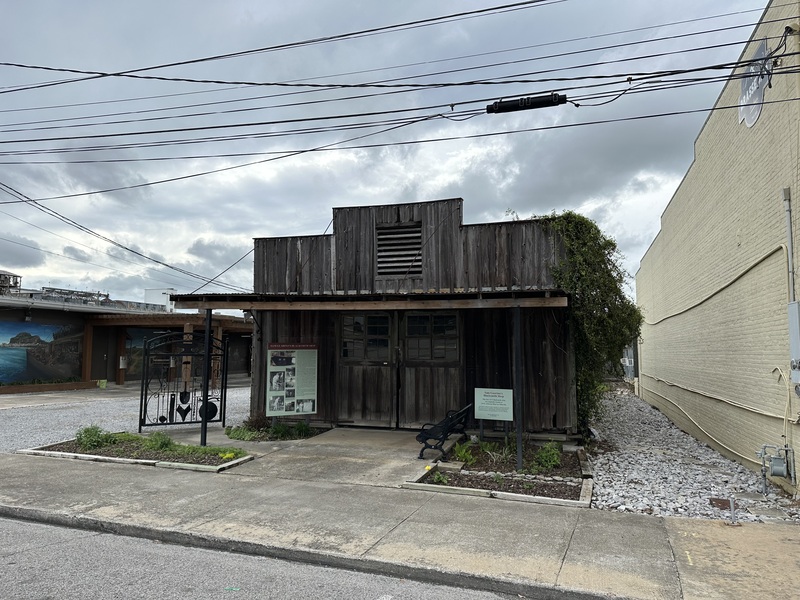
    <summary type="html"><![CDATA[<p><strong><em>Sam Guarino & Son Inc., a cornerstone of Vermilion Parish, Louisiana, is a testament to Sicilian craftsmanship and dedication. Founded over a century ago by Sicilian immigrant Salvadore “Sam” Guarino, the blacksmith shop is now a museum preserving a rich cultural heritage.</em></strong></p><img src="https://mail.acadianahistorical.org/files/fullsize/3f7dd825847b3b1198af18aa8428f8aa.jpg" alt="Sam Guarino Blacksmith Shop Museum" /><br/><p>Sam Guarino & Son Inc., a historic blacksmith shop in Abbeville, Louisiana, traces its roots back to the early 20th century. Founded by Sicilian immigrant Salvadore "Sam" Guarino, the business initially operated as a blacksmith shop, serving the agricultural and industrial needs of the local community. Sam, born on May 24, 1892, in Cefalu, Sicily, Italy, learned the blacksmithing trade from a young age, working alongside his father and later apprenticing under another blacksmith.</p><p>In 1905, Sam immigrated to Abbeville, Louisiana, with his family at age twelve. After working at various locations, he opened his own blacksmith shop in Abbeville in 1911. The <em>Abbeville Meridional</em> reported on May 4, 1911, "Having been closed for more than a year, the old blacksmith shop on State Street, formerly run by William Castanie, has been opened by Sam Guarino, who has already secured a fair run of customers." Sam married Jennie LaBruzzo in 1912, and together, they had five children, including Tony Guarino, who would later join his father in running the family business.</p><p>Over the years, Sam Guarino's blacksmith shop became vital to the community, offering essential services such as brazing, welding, and metalwork. Despite the arrival of electricity, Sam continued to work primarily with hand tools, passing down his expertise to his son, Tony. A repurposed engine from a Model-T initially powered the shop's operations before transitioning to electrically operated machinery.</p><p>To efficiently meet their customers' needs, the Guarino family maintained a well-stocked warehouse containing a variety of metal goods and materials. This dedication to quality service earned them widespread respect and appreciation in Vermilion Parish.</p><p>After Sam Guarino's passing in 1979, Tony carried on the family legacy until his retirement in 2004. Following Sam Guarino & Son Inc.'s closure, the Guarino family donated the blacksmith shop to the City of Abbeville in 2005. The city recognized the establishment's historical significance and undertook efforts to preserve it as a museum dedicated to twentieth-century metallurgy and Sam Guarino's legacy.</p><p>The shop's relocation to its current location to South State Street in 2006 marked the beginning of preservation efforts. City officials enlisted Jerry Baker, a blacksmith from Broussard, LA, to assist in cataloging, cleaning the machinery, and setting up the shop as it was before the move. The city's commitment to preserving the building reflects its recognition of Sam Guarino's contributions to Abbeville's history and culture.</p><p>Today, the Sam Guarino Blacksmith Shop Museum is owned by the City of Abbeville and overseen by the Friends of the Sam Guarino Blacksmith Shop committee. The museum stands as a testament to Sicilian pride in Abbeville and serves as a reminder of the hard work and dedication of its founder, Sam Guarino. Additionally, the committee organizes the annual Sicilian Festival of Abbeville, celebrating Sicilian culture and its impact on the community. Sam Guarino & Son Inc. continues to be revered as one of the oldest businesses in Vermilion Parish, leaving behind a lasting legacy of craftsmanship and community service.</p><p><em><strong><a href="https://mail.acadianahistorical.org/items/show/219">For more (including 22 images&#32;&amp;&#32;1 audio file) view the original article</a></strong></em></p>]]></summary>
    <published>2024-04-04T21:33:11+00:00</published>
    <updated>2026-03-04T22:42:49+00:00</updated>
    <link rel="alternate" type="text/html" href="https://mail.acadianahistorical.org/items/show/219"/>
    <id>https://mail.acadianahistorical.org/items/show/219</id>
    <author>
      <name>Sean M. Grappe</name>
    </author>
  </entry>
  <entry>
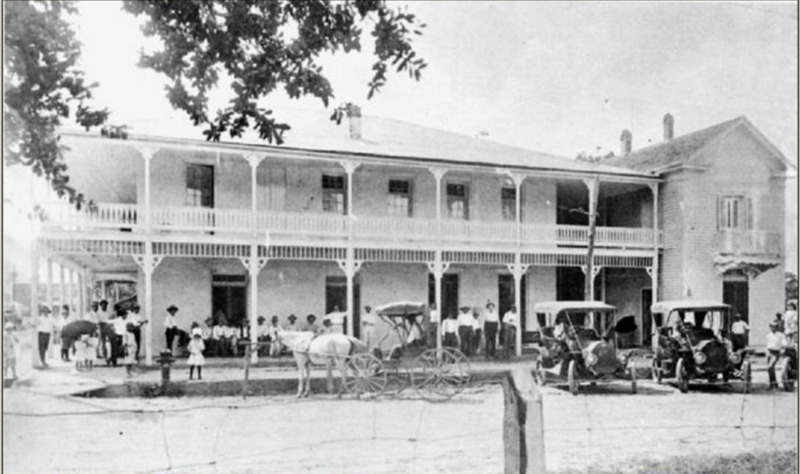
    <title type="html"><![CDATA[The Veranda Hotel&#039;s Journey Through Fires, Violence, and Modernization: The Evolution of Abbeville&#039;s Historic Landmark]]></title>
    <summary type="html"><![CDATA[<p><strong><em>Born from a courthouse construction project in 1845, the Veranda Hotel evolved into a bustling hub for traveling professionals during the nineteenth century. The hotel embodied growth and development until it was replaced by the modern Audrey Hotel in 1928. Today, its legacy endures as a symbol of progress and continuity for Abbeville, Louisiana.</em></strong></p><img src="https://mail.acadianahistorical.org/files/fullsize/57ee60fbfb15a8b7daa02575b77c5e6a.jpg" alt="The Veranda Hotel " /><br/><p>Construction of the Veranda Hotel began in 1845 as a courthouse by Catholic priest and founder of Abbeville, Père Antoine Désiré Mégret. The hotel underwent a tumultuous journey of evolution and transformation, marked by fires, acts of violence, and eventual modernization.</p><p>Construction of the courthouse was interrupted in 1848 during a legal dispute over the location of the parish seat. After Père Megret died in 1853, Joseph Gallet purchased the building and opened it as the Veranda Hotel. The hotel quickly became a hub for traveling professionals, including dentists, salesmen, and jurors.</p><p>Incidents of violence were not isolated to the hotel; they constituted significant events in the town's history. Notable among these was the 1874 duel between Sheriff G.B. Shaw and State Representative Paulin Fontelieu, which followed a disagreement in the Veranda coffee shop. Another incident occurred in 1876 involving the shooting of Carl G. Schneider by Frank R. King over a dispute concerning fraudulent land transactions. Additionally, there was the near-deadly stabbing of Veranda proprietor Joseph Bouriague by a rival hotel owner, Theodule Theriot, in 1889.</p><p>Fires also plagued the Veranda Hotel, with a blaze in 1917 requiring renovations. The following year, the Flu Epidemic of 1918 took its toll, claiming the life of Maria Lydia Boudreaux, daughter of proprietress Desire Trahan. Economic strains resulting from the epidemic affected the hotel and other businesses throughout Abbeville. </p><p>By 1927, the police jury saw a need for a new hotel with modern amenities, so they decided to replace the Veranda Hotel with a more contemporary establishment. The Veranda Hotel was demolished, and construction began on the new Audrey Hotel, which opened in 1928 under the ownership of J.B. Miller. </p><p>On the day of the grand opening, The <em>Abbeville Meridional</em> reported, “The opening of the Audrey Hotel, today, after nearly eight months of patient waiting, marks an epoch in the development of Abbeville and Vermilion Parish. And it may be truthfully said that the completion of this splendid building is of special interest to all classes: agricultural, industrial, and commercial – representing as it does, a new era in the economic and social life of the community.” The Audrey Hotel symbolized progress and economic growth for Abbeville, boasting modern amenities like an elevator and hosting glamorous parties and events in the rooftop garden.</p><p>However, the hotel's prosperity was short-lived, as post-World War II economic challenges led to its eventual closure in the early 1960s. Today, the Veranda and Audrey Hotels remain a valuable part of Abbeville's history. The former Audrey Hotel stands as Abbeville City Hall. The building is a testament to the city's continuity and transformation, from its humble origins as a courthouse to its height as a bustling hotel and, finally, to its current role as a seat of municipal governance.</p><p><em><strong><a href="https://mail.acadianahistorical.org/items/show/211">For more (including 8 images&#32;&amp;&#32;1 audio file) view the original article</a></strong></em></p>]]></summary>
    <published>2024-04-02T01:20:54+00:00</published>
    <updated>2026-03-04T22:42:49+00:00</updated>
    <link rel="alternate" type="text/html" href="https://mail.acadianahistorical.org/items/show/211"/>
    <id>https://mail.acadianahistorical.org/items/show/211</id>
    <author>
      <name>Sean M. Grappe</name>
    </author>
  </entry>
  <entry>
    <title type="html"><![CDATA[Generations of Banking in the Heart of Acadiana: The Bank of Abbeville and Trust Company]]></title>
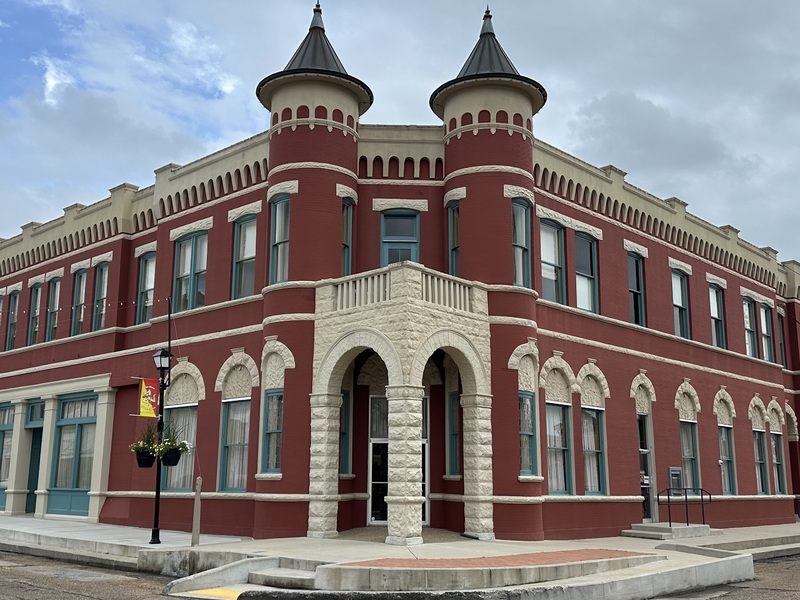
    <summary type="html"><![CDATA[<p><strong><em><span>The Bank of Abbeville and Trust Company has stood the test of time. For over a century, it has served the banking needs of Vermilion Parish, Louisiana residents. Since its establishment in 1894, the bank has survived a fire, two world wars, and numerous financial crises threatening the American South. While other businesses have come and gone, the Bank of Abbeville and Trust Company demonstrates a constancy comparable to that of the city.</span></em></strong></p><img src="https://mail.acadianahistorical.org/files/fullsize/016b7744773d9bf613e9319088ec147c.jpg" alt="Bank of Abbeville and Trust Company Exterior" /><br/><p>Abbeville, Louisiana, is renowned for its rich history as an agricultural community along the Vermilion River. The city was founded by the French Catholic priest Père Antoine Desiré Megrét in 1843. As the town’s population grew and its economy developed, a pressing need arose to establish a banking institution in the heart of the city.
The first bank opened on August 10, 1894, under the name of the Bank of Abbeville. It was situated in the sheriff’s office within the Abbeville courthouse. The Abbeville Meridional reported in 1894, “The new bank has purchased all necessary supplies including a safe and will open up for business about the 10th instant. For the time being the bank will be located in the sheriff’s office in the courthouse.” However, this location was only temporary, and the new bank building was completed in May 1896.
According to the local newspaper, the Bank of Abbeville enjoyed early success. In 1899, The Abbeville Meridional reported, “The bank is in a flourishing condition and has added a large number of depositors to its list and declared a 20 per cent dividend.” The Bank of Abbeville continued to thrive and expand until a devastating fire ravaged parts of the city in 1903. The Concord Street fire occurred on February 19, 1903, destroying the Bank of Abbeville. Consequently, its operations were temporarily relocated to the courthouse. In response, the Abbeville Investment Company was established to acquire land and erect a second bank building. Completed in 1903 by architect George Honold, this new building still stands on the corner of Concord and Jefferson Streets in Abbeville.
The Great Depression inflicted severe hardships on agricultural communities throughout Louisiana, including Abbeville. On February 3, 1932, the Bank of Abbeville was forced to cease operations. However, it reopened six weeks later under the new name Bank of Abbeville and Trust Company. During its reopening, the bank’s president, L.O. Broussard, exchanged telegrams with President Herbert Hoover—each assured cooperation between the bank and the federal government in the wake of the Great Depression. The Bank of Maurice also became a branch of the Abbeville Bank and Trust Company.
Since its recovery from the Depression Era, the Bank of Abbeville and Trust Company has undergone numerous transformations. It has embraced the modernization of banking technology and undergone renovations to both its interior and exterior. Renovations of the building took place in the 1980s, and architect Paul J. Allain renovated the building again in 2015. The main offices of the Bank of Abbeville and Trust Company are still located in the original bank building, with an additional drive-in portion adjacent to it. The original branch in Maurice continues to operate to this day.</p><p><em><strong><a href="https://mail.acadianahistorical.org/items/show/199">For more (including 8 images&#32;&amp;&#32;1 audio file) view the original article</a></strong></em></p>]]></summary>
    <published>2024-03-17T02:58:41+00:00</published>
    <updated>2026-03-04T22:42:49+00:00</updated>
    <link rel="alternate" type="text/html" href="https://mail.acadianahistorical.org/items/show/199"/>
    <id>https://mail.acadianahistorical.org/items/show/199</id>
    <author>
      <name>Sean M. Grappe</name>
    </author>
  </entry>
  <entry>
    <title type="html"><![CDATA[The 440 Yard Journey: Cajun Downs, 1898-1998: The Foundation of Cajun Horse Culture]]></title>
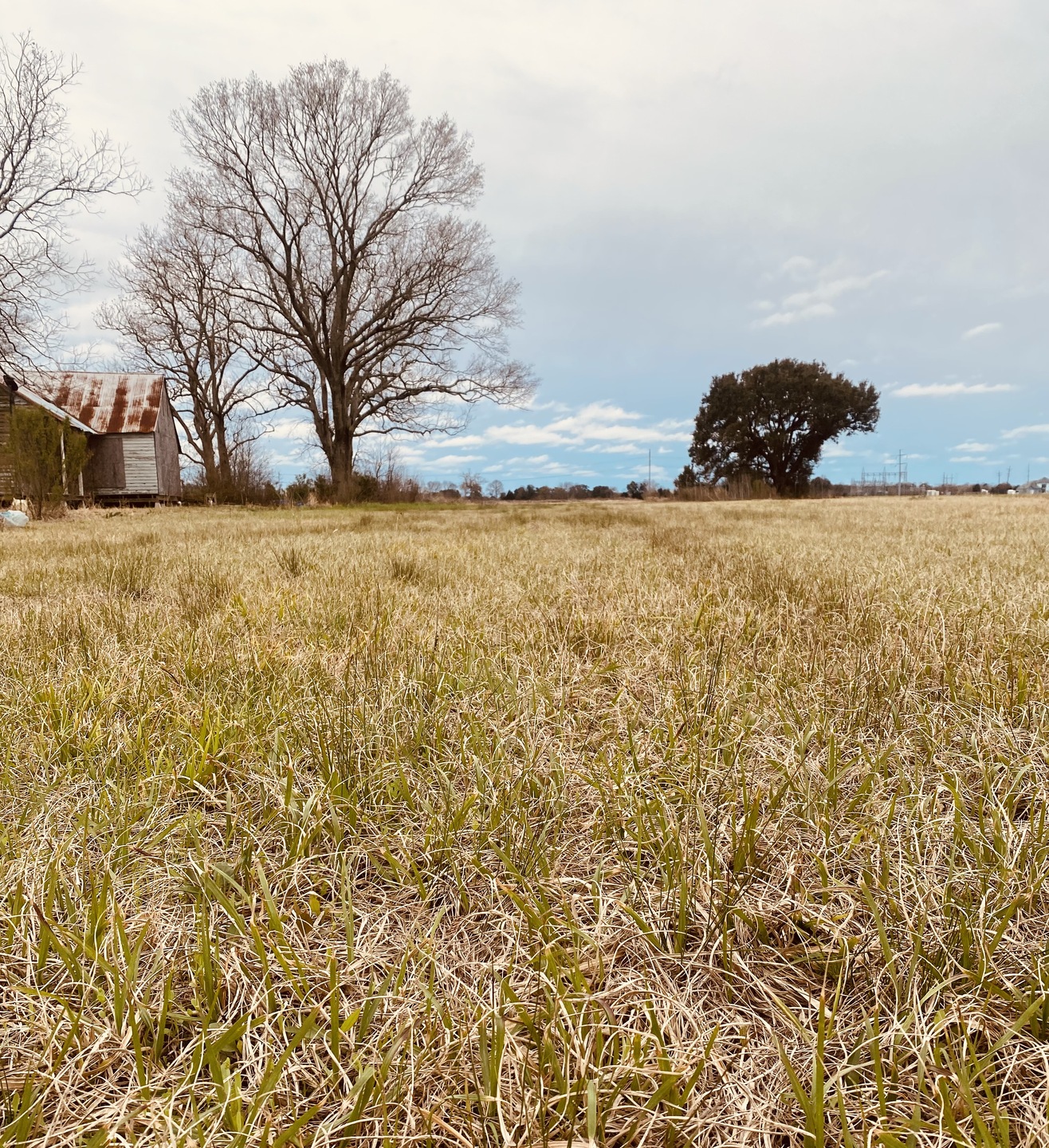
    <summary type="html"><![CDATA[<p><strong><em>Barefoot and in your underwear.  This is not how most people start an important journey...</p></strong></p><img src="https://mail.acadianahistorical.org/files/fullsize/e9adad2a52d1cc675a5a81809ddd53dc.jpg" alt="The 440 Yard Journey" /><br/><p>But it’s how many young boys found themselves on a sweltering south Louisiana Sunday afternoon—sitting atop 1200 pounds of hot, sweaty horse and getting ready for the ride of their lives. “They’d tie you on the saddle in your underwear to keep you light as possible,” said Ronald Ardoin, one of Louisiana’s leading riders. Young riders were a welcome sight at Cajun Downs in Abbeville. Kentucky Derby winner Calvin Borel’s very first race took place at Cajun Downs. He was 8 years old and sitting atop a colt named Mickey. The pair barreled down the 350-yard straight track for the first win of his life. Over 5,000 wins would follow throughout his career. </p><p>93-year-old BB Hebert has fond memories of the “good ole days” at Cajun Downs. “I trained Shane Sellers,” he tells me with his thick Cajun accent and a bit of a laugh. “His parents came to me and said, 'No one wants to play with this boy. Can you help him?’ I said I’d train him so long as they don’t sue me when he got hurt.’” The gamble paid off, with Sellers enjoying a stellar career, racing in the Kentucky Derby for 14 consecutive years and placing in the Belmont Stakes. </p><p>This bush track consisted of two straight lanes, one quarter mile, or 440 yards long, separated by rails. Alice and Doris Hebert operated the beloved track for over 50 years. They charged an entry fee of $2 for men. Women and children got in free. </p><p>The site of Cajun Downs in Abbeville is located on LA-338, across from Hebert’s Slaughterhouse and Meat Market. In his book, <i>Cajun Racing</i>, Ed McNamara laments that “no one would imagine that one of the best bush tracks in Louisiana history rocked there for more than 100 years.” Situated in between a sugarcane field and the home of the original owners, Clement and Eunice Hebert, the track is now a neatly manicured strip of land speckled with crawfish mounds. </p><p>Cajun Downs is known as “a breeding ground for dreams." Former owner Alice Hebert says, “Every year we’d see 10 or 15 young boys who wanted to be riders, among them Eddie Delahoussaye, Kent Desormeaux, Calvin Borel, Robby Albarado, Shane Sellers, Randy Romero, and Mark Guidry.” Sadly, the tracks gradually died out with liability issues and excessive insurance rates spelling an end of the heart and soul of Cajun Horse culture.</p><p><em><strong><a href="https://mail.acadianahistorical.org/items/show/123">For more (including 9 images) view the original article</a></strong></em></p>]]></summary>
    <published>2022-03-18T19:47:24+00:00</published>
    <updated>2026-03-04T22:42:47+00:00</updated>
    <link rel="alternate" type="text/html" href="https://mail.acadianahistorical.org/items/show/123"/>
    <id>https://mail.acadianahistorical.org/items/show/123</id>
    <author>
      <name>Laura M. Hughes</name>
    </author>
  </entry>
  <entry>
    <title type="html"><![CDATA[Bread made by Civil War Veteran: Abbeville&#039;s staple bread maker]]></title>
    <summary type="html"><![CDATA[[Text Unavailable]<p><em><strong><a href="https://mail.acadianahistorical.org/items/show/88">For more view the original article</a></strong></em></p>]]></summary>
    <published>2022-02-18T01:31:04+00:00</published>
    <updated>2026-03-04T22:42:47+00:00</updated>
    <link rel="alternate" type="text/html" href="https://mail.acadianahistorical.org/items/show/88"/>
    <id>https://mail.acadianahistorical.org/items/show/88</id>
    <author>
      <name>Theresa Slovacek-Herrera</name>
    </author>
  </entry>
  <entry>
    <title type="html"><![CDATA[An Old Plantation Meant for a Queen <br />
: From Rose Hill Plantation to Queen&#039;s Ranch ]]></title>
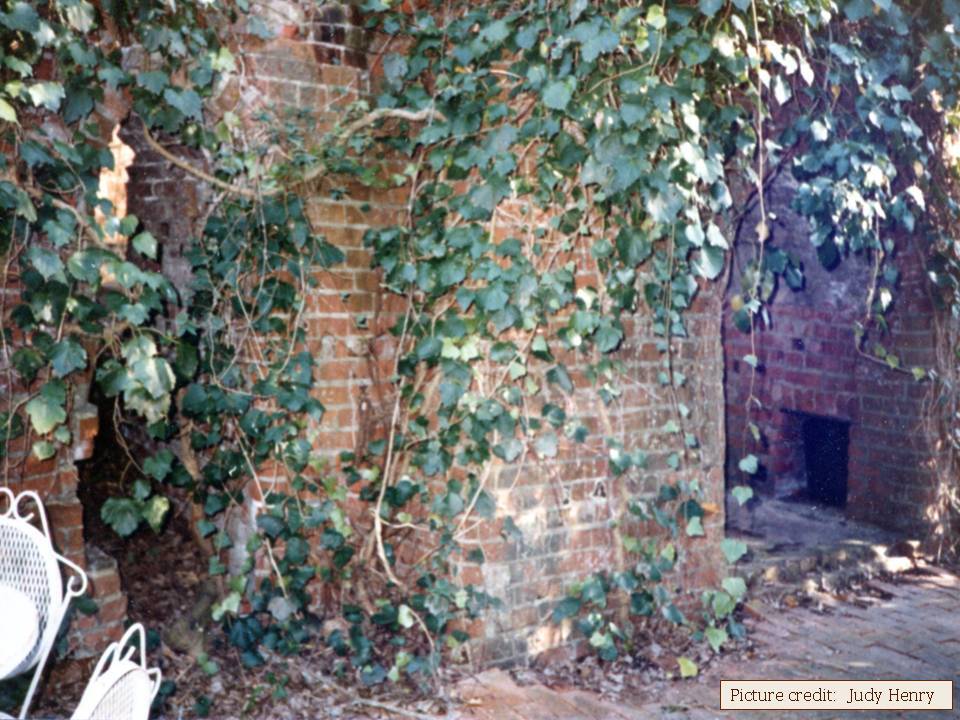
    <summary type="html"><![CDATA[<p><strong><em>From an antebellum plantation in the mid nineteenth century to a small family farm in the early twenty-first century, the old Rose Hill Plantation in now the beautiful Queen's Ranch. </em></strong></p><img src="https://mail.acadianahistorical.org/files/fullsize/9d0129ad7c5eb5560609406ac62a93b2.jpg" alt="Run Down Pieces of the Old Sugar Mill " /><br/><p>In 1833 in Vermillion Parish Louisiana, four miles outside of current day Abbeville, LA, War of 1812 veterans, Thomas Fletcher and Brandon McDermott were given 1,000 acres of conjoined land for their help in defeating the British at the Battle of New Orleans. They named this piece of land the Rose Hill Plantation, which, according to Loraine Sirmon, former owner of Queen’s Ranch – the name given to the ranch that Rose Hill Plantation would later become – was named after the Cherokee rose, a thorny rose bush that once surrounded the land. Originally a cotton mill, Rose Hill became a sugar plantation after J. Henry Putnam, a distant relative of famous Salem witch trials witness Ann Putnam, bought the plantation in 1871 with the hopes of becoming a sugar producer. Unfortunately for the Putnam family, a fire on the plantation on December 10, 1881, halted work towards Putnam’s sugar plantation dream after burning down the sugar house and entire crop of sugar. However, only six months later, in May 1882, Putnam was working towards rebuilding his plantation. On November 6, 1882, the Abbeville Meridional reported that J. Henry Putnam’s Rose Hill was working splendidly, grinding cane grown on the property, as well as purchasing cane for four dollars a ton from neighboring farmers.</p><p>In January 1883, the Abbeville Meridional reported that J. Henry Putnam’s Rose Hill Plantation had processed the largest crop ever made in Vermillion Parish. By 1893, the Daily Picayune reported that the plant had processed four million pounds of sugar from the 1892 crop and Putnam planned to produce ten million pounds of sugar per year by 1896. Unfortunately for the Rose Hill Plantation, a tariff put on imported Cuban sugar was lifted. In 1899, it was cheaper to buy imported sugar than it was to grow it and Rose Hill Planting and Refinery Co. Inc. went bankrupt. In 1901, Putnam handed over the deed to the property to the New Orleans banks, which took it over and put a railroad on the property. This railroad ran until about the early 1930s and today is not usable. </p><p>Between the city of New Orleans owning the plantation for the railroad and it eventually becoming Queen’s Ranch, little is known about the ownership of the land. After going through different ownership, Revis Sirmon and his wife, Lorraine Sirmon, purchased Rose Hill Plantation from Mack Schriever in the late 1950s and turned it into a working ranch and farm called Queen’s Ranch. Sirmon, being the jokester that he was, decided on the name “Queen’s Ranch” after his friend, Silas Cooper of Abbeville jokingly mentioned that Texas had the famous and massive King’s Ranch so Louisiana would now have its own Queen’s Ranch. Sirmon was a pilot in World War II and even installed a family museum on the property to showcase paraphernalia from the war along with antique farming equipment used to run the ranch. In the farm’s heyday, it boasted forty-two acres of property and was home to cattle, horses, ducks, quails and even some of the farm hands. In 2018 after the death of Revis Sirmon’s son, and heir to the ranch, Johnny Sirmon, the property was split amongst Revis Sirmon’s two grandsons, Patrick and Dannon Stokes, who still look after the farm today. Today, with more property later bought to add to the farm, Queen’s Ranch is an active cattle farm as well as an active crawfish farm with two hundred-thirty-seven acres making up the property. On the property, there still stands the remains of the old sugar processing plant from Rose Hill Plantation. Although it is no longer in use, lying on the banks of the Vermillion River, the ruins of the plant are beautiful, being overlooked by Louisiana moss and towering oak trees on the property. </p><p><em><strong><a href="https://mail.acadianahistorical.org/items/show/81">For more (including 9 images&#32;&amp;&#32;1 audio file) view the original article</a></strong></em></p>]]></summary>
    <published>2022-02-18T01:30:29+00:00</published>
    <updated>2026-03-04T22:42:47+00:00</updated>
    <link rel="alternate" type="text/html" href="https://mail.acadianahistorical.org/items/show/81"/>
    <id>https://mail.acadianahistorical.org/items/show/81</id>
    <author>
      <name>Anne-Marie Stokes</name>
    </author>
  </entry>
</feed>