<?xml version="1.0" encoding="UTF-8"?>
<feed xmlns="http://www.w3.org/2005/Atom">
  <title type="text">Acadiana Historical</title>
  <updated>2026-03-04T22:42:46+00:00</updated>
  <generator uri="http://framework.zend.com" version="1.12.20">Zend_Feed_Writer</generator>
  <link rel="alternate" type="text/html" href="https://mail.acadianahistorical.org/"/>
  <link rel="self" type="application/atom+xml" href="https://mail.acadianahistorical.org/items/browse?output=rss2"/>
  <id>https://mail.acadianahistorical.org/</id>
  <author>
    <name>Acadiana Historical</name>
    <uri>https://mail.acadianahistorical.org</uri>
  </author>
  <link rel="hub" href="https://pubsubhubbub.appspot.com/"/>
  <entry>
    <title type="html"><![CDATA[A Grandiose Building with a War-Torn Past: St. Landry Catholic Church in Opelousas, LA]]></title>
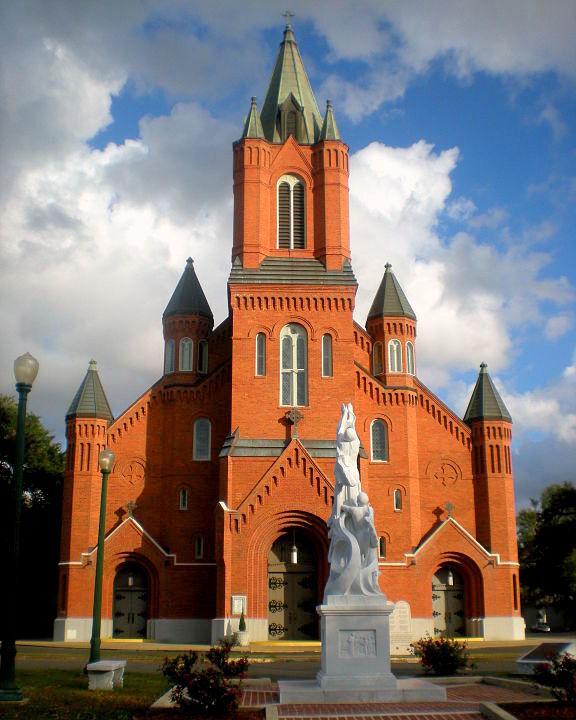
    <summary type="html"><![CDATA[<p><strong><em>This immense and ornate church holds centuries of stories which tell the impact of wars on Acadiana.</em></strong></p><img src="https://mail.acadianahistorical.org/files/fullsize/50c20f5e6e8e60ac0caf14d0da00e104.jpg" alt="St. Landry Catholic Church" /><br/><p>This cathedral-sized church in Opelousas is called the “Mother Church of Acadiana,” for it was the second to be founded in the Diocese of Lafayette, and many smaller church parishes have been formed within the wide boundaries of the original parish (“Parish History”). The beginnings of the parish date back to the 1750s, when missionary priests administered sacraments in the area (“Parish History”). Several churches have been built to serve this church parish over its long history; the current structure dates back to 1908 (Harper 55). During the Civil War, Opelousas served as the capitol of the Confederacy, bringing the war to the church’s front steps. Beginning in mid-1863, Federal troops camped around St. Landry Church, looting graves and destroying church property (Harper 46-47). In fact, “[t]he church would have been completely destroyed, but thanks to the Irish Catholics in the Union ranks, it was spared outright elimination” (“Parish History”).</p><p>The structure of the current church was designed in hopes that St. Landry would one day become a cathedral (Harper 55). In front of the church is a statue honoring Father Joseph Verbis Lafleur, a military chaplain who died as a prisoner of war in World War II and has received military honors for his bravery. Lafleur celebrated his first Mass at St. Landry, and every year on September 7, the anniversary of his death, a memorial Mass in his honor is attended by hundreds of people (Oubre). The history of this church is marked with events related to war, yet the cavernous space, filled with sacred artwork, invites worshippers to peaceful contemplation.</p><p><em><strong><a href="https://mail.acadianahistorical.org/items/show/11">For more (including 4 images) view the original article</a></strong></em></p>]]></summary>
    <published>2018-04-26T14:37:59+00:00</published>
    <updated>2026-03-04T22:42:45+00:00</updated>
    <link rel="alternate" type="text/html" href="https://mail.acadianahistorical.org/items/show/11"/>
    <id>https://mail.acadianahistorical.org/items/show/11</id>
    <author>
      <name>Briley Higginbotham</name>
    </author>
  </entry>
  <entry>
    <title type="html"><![CDATA[Central Louisiana State Hospital]]></title>
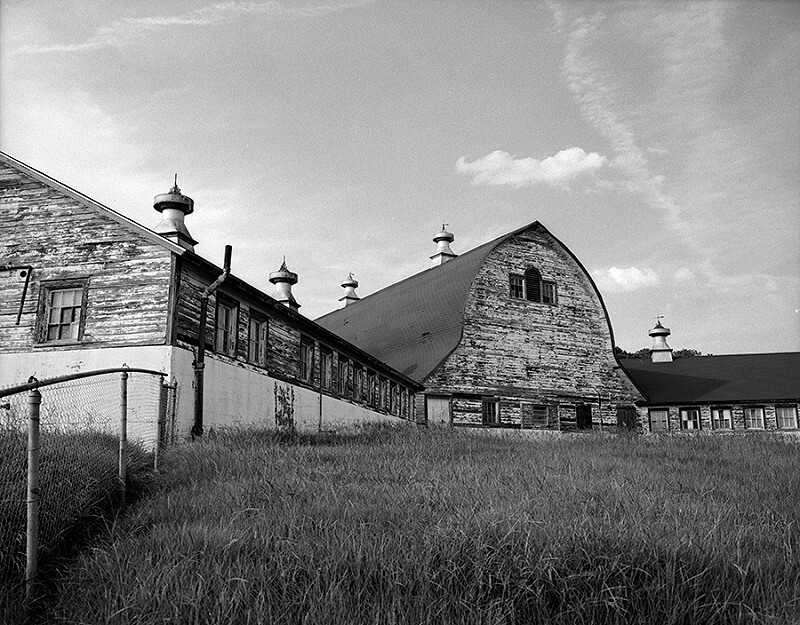
    <summary type="html"><![CDATA[<p><strong><em>Have you ever wondered what happens to tortures souls of Acadiana after their bodies have withered away?</em></strong></p><img src="https://mail.acadianahistorical.org/files/fullsize/34a6fe94b52e5cf96185b473427777de.jpg" alt="Central LA State Hospital " /><br/><p>In Pineville, Louisiana, you will find one of the most predictable places to be haunted—A mental institution. Central LA State Hospital is a psychiatric hospital built in 1906 and surprisingly is still under operation. It housed THOUSANDS of patients at a time and it has just as many buried among its grounds. Since this hospital was under operation years before the idea of the hearse, most of the first patients’ lifeless bodies were transported from their deathbed to the gravesite via wheelbarrow, until modern practices were adapted. The spirits of many loved ones that passed on while residing here must have been tortured souls who seem to have unfinished business on Earth. There have been numerous reports of staff members hearing doors slamming, despite all the doors already being secured moments prior. Chairs have mysteriously flipped over after being seen right-side-up few moments prior and no one has been in or out the room. Investigators have witnessed a loud shatter that seemed like glass or something hard and hollow had been thrown to the floor. They discovered that a piece of the floor had been broken up into pieces, as if the tile “exploded.” Nothing looked broken when they first searched the building and it seemed freshly shattered, and they were all unable to identify how it broke. The spirits of Central Louisiana State Hospital remain active today and certain sites of its location is still open for touring, so feel free to give it a look and fulfill your suspense!</p><p><em><strong><a href="https://mail.acadianahistorical.org/items/show/12">For more (including 3 images) view the original article</a></strong></em></p>]]></summary>
    <published>2018-04-26T14:50:01+00:00</published>
    <updated>2026-03-04T22:42:45+00:00</updated>
    <link rel="alternate" type="text/html" href="https://mail.acadianahistorical.org/items/show/12"/>
    <id>https://mail.acadianahistorical.org/items/show/12</id>
    <author>
      <name>Amber Delahoussaye</name>
    </author>
  </entry>
  <entry>
    <title type="html"><![CDATA[The Famous Livable Corner Bank : Bank of Scott ]]></title>
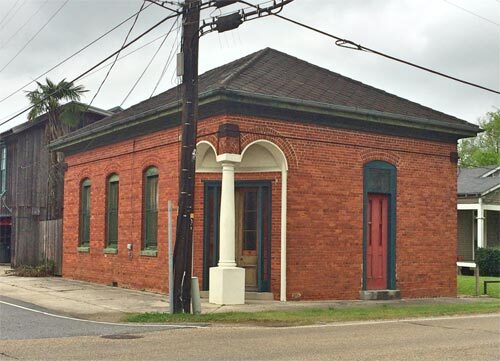
    <summary type="html"><![CDATA[<p><strong><em>Old corner bank turned into renovated AirBnB. </em></strong></p><img src="https://mail.acadianahistorical.org/files/fullsize/6afe28065c640b69693b41b05be696b9.jpg" alt="[Untitled]" /><br/><p>Scott, Louisiana is full of rural characteristics and has several historic buildings. Many of the buildings throughout the city resemble a special style and are similar historically. Downtown Scott is split into two sections by the railroad tracks. </p><p>The Bank of Scott was founded in 1910, in the great city of Scott, Louisiana. It is a one-story brick building located at the intersection of St. Mary Street and Delhomme Avenue in Lafayette Parish. The Bank of Scott is centered at the heart of the city. This bank promotes rich commercial architecture from the early 20th century. It is also amongst one of the first banks in the state of Louisiana. </p><p>The bank’s exterior consists of solid red bricks and tall windows. The original windows, doorways and floors are still intact. The doorways entailed with half-round arched designs at the top of the arch detailed with red bricks.  What is unique about the outer structure of the building is that if you look closely you can see the original “burglar” bars hanging over the glass as well as the distinctive white supporting columns. As you can see in the photo, the front door is a new replacement of a set of French doors with three glass panels inside. The original door of the bank was a large set of double doors with a sign saying “Bank of Scott” painted on top of it. The interior of the bank includes solid brick walls with a thick layer of plaster hovering over the bricks. </p><p>The Bank of Scott thrived throughout the 1900’s and the tellers were individuals that will never be forgotten. The original teller cages have currently been removed and turned into an open room with fifteen-foot ceilings with original hardwood floors. The vault still remains in the Bank of Scott. Since then, the vault has been turned into a kitchen for the residential area. Also, a former office space has been renovated into a small bathroom. </p><p>This bank is now a thriving residential space for visitors to reside in. You can book this living space on your next visit to Louisiana. The Bank of Scott is the epitome of a small town corner entry bank that ran throughout the south. Although it is now a living area, the architecture will never be forgotten.</p><p><em><strong><a href="https://mail.acadianahistorical.org/items/show/13">For more (including 4 images) view the original article</a></strong></em></p>]]></summary>
    <published>2018-04-26T14:55:05+00:00</published>
    <updated>2026-03-04T22:42:45+00:00</updated>
    <link rel="alternate" type="text/html" href="https://mail.acadianahistorical.org/items/show/13"/>
    <id>https://mail.acadianahistorical.org/items/show/13</id>
    <author>
      <name>Kristen Angelle Harrison</name>
    </author>
  </entry>
  <entry>
    <title type="html"><![CDATA[Louisiana&#039;s Most Revolutionary Educator]]></title>
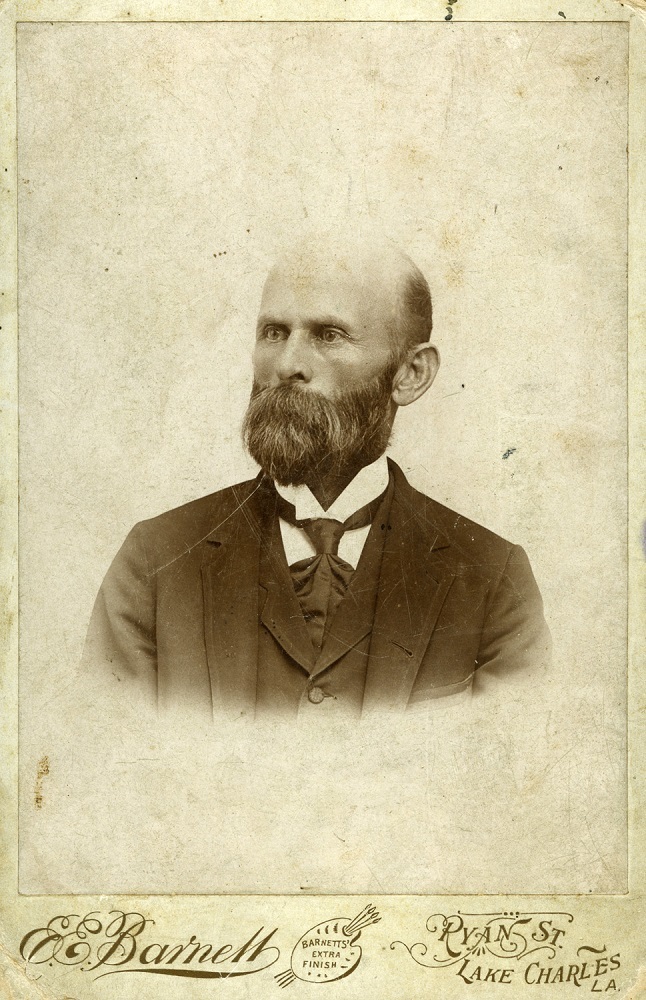
    <summary type="html"><![CDATA[<p><strong><em>John McNeese was one of the most influential educators of the Lake Charles area.</em></strong></p><img src="https://mail.acadianahistorical.org/files/fullsize/fc6b98f6bfed2f4b9d866034ac602cd7.jpg" alt="John McNeese" /><br/><p>John McNeese came to Louisiana with a few other men, planning to sell cattle in New Orleans. However, drought meant that most of the cattle were dead by the time the men reached Lake Charles. They sold the rest and McNeese began teaching in the Lake Charles area, at Hickory Flat. He also started studying law. He enrolled in Tulane Law School in 1886, and after receiving his degree, he returned to Lake Charles to practice. Very soon, however, he began teaching again and getting involved in education. He served on a committee to organize high schools, was elected to the examining board for qualifying teachers, and served as a principal in Lake Charles. In 1888 he was elected Superintendent of public education for Calcasieu Parish. Very few public schools existed in Louisiana at the time. His work on a system of organization and supervision was copied by many other parishes. He made a huge amount of progress with the building of the school system in the twenty-five years that he acted as superintendent. By the time he reached the end of his time as superintendent, Calcasieu Parish had voted in taxes to fund public schools, constructed school buildings, and increased teacher qualifications, student enrollment,and public interest in education.</p><p><em><strong><a href="https://mail.acadianahistorical.org/items/show/14">For more (including 4 images&#32;&amp;&#32;1 audio file) view the original article</a></strong></em></p>]]></summary>
    <published>2018-04-26T14:55:32+00:00</published>
    <updated>2026-03-04T22:42:45+00:00</updated>
    <link rel="alternate" type="text/html" href="https://mail.acadianahistorical.org/items/show/14"/>
    <id>https://mail.acadianahistorical.org/items/show/14</id>
    <author>
      <name>Bailey Lemoine</name>
    </author>
  </entry>
  <entry>
    <title type="html"><![CDATA[Kaliste Saloom Jr AKA “The History Book of Lafayette” ]]></title>
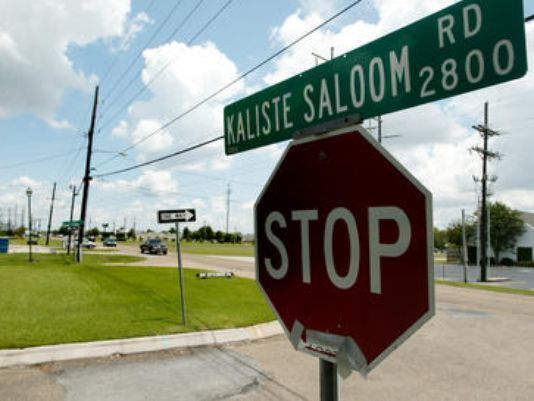
    <summary type="html"><![CDATA[<p><strong><em>The history behind the naming of Kaliste Saloom Road.</em></strong></p><img src="https://mail.acadianahistorical.org/files/fullsize/c33958a2c1d3206d5f517e8f4f2dfb83.jpg" alt="Kaliste Saloom Road" /><br/><p>Kaliste Saloom is named after Judge Kaliste Saloom SR. Kaliste Saloom JR was the son of Saloom SR. Salooms son was known for his dedication to the community, with that being said a lot of people considered the street to be named after him. Saloom just recently passed away in December of 2017. They say that Saloom was a very devoted catholic, and everyone knew him well. His father Kaliste Saloom SR, passed away in 1925 when he was 6 years old. Saloom Jr, graduated from Southwestern Louisiana Institute of Liberal and Technical Learning in 1939. When WWII came about he got drafted into the Army in June of 1942, but had just enough time to finish his degree at Tulane University. Where does” Judge” come from you are wondering. After being a Lawyer and a City Attorney he served as a Judge from 1952-1983. That’s when Saloom really became well known, even after he retired in 1993. Saloom was an important and very well-known native to Lafayette, which is why they named a street after him in his honor.</p><p><em><strong><a href="https://mail.acadianahistorical.org/items/show/15">For more (including 2 images) view the original article</a></strong></em></p>]]></summary>
    <published>2018-04-26T14:55:42+00:00</published>
    <updated>2026-03-04T22:42:45+00:00</updated>
    <link rel="alternate" type="text/html" href="https://mail.acadianahistorical.org/items/show/15"/>
    <id>https://mail.acadianahistorical.org/items/show/15</id>
    <author>
      <name>Hannah Bryan</name>
    </author>
  </entry>
  <entry>
    <title type="html"><![CDATA[Evangeline&#039;s Gabriel Settled in Lafayette in 1765: Is Beau Bassin a Cajun Shangri-La?]]></title>
    <summary type="html"><![CDATA[<img src="https://mail.acadianahistorical.org/files/fullsize/2d0cf39b7ee0729f0aada6bf441affd4.jpg" alt="[Untitled]" /><br/><p>          One of the earliest settlers of Lafayette parish was Louis Arceneaux.   Many believe that Louis was the real-life character, “Gabriel” in Longfellow’s famous poem, Evangeline. Back in Nova Scotia, Louis was engaged to Emmeline Labiche, who is identified as “Evangeline” in the poem.  When the English began deporting thousands of Acadians onto ships in 1755 for over a period of ten years, many families and loved ones were separated, and Louis thought that he would never see his beloved Emmeline again.  Of the 17,000 who were estimated to have been banished and scattered from their homeland, about half of them perished, mostly the elderly and young children.  When Emmeline had finally reunited with Gabriel many years later near St. Martinville, Louisiana, she sadly found that he was married to another.  Their relationship was a casualty of the Great Upheaval, le Grand Derangement.  </p><p>Louis Arceneaux was raising cattle north of Lafayette as early as 1765.  In 1787 he moved his family to a ridge east of Carencro next to a basin and named it Beau Bassin (Beautiful Basin) because the area reminded him of his beloved hometown, Beau Bassin in L’Acadie, Nova Scotia.  </p><p>When driving by, one cannot but notice the beautiful homes, the spacious, attractive golf course, and the abundant natural wildlife in the area.  Today, Beau Bassin has resurrected to become a modern-day Shangri-La and a symbol of rebirth for the Acadian people.  </p><p><em><strong><a href="https://mail.acadianahistorical.org/items/show/16">For more (including 14 images&#32;&amp;&#32;1 audio file) view the original article</a></strong></em></p>]]></summary>
    <published>2018-04-26T14:55:56+00:00</published>
    <updated>2026-03-04T22:42:45+00:00</updated>
    <link rel="alternate" type="text/html" href="https://mail.acadianahistorical.org/items/show/16"/>
    <id>https://mail.acadianahistorical.org/items/show/16</id>
    <author>
      <name>Rusty Chastant</name>
    </author>
  </entry>
  <entry>
    <title type="html"><![CDATA[The Old Jesuit Church: The St. Charles College]]></title>
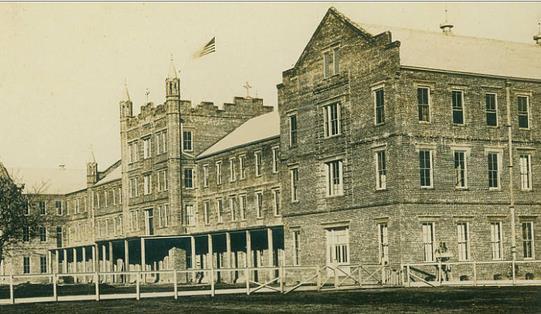
    <summary type="html"><![CDATA[<p><strong><em>The College Turned Church</em></strong></p><img src="https://mail.acadianahistorical.org/files/fullsize/e8c1b9e24f17cbfcd5d656a999502e61.jpg" alt="The Old St. Charles Church" /><br/><p>St. Charles College was established in 1837 in St. Charles parish, which is the third oldest parish in the Diocese of Lafayette. The site of the church was first purchased in 1819 by Bishop Louis William Dobourg for $10,000. In 1838 the church was officially built, and in the beginning the church was built and staffed by numerous Jesuit brothers who felt the need for a Jesuit following within the area. The first purpose of this building was not a church, but instead a school for young boys and men that wanted to learn about the catholic religion. At its peak the school enrolled 128 students in one year.  As the church entered the 20th century, still a school at this time, it burned down in a fire and had to be rebuilt to what we see today. At this same time the school was transitioning from a school, to a college that only focused on training men into Jesuit priest and brothers. At the peak of this college, the school enrolled about 120 people (50 Jesuit priest and 40 juniors in training). This continued until 1972, when the college finally transformed into a church where people come and complete spiritual exercises in attempt to strengthen their faith. Due to this transition the college officially renamed the building from St. Charles College to what it is today, The Jesuit Spirituality Center. </p><p><em><strong><a href="https://mail.acadianahistorical.org/items/show/17">For more (including 2 images) view the original article</a></strong></em></p>]]></summary>
    <published>2018-04-26T14:56:21+00:00</published>
    <updated>2026-03-04T22:42:45+00:00</updated>
    <link rel="alternate" type="text/html" href="https://mail.acadianahistorical.org/items/show/17"/>
    <id>https://mail.acadianahistorical.org/items/show/17</id>
    <author>
      <name>Nicholas DeLucia</name>
    </author>
  </entry>
  <entry>
    <title type="html"><![CDATA[Sunken Steamboat in Bayou Teche]]></title>
    <summary type="html"><![CDATA[<p><strong><em>There sits a sunken steamboat below four feet of mud in Bayou Teche. </em></strong></p><img src="https://mail.acadianahistorical.org/files/fullsize/723f2cdd33a2a0fdec42f8f685fa0614.jpg" alt="Irish Bend" /><br/><p>In Bayou Teche just north of Franklin, Louisiana sits a sunken steamboat from Civil War times. The ship is named CSS Tom Sugg or the USS Tensas. The ship was captured during the Civil War which is why it is given two names. This ship now lies under four feet of mud at the bottom of Bayou Teche. </p><p>The Tom Sugg was a side-wheeled steamboat built in 1860. The ship was given a side wheel gunboat and operated as a merchant vessel in Arkansas. Once the Civil War begun, the Tom Sugg was used to transport arms and horses for the confederate troops. In 1863 the Tom Sugg was captured by Union forces and used by the Union. The boat was then renamed to the USS Tensas for the United States Navy. Acting Master E. C. Van Pelt was in command of the Tensas until the ship was decommissioned in 1865. The steamboat was eventually sold in auction to E. B. Trinidad of New Iberia, Louisiana. The Tensas was renamed to the Teche but was not widely known by this name. The Teche was sold again to other owners before it eventually sunk in Irish Bend of Bayou Teche. Irish Bend is also the site of a Civil War Battle, but the Tensas was not a part of the battle. It now lies completely unseen under the waters and mud of Bayou Teche.</p><p><em><strong><a href="https://mail.acadianahistorical.org/items/show/18">For more (including 3 images&#32;&amp;&#32;1 audio file) view the original article</a></strong></em></p>]]></summary>
    <published>2018-04-26T14:58:19+00:00</published>
    <updated>2026-03-04T22:42:45+00:00</updated>
    <link rel="alternate" type="text/html" href="https://mail.acadianahistorical.org/items/show/18"/>
    <id>https://mail.acadianahistorical.org/items/show/18</id>
    <author>
      <name>Ryan LeBlanc</name>
    </author>
  </entry>
  <entry>
    <title type="html"><![CDATA[Willkommen in Roberts Cove: St. Leo IV Catholic Church]]></title>
    <summary type="html"><![CDATA[<p><strong><em>Learn how Germans found their way to Roberts Cove. </em></strong></p><img src="https://mail.acadianahistorical.org/files/fullsize/11ea7807778680a37e2363c417cdbed1.jpg" alt="St. Leo IV 1900s " /><br/><p>In the words of Fr. Keith L Vincent, a previous pastor of St. Leo IV, “Hidden treasure lies just three miles from busy Interstate-10…Signs 500 feet before and after the church say ‘Roberts Cove,’ but this is all…” (Kondert, ix). The Germans have been tucked away in French Louisiana, but why? For the same reason the Acadians were exiled from Nova Scotia, their religion (Kondert, xi). A priest, Fr. Peter Leonard Thevis, was the first to come to Louisiana from Germany in 1867. It took him ten years to find a place of his own, but when he did he sent for his family to come by ship from Germany. A Benedictine missionary helped to build the first church. He bought land in Robert’s Cove for a monastery, but a church was built instead. </p><p>The church, St. Leo IV, started many traditions that still happen today. One of these traditions happens on the Feast of St. Nicholas, which is December 6th, every year. Families a part of the Roberts Cove community will leave their shoes out on their front porch. St. Nicholas and Santa Claus will come visit their house and leave little candies for them in their shoes. There are events throughout the year that the Roberts Cove community will have to keep their traditions and culture alive. The church will be the center of Roberts Cove for many years to come.</p><p><em><strong><a href="https://mail.acadianahistorical.org/items/show/19">For more (including 3 images&#32;&amp;&#32;1 audio file) view the original article</a></strong></em></p>]]></summary>
    <published>2018-04-26T14:59:11+00:00</published>
    <updated>2026-03-04T22:42:45+00:00</updated>
    <link rel="alternate" type="text/html" href="https://mail.acadianahistorical.org/items/show/19"/>
    <id>https://mail.acadianahistorical.org/items/show/19</id>
    <author>
      <name>Sophia Verret</name>
    </author>
  </entry>
  <entry>
    <title type="html"><![CDATA[The Largest Plantation Ever Built: Belle Grove Plantation]]></title>
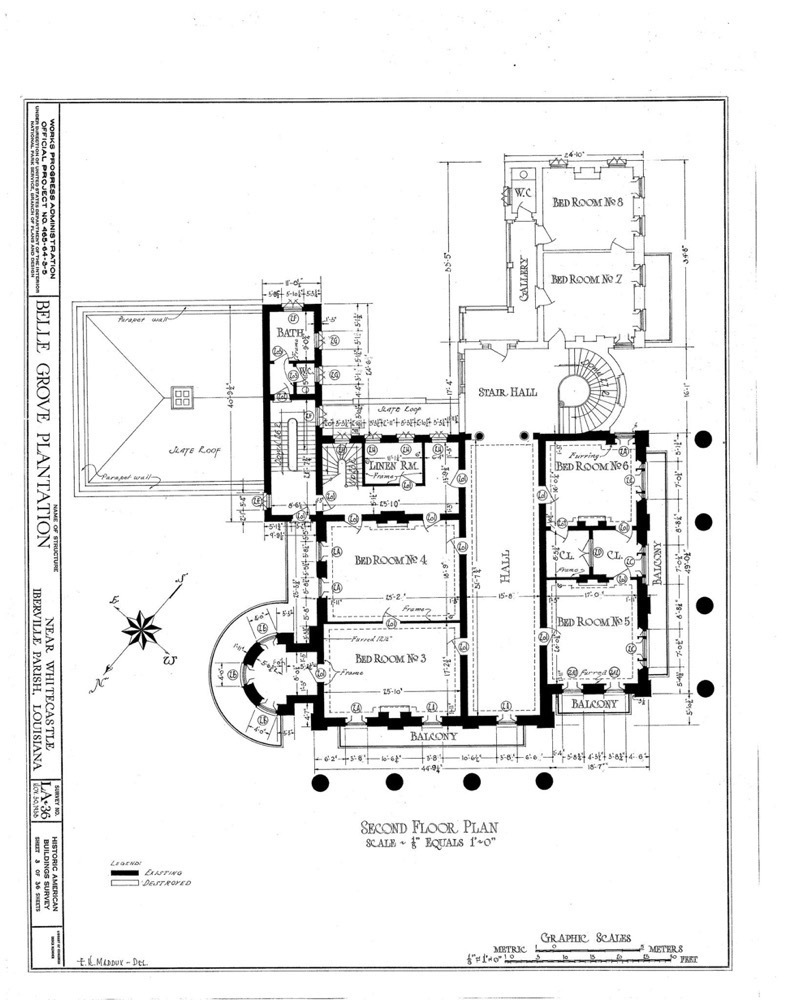
    <summary type="html"><![CDATA[<p><strong><em>One of the largest plantations to ever be built in Louisiana and in the South was the Belle Grove Plantation of White Castle.  This southern mansion was 62 feet high and 122 feet wide that contained seventy-five rooms.</em></strong></p><img src="https://mail.acadianahistorical.org/files/fullsize/eb23153fda5e0777581a3f8082daa616.jpg" alt=" Survey Plans for the second floor " /><br/><p>LOCATION: WHITE CASTLE, IBERVILLE PARISH, LA</p><p>COORDINATES: 30.185731, -91.120011</p><p>STATUS: LOST </p><p>One of the largest plantations to ever be built in Louisiana and in the South was the Belle Grove Plantation of White Castle.  This southern mansion was 62 feet high and 122 feet wide that contained seventy-five rooms. John Andrews, a sugar planter from Virginia, built Belle Grove in 1857. To make it stand out more, its colors were not standard white and green but pale lavender rose, blue and yellow. Eventually Andrews decided to sell Belle Grove and planter Henry Ware bought it. The Ware family was the last family to own this plantation and was forced to sell the home, as there had been a series of bad crops in the 1920s.  Unfortunately one night in 1952 a fire broke out and the beautiful plantation was lost to the flames. By 1958 the rest of it was bulldozed and now the Belle Grove subdivision is all that is left to remember Belle Grove Plantation.  </p><p><em><strong><a href="https://mail.acadianahistorical.org/items/show/20">For more (including 4 images&#32;&amp;&#32;1 audio file) view the original article</a></strong></em></p>]]></summary>
    <published>2018-04-26T15:01:17+00:00</published>
    <updated>2026-03-04T22:42:45+00:00</updated>
    <link rel="alternate" type="text/html" href="https://mail.acadianahistorical.org/items/show/20"/>
    <id>https://mail.acadianahistorical.org/items/show/20</id>
    <author>
      <name>Rachel Blomquist</name>
    </author>
  </entry>
  <entry>
    <title type="html"><![CDATA[First Licensed Doctor of Calcasieu Parish]]></title>
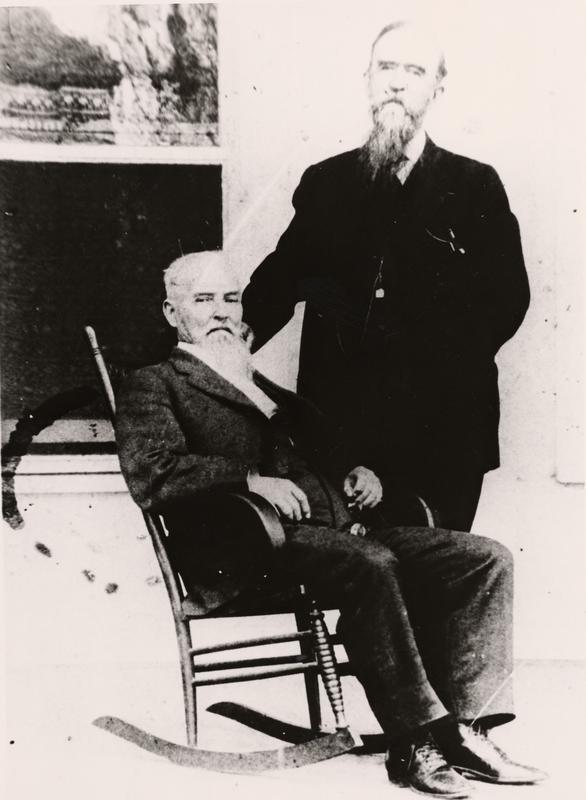
    <summary type="html"><![CDATA[<p><strong><em>Dr. Lyons was the first doctor with a diploma to ever practice in Calcasieu Parish.</em></strong></p><img src="https://mail.acadianahistorical.org/files/fullsize/d6e661645a61b73761fd3fa5bb1a1c9c.jpg" alt="Dr. E. J. Lyons and Dr. Richardson" /><br/><p>Dr. Erastus J. Lyons was born in Calcasieu parish on March 17, 1839, near Eunice on Bayou Plaquemine.  Erastus Lyons completed his initial education in public school, then attended school for three years in Jasper, Texas.  He returned to Louisiana to attend the University of Louisiana, now known as Tulane University, in 1861.  After receiving his M.D. there, he returned to Calcasieu Parish and enlisted in the Confederate Infantry.  He served as an assistant surgeon with the rank of captain for eleven months before the people of Calcasieu parish petitioned the Confederate government for his release on the grounds that he was the only resident practicing physician of the parish.  He was the first regular physician with a diploma to practice in Calcasieu Parish. 	After returning from the Confederate Army, he settled in Big Woods settlement and practiced there until moving into the city of Lake Charles in 1879.  He was a member of the Free and Accepted Masons, the Knights of Honor, and less secretive societies such as the Louisiana state and Calcasieu parish medical societies. </p><p>There was an increase in secret societies after the end of the Civil War.  Societies such as the Masons and Knights of Honor had extremely large membership and funds.  In the late 1800s, their membership was increasing rapidly.  It was very common for members of the community who could afford the fees to be a member of at least one such society.  As an active member of the community, Dr. Lyons would have been expected to be involved in at least one such society.  </p><p>He retired in 1911 after a little more than fifty years of constant practice.  He was very active in the community, serving several times on the City Council and once as the parish health officer. The street that bears his name is located in Lake Charles, running north of Interstate 10 to Channel Street.</p><p><em><strong><a href="https://mail.acadianahistorical.org/items/show/21">For more (including 3 images&#32;&amp;&#32;1 audio file) view the original article</a></strong></em></p>]]></summary>
    <published>2018-04-26T15:05:30+00:00</published>
    <updated>2026-03-04T22:42:45+00:00</updated>
    <link rel="alternate" type="text/html" href="https://mail.acadianahistorical.org/items/show/21"/>
    <id>https://mail.acadianahistorical.org/items/show/21</id>
    <author>
      <name>Bailey Lemoine</name>
    </author>
  </entry>
  <entry>
    <title type="html"><![CDATA[From the Ground Up: Exploring Cathedral : Cathedral of Saint John the Evangelist ]]></title>
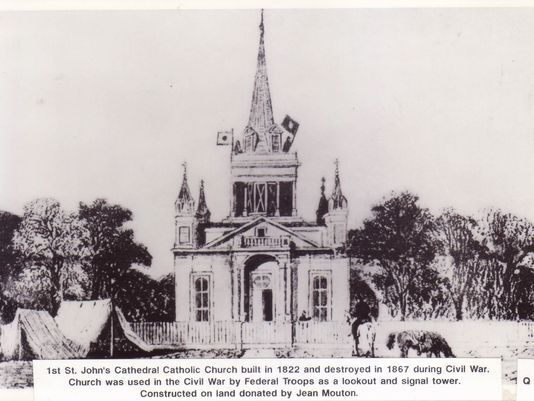
    <summary type="html"><![CDATA[<p><strong><em>Learn about the heart of Lafayette Parish! </em></strong></p><img src="https://mail.acadianahistorical.org/files/fullsize/3b3bc78b2fabe9e0e5fc5c1dc29d3083.jpg" alt="Cathedral of St. John 1822-1867" /><br/><p>The Cathedral of Saint John the Evangelist has been in existence for one hundred and ninety-seven years, and during this time, Cathedral has seen its ups and downs. In the early 1800s, Jean Mouton Sr. brought his friend, Father Barrière, to say mass for his family in his home. Jean Mouton Sr. then decided to donate land for the first church of Vermilionville to be built on because of the popularity of these masses. Fr. Barrière was assigned to be the first pastor of the church (The Cathedral of Saint John the Evangelist, 4). The people of Vermilionville loved him and they were sad to see him go.</p><p>Father Foltier took over just before the Civil War. During the Civil War, he tried to protect the church as best as he could but there was no stopping the Union soldiers from setting up camp on the church grounds. The church was slowly being destroyed by the Union soldiers. Many priests had come and gone, but the next one to do an extraordinary amount of work for the parish was Father Forge. He beautified the old church, but his work was ruined by a hurricane. Fr. Teurlings made plans with a Dutch architect to build an extravagant church. These plans would take $200,000 to construct (The Cathedral of Saint John the Evangelist, 20). This was not feasible so Fr. Teurlings met with another architect to scale back the original plan. The church was finished in 1916.</p><p><em><strong><a href="https://mail.acadianahistorical.org/items/show/23">For more (including 4 images) view the original article</a></strong></em></p>]]></summary>
    <published>2018-04-26T15:07:26+00:00</published>
    <updated>2026-03-04T22:42:45+00:00</updated>
    <link rel="alternate" type="text/html" href="https://mail.acadianahistorical.org/items/show/23"/>
    <id>https://mail.acadianahistorical.org/items/show/23</id>
    <author>
      <name>Sophia Verret</name>
    </author>
  </entry>
  <entry>
    <title type="html"><![CDATA[C.C. &quot;Taddy&quot; Aycock: Louisiana Lieutenant Governor and Lawyer]]></title>
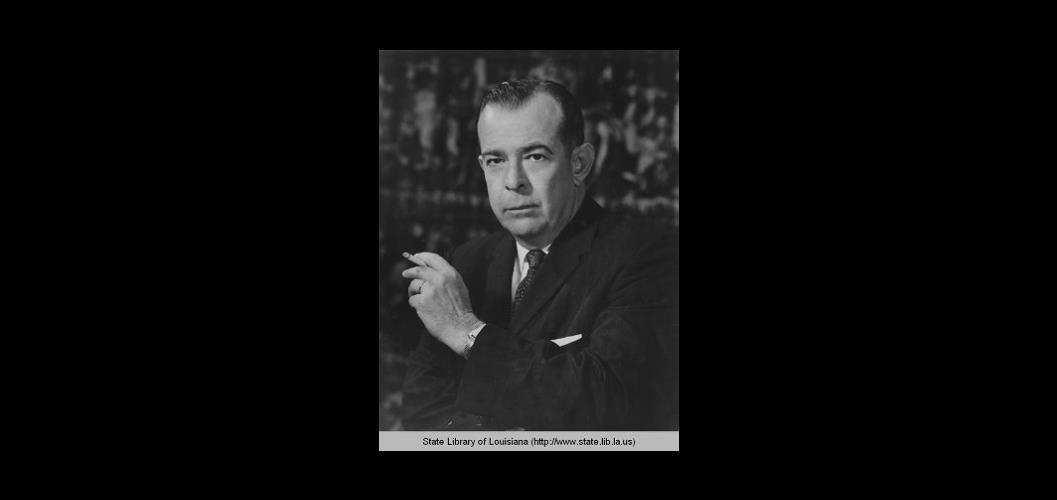
    <summary type="html"><![CDATA[<p><strong><em>C.C. ‘Taddy” Aycock was a prominent Louisiana politician in the 20th century.</em></strong></p><img src="https://mail.acadianahistorical.org/files/fullsize/8be0d8fcfd64463c64c18877338425e9.jpg" alt="C.C. &quot;Taddy&quot; Aycock: Louisiana&#039;s Lieutenant Governor and Senate President from 1960-1972." /><br/><p>Taddy served in World War II and received a Bronze Star. Although his records are difficult to find, there is a Clarence C Aycock who enlisted in Jacksonville, Florida. His state and county of residence are listed with unknown codes, but he was born in 1915 and his civilian occupation is listed as “lawyers and judges.” It says that he was single and without dependents, and Taddy did not marry Elaine Champagne until 1945, after the war ended. Their first child, Barbara Elaine, was born in 1946. </p><p>From 1952-1959, Aycock was a member of the state house of representatives in Louisiana. He was involved in the passage of Louisiana’s “right to work” law in 1952. The right to work law in Louisiana protects employees from being required to pay a fee or join a union. Because unions represent an entire bargaining unit, in states without right to work laws, they may require a monthly payment from everyone, including non-union-members. These laws are somewhat controversial: those who support such laws say that it protects workers from being coerced into joining a union if they do not want to, but opponents say that the laws are meant to weaken unions. </p><p>Despite being the only three-term lieutenant governor in Louisiana in the 20th century, serving from 1960 to 1972, Aycock’s political career ended after an unsuccessful run for governor. When he failed to win support at the Democratic primary in 1971, he retired from politics to practice law in his hometown. He died in 1987. The street that bears his name today runs from Bonvillain St. to Point St. in Terrebonne Parish.</p><p><em><strong><a href="https://mail.acadianahistorical.org/items/show/24">For more (including 3 images&#32;&amp;&#32;1 audio file) view the original article</a></strong></em></p>]]></summary>
    <published>2018-04-26T15:13:22+00:00</published>
    <updated>2026-03-04T22:42:45+00:00</updated>
    <link rel="alternate" type="text/html" href="https://mail.acadianahistorical.org/items/show/24"/>
    <id>https://mail.acadianahistorical.org/items/show/24</id>
    <author>
      <name>Bailey Lemoine</name>
    </author>
  </entry>
  <entry>
    <title type="html"><![CDATA[Hurdling For Gold]]></title>
    <summary type="html"><![CDATA[<img src="https://mail.acadianahistorical.org/files/fullsize/ceabef136b95fee227bcad04b9cab253.jpg" alt="[Untitled]" /><br/><p>Rodney Milburn was an Olympic hurdler who won gold at the 1972 Summer Olympics in Munich in the 110 meters hurdles. While in Munich, Rodney Milburn tied the world record of 13.24 in winning the gold medal. Rodney “Rod” Milburn Jr. was born in Opelousas, Louisiana on March 18, 1950 and died at the young age of 47 years old on November 11, 1997 from an accident while at work.</p><p>While in high school, he grew from a teenager knocking over hurdles in his first race to a national recorded breaking high school athlete. When he was a senior at Clark High school, he looked upon as an outstanding high school hurdler in the United States. Rodney attended Southern University and A&M College in Baton Rouge, Louisiana where he received an athletics scholarship. By 1971, he was unbeaten in twenty-eight races. During that time, Rodney Milburn had also broken the national age record for the 120 yard hurdles at 13.5 seconds.</p><p>Rodney Milburn retired from athletics in 1983. By the next year, he was hired as a coach at Southern University in Baton Rouge and coached there until 1987. In 1992, the city of Opelousas named a street after Rodney Milburn to show honor and commemorate his Olympic triumph. The name of the street is now Rodney Milburn Blvd. Rodney’s street run through the North City Park. The Opelousas Museum also has a dedicated section to Rodney Milburn.</p><p><em><strong><a href="https://mail.acadianahistorical.org/items/show/25">For more (including 2 images) view the original article</a></strong></em></p>]]></summary>
    <published>2018-04-26T15:15:30+00:00</published>
    <updated>2026-03-04T22:42:45+00:00</updated>
    <link rel="alternate" type="text/html" href="https://mail.acadianahistorical.org/items/show/25"/>
    <id>https://mail.acadianahistorical.org/items/show/25</id>
    <author>
      <name>Brennon Rami</name>
    </author>
  </entry>
  <entry>
    <title type="html"><![CDATA[Johnston Street]]></title>
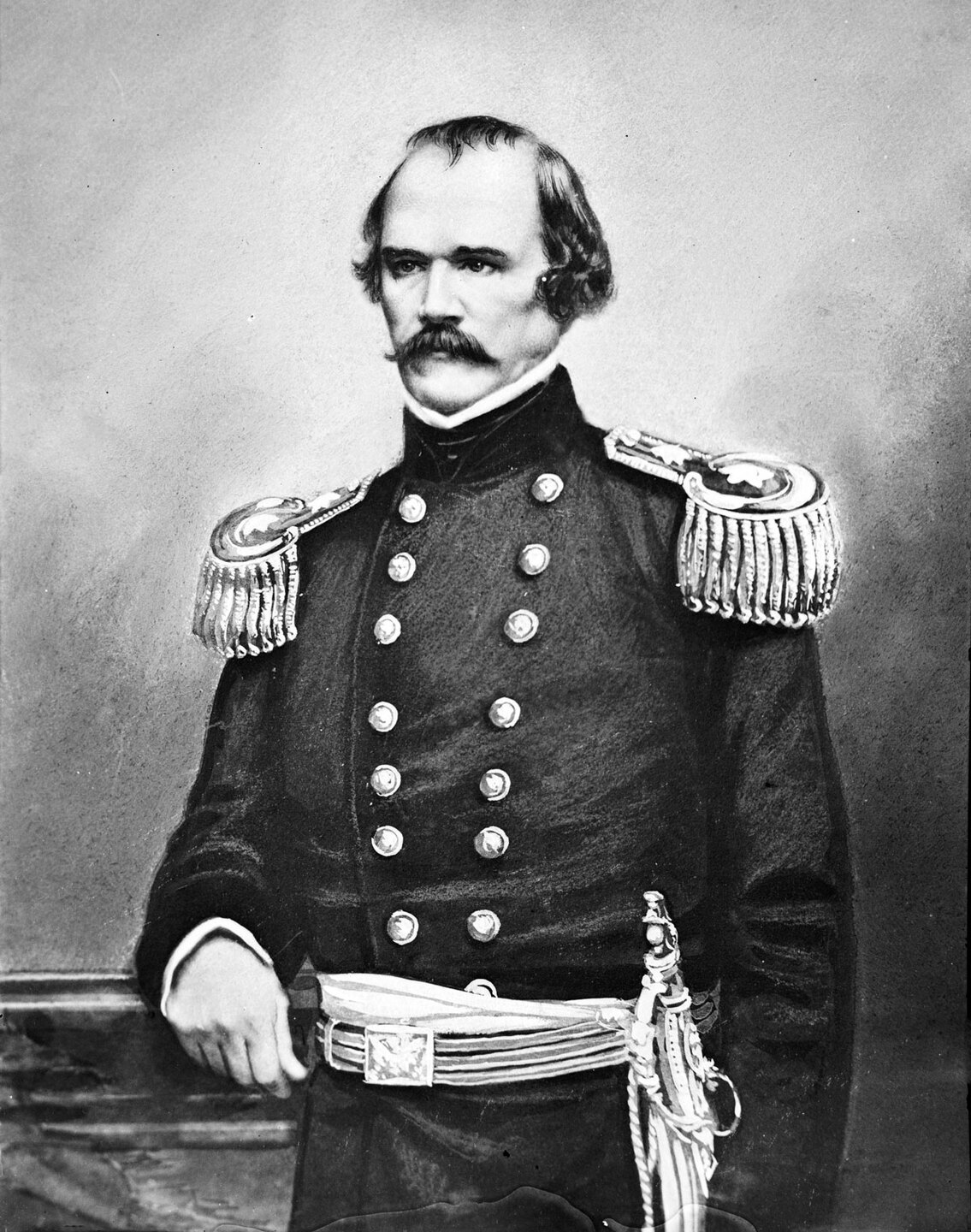
    <summary type="html"><![CDATA[<p><strong><em>General Albert Sidney Johnston was honored for his multiple assignments as a general.</em></strong></p><img src="https://mail.acadianahistorical.org/files/fullsize/8526e05530ca36f9edaba0aac580e04a.jpg" alt="General" /><br/><p>General Albert Sidney Johnston was born in Kentucky in 1803. He first attended a University in Lexington but later graduated in 1826 from a Military Academy in West Point. Johnston was known for serving in three major places, The Texas, U.S, and Confederate Armies.  Johnston was in one of the highest ranking generals during the Battle of Shiloh. He was also a U.S Texas military officer who served during the Civil War as a general. Johnston first served as a general in Texas during the Texas Revolution. During his assignment in Texas he and the previous general had gotten into an argument that turned into a duel. Johnston suffered with a wounded hip which also was a result of his death later in in the Battle of Shiloh. After that he resigned and moved back to his home town Kentucky. In 1856 Johnston ended up leading the U.S military to the war known as the Utah War. After Johnston resigned from the U.S Army in 1861 he ended up being put in the Confederate Department. During his assignment here he ended up leading his confederates to the Battle of Shiloh where he took his final breath. </p><p><em><strong><a href="https://mail.acadianahistorical.org/items/show/26">For more (including 2 images) view the original article</a></strong></em></p>]]></summary>
    <published>2018-04-26T15:18:19+00:00</published>
    <updated>2026-03-04T22:42:45+00:00</updated>
    <link rel="alternate" type="text/html" href="https://mail.acadianahistorical.org/items/show/26"/>
    <id>https://mail.acadianahistorical.org/items/show/26</id>
    <author>
      <name>Hannah Bryan</name>
    </author>
  </entry>
  <entry>
    <title type="html"><![CDATA[Louisiana&#039;s Canadian Founder: Pierre d&#039;Iberville]]></title>
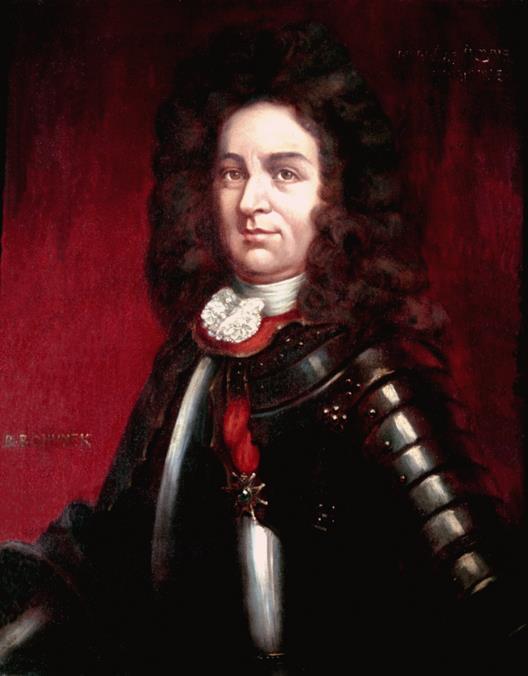
    <summary type="html"><![CDATA[<p><strong><em>The soldier and explorer who founded the French colony "La Louisiane"</em></strong></p><img src="https://mail.acadianahistorical.org/files/fullsize/1df724e97bc6ee0fcd0e6a9e1f178e24.jpg" alt="Pierre Le Moyne d&#039;Iberville" /><br/><p>Pierre Le Moyne d’Iberville was born in 1661 in Montreal in Canada. He became well known through his strategic winning of battles in King William’s War. Iberville was the founder of the French colony La Louisiane. He was a soldier and explorer who was sent to find the mouth of the Mississippi River and establish a colony there for France. The Minister Ponchartrain tasked Iberville with following the guidelines left by the explorer La Salle and discovering the mouth of the Mississippi River. He was to build a fort there so that it would be protected from Spanish and English colonists. Iberville was chosen for the job because he had naval experience and had lead expeditions before, in Hudson Bay. On his first voyage, he was somewhat aimlessly exploring the delta and looking for a mixture of salt and freshwater that would signify the mouth of the river as La Salle had described it. Eventually he found a group of Native Americans who remembered La Salle, confirming that he was in the right place. He built a temporary fort at Biloxi so that he could return to France, leaving his brother Bienville behind with 80 other men. </p><p>On his second voyage, he built Fort Maurepas, and on the third voyage, a fort at Mobile. This was not welcomed by the Spanish acting governor because that territory was claimed by Spain, but Spain and France had recently made an agreement to work together in the colonies against their shared enemy, England. Iberville died in 1706 of yellow fever, weakened by years of diseases like malaria from his time in the Gulf area. The street that now bears his name in Iberville parish, also named after him, runs from Bayou Rd. along the Bayou Plaquemine to Main St. in Plaquemine, Louisiana.</p><p><em><strong><a href="https://mail.acadianahistorical.org/items/show/27">For more (including 2 images&#32;&amp;&#32;1 audio file) view the original article</a></strong></em></p>]]></summary>
    <published>2018-04-26T15:18:22+00:00</published>
    <updated>2026-03-04T22:42:45+00:00</updated>
    <link rel="alternate" type="text/html" href="https://mail.acadianahistorical.org/items/show/27"/>
    <id>https://mail.acadianahistorical.org/items/show/27</id>
    <author>
      <name>Bailey Lemoine</name>
    </author>
  </entry>
  <entry>
    <title type="html"><![CDATA[Forgotten History of the Calumet Plantation]]></title>
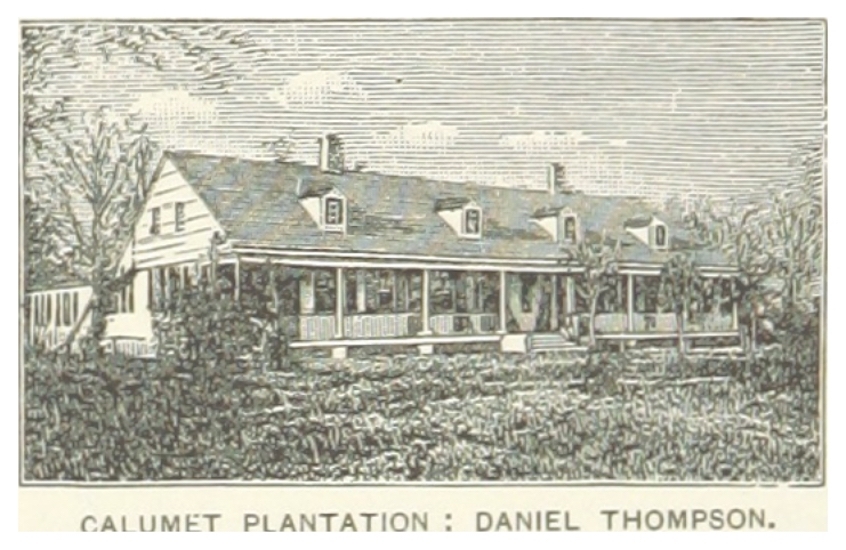
    <summary type="html"><![CDATA[<p><strong><em>The plantation is the site of a Civil War battle, sugar experiments, and racing planes.</em></strong></p><img src="https://mail.acadianahistorical.org/files/fullsize/622ba756f07125e9566e0658456a2739.jpg" alt="Calumet Plantation House 1891" /><br/><p> The Calumet Plantation is a large plantation house located north of Patterson, Louisiana in West Baton Rouge Parrish. The house sits on the site of the Battle of Fort Bisland during the Civil War. This battle involved 25,000 soldiers along with naval encounters in Bayou Teche. The battle was between the Confederate regiment of Colonel Tom Green sent by Major General Richard Taylor and the Union regiment of Major General Nathanial P. Banks.</p><p>The plantation itself played an important role in the development of sugar crops. The owner, Daniel Thompson led experiments into chemical research of the sugar industry in conjunction with the US Department of Agriculture during the 1870’s. This involved the use of fertilizers being tested, a new cane milling process, and new seeds for a high sucrose content being developed. </p><p>In the early 1920’s, the home was purchased by Harry P. Williams and his wife, Marguerite Clark, who was one of the highest paid actresses in Hollywood. Her most famous film was reprising her Broadway role in the first film version of Snow White in 1916. Williams made himself known in the lumber and aviation industries. He started a lumber business in Patterson, which became the largest lumber yard in the US. He, along with his partner Jimmy Wedell also created the fastest racing plane, the Wedell-Williams Model 44. The Model 44 won many races between 1932 and 1934, and set multiple records including the world speed record at 305.33 miles per hour. Together they opened one of the first airports in the south and one of the first airplane manufacturing plants in the US. The airport was donated to the state by Marguerite Clark after a plane crash killed Williams and Wedell. The airport is still in operation today and has a museum dedicated to the two men.</p><p><em><strong><a href="https://mail.acadianahistorical.org/items/show/28">For more (including 5 images&#32;&amp;&#32;1 audio file) view the original article</a></strong></em></p>]]></summary>
    <published>2018-04-26T15:18:40+00:00</published>
    <updated>2026-03-04T22:42:45+00:00</updated>
    <link rel="alternate" type="text/html" href="https://mail.acadianahistorical.org/items/show/28"/>
    <id>https://mail.acadianahistorical.org/items/show/28</id>
    <author>
      <name>Ryan LeBlanc</name>
    </author>
  </entry>
  <entry>
    <title type="html"><![CDATA[The Lost Town of Morrisonville ]]></title>
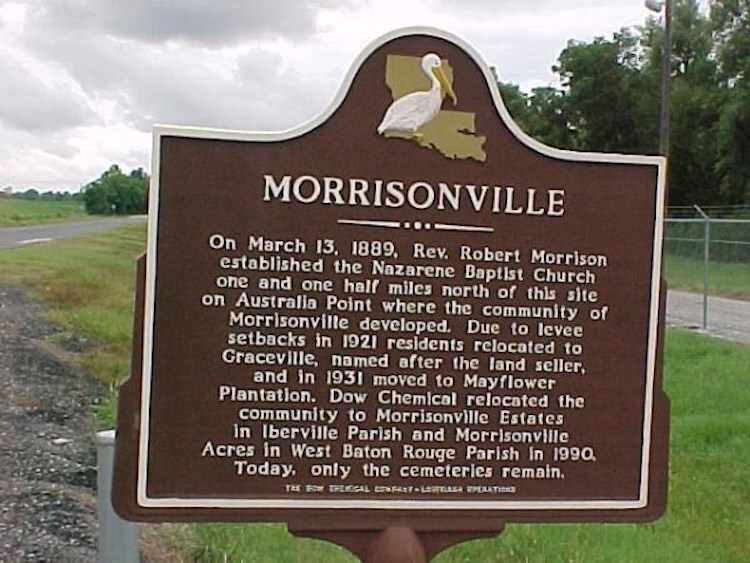
    <summary type="html"><![CDATA[<p><strong><em>The small, historic town of Morrisonville in Iberville Parish is not only lost to its past residences but also to history.</em></strong></p><img src="https://mail.acadianahistorical.org/files/fullsize/562f3b7d1a8a1c20409a07e8b51ea110.jpg" alt="Morrisonville&#039;s Marker" /><br/><p>LOCATION: PLAQUEMINE, IBERVILLE PARISH, LA</p><p>COORDINATES: 30.322331, -91.227700 (Nazarene Baptist’s Cemetery)</p><p>STATUS: LOST</p><p>The small, historic town of Morrisonville in Iberville Parish is not only lost to its past residences but also to history. Morrisonville was one of the oldest towns in the area as freed slaves had started it during the end of the Civil War.  Along the 85 miles between Baton Rouge and New Orleans, seats 75 of the largest plants in the U.S.  In 1958 the Dow Chemical Company moved to Plaquemine, but eventually its waste produce became a problem and they began to buy out land in the 1980s.  Morrisonville had no choice to leave come 1989 when there was a major groundwater contamination.  Today all that is left is a historical marker and the Nazarene Baptist’s cemetery.  </p><p><em><strong><a href="https://mail.acadianahistorical.org/items/show/29">For more (including 3 images&#32;&amp;&#32;1 audio file) view the original article</a></strong></em></p>]]></summary>
    <published>2018-04-26T15:19:23+00:00</published>
    <updated>2026-03-04T22:42:45+00:00</updated>
    <link rel="alternate" type="text/html" href="https://mail.acadianahistorical.org/items/show/29"/>
    <id>https://mail.acadianahistorical.org/items/show/29</id>
    <author>
      <name>Rachel Blomquist</name>
    </author>
  </entry>
  <entry>
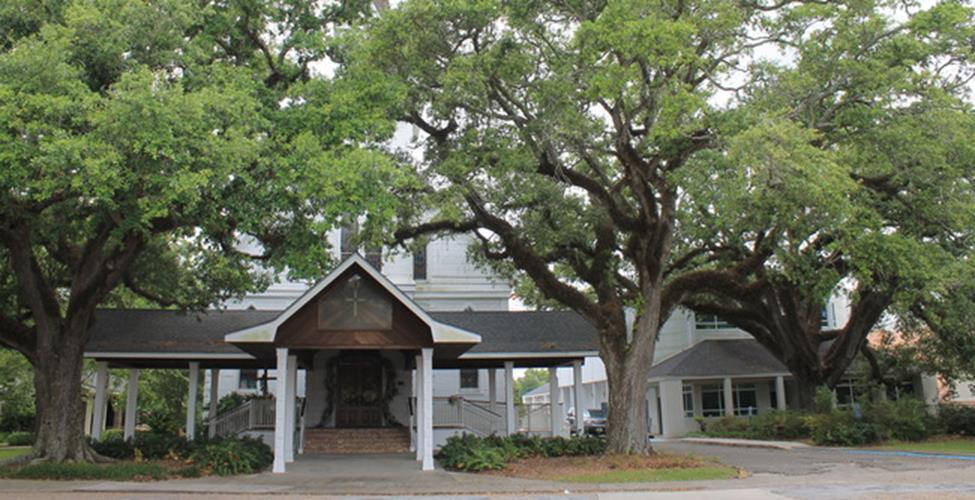
    <title type="html"><![CDATA[The Catholic Church of Patterson, Louisiana: St. Joseph Church]]></title>
    <summary type="html"><![CDATA[<p><strong><em>19th Century Church</em></strong></p><img src="https://mail.acadianahistorical.org/files/fullsize/0e8e6366fa84b6258bc5192576ba1036.jpg" alt="[Untitled]" /><br/><p>St. Joseph Catholic Church is located in the city of Patterson within the St. Mary Parish. In 1848 a group of catholic men, from a Dutch settlement, purchased the land that the church is sitting on for $225, and in 1895 Father Thomas Smith began construction of the St. Joseph Church on these grounds. Throughout its time, this church has withstood multiple fires and hurricanes that show the hundred plus years of wear and tear this church has had to endure. The biggest catastrophe that this Church has had to endure was the hurricane of 1926 that reached speeds of up to 115 miles per hour and basically destroyed everything aside from the church. As time went on the church had to do a lot of repairs to fix the church but the original structure is still standing along with multiple little renovations done by the various priest throughout the years.  </p><p><em><strong><a href="https://mail.acadianahistorical.org/items/show/30">For more (including 2 images) view the original article</a></strong></em></p>]]></summary>
    <published>2018-04-26T15:21:31+00:00</published>
    <updated>2026-03-04T22:42:45+00:00</updated>
    <link rel="alternate" type="text/html" href="https://mail.acadianahistorical.org/items/show/30"/>
    <id>https://mail.acadianahistorical.org/items/show/30</id>
    <author>
      <name>Nicholas DeLucia</name>
    </author>
  </entry>
  <entry>
    <title type="html"><![CDATA[Every Child Should be Loved : St, Mary&#039;s Orphanage ]]></title>
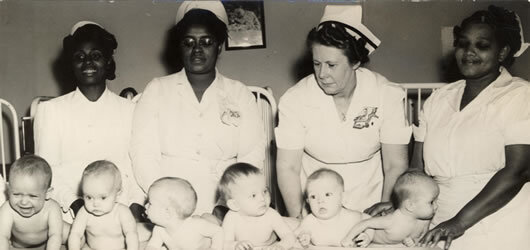
    <summary type="html"><![CDATA[<p><strong><em>A Louisiana Orphanage opens up its doors to abandoned children in hopes of creating a better life for them.</em></strong></p><img src="https://mail.acadianahistorical.org/files/fullsize/0381a95cebb5b07cf2cffc07b58191a6.jpg" alt="[Untitled]" /><br/><p>In the 1920's, St. Mary’s Orphange opened its doors. The home welcomed abandoned and orphaned children to a renovated old building to be cared for. </p><p>In 1924, the orphanage was created by Bishop Jules B. Jeanmard. He then managed the home and began caring for children with all types of backgrounds. The last Daughter of Wisdom, Sister Mary June Morin, cared for the children at St. Mary’s and retired in 2011 after serving over fifty one years of service. Morin would regularly volunteer and visit children, up until she passed away in 2014. </p><p>In the late 1950’s, St. Mary’s home decided to not only to care for children but to also care for those with disabilities.  During the next decade, St. Mary’s Home decided to move to a larger building in order to care for more children. They moved into a 50-bed nursing facility that specialized in residential care for children with severe mental disabilities. </p><p>By the early 1980’s, St Mary’s home transformed and thrived into what it is today. In 1986 the main building of the home was demolished by Our Lady of Lourdes Hospital. It is now a privately owned, nonprofit, nonsectarian organization that provides exquisite care by experts consistently for children with severe physical and mental disabilities. </p><p>Throughout the years, the number of children cared for at the St. Mary’s Home has expanded from a dozen to over 100. The Home strives to cherish, love and respect every young person who walks in the door.</p><p><em><strong><a href="https://mail.acadianahistorical.org/items/show/31">For more (including 2 images) view the original article</a></strong></em></p>]]></summary>
    <published>2018-04-26T15:22:32+00:00</published>
    <updated>2026-03-04T22:42:46+00:00</updated>
    <link rel="alternate" type="text/html" href="https://mail.acadianahistorical.org/items/show/31"/>
    <id>https://mail.acadianahistorical.org/items/show/31</id>
    <author>
      <name>Kristen Angelle Harrison </name>
    </author>
  </entry>
  <entry>
    <title type="html"><![CDATA[An Influential Politician: Jean Noel Destrehan]]></title>
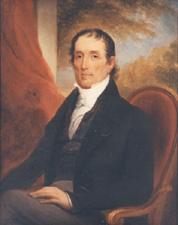
    <summary type="html"><![CDATA[<p><strong><em>A prominent Louisiana politician and legislator, as well as a mercantilist and planter.</em></strong></p><img src="https://mail.acadianahistorical.org/files/fullsize/cc4e7de1b51d3aab10d7588e2ec85a5c.jpg" alt="[Untitled]" /><br/><p>Jean Noel Destrehan was born in 1754 in what is today St. Charles Parish. He was the son of Jean Baptiste Honore Destrehan de Beaupre, “the head of the Destrehan family line in Louisiana,” the Treasurer of the Louisiana Colony of France (Harvey 13). Jean Noel was educated in France. </p><p>Jean Noel Destrehan married Marie Claude Celeste de Logny. His wife’s father, Antoine Robin de Logny, built for them the Destrehan Manor House in 1787, which is still in St. Charles Parish. Later, the couple had two more wings added to the original house to accomodate their total of fourteen children. </p><p>Destrehan was a prominent Louisiana politician and legislator, as well as a mercantilist and planter. He was a member of the Louisiana Territorial government from 1803 to 1812. At one point, he and two other members carried a petition to the United States Congress to protest a 6% tax duty put on the Louisiana Territory and that the appointed governor could not speak any French. Destrehan was elected the first Vice-Mayor of New Orleans in 1805, and was a member of the legislative council of the Territory of Orleans from 1806 to 1811. In 1812 he was elected as a United States Senator, just after Louisiana became a state. However, he resigned less than a month after his election before even qualifying for office, possibly because he did not speak much English. Destrehan served as a Louisiana State Senator from 1812 to 1818. During this time, he helped to draft the Louisiana Constitution.</p><p>Jean Noel Destrehan de Beaupre died in 1823 and is interred near Destrehan, Louisiana. The street that bears his family name today runs from River Road on the eastbank of the Mississippi to Noel Street in the town named after him.</p><p><em><strong><a href="https://mail.acadianahistorical.org/items/show/32">For more (including 2 images&#32;&amp;&#32;1 audio file) view the original article</a></strong></em></p>]]></summary>
    <published>2018-04-26T15:22:48+00:00</published>
    <updated>2026-03-04T22:42:46+00:00</updated>
    <link rel="alternate" type="text/html" href="https://mail.acadianahistorical.org/items/show/32"/>
    <id>https://mail.acadianahistorical.org/items/show/32</id>
    <author>
      <name>Bailey Lemoine</name>
    </author>
  </entry>
  <entry>
    <title type="html"><![CDATA[A Father and Son]]></title>
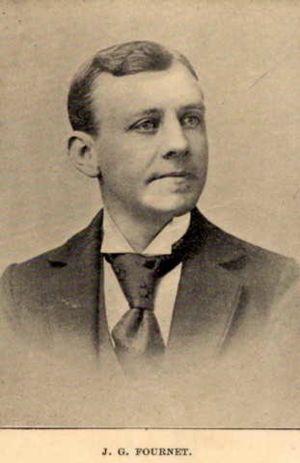
    <summary type="html"><![CDATA[<p><strong><em>Fournet street was named in honor of a father and son that had a very similar life.</em></strong></p><img src="https://mail.acadianahistorical.org/files/fullsize/2facee0c8aacaaacc66edc4b05281963.jpg" alt="Joseph Fournet" /><br/><p>Fournet street is currently located in Lake Charles, Louisiana. Fournet is named after a father and his son. Gabriel Fournet is the father of Joseph Fournet. Gabriel graduated from Georgetown College in 1861. He then entered the military during the civil war as a major of the Yellow Jacket Battalion in 1862. In 1866 he decided to go back to St Martinville and practice law. During this time Gabriel was very involved in the city. He was an editor for a newspaper and a clerk of court. Also in 1866 he took the bar in New Orleans to continue his practice in law. In 1870 Gabriel has his son Joseph. His son Joseph had just as much of an impact as he did. In 1880 Gabriel moved back to Lake Charles in 1893 with his family. Joseph graduated from Tulane University. When he returned to Lake Charles he opened up his own law firm. Gabriel’s wife passed away in 1893, and then 15 years later Gabriel passed. Gabriel and Joseph both come from very respected family from several generations. The street Fournet Street is named in their honor because of the impact they had on the community itself. </p><p><em><strong><a href="https://mail.acadianahistorical.org/items/show/33">For more (including 2 images) view the original article</a></strong></em></p>]]></summary>
    <published>2018-04-26T15:25:37+00:00</published>
    <updated>2026-03-04T22:42:46+00:00</updated>
    <link rel="alternate" type="text/html" href="https://mail.acadianahistorical.org/items/show/33"/>
    <id>https://mail.acadianahistorical.org/items/show/33</id>
    <author>
      <name>Hannah Bryan</name>
    </author>
  </entry>
  <entry>
    <title type="html"><![CDATA[Old City Hall: Lafayette&#039;s First City Hall and National Registered Historic Place]]></title>
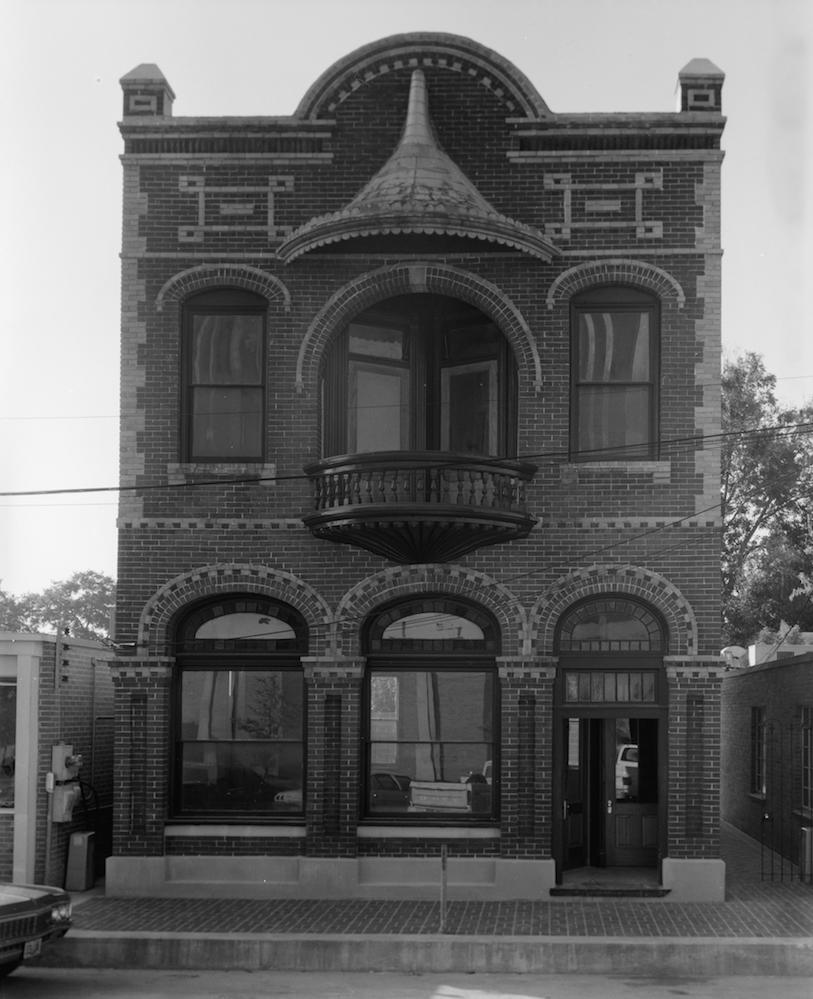
    <summary type="html"><![CDATA[<p><strong><em>One of the first buildings in the town of Lafayette to be on the National Register of Historic Places was, the affectionately nicknamed, Old City Hall.</em></strong></p><img src="https://mail.acadianahistorical.org/files/fullsize/1429932d0b1fb7ce2bbd4322bdde36f0.jpg" alt="1981 City Hall" /><br/><p>LOCATION: LAFAYETTE, LAFAYETTE PARISH, LA</p><p>COORDINATES: 30.222657, -92.020472 (217 W. MAIN ST. LAFAYETTE)</p><p>STATUS: FORGOTTEN </p><p>One of the first buildings in the town of Lafayette to be on the National Register of Historic Places was, the affectionately nicknamed, Old City Hall. It as built in 1898 to be the town’s first bank.  Built in the Rococo style, the building is two stories with colored glass windows and different sized bricks. In 1906, the town of Lafayette bought it and turned it into the city hall. It was the city hall for thirty-three years until 1939.  Then the building went through various owners before there was talk of having the building torn down.  However funds were gathered and the last people to stay in this building were the Council for the Development of French in Louisiana (CODOFIL) in the late 1990s. Since then the building has stood empty amongst it neighbors, waiting for a new owner. </p><p><em><strong><a href="https://mail.acadianahistorical.org/items/show/34">For more (including 4 images&#32;&amp;&#32;1 audio file) view the original article</a></strong></em></p>]]></summary>
    <published>2018-04-26T15:31:42+00:00</published>
    <updated>2026-03-04T22:42:46+00:00</updated>
    <link rel="alternate" type="text/html" href="https://mail.acadianahistorical.org/items/show/34"/>
    <id>https://mail.acadianahistorical.org/items/show/34</id>
    <author>
      <name>Rachel Blomquist</name>
    </author>
  </entry>
  <entry>
    <title type="html"><![CDATA[The Lost Treasure of the Tunica Tribe]]></title>
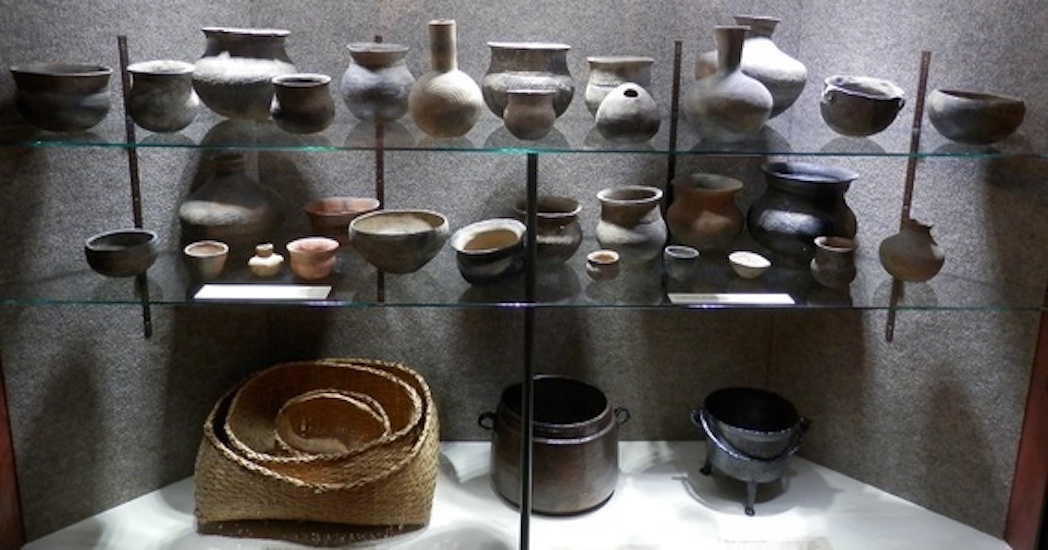
    <summary type="html"><![CDATA[<p><strong><em>The Tunica Treasure contained thousands of artifacts the tribe made themselves or traded for. </em></strong></p><img src="https://mail.acadianahistorical.org/files/fullsize/fd2638eddfac57489e284d1809ec7c69.jpg" alt="Tunica Treasure Today" /><br/><p>The Tunica Treasure is a once lost treasure from the Tunica-Biloxi tribe. The treasure moved across Louisiana over many years and was lost after the chief who owned it died. The treasure includes musket parts, iron tools, jewelry, French and tribal pottery, and over 200,000 European trade beads. The beads are more than half of all the beads ever found in the southeastern United States. </p><p>When Tunica Chief Cahura-Joligo was killed in 1731 in a raid by the Natchez Indians, he was buried alongside hundreds of other Tunica and their prized possessions. The site remained a mystery until 1968, when an Angola Prison guard, Leonard Charrier, went out with a metal detector at the Old Trudeau Plantation in West Feliciana parish. He discovered the grave site and treasure, then decided to dig the graves and keep all of the treasure to himself, destroying the sacred burial site. Charrier stored all of the treasures in his home and eventually attempted to sell the collection but could never provide proof of ownership, therefore a sale was never finalized. When Charrier filed a suit to claim ownership, the Tunica-Biloxi had become federally recognized due to the treasures link to the tribe and filed a countersuit. The Tunica-Biloxi would win the case and take possession of the treasure. The tribe rushed for donations and was able to raise enough money to restore them then put the artifacts into a museum in Marksville in 2011, where the treasure sits today. </p><p><em><strong><a href="https://mail.acadianahistorical.org/items/show/35">For more (including 4 images) view the original article</a></strong></em></p>]]></summary>
    <published>2018-04-26T15:32:04+00:00</published>
    <updated>2026-03-04T22:42:46+00:00</updated>
    <link rel="alternate" type="text/html" href="https://mail.acadianahistorical.org/items/show/35"/>
    <id>https://mail.acadianahistorical.org/items/show/35</id>
    <author>
      <name>Ryan LeBlanc</name>
    </author>
  </entry>
  <entry>
    <title type="html"><![CDATA[The Iberian Masterpiece: St. Peter Catholic Church]]></title>
    <summary type="html"><![CDATA[<p><strong><em>Duperier Grounds</em></strong></p><img src="https://mail.acadianahistorical.org/files/fullsize/eefae6ed4eab678df3fd20ccfd3a68ab.jpg" alt="[Untitled]" /><br/><p>St. Peter Catholic Church was established in 1838 shortly after the surrounding area saw an influx of French immigrants who moved down from the north. The growing population yearned for a church and one local man named Frederick Duperier made it happen when he purchased, and then donated the land the church sits on to the community for the sole purpose of building a church. According to the records Mr. Duperier had one provision, that the church be visible from his home which has now ironically created a very picturesque alley between the main street and St. Peter’s street. In 1889 the construction of the new church was complete, and it wasn’t until 1951 that the modern day church was built after the second church had to be taken down. The current St. Peter Church is a large structure with a red brick façade that imitates a French Renaissance design that the local catholic community is very proud of.</p><p><em><strong><a href="https://mail.acadianahistorical.org/items/show/37">For more (including 2 images) view the original article</a></strong></em></p>]]></summary>
    <published>2018-04-26T15:34:42+00:00</published>
    <updated>2026-03-04T22:42:46+00:00</updated>
    <link rel="alternate" type="text/html" href="https://mail.acadianahistorical.org/items/show/37"/>
    <id>https://mail.acadianahistorical.org/items/show/37</id>
    <author>
      <name>Nicholas DeLucia</name>
    </author>
  </entry>
  <entry>
    <title type="html"><![CDATA[Dr. Benoit Grolee]]></title>
    <summary type="html"><![CDATA[<img src="https://mail.acadianahistorical.org/files/fullsize/beaa915eb98e1e3ec678f2fece747150.jpg" alt="[Untitled]" /><br/><p>Grolee Street is one of the oldest streets in Opelousas, Louisiana. It was in 1934 on March 19th, when the Opelousas Board of Public met and passed an ordinance naming two streets that day. One of those streets just so happened to be named Grolee Street. </p><p>According to the research of the Daily World, “The name Grolee seems to go back as early as the fifteenth-century French history.” However, the street in Opelousas was named after a different Grolee and he went by the name of Dr. Benoit Grolee, who was an early Opelousas physician who died in 1833. But, according to researched records, “Dr. Grolee came to Opelousas during the early 1800s.” Per research, “We do know, however, that Dr. Benoit Grolee was born in 1783 in Saint-Symphorien, France. It was known that, “Dr. Grolee came to Louisiana as a young man and passed his physicians examination in 1801.” In 1817, Dr. Benoit Grolee received his medical degree in New Orleans, which allowed him to practice medicine in the state. </p><p>Dr. Benoit Grolee played a significant role in the early history of Opelousas.” “He was one of the first physicians in the town and the parish.” However, after the passing of Dr. Grolee, the Board of Police of the Town of Opelousas honored his memory by naming a street after him. So, in 1838, the Opelousas Board of Police voted to install brick path walks on some of the major streets in Opelousas. And, Grolee is one of those streets. As of today, many families and businesses have made their homes on East or West Grolee Street. There is also an elementary school called Grolee, which is located on the west end of Grolee</p><p><em><strong><a href="https://mail.acadianahistorical.org/items/show/38">For more view the original article</a></strong></em></p>]]></summary>
    <published>2018-04-26T15:35:12+00:00</published>
    <updated>2026-03-04T22:42:46+00:00</updated>
    <link rel="alternate" type="text/html" href="https://mail.acadianahistorical.org/items/show/38"/>
    <id>https://mail.acadianahistorical.org/items/show/38</id>
    <author>
      <name>Brennon Rami</name>
    </author>
  </entry>
  <entry>
    <title type="html"><![CDATA[Lepers in Louisiana : Sacred Heart Chapel in Carville ]]></title>
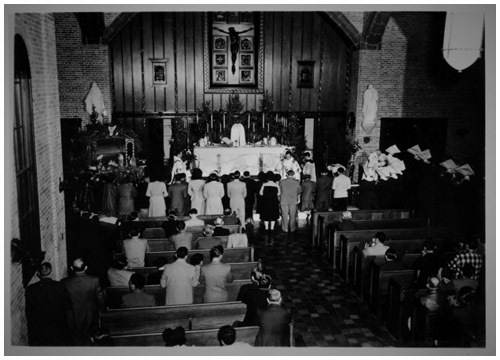
    <summary type="html"><![CDATA[<p><strong><em>Learn about the Miracle at Carville, the cure for leprosy! </em></strong></p><img src="https://mail.acadianahistorical.org/files/fullsize/e4e20db588f923c1332b0ff31b2ee697.jpg" alt="Saying mass in Sacred Heart Chapel " /><br/><p>When someone thinks about Louisiana, Hansen’s Disease, or the cure for it, is not the first thing that comes to mind. It turns out, back in the day, there was a leprosarium right down the street from Baton Rouge in Carville, Louisiana. In this leprosarium was the Sacred Heart Chapel that was built for the lepers to go to mass on a regular basis. It was run by the Daughters of Charity which was started by Vincent de Paul in France. The Daughters of Charity wanted what was best for their patients so they worked many long days and long nights to find a cure for leprosy. Many years later, the leprosarium in Carville was gaining a large amount national attention. </p><p>All of the work that the Daughters of Charity did was finally paying off. Their work helped discover the cure for leprosy in the 1940s. Many years after the cure was found, different leprosy clinics were opening around the state of Louisiana and the rest of the country. The Daughters of Charity remained in Carville until the early 2000s. The Sacred Heart Chapel was built in 1933 and is still up and running today. This chapel was built in “Mission Revival style with Romanesque details” (A Brief History of Sacred Heart Chapel). When it was built, this is where the Daughters celebrated mass everyday with the patients. Religion was an important thing to everyone involved during the 100 years the Daughters of Charity were in Carville. </p><p><em><strong><a href="https://mail.acadianahistorical.org/items/show/39">For more (including 3 images) view the original article</a></strong></em></p>]]></summary>
    <published>2018-04-26T15:38:50+00:00</published>
    <updated>2026-03-04T22:42:46+00:00</updated>
    <link rel="alternate" type="text/html" href="https://mail.acadianahistorical.org/items/show/39"/>
    <id>https://mail.acadianahistorical.org/items/show/39</id>
    <author>
      <name>Sophia Verret</name>
    </author>
  </entry>
  <entry>
    <title type="html"><![CDATA[Old Opelousas City Hall/Town Market]]></title>
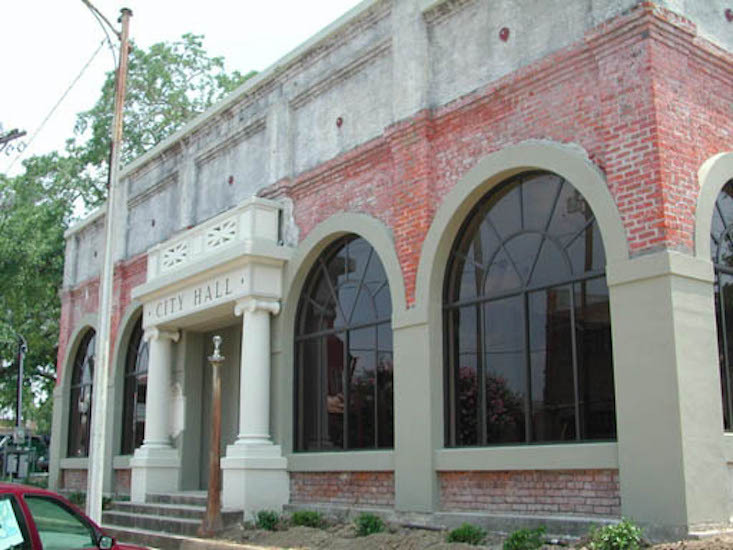
    <summary type="html"><![CDATA[<p><strong><em>The abandoned building was once the center of commerce in Opelousas</em></strong></p><img src="https://mail.acadianahistorical.org/files/fullsize/e9fcb0e8eec199886e133beadf9778eb.jpg" alt="Old City Hall Today" /><br/><p>The old Opelousas City Hall was once the center of one of the oldest towns in Louisiana. Today it is nothing more than a run-down building sitting on a street corner in downtown Opelousas. Many people can tell what it once was due to the words “City Hall” engraved over the door, but most do not know the story behind this historic building. </p><p>The site of the old City hall was used as a market with the original building being built before the Civil War. The current building was built in 1888 as a Victorian style marketplace and was the center of commerce for Opelousas. Fresh fruits, vegetables, and other foods were sold or traded there, along with a coffee shop for the town. In the early 1900’s the building housed the Electric Light Supply Storage Company and later on the Opelousas Public Library. In the 1920’s, the women of Opelousas cast their first votes and held a reception in the building to note the occasion. Later in the 1920’s, Opelousas started to make plans to build a City Hall and in 1932 it was announced the building would house the Opelousas government. The city government put massive renovations into the new City Hall. There have not been any renovations after 1932. The city government occupied the building until 1962. The building has deteriorated and remained vacant. The building is now listed on the National Register of Historic Places and part of the Opelousas Historic District, but many do not know it’s long history.</p><p><em><strong><a href="https://mail.acadianahistorical.org/items/show/40">For more (including 3 images) view the original article</a></strong></em></p>]]></summary>
    <published>2018-04-26T15:40:36+00:00</published>
    <updated>2026-03-04T22:42:46+00:00</updated>
    <link rel="alternate" type="text/html" href="https://mail.acadianahistorical.org/items/show/40"/>
    <id>https://mail.acadianahistorical.org/items/show/40</id>
    <author>
      <name>Ryan LeBlanc</name>
    </author>
  </entry>
  <entry>
    <title type="html"><![CDATA[Hidden Town of Sherburne: Louisiana&#039;s Lumber Towns ]]></title>
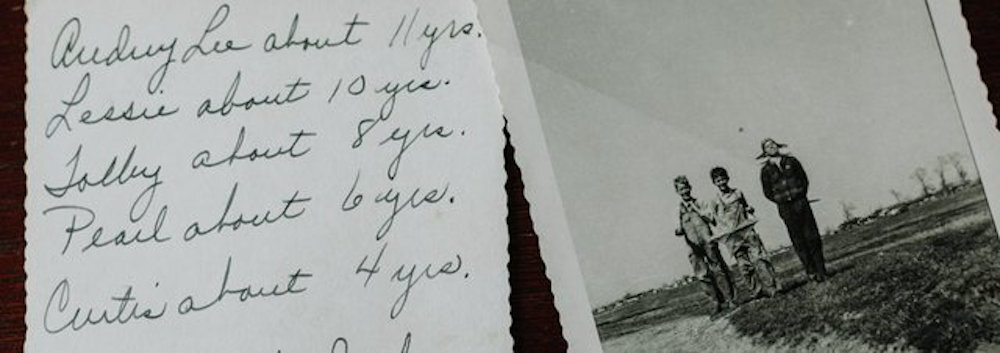
    <summary type="html"><![CDATA[<p><strong><em> Besides the name, the remains left of Sherburne are a few wooden frames of homes, steel equipment and a sawdust pile.    </em></strong></p><img src="https://mail.acadianahistorical.org/files/fullsize/087ffcc8037f39be2538e2e2ecfe5495.jpg" alt="Fletcher family children walking" /><br/><p>LOCATION: POINTE COUPEE PARISH, LA</p><p>COORDINATES: 30.462429, -91.714972</p><p>STATUS: FORGOTTEN AND LOST </p><p>In the 1880s the lumber business came to Louisiana and as the tracts of uncut forest were large, sawmills easily popped up, as the mill itself was able to continue running all day, maximizing the yield and money.  Of these sawmill towns that cropped up for Louisiana one was Sherburne along the Atchafalaya River.  When the lumber business began to dry up towards the end of the later 1800s, the town’s grocer Henry bought up land for farming and to build houses for farmers as the land was now cleared. Come 1939 the federal government ordered the town to move as the construction of the Morganza Spillway might flood the town. Today the Sherburne Wildlife Management Area in the Atchafalaya National Wildlife Refuge (NWR), named in honor of the town that was built there and forced to move, covers where the town stood.  Besides the name, the remains left of Sherburne are a few wooden frames of homes, steel equipment and a sawdust pile.     </p><p><em><strong><a href="https://mail.acadianahistorical.org/items/show/41">For more (including 3 images&#32;&amp;&#32;1 audio file) view the original article</a></strong></em></p>]]></summary>
    <published>2018-04-26T15:41:51+00:00</published>
    <updated>2026-03-04T22:42:46+00:00</updated>
    <link rel="alternate" type="text/html" href="https://mail.acadianahistorical.org/items/show/41"/>
    <id>https://mail.acadianahistorical.org/items/show/41</id>
    <author>
      <name>Rachel Blomquist </name>
    </author>
  </entry>
  <entry>
    <title type="html"><![CDATA[Bishop Jeanmard’s War against Racism: St. Paul the Apostle Church - Lafayette, LA]]></title>
    <summary type="html"><![CDATA[<p><strong><em>This church was created out of the desire of a minority group to worship together as a community.</em></strong></p><img src="https://mail.acadianahistorical.org/files/fullsize/53a8e77ce554d3387eceb6b616705d53.jpg" alt="St. Paul the Apostle Catholic Church" /><br/><p>The history of St. Paul the Apostle Catholic Church tells a story of outreach to and inclusion of minority Catholics. In the early 1900s, the Diocese of Lafayette included “50,000 black Catholics, one fourth of the total for the entire United States” (Oubre 95). In this pre-Civil Rights era, Bishop Jeanmard devoted time and resources to establish Catholic institutions to serve black parishioners. It was black Catholics who expressed a desire for separate institutions; in fact, “[t]he black community of Lafayette was the first to specifically ask for their own church”; as a result, St. Paul was established in 1911 (Oubre 66).</p><p>Shortly after, Bishop Jeanmard was appointed bishop of the Diocese of Lafayette (Oubre 70). In 1934, Bishop Jeanmard accepted four of the first African American priests in the south into his diocese to serve at the newly created parish of the Immaculate Heart of Mary, formed from a portion of St. Paul’s parish (Oubre 94). The parish included Holy Rosary Institute, a church and a boys’ school (Oubre 94). The fruit of this work can be seen in the life of Bishop Joseph Francis, who was born in Lafayette, educated at St. Paul’s school, ordained in 1950 and eventually became associate director of Holy Rosary Institute. Later, he became Auxiliary Bishop of Newark, New Jersey (Oubre 138). Bishop Jeanmard showed his dedication to the minority parishioners of his Diocese to the end of his life; “[o]ne of his last requests was that his body be laid out for an overnight vigil and Mass at St. Paul’s Church” (Oubre 95). The parish of St. Paul was created out of the church’s cooperation with black parishioners when most of the South preferred to do otherwise.</p><p><em><strong><a href="https://mail.acadianahistorical.org/items/show/42">For more (including 4 images) view the original article</a></strong></em></p>]]></summary>
    <published>2018-04-26T15:42:39+00:00</published>
    <updated>2026-03-04T22:42:46+00:00</updated>
    <link rel="alternate" type="text/html" href="https://mail.acadianahistorical.org/items/show/42"/>
    <id>https://mail.acadianahistorical.org/items/show/42</id>
    <author>
      <name>Briley Higginbotham</name>
    </author>
  </entry>
</feed>