<?xml version="1.0" encoding="UTF-8"?>
<feed xmlns="http://www.w3.org/2005/Atom">
  <title type="text">Acadiana Historical</title>
  <updated>2026-05-08T17:25:16+00:00</updated>
  <generator uri="http://framework.zend.com" version="1.12.20">Zend_Feed_Writer</generator>
  <link rel="alternate" type="text/html" href="https://mail.acadianahistorical.org/"/>
  <link rel="self" type="application/atom+xml" href="https://mail.acadianahistorical.org/items/browse?output=rss2"/>
  <id>https://mail.acadianahistorical.org/</id>
  <author>
    <name>Acadiana Historical</name>
    <uri>https://mail.acadianahistorical.org</uri>
  </author>
  <link rel="hub" href="https://pubsubhubbub.appspot.com/"/>
  <entry>
    <title type="html"><![CDATA[A.J. Davis Memorial Highway: A Louisiana Pilot&#039;s Final Flight ]]></title>
    <summary type="html"><![CDATA[<img src="https://mail.acadianahistorical.org/files/fullsize/02a65c721b2e779ef721ee4ff84041fb.jpg" alt="[Untitled]" /><br/><p>In the heart of Louisiana, where old live oaks stretch out over the bayou roads, there's a highway named after a local hero. This man answered his country's call to serve from the cockpit of a military plane. Back in 1997, the Louisiana Legislature decided to honor Captain Ashley James "A.J." Davis by naming the A.J. Davis Memorial Highway after him. Davis was from Baton Rouge and flew for the United States Air Force, sadly losing his life while serving his country.</p><p>A.J. Davis was born on November 19, 1960, in Hammond, Louisiana, a place known for its strong-willed people. He joined the Air Force in 1989 and worked his way up to become an Aircraft Commander in the 76th Airlift Squadron. During his time in the Air Force, he spent over 2,900 hours flying the military CT-43 plane. Davis had many important jobs, including flying First Lady Hillary Clinton to Bosnia and Turkey. He also played a role in Operation Deliberate Force, which took place over Serbia in 1995. His experiences took him to the highest levels of duty, giving him a unique perspective on the world. Davis's time in the Air Force was marked by notable assignments and a strong sense of determination, reflecting the character of his hometown in south Louisiana.</p><p>On a rainy April 3, 1996, Captain Davis was in charge of Flight IFOR 21, which took off from Zagreb. The plane was carrying a very important group of people, including Commerce Secretary Ronald H. Brown, who were on a mission to help rebuild Bosnia and Croatia after the Dayton Accords. As the plane flew through the heavy rain and poor visibility, it relied on old navigation systems to guide it towards Dubrovnik Airport. But something went terribly wrong, and the plane crashed into a mountainside near the city. Sadly, all 35 people on board lost their lives in the tragic accident. The incident was a devastating blow to the efforts to rebuild the war-torn region, and it would be remembered for a long time as a tragic loss of life.</p><p>President Clinton paid his respects to the fallen heroes at Dover Air Force Base, recalling their bravery as patriots who brought America's hope to a far-off and troubled land. Meanwhile, in Mississippi, Captain Davis, who was only 35 years old, was given a final farewell at Biloxi National Cemetery. His life, though short, was one of service and sacrifice, leaving behind a legacy that will be remembered. The president's words echoed the sentiments of a nation, as people came together to mourn the loss of these brave men and women.</p><p>The A.J. Davis Memorial Highway is a lasting tribute that can be found along the roads of his home state, serving as a reminder of a man who came from the bayous of Louisiana and went on to serve with great distinction and courage. This highway stands for all the people from Louisiana who have worn a uniform, whether they were in the air, at sea, or on the battlefield, and unfortunately did not make it back home. As people drive by the moss-covered oak trees, they are reminded of his name, which lives on as a son of Louisiana who will never be forgotten. The memorial highway is a quiet way to honor his memory, and it's a testament to the impact he had on the state and its people. For those who travel through the area, the highway is a poignant reminder of the sacrifices made by people like A.J. Davis, and it's a way to keep his legacy alive.</p><p>Drive slow. Look up. And carry his spirit forward. </p><p><em><strong><a href="https://mail.acadianahistorical.org/items/show/335">For more (including 3 images) view the original article</a></strong></em></p>]]></summary>
    <published>2026-05-08T03:43:41+00:00</published>
    <updated>2026-05-08T17:25:16+00:00</updated>
    <link rel="alternate" type="text/html" href="https://mail.acadianahistorical.org/items/show/335"/>
    <id>https://mail.acadianahistorical.org/items/show/335</id>
    <author>
      <name>Acadiana Historical</name>
    </author>
  </entry>
  <entry>
    <title type="html"><![CDATA[The Show Must Go On: The Story of the Grand Opera House of the South]]></title>
    <summary type="html"><![CDATA[<img src="https://mail.acadianahistorical.org/files/fullsize/19f2aaa59ee517b77ee65a5772a5f10b.jpg" alt="Grand Opera House of the South, 1913" /><br/><p>In the year 1901, David E. Lyons built a theatre in downtown Crowley.  It is estimated that the entire 33,000 square foot building priced out at approximately 18,000 dollars. The original name for this theater is debated, but the terms, “the opera house” (according to The Crowley Post Signal article by Crystal Istre) and “The Grand” (according to the Grand Opera House of the South’s official website) are two names that can be found in the oldest records. Regardless of the name, the theater was used predominately for live performances in its first years, before the era of silent films became popular and took the stages by storm. In the year 1920, The Crowley Elk Lodge purchased the theater from Lyons.</p><p>Following the silent film heyday and the Great Depression, The Grand was forced to shut its doors in 1940. It unfortunately sat empty for 69 years. Contrary to reasonable suspicion, the theater itself was preserved well. In 1999,  John Lazar Gielen and his family purchased the building. The Gielen family owned it until the year 2004, when they donated it to the newly founded 501c3 “Grand Opera House of the South”. Over time, and with overwhelming support from local, state, and federal historical preservation organizations, the GOHS was able to give the building 4.5 million dollars worth of repairs and improvements. They were even able to reopen in 2008. (GOHS website)</p><p>The Crowley Post Signal told the story originally written by the Crowley Daily Signal on an esteemed guest appearance in 1921. The story consists of how the New York Yankees, spearheaded by the famed Babe Ruth came to Crowley to play a game of baseball. The Grand and the nearby Acadia theater both played films that starred the great bambino in honor of the special visit. The Grand went one step further though. They made an advertisement with Babe Ruth on it indicating that he will be making a special appearance during the screening. Throngs of people flocked into the Grand to see him. Unfortunately, there is no evidence that Babe Ruth actually showed up. It was likely much to the disappointment of the theatergoers, but nevertheless made for a very lucrative day for the box office at the Grand. With that said, it should be noted that The Crowley Post Signal wrote another story in 2014 indicating that Babe Ruth’s autograph is</p><p>clearly written on the walls. Given this, it muddies the waters and makes it much more difficult to truly know if the renowned baseball player actually made an appearance. </p><p>All in all, the GOHS is a story of revival and hope for theater and showbiz of days gone by. </p><p>Uknown author, http://www.thegrandoperahouse.org/what-we-do “History of the Grand Opera House” unknown date</p><p>Crystal Istre The Crowley Post Signal “Crowley’s Opera House” https://www.newspapers.com/image/ 470680235/?match=1&terms=“Crowley’s%20Opera%20House”%20 Page 18 April 11, 2004 </p><p>Mire, Ann and Quibodeaux, Meghan S. The Crowley Post Signal “Dave E. Lyons’ ‘Grand’ Vision” https://www.newspapers.com/image/487418641/?match=1&terms=“Dave%20E. %20Lyons’%20‘Grand’%20Vision” page 6 also responsible for both black and white pictures 6, August 17, 2014</p><p>Picture of clipping regarding New York Yankees: Unknown author, The Crowley Post Signal, Wednesday March 16, 1921, page 1. https://www.newspapers.com/image/226469717/?match=1 </p><p>In color photos taken by C.E. Richard with photographer in March 2024</p><p><em><strong><a href="https://mail.acadianahistorical.org/items/show/237">For more (including 5 images&#32;&amp;&#32;1 audio file) view the original article</a></strong></em></p>]]></summary>
    <published>2024-05-02T23:56:41+00:00</published>
    <updated>2026-03-04T22:42:50+00:00</updated>
    <link rel="alternate" type="text/html" href="https://mail.acadianahistorical.org/items/show/237"/>
    <id>https://mail.acadianahistorical.org/items/show/237</id>
    <author>
      <name>Acadiana Historical</name>
    </author>
  </entry>
  <entry>
    <title type="html"><![CDATA[The Battle at the Vermilion Bayou]]></title>
    <summary type="html"><![CDATA[<img src="https://mail.acadianahistorical.org/files/fullsize/40091c56f26af2f5e732ec398b1785d5.jpg" alt="[Untitled]" /><br/><p>The First Battle of Vermillion bridge, On April 17, 1863, was the third of delaying actions by Generals Muton and Taylor against Union forces led by Major General Nathaniel Prentice Banks. General Taylor and Banks had led his confederate troops through battles at Fort Bisland, Franklin, and Irish bend. Arriving at Vermillionville, they crossed the bridge, at what we know as Pinhook street, and set it on fire.</p><p>Union units arrived on October 7, and the two sides exchanged rifles and cannons on the 8th 9th.</p><p>General Banks soldiers rebuilt the bridge when. General Taylor soldiers had little time to rest; they had not unsaddled their horse or removed their boots for five days and had been on the move almost continuously, and now short on food,  they fell back to Carencro. There they rested and were reinforced by General Green. Once again, advancing on the bridge across the Vermilion River for a second time, Advancing engaged the Union forces. On October 9th and 10th, the Federals crossed built a pontoon bridge, and crossed the river, forcing the rebels to fall back eight miles and form a battle line with support from artillery. The Yankees fell back to the Vermillion to regroup and rearm. Commander Nathaniel P. Banks was so successful that Confederate Major General Richard Taylor retreated from the Teche region. Afterward, Banks captured the Confederate fort at Butte la Rose and Alexandria. The two sides would meet again on November 2 at the Bayou Bourbeaux.</p><p><em><strong><a href="https://mail.acadianahistorical.org/items/show/138">For more (including 1 audio file) view the original article</a></strong></em></p>]]></summary>
    <published>2022-03-24T04:39:59+00:00</published>
    <updated>2026-03-04T22:42:48+00:00</updated>
    <link rel="alternate" type="text/html" href="https://mail.acadianahistorical.org/items/show/138"/>
    <id>https://mail.acadianahistorical.org/items/show/138</id>
    <author>
      <name>Acadiana Historical</name>
    </author>
  </entry>
  <entry>
    <title type="html"><![CDATA[The Battle of Vermilion Bridge]]></title>
    <summary type="html"><![CDATA[<img src="https://mail.acadianahistorical.org/files/fullsize/1c622ba2b9d9285a95d34a554bc17ce4.jpg" alt="[Untitled]" /><br/><p>It is 1860, and Abraham Lincoln was Just elected, the first Republican to win the White House. The Southern States had threatened secession if the Republicans won, and by the time Lincoln was inaugurated on March 4, 1861, seven states had left the Union.  </p><p>The country's rift would extend through the states, towns and villages, and individual families. The President's wife had brothers who fought for the south, and others would face brothers and sons across the battle line. A powder keg waiting for something to light its fuse. On April 12, 1861, that fuse was lit as Union ships attempted to resupply Fort Sumter as South Carolina artillery pounded the redoubt. Others say a battery on Morris Island manned by Citadel Academy cadets fired the first shots of the American Civil War on January 9, 1861, on the U.S. steamer Star of the West. The country was plunged into a war no matter the date, leaving scars that still have not healed. The media of the day reported the great battle in Gettysburg, Bull run, but Louisana, under-reported in favor of the big battles, was not spared the suffering of that war.        </p><p>The Battle of Vermillion Bridge was the third in a series of running battles between Union Major General Nathaniel Prentice Banks and Confederate Major General Richard Taylor, which took place at the Vermilion Bridge on Pinhook Street Lafayette. The name Pinhook is derived from the American Indian word for the crossing, Pinsahuk (meaning "linden" or "basswood tree"). On October 7, 1863. Retreating from battles in Bisland and Franklin, General Taylor crossed the Vermillion river and burned the wooden bridge behind him. The two opposing armies continued to exchange cannon and rifle fire for the next three days. Short on food and exhausted from almost continuous fighting, General Taylor fell back to 'Carrion Crow' Bayou, where General Green's cavalry brigade reinforced him. General Green then took command of operations and advanced on Lafayette. The Confederates skirmished with the Yankees on Oct. 8th, 9th, 1863, while General Banks' Army rebuilt the bridge. On October 10, 1863, the enemy advanced across the bayou. General Green fell back some eight miles and formed a battle line, having a battery of artillery in support. The enemy fell back to Vermilion. On November 2, they would fight again in the Battle of Bayou Bourbeau. </p><p>General Taylor's army was outnumbered, and this battle and other skirmishes served to slow the Union's advance towards Generals Banks' objective Alexandria, Louisiana.</p><p><em><strong><a href="https://mail.acadianahistorical.org/items/show/124">For more (including 4 images&#32;&amp;&#32;1 audio file) view the original article</a></strong></em></p>]]></summary>
    <published>2022-03-19T03:44:31+00:00</published>
    <updated>2026-03-04T22:42:47+00:00</updated>
    <link rel="alternate" type="text/html" href="https://mail.acadianahistorical.org/items/show/124"/>
    <id>https://mail.acadianahistorical.org/items/show/124</id>
    <author>
      <name>Acadiana Historical</name>
    </author>
  </entry>
  <entry>
    <title type="html"><![CDATA[Setting Sights on the Rice]]></title>
    <summary type="html"><![CDATA[<p><strong><em>A rich history of film entertainment, community, tragedy, and rebirth at Crowley's longest operating theater, The Rice Theater</em></strong></p><img src="https://mail.acadianahistorical.org/files/fullsize/8e889c08e500713267ea2a75f18dfdd1.jpg" alt="Photo of the Rice Theater&#039;s Opening" /><br/><p>On Friday, January 31<sup>st</sup>, 1941, a new center of entertainment and community held its formal debut. Throughout the decades since its grand opening, the Rice Theater has hosted a variety of events from film screenings to Christmas celebrations, including political talks, workshops, community competitions, and more. Time has not always been kind to the theater, as it has undergone countless renovations and restorations and even closing down in the late twentieth century. There has been mention of the Rice Theater’s history here and there, such as on the City of Crowley’s website, the Acadia Tourism website, Crowley Historic Tour, Explore Louisiana, and other such sites, though some information has been left out that is particularly fascinating.
The theater’s construction did not start off well. The original lot and project was bought and commissioned by the Southern Amusement Company in 1940 at a total cost of $48,520.42 including property cost, building permit and construction, plumbing, electricity, and yes, even air conditioning. Though it should have originally opened sometime in late 1940, the Great ’40 Flood that hit Crowley in August of 1940 delayed construction and pushed it’s opening back to January of 1941. After the design process was finished, the Rice boasted a capacity of one thousand patrons, quite a large crowd for the 1940s, especially under a single screen. For a long time, following racial tensions in the South, the theater would be segregated, where Black families were required to sit in the balcony, though there were always welcome to attend performances.
The slew of entertainment that occupied the Rice’s schedule of course included films, ranging from horror films, action movies, documentaries, political commentary, and even silent films. Movie screenings were not the only events that crowds of people, often more than the Rice actually had capacity for, flocked in droves to see. One of the theater’s most popular events was the annual Christmas party, where children and their parents were given free tickets to see the chosen Christmas movie of the time, as well as given free candy and experience a Santa meet and greet, wherein Santa Claus would arrive at the theater on a fire truck spreading merry and spirit. In fact, in 1954, the annual Christmas celebration welcomed a staggering 3600 people, consisting of 1500 children, causing the theater to play the movie multiple times to ensure every family was able to participate in the festivities. Other community events included duck-calling competitions, children’s French-speaking competitions, copper matinees to support the war effort during World War II, fundraising events for various charities, and, prior to the city outlawing gambling in 1954, bingo nights featuring cash prizes.
This theater represented the pinnacle of entertainment and community in Crowley, though history had not always been kind to it. On multiple instances fires broke out, there was attempted arson, called in bomb threats, and break-ins occurred, though that never stamped on the theater's spirits. Throughout the theater’s life, it seems as though it was always in repair. One such instance of these repairs was actually for good reason, where the theater began installing new film equipment in July of 1954 that could play cinemascope films with stereophonic sound. This was a unique experience, however, as the decades following would require countless resources and labor dedicated to repairing the theater on multiple occasions. An example comes from an excerpt of <em>The Crowley Post-Signal</em> in 1988 following the theater’s purchase after being closed for some years, stating that the smells and litter within the theater were nearly overwhelming. From 1986 to the early 2000s, the Rice Theater would be purchased by the City of Crowley in an effort to restore the center to its former glory, and as a result the theater’s name would be changed to the Rice City Civic Center in hopes of hosting more community focused events. Still, the theater continued to specialize in film screening, and its name was changed back to the Rice Theater in 1996.
What is the least talked about, but possibly the most interesting, is the Rice Theater’s relationship to the afterlife. On multiple occasions spanning from 2012 to 2017, Louisiana Spirits Paranormal Investigations visited the theater in hopes of witnessing the supernatural, hopes that would come true. In reports from their visits, they experienced whispering on the stage, knocks coming from the stage and balcony, the piano ringing out with a single key, light coming from a hole in the stage door being covered briefly indicating someone standing on the other side, doors opening by themselves, and several interesting audio clips they obtained where they seemingly speak with the spirits that inhabit the theater’s walls. While it is possible these experiences were mere fantasy, they were clearly valid enough to warrant multiple return trips by the ghost hunters.
Overall, the Rice Theater served, and continues to serve, as a pillar of its community, hosting films and public events that put smiles on the faces of the people of Crowley. Though its restoration project will likely never be fully completed, the historic nature of the building connects generations of patrons to each other, and those who knew the theater as it was decades ago can feel confident in knowing that new generations will continue to see it flourish.</p><p><em><strong><a href="https://mail.acadianahistorical.org/items/show/236">For more (including 11 images&#32;&amp;&#32;1 audio file) view the original article</a></strong></em></p>]]></summary>
    <published>2024-04-30T19:24:10+00:00</published>
    <updated>2026-03-04T22:42:50+00:00</updated>
    <link rel="alternate" type="text/html" href="https://mail.acadianahistorical.org/items/show/236"/>
    <id>https://mail.acadianahistorical.org/items/show/236</id>
    <author>
      <name>Xian Maynor</name>
    </author>
  </entry>
  <entry>
    <title type="html"><![CDATA[Rich History at the Royal Tavern: Twenty years of Roy Gathe&#039;s legacy, the Royal Tavern]]></title>
    <summary type="html"><![CDATA[<p><strong><em>Nightlife in Acadiana was especially dynamic and rich with complicated history. Many dancehalls, prior to the 1960s, were segregated or even white only, though one particular dancehall that opened sometime in the late 1930s not only welcomed Black patrons, but was owned by a Black family.  In its early days, the Royal Tavern was regarded as a pinnacle of high-class entertainment in Lafayette. As the dancehall changed hands and became more established in the Lafayette community, vices of the night, including illegal alcohol sales, prostitution, violence, and narcotics changed the place the Royal Tavern held in the community. </em></strong></p><img src="https://mail.acadianahistorical.org/files/fullsize/20b325e8284894acaa4ee3926b7d976e.jpg" alt="Photo of the Royal Tavern. " /><br/><p>Decades ago, music and dance were the epitome of South Louisiana’s nightlife. People from various parishes would travel miles to go to the ultimate hub of music and dance, the Louisiana Danchall. While the total number of dancehalls that have existed in Louisiana is rather impossible to know, some dancehalls have become quite popular in contemporary life and historical attention, while others have been borderline lost to the ravages of time. One such dancehall, that many have forgotten, sat in the heart of Lafayette, Louisiana, the Royal Tavern.</p><p>The Royal Tavern’s true location is still to be determined, though records have placed it on the Carencro highway, 615 North College Avenue, and Gilman Road. Interestingly, it’s location at 615 North College Avenue is right where the University of Louisiana Lafayette’s soccer and track field are currently located. The bar was started by Mr. Roy Gathe of the prominent Gathe farming family. The bar seemingly began in 1938 or ’39, with the earliest record of the existence being an advertisement for a whiskey brand called Old Schenley. Patrons of the bar, in 1942, described the bar as “high-class entertainment” owing testament to Mr. Roy Gathe’s activism in the community and his business ingenuity, having even helped start Lafayette’s NAACP chapter. As a testament to the "high-class" nature of the dancehall, the Royal Tavern owned the first remote-controlled music box in the city. In 1943, Roy Gathe joined the military and the ownership changed hands, with the next owner being listed as Relic Dartez in 1952. Over the years, two other owners, Milton Cormier and Russel Malbreaux (both Black), would be named as operators of the location, involved in a multitude of scandals.
The first recorded scandal being a prostitution raid in 1950, where a total of fourteen women were arrested over five separate locations including the Royal Tavern. Under these new owners, several more police raids would prove successful in finding illegal substances and dealings. In 1951 and ’52, narcotics busts at the Royal Tavern resulted in the arrest of over twenty-six men and women, among which was owner Relic Dartez. After this date, Milton Cormier was recorded as the operator of the tavern. From 1953-56, under Milton Cormier’s gaze, violence and thievery plagued the Royal Tavern as three fights resulting in stabbings occurred, and a group of thieves broke in and stole $8-9 in cash and three cases of beer. Additionally, the Royal Tavern and Milton Cormier were fined $50 for operating and selling alcohol on a Sunday, against Sunday Law.
The last records of the Royal Tavern are in 1957 and ’59 when Russel Malbreaux was listed as the bar’s operator applying for a license to sell alcohol, and listed in the city directory. The Royal Tavern has a rich and colorful history as a respectable dancehall in the beginning, and a patron of illicit substances, sex work, and violence in its later years. This dynamic history is a prime example of night life in Acadiana and the place many dancehalls held in communities. People would flock to these locations to dance and relieve their stress, and often times that release would result in arrests and pain.</p><p><em><strong><a href="https://mail.acadianahistorical.org/items/show/218">For more (including 3 images&#32;&amp;&#32;1 audio file) view the original article</a></strong></em></p>]]></summary>
    <published>2024-04-04T00:16:04+00:00</published>
    <updated>2026-03-04T22:42:49+00:00</updated>
    <link rel="alternate" type="text/html" href="https://mail.acadianahistorical.org/items/show/218"/>
    <id>https://mail.acadianahistorical.org/items/show/218</id>
    <author>
      <name>Xian Maynor</name>
    </author>
  </entry>
  <entry>
    <title type="html"><![CDATA[Give Me Liberty: A brief history of the historic Liberty Theatre in downtown Eunice]]></title>
    <summary type="html"><![CDATA[<p><strong><em>Through fire and storm, the Liberty Theatre stands as an historic example of entertainment and community for the people of Eunice</em></strong></p><img src="https://mail.acadianahistorical.org/files/fullsize/70944d1a1fadd8e0d79d394aba121172.jpg" alt="First Talking Picture at Liberty Theatre in Eunice" /><br/><p>The Liberty Theatre in Eunice, Louisiana, has a rich history spanning from its founding in 1920 to its closure in 1982 and subsequent revival in 1987. J. Claude Keller and A. F. McGee partnered to establish the theatre, aiming to create a premier entertainment venue in the state. McGee purchased a prime lot in the town center for the venture, incorporating it under the Liberty Theatre Company, which would later become the Liberty Amusement Company.
From its early days, the Liberty Theatre gained a reputation for excellence, attracting patrons with a diverse array of entertainment, including vaudeville shows, films, music, and community events. Despite operating in a segregated environment, the theatre welcomed guests of all races, solidifying its status as a cultural hub.
In 1924, the theatre relocated to a larger building, expanding its capacity and amenities. Renovations continued over the years, with the addition of modern technology like Vitaphone equipment, cinemascope, stereophonic sound systems, modern cushioned chairs, and air conditioning, ensuring a top-notch experience for audiences.
The Liberty Theatre remained a beloved institution in Eunice for over five decades, but not without challenges. In 1924, the theater changed locations to its current location on Park Avenue and Second Street in downtown Eunice. Later, the theater would experience expensive disasters. In 1952, a fire broke out in the production room that caused $25,000 in damages and put the theatre out of commission for two weeks. In 1972, the theatre fell victim to violent storms that resulted in the water-cooling tower above caving in through the ceiling resulting in $2,500 in damages. Still, the theatre continued to thrive despite hardship. Even in 1982, when the theatre closed its doors to give room to the Queen Cinema also operated by the Liberty Amusement Company, the community rallied together to preserve its legacy. The Eunice City Council purchased the building and initiated a restoration project, culminating in its grand reopening in 1987.
The theatre's revival was a testament to the community's dedication to preserving its cultural heritage. Volunteers and donations poured in to support the renovation efforts, culminating in a grand reopening ceremony attended by a large crowd. Additionally, the theatre attracted international audiences, with tourists voyaging from Britain and France to see the shows presented there. Some of the most popular events at the theatre were the annual anniversary parties held there. At these parties, the Liberty Theatre would even offer prizes to people who attended, including free tickets and cash prizes, and on the 28<sup>th</sup> anniversary, even a Shetland pony.
Throughout its history, the Liberty Theatre played a pivotal role in the cultural life of Eunice, attracting audiences from near and far with its diverse programming. From vaudeville shows to film screenings and community events, the theatre provided entertainment for people of all interests and backgrounds.
Despite its complicated past, including segregation and financial struggles, the Liberty Theatre remained a beacon of culture and unity in Eunice. Its revival in 1987 symbolized the community's resilience and commitment to preserving its heritage for future generations to enjoy.</p><p><em><strong><a href="https://mail.acadianahistorical.org/items/show/238">For more (including 6 images&#32;&amp;&#32;1 audio file) view the original article</a></strong></em></p>]]></summary>
    <published>2024-05-03T03:42:21+00:00</published>
    <updated>2026-03-04T22:42:50+00:00</updated>
    <link rel="alternate" type="text/html" href="https://mail.acadianahistorical.org/items/show/238"/>
    <id>https://mail.acadianahistorical.org/items/show/238</id>
    <author>
      <name>Xian C. Maynor</name>
    </author>
  </entry>
  <entry>
    <title type="html"><![CDATA[Slim&#039;s Y-Ki-Ki: Zydeco&#039;s Highs and Lows in Opelousas]]></title>
    <summary type="html"><![CDATA[<p><strong><em>Once the heart of Opelousas nightlife, learn about the highs and lows of zydeco's favorite dancehall, Slim's Y-Ki-Ki and the club it used to be!</em></strong></p><img src="https://mail.acadianahistorical.org/files/fullsize/f5f2d4bc694c33187b77c624766f7db4.jpg" alt="Annexation Meeting in Opelousas" /><br/><p>In 2016, after an alleged 69 years of business, a dancehall once deemed the zydeco hotspot of the world, closed. Following a change in patrons’ behavior and attendance, St. Landry Parish’s weakening grasp on zydeco, and sharp increases in band prices, Anthony “Tony” Gradney, owner of Slim’s Y-Ki-Ki, made the hard decision to close doors permanently. The bar was originally owned and operated by Tony Gradney’s parents, Arnold “Slim” Gradney and Irene Pratt Gradney, who were both persons of color. In a 2004 newspaper piece written by Stephanie Kirk, Kirk notes the origin of the name “Slim’s Y-Ki-Ki” writing, “Slims took on the elder Gradney’s (Arnold “Slim” Gradney) name and interest. The second half of the club’s name ‘Y-Ki-Ki,’ came from Slim’s interest in Hawaii.” On October 16th, 1940, Arnold was drafted into the military. It is possible, though unverified, that his military experience took him to Hawaii where he gained the interest that led to his Club’s name.
In works by Herman Fuselier and journalist Stephanie Kirk, Slim’s allegedly started either in 1947 or 1949, though other evidence seems to counter those dates. In 1957, ten years after Slim’s earliest alleged start date, Arnold “Slim” Gradney, the original owner and founder of Slim’s Y-Ki-Ki, applied for a license to sell beer at the Murray Hill Club located in the same location as Slim’s. It is not until three years later, in 1960, that Arnold is witnessed applying for a license under the business Slim’s Y-Ki-Ki. The story gets even more interesting decades later, following an anniversary party and a statement from the owner. In the early spring of 1999, Slim's Y-Ki-Ki held a celebration for its 40th Year Anniversary. If that anniversary is accurate, that would put the start of Slim's Y-Ki-Ki in 1959, not ‘47 or ‘49. Five years later, in December of 2004, Anthony told reporters, "My daddy said Clifton Chenier was the first artist to perform at Slim's, in the early 1960s," and in the same newspaper column, Stephanie Kirk writes, "Slims was a rock 'n' roll club that began catering to zydeco lovers in the 1960s, just as the music genre began to thrive in St. Landry Parish." It would seem that Arnold Gradney originally opened the Murray Hill Club, a rock 'n' roll club, and turned that club into the legendary zydeco dancehall following local music trends. Though there still exists reasonable doubt, there were clearly some details about Slim's Y-Ki-Ki's origin that were yet to be fully explored.
Slim’s Y-Ki-Ki was not only a worldwide beacon of zydeco, it, and its owner Arnold, were a pillar of the community. Unlike many dancehalls between the 1940's and 1990's, Slim's Y-Ki-Ki welcomed patrons of all races and had both Black and white guests grooving to the music together. The dancehall hosted public events, fundraisers, union rallies, holiday celebrations, marriage receptions, festival kickoffs, and even family reunions. These events ranged from a policemen's ball for the Colored Police Athletic Association to a Fontenot family reunion, and even included a city meeting protesting an Opelousas annexation ordinance. One consistent detail in all of these events, however, was music. Slim's Y-Ki-Ki boasted an impressive list of performers, many of which started their careers there. The sounds of Clifton Chenier, Beau Jocques, John Delafose and the Eunice Playboys, Rockin' Sidney, and so many more rocked the walls and shook the roof of Slim's. The famous dancehall even hosted multiple documentary films, including an HBO documentary titled "Finding the Grove" that featured 7-year-old Guyland Ledet playing the accordion and captivating the audience with such awe, there was a brief moment where people stopped dancing. 
Eventually, Slim's Y-Ki-Ki was laid to rest. Pressure from Lafayette and New Orleans began siphoning both zydeco players and enjoyers, and the new sound that began to fill the dancehall's wooden floors and open walls was silence. Slim's, which for decades hosted a packed house three to four nights a week, was lucky to have a large crowd even one night. Yet absence and losing business was not the only nail in the coffin. Anthony, when questioned on his decision to close the hall, noted increased band rates (often around $3500 or more) and unruly crowds helped affirm his choices in shutting down. Anthony is quoted saying, "It's a younger crowd and a lot of disrespect. They'll take off their shirt and want to dance with no shirt. It's not like it used to be with the older people....You're under four hours of nothing but stress now." Rather than try to keep it running until there's nothing left in the business or him, Anthony preferred to close it sooner and let the good memories sit forefront in peoples' minds.
The story of Slim’s Y-Ki-Ki is not shiny or explosive. It is not a story of particular grandeur that sets it apart from the rest of the world. Instead, Slim’s Y-Ki-Ki and its history is one of humility and community. Countless musicians, ranging from part-time players who no one knows to multiple grammy award winners to documentary subjects, played this dancehall. With every musician, Slim’s Y-Ki-Ki gained another story and gained more renown as newspapers referencing the dancehall’s legendary status. Festival kickoffs, holiday parties, wedding receptions, community fundraisers, political rallies, family reunions, all held within the walls of this historic business that now exists only in memory. To this day, people from all over Acadiana still reminisce on their personal stories related to the club, thinking back to the fun, dancing, and music that filled the air and lifted spirits.</p><p><em><strong><a href="https://mail.acadianahistorical.org/items/show/234">For more (including 9 images&#32;&amp;&#32;1 audio file) view the original article</a></strong></em></p>]]></summary>
    <published>2024-04-22T22:18:04+00:00</published>
    <updated>2026-03-04T22:42:50+00:00</updated>
    <link rel="alternate" type="text/html" href="https://mail.acadianahistorical.org/items/show/234"/>
    <id>https://mail.acadianahistorical.org/items/show/234</id>
    <author>
      <name>Xian C. Maynor</name>
    </author>
  </entry>
  <entry>
    <title type="html"><![CDATA[Helma B. Constantine ]]></title>
    <summary type="html"><![CDATA[<p><strong><em>Helma Constantine, the Author of the Integration of University of Louisiana at Lafayette. </em></strong></p><img src="https://mail.acadianahistorical.org/files/fullsize/feec461235601e92e2ae7e8482bf622e.jpg" alt="The Personal Residences of Helma Constantine " /><br/><p>Helma Constantine was a civil rights Pioneer From Jeanerette, Louisiana but moved with her family to Lafayette, Louisiana in search of a better life. Education was the main focus of Helma and felt that higher education should be open to everyone no matter their race or background. Helma always thought it was odd that black students had to travel out of their respected city of Lafayette to obtain a college degree when there is a University in their city. Helma was a pioneer in the local NAACP chapter and voiced this opinion very frequently. Helma alongside the NAACP and attorney A.P Turead fought for the integration of the SLI now known as the University of Louisiana at Lafayette, for her Daughter Clara Dell Constantine so that she can go to school locally without having to travel to nearby Southern University which is an HBCU. Although Ms. Clara Dell didn't finish at SLI due to the backlash of the lawsuit, this still opened the door for black students to still prosper. Helma Constantine knocked down the door that many white institutions had put up for black students and continued to diligently with government officials and church officials years later in Lafayette to promote higher education within the black community.</p><p><em><strong><a href="https://mail.acadianahistorical.org/items/show/85">For more (including 6 images) view the original article</a></strong></em></p>]]></summary>
    <published>2022-02-18T01:30:38+00:00</published>
    <updated>2026-03-04T22:42:47+00:00</updated>
    <link rel="alternate" type="text/html" href="https://mail.acadianahistorical.org/items/show/85"/>
    <id>https://mail.acadianahistorical.org/items/show/85</id>
    <author>
      <name>Tyler C. Bruno</name>
    </author>
  </entry>
  <entry>
    <title type="html"><![CDATA[Belleau Wood Monument: “Retreat, hell we just got here!” ~Capt. Lloyd W. Williams]]></title>
    <summary type="html"><![CDATA[<p><strong><em>A black stone memorial accompanied by an American flagpole commemorates the U.S. Marines who fell in Belleau Woods.</em></strong></p><img src="https://mail.acadianahistorical.org/files/fullsize/229d3e997279e1b20e06b299ff543657.jpg" alt="Belleau Wood: Site Overview" /><br/><p>Major General John Archer Lejeune was born in 1867 on a sugar plantation in Pointe Coupee, Louisiana. After studying for three years at Louisiana State University, Lejeune was appointed to the U.S. Naval Academy where he trained from 1884 to 1888. He gained the rank Second Lieutenant of the Marine Corps in 1890. He continued to climb the ranks, earning Captain during the Spanish-American War in 1898, and Lieutenant Colonel in 1908. He earned the rank of Colonel while occupying Vera Cruz in a skirmish between Mexico and the U.S. in 1913. When the Great War broke out, the Marines prepared for potential overseas service. Lejeune was promoted to Brigadier General in 1916, only a year before the U.S. entered the war in 1917. During the Battle of Belleau Woods on 25 June, 1918, he took command of the 4th Brigade of Marines fueling their resolve to take the woods. Just three days later, Lejeune took command of the entire 2nd Division. He led the division through successful campaigns to eliminate the German salient at St. Mihiel, to take the Mont Blanc ridge, and to defend the Meuse-Argonne against the Hindenburg Line. For his service and actions during the war he was awarded the Distinguished Service Medal, the Legion of Honor, and the Croix de Guerre. His military career did not end at the Armistice of 1919, and continued to serve in various capacities until his death on 20 November, 1942. He was a leading advocate for professional military education, became the commandant of the Marines in 1920, and served as superintendent at the Virginia Military Institute until he retired in 1937. His legacy lives on through his advocacy for the Marine Corps Birthday on 10 November 1775, his namesake Camp Lejeune in North Carolina, and a bronze statue on the grounds of the Pointe Coupee Courthouse.</p><p>According to military records at least three Acadiana men fell at Belleau Woods. Four Corpsmen: Thomas A. Gragard, Richard H. Heinrich, Laurence B. Miller (Plaquemine), and Charles E. Suiter (Melville); and an infantryman: Arthur Kennedy (Plaquemine).</p><p>Nearly five miles west of Chateau-Thierry, within walking distance from the Aisne-Marne American cemetery resides an American flagpole accompanied by a simple black marble monument at the end of a road. It is surrounded by memorialized heavy artillery, including a German gun damaged by an explosion. Created by artist Felix de Weldon in 1955, the monument is officially named “The Marine Memorial” and features a bronze relief of an American Marine, lovingly named “Iron Mike”, with a bayoneted rifle. Bellow is a plaque which reads in both French and English:</p><p>“BOIS DE BELLEAU</p><p>OFFICIALLY RENAMED</p><p>BOIS DE LA BRIGADE DE MARINE</p><p>BY THE</p><p>COMMANDING GENERAL</p><p>FRENCH SIXTH ARMY</p><p>ON 30 JUNE 1918</p><p>IN RECOGNITION OF THE COURAGEOUS ACTION OF THE 4TH UNITED STATES MARINE BRIGADE IN THE SEIZURE OF THIS WOOD IN THE FACE OF DETERMINED GERMAN RESISTANCE. ON 27 MAY, 1918, THE GERMANS LAUNCHED A MAJOR SURPRISE OFFENSIVE WHICH CROSSED THE CHEMIN DES DAMES AND CAPTURED SOISSINS. BY 31 MAY, THEIR ARMIES WERE ADVANCING RAPIDLY DOWN THE MARNE VALLEY TOWARDS PARIS. THE 2ND UNITED STATES ARMY DIVISION, OF WHICH THE 4TH MARINE BRIGADE FORMED A PART, WAS RUSHED INTO THE DEEPEST POINT OF PENETRATION TO ASSIST THE FRENCH FORCES IN STOPPING THE ADVANCE OF THE ENEMY. RAPIDLY OCCUPYING DEFENSIVE POSITIONS SOUTH AND WEST OF BELLEAU WOOD. THE 4TH MARINE BRIGADE, COMPRISED OF THE 5TH AND 6TH MARINE REGIMENTS AND 6TH MACHINE GUN BATTALION, STOOD FIRM UNDER UNREMITTING ENEMY ATTACKS FROM 1 TO 5 JUNE. ON 6 JUNE THE MARINES BEGAN A SERIES OF ATTACKS WHICH CULMINATED ON 25 JUNE WITH THE CAPTURE OF THE ENTIRE BELLEAU WOOD AREA, AND THE DEFEAT OF THE GERMAN OFFENSIVE IN THIS SECTOR. MAY THE GALLANT MARINES WHO HERE GAVE THEIR LIVES FOR CORPS AND COUNTRY REST IN PEACE.” </p><p>In 1923 Belleau Wood itself was dedicated as an American Battle Monument, and the memorial was dedicated thirty-seven years after the battle on the 18th of November, 1955 by the United States Marines in a ceremony which included surviving members of the 4th Brigade. The monument also includes the names of 1,060 men who went missing in action during the battle, and the surrounding cemetery is the final resting place to over 2,000 soldiers, 250 of whom are unknown. It is the only monument in Europe dedicated solely to the U.S. Marines.</p><p>In the first days of June 1918, the Marines of the 2nd Division dug defensive lines south of Belleau Wood in an effort to curb the attacks of the German Spring offensive that aimed to surround Paris. French soldiers in retreat warned the Americans of the coming attacks, to which Captain Lloyd Williams famously replied “Retreat, hell we just got here!” From their shallow dugouts, the marines waited until the Germans were within 100 yards of their lines and opened deadly fire, successfully forcing the surviving Germans to retreat to the woods. The German lines dug in at the base of Hill 142, where on June 6th the Marines attacked and despite suffering heavy losses captured the Hill by the afternoon. That same evening the 6th Brigade advanced into machine gun fire in Belleau Wood. Though the first wave was cut down, the second wave of marines were able to break through the firing line to engage in hand to hand combat with German infantrymen. The battle became deadlocked on the 7th and 8th, with neither side gaining any advance. By the 11th however, it was discovered that the marines had not advanced towards the northeast as the operation was planned, but rather to the south. Instead of changing direction, the Americans persisted and still broke through German lines. Fighting lasted for three weeks, and finally on 26 June and after six major attacks on the woods that the Marines announced “Belleau Woods now U.S. Marines entirely.” They had finally expelled the Germans once and for all from Belleau Woods. The United States lost 9,777 men in Belleau Woods with a 55% casualty rate, and it became one of the bloodiest battles that the U.S. fought during the Great War. </p><p><em><strong><a href="https://mail.acadianahistorical.org/items/show/167">For more (including 10 images&#32;&amp;&#32;1 audio file) view the original article</a></strong></em></p>]]></summary>
    <published>2022-04-28T20:16:42+00:00</published>
    <updated>2026-03-04T22:42:48+00:00</updated>
    <link rel="alternate" type="text/html" href="https://mail.acadianahistorical.org/items/show/167"/>
    <id>https://mail.acadianahistorical.org/items/show/167</id>
    <author>
      <name>Theresa Slovacek-Herrera</name>
    </author>
  </entry>
  <entry>
    <title type="html"><![CDATA[Chateau Thierry Monument: &quot;Come on ya sons of bitches, ya want to live forever?&quot; ~Sgt. Dan Daley]]></title>
    <summary type="html"><![CDATA[<p><strong><em>A majestic terrace watches over the sector that changed the enemy's perception of the American Army's strategic competence.</em></strong></p><img src="https://mail.acadianahistorical.org/files/fullsize/b1991a21a90064bb90d295120add22f0.jpg" alt="Chateau-Thierry American Monument: Site Overview" /><br/><p>While over 5,300 German troops were lost during the Battle of Chateau Thierry, the Allied forces only lost 1,900 troops. Of these 1,900 who fell, sixteen were from Louisiana, six of whom were residents of Acadiana. Henry Binet, Joseph A. Logg, Murphy J. Cole (Deridder), Sidney Manuel (Mamou), Dorsle Richard (Cameron), and Isaac C. Savoie (Houma).</p><p>Murphy Cole was only 24 years old when he joined the U.S. Army. He was born and raised in DeRidder, LA  and was the son of Joseph C. and Denise Augustine Cole.  He served in many companies during his short time in France, and fell on July 18th during the Battle of Chateau-Thierry.</p><p>Four and a half miles southwest of the Aisne-Marne American Cemetery overlooking the valley of the Marne river resides a double colonnade that rises above a long terrace. Designed by Paul Phillip Cret and sculpted by French artist Alfred Bottiau in 1937, the monument sits on Hill 204, where heavy fighting had taken place in 1918, and commemorates the sacrifices and achievements of the Americans and French during the Aisne-Marne and Oise-Aisne offensives. On the east side of the terrace is a map showing American military operations and an operation table which helps visitors visualize where battles or events took place along the Marne. It also features a sculpture of two women who represent France, and a list of French Divisions who participated in the operations near the Hill. The West side of the terrace bears an inscription which reads in French and English: </p><p>“THIS MONUMENT HAS BEEN ERECTED BY THE UNITED STATES OF AMERICA TO COMMEMORATE THE SERVICES OF HER TROOPS AND THOSE OF FRANCE WHO FOUGHT IN THIS REGION DURING THE WORLD WAR. IT STANDS AS A LASTING SYMBOL OF THE FRIENDSHIP AND COOPERATION BETWEEN THE FRENCH AND AMERICAN ARMIES.” </p><p>The west facade also features a sculpture of an American Eagle which represents America, and a list of American Divisions who participated in this sector of the war.  </p><p>One of the first military actions of the AEF under General John J. “Black Jack” Pershing, 18 July, 1918, French and American troops launched a counter-assault against the German Spring offensive stretching over 25 miles between the villages Fontenoy and Chateau-Thierry as part of the Second Battle of the Marne. Upon their entry into the war, German leadership expected the AEF to be clumsy and inexperienced. At 04:45 the Allies silently and calmly went over the top of the trenches and attacked with precision, taking the German troops by surprise, as there was no preceding artillery bombardment which usually precluded an attack. The assault was successful with American troops breaking through German lines, and individual Americans even continued fighting despite being behind enemy lines. In doing so, the AEF found themselves in command of the main bridge in the village of Chateau Thierry, and American machine guns helped rescue the French positions, effectively forcing the Germans to retreat.  </p><p><em><strong><a href="https://mail.acadianahistorical.org/items/show/166">For more (including 10 images&#32;&amp;&#32;1 audio file) view the original article</a></strong></em></p>]]></summary>
    <published>2022-04-28T20:06:11+00:00</published>
    <updated>2026-03-04T22:42:48+00:00</updated>
    <link rel="alternate" type="text/html" href="https://mail.acadianahistorical.org/items/show/166"/>
    <id>https://mail.acadianahistorical.org/items/show/166</id>
    <author>
      <name>Theresa Slovacek-Herrera</name>
    </author>
  </entry>
  <entry>
    <title type="html"><![CDATA[Cantigny American Monument: &quot;This was our first offensive, which had been ordered primarily for the purpose of its effect on the morale of the English and French armies.&quot; ~ Lt. Col. George C. Marshall]]></title>
    <summary type="html"><![CDATA[<p><strong><em>As the first American action in the Great War,  the victory at Cantigny provided a boost in moral for the Allied troops that spurred the Allies to victory.</em></strong></p><img src="https://mail.acadianahistorical.org/files/fullsize/57f644a1777f5089630723ca503e7aba.jpg" alt="Close-up of Cantigny American Monument" /><br/><p>Despite the American army bearing the higher number of total casualties, only 318 American soldiers lost their lives, while the Germans had 1,400 killed and over 250 taken as prisoners of war. Of the 318 Americans killed, five called Louisiana their home, one of whom was a St. Patrick native of St. James Parish, Lazzard Landry. Landry was only 17 years old when he joined the army and served in the 26th infantry until he was transferred to the 2nd Brigade Machine Gun Battalion in May 1918, the same day he was killed in action. </p><p>In a small park at the center of the small village of Cantigny resides a white marker overlooking the fields of local farms. The Cantigny American Monument was built by the American Battle Monument Commission in 1923 and was dedicated by Col. Robert R. McCormick on 9 August, 1937. Two sides of the marker bear inscriptions in French, while the opposite sides bear their translations in English, which read: “ERECTED BY THE UNITED STATES OF AMERICA TO COMMEMORATE THE FIRST ATTACK BY AN AMERICAN DIVISION IN THE WORLD WAR.” and “THE FIRST DIVISION UNITED STATES ARMY OPERATING UNDER THE X FRENCH CORPS CAPTURED THE TOWN OF CANTIGNY ON MAY 28 1918 AND HELD IT AGAINST NUMEROUS COUNTERATTACKS.” Nearby reside other American monuments including the 28th Infantry Regiment Monument, McCormick’s Cantigny Artillery Monument, and a monument to the First U.S. Division. </p><p>The first American offensive of the Great War occurred at the village of Cantigny. The village’s high ground position was crucial for the occupation of a German salient in the region. At 06:45  on 28 May, the U.S. First Division attacked the German line with the objective of removing them from the village. With an artillery barrage supporting them the 28th Infantry, two units of the 18th Infantry Regiment, three machine gun companies, and a company of engineers moved swiftly. French support by way of air cover, heavy artillery, flame throwers, and tanks helped the American troops advance on a two minute increment schedule, which allowed them to take the village within thirty minutes of launching the attack. This great achievement did not constitute the end of the battle however. German counter attacks lasted for three days, with bombardments that lasted all day long, attacks that were easily repulsed by American troops. All three days the American position was held, suffering a mere 1,603 casualties. Though often overshadowed by the importance of other battles along the Aisne salient, this battle is considered to be a turning point towards an allied victory.  </p><p><em><strong><a href="https://mail.acadianahistorical.org/items/show/165">For more (including 6 images&#32;&amp;&#32;1 audio file) view the original article</a></strong></em></p>]]></summary>
    <published>2022-04-28T19:48:47+00:00</published>
    <updated>2026-03-04T22:42:48+00:00</updated>
    <link rel="alternate" type="text/html" href="https://mail.acadianahistorical.org/items/show/165"/>
    <id>https://mail.acadianahistorical.org/items/show/165</id>
    <author>
      <name>Theresa Slovacek-Herrera</name>
    </author>
  </entry>
  <entry>
    <title type="html"><![CDATA[Montsec American Monument: “Don’t sweat over ’em Colonel. If they’re gonna get you, they’re gonna get you,” General Douglas MacArthur]]></title>
    <summary type="html"><![CDATA[<p><strong><em>An American monument to those who fell during the second most fatal battle in American history.</em></strong></p><img src="https://mail.acadianahistorical.org/files/fullsize/520759ddf3cde4931b61da4def090317.jpg" alt="Montsec American Monument in France" /><br/><p>The Men: Although over 4,000 American troops were lost in the Montsec salient over the course of the war, only two known soldiers hailed from Acadiana. Angel Duhon of Cameron and Eugene W. Rogillio of Rogillioville.  Duhon was only 22 when he enlisted in the Army, had fought at Veaux Castelle Vicxy, and was serving in Company D of the 23rd U.S. Infantry when he fell. Rogillio was 29 and fell during his only engagement during the war. Both of these men lost their lives on 12 September 1918. </p><p>The St. Mihiel region stands a doric temple that seems to have been transferred from another part of the world to come to rest atop a hill in the St. Mihiel region of northeastern France. The white rounded columns form a circular colonnade to which visitors climb via a wide stairway. At its center is a bronze observation table which illustrates the St. Mihiel salient and the operations which took place to recover the region. The monument was designed by Egerton Swartwout and erected by the American Battle Monuments Commission in the 1930s. A plaque near the steps up to the monument reads: </p><p>“THIS MONUMENT HAS BEEN ERECTED BY THE UNITED STATES OF AMERICA TO COMMEMORATE THE CAPTURE OF THE ST. MIHIEL SALIENT BY THE TROOPS OF HER FIRST ARMY AND TO RECORD THE SERVICES OF THE AMERICAN EXPEDITIONARY FORCES ON THE BATTLE FRONT IN THIS REGION AND ELSEWHERE IN LORRAINE AND ALSACE. IT STANDS AS A LASTING SYMBOL OF THE FRIENDSHIP AND COOPERATION BETWEEN THE FRENCH AND AMERICAN ARMIES.”</p><p>However during the Second World War, that region saw intense fighting once again and the monument was partially destroyed by American artillery in their attempt to rid the region of German troops. Efforts to restore the monument took place in 1948 and 1958.  </p><p>During the first year of the war in 1914 the German Army occupied the village of Montsec during the Battle of Flirey. The village was continuously occupied by German troops until 12 September 1918, when American troops under the command of General John Pershing launched an offensive on the St. Mihiel salient. The Americans, in tandem with the French attacked the salient on three sides, two American battalions to the South, the French Colonial Brigade at the apex of the salient, and both French and American corps to the west. General Pershing’s plan worked by enveloping the salient and forcing the reduced German manpower towards other allied forces. The battle for the Montsec region lasted for three days, and by 15 September, St. Mihiel had been recovered by Allied troops and 4,000 German POWs had been taken. The Battle of St. Mihiel also became the largest air operation of the war with nearly 1,500 Allied aircraft in service. Only nine units of the RAF were not subject to General Pershing’s command. The AEF also utilized its new tank force which consisted of two tank battalions, consisting of 144 American tanks, and an additional 275 French tanks, to provide support for advancing American artillery. The operation proceeded so smoothly that General Pershing actually ordered his troops to speed up the attack so they could move on to and prepare for other objectives in the upcoming Meuse-Argonne Offensive. Despite the AEF’s undeniable success, nearly 4,500 American troops were lost in battle, making it the second highest fatal casualty battles in American history, surpassed only by the Battle of the Bulge in 1944.</p><p><em><strong><a href="https://mail.acadianahistorical.org/items/show/164">For more (including 8 images&#32;&amp;&#32;1 audio file) view the original article</a></strong></em></p>]]></summary>
    <published>2022-04-28T19:30:31+00:00</published>
    <updated>2026-03-04T22:42:48+00:00</updated>
    <link rel="alternate" type="text/html" href="https://mail.acadianahistorical.org/items/show/164"/>
    <id>https://mail.acadianahistorical.org/items/show/164</id>
    <author>
      <name>Theresa Slovacek-Herrera</name>
    </author>
  </entry>
  <entry>
    <title type="html"><![CDATA[Aisne-Marne Cemetery and Memorial:  &quot;I never saw men charge to their death with finer spirit.&quot; ~Floyd Gibbons]]></title>
    <summary type="html"><![CDATA[<p><strong><em>A serene cemetery dotted with white crosses and Stars of David and a white chapel commemorate the loss of American soldiers who fell during the Aisne-Marne operation. </em></strong></p><img src="https://mail.acadianahistorical.org/files/fullsize/45d615fa16854ede4162d534c6d0483f.jpg" alt="Aisne-Marne American Cemetery: Site Overview" /><br/><p>The Second Battle of the Marne had incredibly high casualties with over 272,000 casualties within the space of three full days. Of these, only 12,000 were Americans who fell in battle. It is no surprise then that many of these men hailed from Acadiana. These men include: Horace Aucoin (Chataignier), Louis Bellard (Crowley), Joseph R. Businick (Lake Charles), John F. Clark (New Iberia), Murphy J. Cole (DeRidder), Henry H. Dalrymple (Midway), Claymile J. Darcy (Gray), Merritt B. Durham (Baton Rouge), Joseph C. Gaudin (Donaldsonville), Nick Gonzales (New Roads), Joseph A. Gregoire (Franklin), Cleopha P. Hebert (Cameron), Theodore Jacquet (New Iberia), Arthur Kennedy (Plaquimine), Adrien Kilbert (Convent), Sidney Manuel (Mamou), Laurence Miller (Plaquimine), Dorsle Richard (Cameron), and Isaac C. Savoie (Houma). </p><p>Isaac C. Savoie was 25 when he enlisted in the Army and served as an infantryman in both the 347th Infantry and the 23rd infantry, with which he was serving in Company E when he fell during the Second Battle of the Marne.</p><p>In the quiet French countryside, a sweeping cemetery speckled with white crosses and Stars of David now resides in silence on what was once one of the worst battlefields the world had ever seen. The Aisne-Marne Cemetery is the final resting place for almost 2,300 American soldiers. The 42.5 acre cemetery was designed and dedicated by the American Battle Monument Commission in 1937, and is located near the base of Belleau Wood. The cemetery is divided into two plots with the memorial chapel situated between them, each plot consisting of thirteen rows of graves. Of the 2,289 soldiers buried in these plots 250 remain unidentified.  </p><p>The Monument Chapel: Sitting where the front line had been dug, now between burial plots is a white Gothic Revival chapel with a distinguished bell tower that watches over the battlefield turned cemetery. The chapel is adorned with stain glass that features insignia of the Allied Forces and equipment, and provides a quiet space for reflection. Inscribed into the stone walls in large letters is: “THE NAMES RECORDED ON THESE WALLS ARE THOSE OF AMERICAN SOLDIERS WHO FOUGHT IN THIS REGION AND WHO SLEEP IN UNKNOWN GRAVES.” Beneath this salutation are 1,060 names of those who went missing during the various battles in this region. Some are accompanied by rosettes, indicating that the missing soldier had been found and identified. These names include a few Acadiana men. During the Second World War the cemetery and chapel came under fire and was damaged by heavy artillery. During post-war years the chapel was repaired, but the architect chose to leave one bullet hole near the entrance as a reminder of the fighting that took place in this region. </p><p>In an effort to distract Allied troops from their planned attack on Flanders, the Germans launched their last major offensive on the Marne. Beginning on 15 July, 1918 when German divisions attacked the French Army to the east and west of Reims. In the east, though the French artillery were reduced in number, they began an assault prior to the Germans planned bombardment, taking them by surprise. By the time the Germans had time to retaliate, the French lines were almost completely empty. Following the trenches the Germans found the bulk of the French army and, as they found out when they attacked the next morning, the bulk of French artillery. The attack to the west was much more successful beginning with a three hour bombardment which left the Allied forces scarce, until 17 July, when the British Expeditionary Force and 85,000 troops of the American Expeditionary Force came to reinforce the survivors. On 18 July, the Allied counterattack began when twenty-four French divisions, eight large American divisions, along with other Allied divisions attacked the enemy lines. Allied intelligence knew what the Germans plan of attack minute by minute, partially because the Americans fed the enemy false plans, and were able to deceive them. Allied troops attacked the exposed parts of enemy lines leaving them no choice but to retreat. On 20 July, German leadership ordered a retreat back to where their Spring Offensive had begun.  </p><p>The Second Battle of the Marne is considered to be the turning point in the war, which alerted German leadership to the idea that they would lose the war. Allied forces had captured 29,367 German troops and caused 168,000 casualties.</p><p><em><strong><a href="https://mail.acadianahistorical.org/items/show/162">For more (including 10 images&#32;&amp;&#32;1 audio file) view the original article</a></strong></em></p>]]></summary>
    <published>2022-04-28T18:55:09+00:00</published>
    <updated>2026-03-04T22:42:48+00:00</updated>
    <link rel="alternate" type="text/html" href="https://mail.acadianahistorical.org/items/show/162"/>
    <id>https://mail.acadianahistorical.org/items/show/162</id>
    <author>
      <name>Theresa Slovacek-Herrera</name>
    </author>
  </entry>
  <entry>
    <title type="html"><![CDATA[Bread made by Civil War Veteran: Abbeville&#039;s staple bread maker]]></title>
    <summary type="html"><![CDATA[[Text Unavailable]<p><em><strong><a href="https://mail.acadianahistorical.org/items/show/88">For more view the original article</a></strong></em></p>]]></summary>
    <published>2022-02-18T01:31:04+00:00</published>
    <updated>2026-03-04T22:42:47+00:00</updated>
    <link rel="alternate" type="text/html" href="https://mail.acadianahistorical.org/items/show/88"/>
    <id>https://mail.acadianahistorical.org/items/show/88</id>
    <author>
      <name>Theresa Slovacek-Herrera</name>
    </author>
  </entry>
  <entry>
    <title type="html"><![CDATA[Smoked Boudin - First Advertised: Early History of Modern Boudin]]></title>
    <summary type="html"><![CDATA[<p><strong><em>Who "invented" smoked boudin?  Well, this is the location of the first meat market to advertise it . . . . . </em></strong></p><img src="https://mail.acadianahistorical.org/files/fullsize/34ac7da9a5029ac8dcfb18bfeede2446.jpg" alt="Smoked Boudin for Sale!" /><br/><p>Today, smoked links of traditional boudin are regularly found at meat markets and grocery stores across South Louisiana and into East Texas.  Following the historical record, it seems that Lane Sonnier, a young butcher at the Market Basket grocery store in Lake Charles was the first person to start commercially producing links of smoked boudin in 1985. However, the first documented advertising of smoked boudin is connected to Richter's  Grocery and Smokehouse where they advertised "smoked" links of boudin for $1 in 1988.  The advertising of smoked links here indicates that the smoked boudin phenomenon that currently exists got a slow start in various parts of the state.  </p><p>Richter's Grocery and Smokehouse burned in the 1990s and the location currently has electrical distribution infrastructure on it.</p><p><em><strong><a href="https://mail.acadianahistorical.org/items/show/79">For more (including 4 images) view the original article</a></strong></em></p>]]></summary>
    <published>2022-01-13T22:12:25+00:00</published>
    <updated>2026-03-04T22:42:47+00:00</updated>
    <link rel="alternate" type="text/html" href="https://mail.acadianahistorical.org/items/show/79"/>
    <id>https://mail.acadianahistorical.org/items/show/79</id>
    <author>
      <name>The Godfather of Boudin</name>
    </author>
  </entry>
  <entry>
    <title type="html"><![CDATA[Grand Opera House of the South: Opera House Masquerades as Theater]]></title>
    <summary type="html"><![CDATA[<p><strong><em>A community works together to piece an opera house back together physically and historically.</em></strong></p><img src="https://mail.acadianahistorical.org/files/fullsize/ab5d1b0ebea91826b38f1c0495c9d766.jpg" alt="Grand Opera House Opening" /><br/><p>How does a building from 1901 stay so pristine while having actors and major Louisiana figures visit it? You may know some of them: “Enrico Caruso, Huey P. Long, and Babe Ruth” (1)  are a few of the notable people to visit the aptly named Grand Opera House of the South. </p><p>The opera house was constructed by David Lyons, a Plaquemine native who was a deputy sheriff and a stable owner, in the small town of Crowley. It took a major hiatus much like most of us to recollect itself after continually showing not just operas, but theater performances and other acts like musicals until 1940. </p><p>Local Crowley residents like Irene Dunne, a dancer, and Rev. Paul Freeland, local historian, performed in the theater dancing and acting respectively (2). Ironically, the opera house never hosted any opera yet continues to hold weddings, school plays, and community events within an ornate location with three stories and an almost classical air (3).The old theater lost some luster after its abandonment and was renovated in 2008 by architect Donald J. Breaux costing $4.5 million (4) which was well worth the money as the interior is a theater masquerading as a beautiful opera house. </p><p>This four-story building still hosts performances and many Crowley acting children have their careers start here. In fact, they still continue the tradition of marking the backstage with art and names of the children and teenagers who have performed here. The hardware store was removed from the first floor in order to make the wedding reception area look more attractive. The second floor even has a museum where people can look at how the Crowley community provided pieces of history back to the Grand Opera House. </p><p>Many also say the opera house is haunted as according to paranormal investigators; five people have died with two murders, two under natural causes, and one as an work incident (5). The board director, Kimberly G. Gattle says her experience with ghosts have never been mean-spirited and how she thinks they are proud of what the theater still accomplishes. With so much history since the 1900s, one can see how Crowley would be proud of its theater.</p><p>1. “History,” The Grand Opera House of the South, accessed March 24, 2022, http://www.thegrandoperahouse.org/what-we-do.</p><p>2. “Crowley’s Grand Opera Relived,” Crowley Post Signal, December 24, 1974, https://www.newspapers.com/image/470648345/.</p><p>3. Ibid.</p><p>4. “History,” The Grand Opera House of the South, accessed March 24, 2022, http://www.thegrandoperahouse.org/what-we-do.</p><p>5. Duplechien, “Haunted Nation: The Grand Opera House - Crowley, LA (From Brothels to Broadway),” Haunted Nation (blog), August 23, 2016, http://hauntednation.blogspot.com/2016/08/the-grand-opera-house-crowley-la-from.html.</p><p><em><strong><a href="https://mail.acadianahistorical.org/items/show/142">For more (including 25 images) view the original article</a></strong></em></p>]]></summary>
    <published>2022-03-31T19:35:24+00:00</published>
    <updated>2026-03-04T22:42:48+00:00</updated>
    <link rel="alternate" type="text/html" href="https://mail.acadianahistorical.org/items/show/142"/>
    <id>https://mail.acadianahistorical.org/items/show/142</id>
    <author>
      <name>Thanh Vo</name>
    </author>
  </entry>
  <entry>
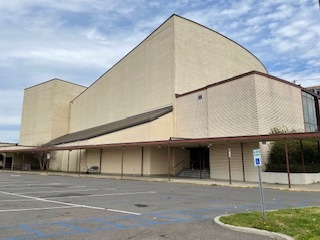
    <title type="html"><![CDATA[Hey, Hey, Heymann Performing Arts Center: Hey man, Lafayette&#039;s first municipal auditorium turned into a theater!]]></title>
    <summary type="html"><![CDATA[<p><strong><em>The deeper insight into the Heymann family's legacy with the performing arts with their auditorium turned theater.</em></strong></p><img src="https://mail.acadianahistorical.org/files/fullsize/26442e30e46f17f01ca9a3cd1213d749.jpg" alt="Side view of theater" /><br/><p>Who knew one of Lafayette's most famous figures patronized the arts? The Heymann Performing Arts Center was originally Lafayette’s first municipal auditorium designed by architect A. Hays Town in 1957. Town built many of the most famous buildings in Lafayette and the Performing Arts Center combines his speciality for French Creole architecture with a more functional modernist style. </p><p>It was completed in 1960 and people were excited for new cultural events for the growing city. The Daily Advertiser played on the new experience for Lafayette’s citizens as they mentioned this, performing arts, as the American way to create a better society. The center hosted Broadway shows and it brought major cities’ acclaim to Lafayette. Since then, we see performances of ballets, concerts, and other celebrations. A parking lot hides the true beauty of the theater which boasts a professional stage and extensive setup for Lafayette to showcase its art prowess in dance, musicals, and plays. </p><p>The Heymann family has prided itself on giving back to the city’s community in the downtown area in oil and business acclaim, medical expertise, and the performing arts. The Heymann Performing Arts Center still faces challenges as many speculate on its future with theories on selling the theater. </p><p><em><strong><a href="https://mail.acadianahistorical.org/items/show/111">For more (including 3 images&#32;&amp;&#32;1 audio file) view the original article</a></strong></em></p>]]></summary>
    <published>2022-03-03T22:40:52+00:00</published>
    <updated>2026-03-04T22:42:47+00:00</updated>
    <link rel="alternate" type="text/html" href="https://mail.acadianahistorical.org/items/show/111"/>
    <id>https://mail.acadianahistorical.org/items/show/111</id>
    <author>
      <name>Thanh Vo</name>
    </author>
  </entry>
  <entry>
    <title type="html"><![CDATA[Abbey Players Play On Your Heartstrings: Abbey Players PLAYED their Part]]></title>
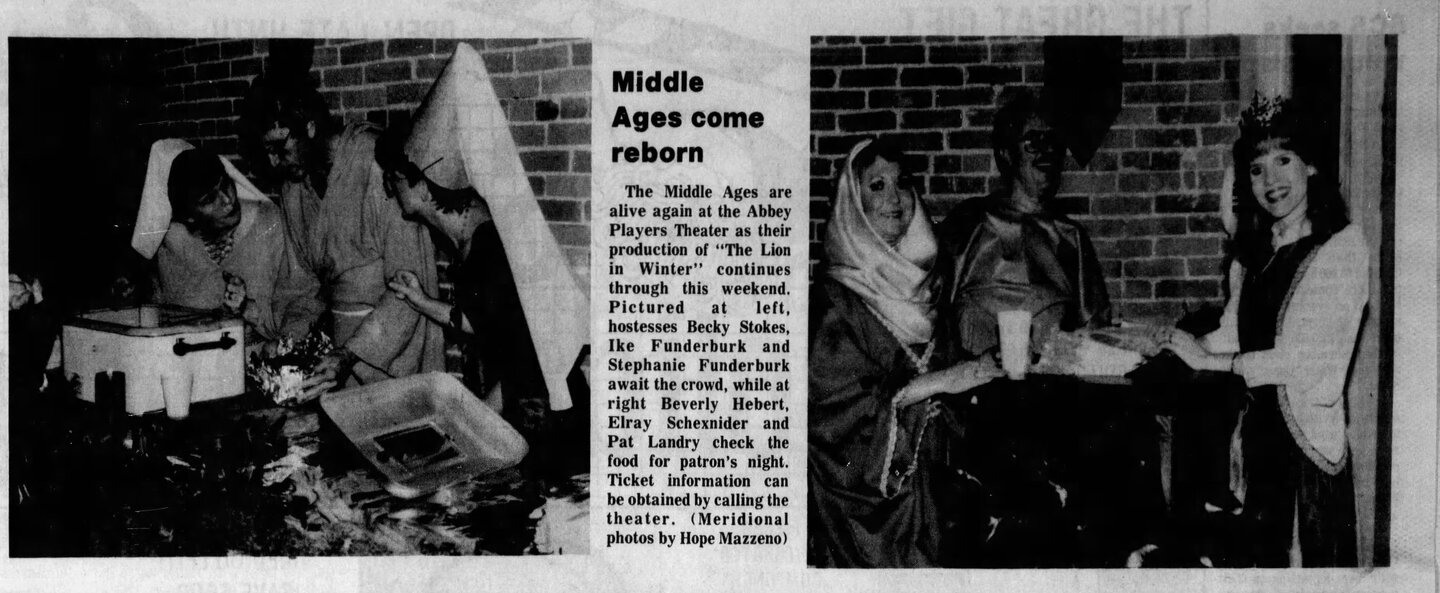
    <summary type="html"><![CDATA[<p><strong><em>A story about creatives who had very little funds yet still provided a performing arts community in Abbeville with a small secret for their theater.</em></strong></p><img src="https://mail.acadianahistorical.org/files/fullsize/ca01392eaea93f556e0ded3015291a5b.jpg" alt="Abbeville Meridional newspaper clipping (15 Dec 1983)" /><br/><p>Can a group of talented friends provide entertainment to the community? The story of the Abbey Players Theater begins with their first actors highly interested in the performing arts and so Ted and Lynette Winter Cessac and their partner, Dave Pierce formed the Abbey Players. The Abbey Players themselves were a non-profit acting group in 1976 moving around town in Abbeville performing plays like a standard troupe. Their local newspaper captured the heart of their performances and the Abbeville crowd loved the well-done performances each time. It showed how a ragtag team of performers could start something by continuing to practice small plays over and over. </p><p>The group rented many locations but they desired a stable venue rather than schools, banks, and small stages. </p><p>They featured in many instances for their local newspaper for outstanding performances and eventually placed an advertisement in November of 1980 for a more permanent location. They settled on a lumber mill, the Reaux Lumber Co., which was a saloom in the early 1900s and their public stage was set as they continued to perform for the city. They completely renovated the old warehouse with a stage, backstage, and fitting room as well as installing lights fixtures for their upcoming plays of “the Rainmaker”, “Cat on a Hot Tin Room”, and “The Man who Came to Dinner”. </p><p>The theater served hors d'oeuvres and champagne which became such a regular occurrence that it was cemented into their calling card as Patrons’ Night. The waiting area has multiple chairs and tables for a comfortable night out with friends to catch a lovely play. A little known fact about their current location is supposedly haunted and paranormal investigators visited the location where their investigation yielded sounds from a little ghost girl.</p><p><em><strong><a href="https://mail.acadianahistorical.org/items/show/109">For more (including 13 images&#32;&amp;&#32;1 audio file) view the original article</a></strong></em></p>]]></summary>
    <published>2022-03-03T22:35:11+00:00</published>
    <updated>2026-03-04T22:42:47+00:00</updated>
    <link rel="alternate" type="text/html" href="https://mail.acadianahistorical.org/items/show/109"/>
    <id>https://mail.acadianahistorical.org/items/show/109</id>
    <author>
      <name>Thanh Vo</name>
    </author>
  </entry>
  <entry>
    <title type="html"><![CDATA[Hurricanes Batter Cameron Parish Cemeteries: Little Chenier Attempts to Defy the Storms]]></title>
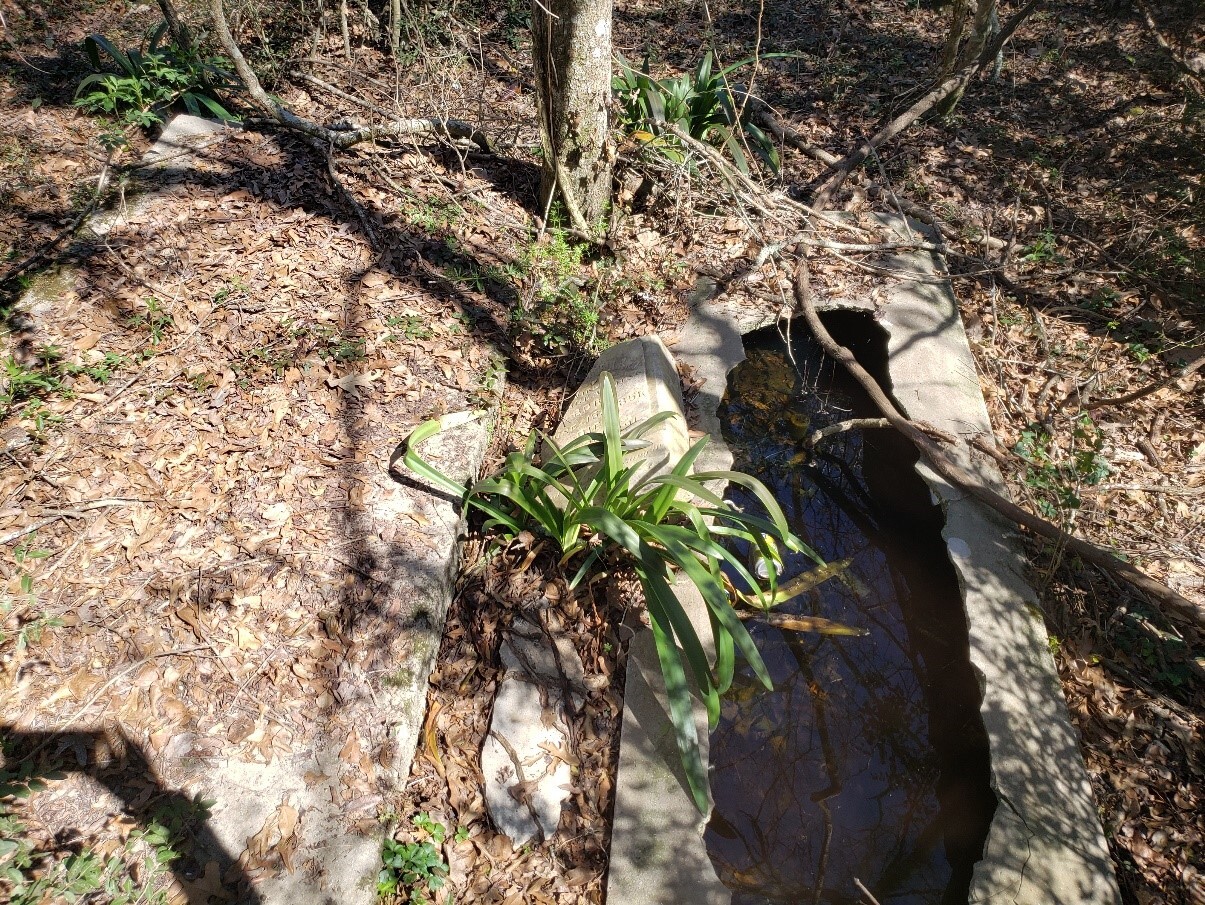
    <summary type="html"><![CDATA[<img src="https://mail.acadianahistorical.org/files/fullsize/265ee6f94a20375b82a024271802568c.jpg" alt="Overview of Little Chenier" /><br/><p>One of the lost and forgotten cemeteries is Little Chenier Cemetery in Creole, Cameron Parish. Located on Big Burn Road off the main Little Chenier Road, the cemetery is small but in an easily accessed clearing. The area is known for hunting camps and is easily evident with the large pile of bird carcasses on the opposite side of the road. Past hurricanes have damaged the area, and Little Chenier is no exception. A metal fence at one point marked the cemetery boundary, but now only a few posts and the gate remain.</p><p>The cemetery does not look cared for, although some of the headstones look as though they were replaced recently. Two headstones are marked with “Smith Woodard Lake Charles LA.” Upon further research, I spoke with the owner of the now Bourque Smith Woodard Memorials, and for over half a century, the business has helped clean up hurricane-hit cemeteries along the Gulf Coast. Since FEMA started providing financial assistance to hurricane hit cemeteries, other companies have jumped on board and even specialize in cemetery disruption consulting. </p><p>Several headstones are handwritten, one is curiously outside the original fence, and one has famous relations. Victoria Broussard lived to be 101 years old and had a very famous second cousin, Abraham Lincoln. Although Victoria never met her famous cousin, it is still amazing how Lincoln’s family ties travel to south Louisiana; disturbing to think that these famous associations might never be known because of a lack of upkeep. Think about how many have already been lost.</p><p><em><strong><a href="https://mail.acadianahistorical.org/items/show/177">For more (including 12 images&#32;&amp;&#32;1 audio file) view the original article</a></strong></em></p>]]></summary>
    <published>2022-05-06T07:56:06+00:00</published>
    <updated>2026-03-04T22:42:48+00:00</updated>
    <link rel="alternate" type="text/html" href="https://mail.acadianahistorical.org/items/show/177"/>
    <id>https://mail.acadianahistorical.org/items/show/177</id>
    <author>
      <name>Tanya Greene</name>
    </author>
  </entry>
  <entry>
    <title type="html"><![CDATA[Southdown Cemetery History Loss: Where are they now?]]></title>
    <summary type="html"><![CDATA[<img src="https://mail.acadianahistorical.org/files/fullsize/6b486fca70b6ad533b0e62b6c008810b.jpg" alt="Dawn to Dusk" /><br/><p>About three and a half miles from the Southdown Plantation house in Houma, Terrebonne Parish, lies a cemetery of the same name. Southdown Cemetery is still used today however, the history is being forgotten and the grounds are used in a nefarious manner. Many of Southdown’s slaves were buried on the grounds in and around the cemetery however their markers, if any, are long gone. </p><p>Newspaper articles published in the past two decades reveal dark instances of historical coverup, however, further inquiry has led to roadblocks. A company from New Orleans was hired over twenty years ago to survey the cemetery’s surrounding property to build a new parish library. The survey revealed possible pockets left in the ground. The final conclusions were that the areas were mass graves of slaves who died from the yellow fever epidemic over 150 years ago. Terrebonne Parish government was not able to return my inquires into the subject therefore more research into the matter is needed.</p><p>The cemetery itself is open to the public from dawn to dusk, however, homeless people appear to stay through the night hours. Back in the far east corner behind some trees, a tent, cushions, and scattered books used for a fire, can be found. Many of the headstones are taken care of and whitewashed. Two areas are specifically for babies and young children. Many gravesites have multiple tombs buried on top of one another. The history of Southdown Cemetery points to an enslaved cemetery that has been passed down to their descendants. The grounds are an open-air Louisiana slave family history museum that should be remembered instead of forgotten.</p><p><em><strong><a href="https://mail.acadianahistorical.org/items/show/171">For more (including 14 images) view the original article</a></strong></em></p>]]></summary>
    <published>2022-05-05T13:52:50+00:00</published>
    <updated>2026-03-04T22:42:48+00:00</updated>
    <link rel="alternate" type="text/html" href="https://mail.acadianahistorical.org/items/show/171"/>
    <id>https://mail.acadianahistorical.org/items/show/171</id>
    <author>
      <name>Tanya Greene</name>
    </author>
  </entry>
  <entry>
    <title type="html"><![CDATA[Mount Zion Riverlake Cemetery: &quot;To Lie With Those Who Have No Mark&quot;]]></title>
    <summary type="html"><![CDATA[<img src="https://mail.acadianahistorical.org/files/fullsize/9b577bfc16ed6e6b91b7e161ce7dcd83.jpg" alt="To Lie With Those Who Have No Mark" /><br/><p>One of the lost and forgotten cemeteries is maybe not so lost, but unfortunately becoming forgotten. The cemetery is famous but a search on Google maps reveals a simple word to describe this place: Graveyard. Upon further inspection, however, an entire world opens up. The cemetery is located in the small community of Oscar, Louisiana in Point Coupee Parish. Traveling down Louisiana Highway One, the road to the cemetery is barely visible. Once on the small, dirt road, it appears uninviting and you expect to see “No Trespassing” signs. The road is surrounded by sugarcane fields and about one mile down, a small tree covered area appears to the left. Inching closer, you can see the reflective white of the stones appearing through the trees. The cemetery appears taken care of and quite beautiful. Large oak trees shade most of the grounds and each are surrounded by beautiful, thick cast iron plants. Many of the sites look old and worn but several appear to have received a recent facelift. Some new, marble headstones sit next to the originals that were concrete and handwritten. The headstones speak of their owners as mothers, fathers, babies, soldiers, sports fans, and many other individualities. A particularly interesting headstone marks that of L. J. Johnson who died in 1924. The carved symbol above his name represents the Mosaic Templars of America (MTA). The MTA was founded in 1883 in Arkansas by two former slaves. For African Americans experiencing the Jim Crow South, times were tough and the MTA provided illness, death, and burial insurance to its members. The organization adopted its name from the Biblical story of Moses emancipating the Hebrew slaves. The local chapter name, number, and location are located at the bottom of the headstone.</p><p>One invisible disclosure within the cemetery of particular importance, is that the people buried there were either slaves or the descendants of slaves from Riverlake Plantation. The same house, built 200 years ago, still stands overlooking the cemetery. After emancipation, many former slaves stayed and worked on the grounds. Up until the 1980s, descendants still lived in the old slave quarters. They lived, they loved, they went to school, went to church, and still worked and lived on the property. </p><p>The cemetery’s most famous resident is that of Ernest J. Gaines, Louisiana’s own famous author who based most of his story’s setting and premise on Riverlake Plantation. Gaines is surrounded by many of his family and friends. His biggest fear was that the cemetery would disappear amongst the encroaching agriculture. He wanted to be buried there in hopes that his fame would draw attention to the place and those he was surrounded by were never forgotten. In the 1990s, Gaines and his wife created the Mount Zion Riverlake Cemetery Association in order to care for the cemetery. The association along with the University of Louisiana at Lafayette’s Ernest J. Gaines Center hosted and successfully carried out a cleanup of the cemetery every year. Unfortunately, due to Gaines’ passing, other association board member deaths, and COVID-19, the last cleanup occurred in October of 2019 and there has been no mention of new cleanup dates. </p><p>Mount Zion Riverlake Cemetery is hugely important to Acadiana history. Instead of being labeled generically, it should be remembered as an open-air museum of African American slaves and their descendants who lived and left an indelible mark that should never be forgotten.</p><p><em><strong><a href="https://mail.acadianahistorical.org/items/show/170">For more (including 22 images&#32;&amp;&#32;1 audio file) view the original article</a></strong></em></p>]]></summary>
    <published>2022-05-05T08:12:28+00:00</published>
    <updated>2026-03-04T22:42:48+00:00</updated>
    <link rel="alternate" type="text/html" href="https://mail.acadianahistorical.org/items/show/170"/>
    <id>https://mail.acadianahistorical.org/items/show/170</id>
    <author>
      <name>Tanya Greene</name>
    </author>
  </entry>
  <entry>
    <title type="html"><![CDATA[Marceaux Cemetery: Becoming the Norm]]></title>
    <summary type="html"><![CDATA[<img src="https://mail.acadianahistorical.org/files/fullsize/9bd9ec43cba913a6040c45d61d08465c.jpg" alt="[Untitled]" /><br/><p>Marceaux Cemetery, located between Kaplan and Wright in Vermilion Parish, has sadly become very lost and very forgotten. The cemetery is located on private property, but after gaining permission from the Matthews Family, a quick climb over the railed gate, curious looks from a dozen or so cows, and a small beaten path lead you to a large oak tree that shades the grounds. After dodging massive amounts of cow patties, another quick hop over the cemetery's fence allows full access to the grounds. Marceaux is so overgrown and indiscernible that all but two names are barely readable among the six featured cemeteries within the tour. There are no less than thirteen souls buried within the metal fence; however, there could be more. Most of the markers are broken, missing, or worn completely off. The two marked headstones have handwritten names, yet, only one contains the birth and death dates.</p><p>The two marked names cannot be located upon further research into local newspapers. There is no mention of the birth or death of the one marker that reads May of 1925 as the date of death. Even today, the area is sparsely populated and has no doubt seen many hurricanes trample the land in the past two centuries. The history points to a small, family locale cemetery, although the cemetery's name is also the same as two other cemeteries in the area. I call the grounds Guidry Cemetery, for it is the only name now left discernable. The grounds are a reminder of what will come to pass for most private, public and municipal cemeteries in Louisiana. </p><p>Unfortunately, the state of the grounds has become the norm instead of the exception. Marceaux Cemetery is why cemeteries must be preserved by volunteer effort and donations if no state or local government can help. Every time a cemetery disappears, a library is lost.</p><p><em><strong><a href="https://mail.acadianahistorical.org/items/show/169">For more (including 13 images) view the original article</a></strong></em></p>]]></summary>
    <published>2022-05-05T06:52:37+00:00</published>
    <updated>2026-03-04T22:42:48+00:00</updated>
    <link rel="alternate" type="text/html" href="https://mail.acadianahistorical.org/items/show/169"/>
    <id>https://mail.acadianahistorical.org/items/show/169</id>
    <author>
      <name>Tanya Greene</name>
    </author>
  </entry>
  <entry>
    <title type="html"><![CDATA[St. Mary Parish Fields Overtaking Cemeteries: Raising Cane Around Midway]]></title>
    <summary type="html"><![CDATA[<img src="https://mail.acadianahistorical.org/files/fullsize/53cde5fb89e45145390582db06f94685.jpg" alt="Steel Crosses Bend to Weather and Time" /><br/><p>One of the forgotten cemeteries is Midway Cemetery located in Franklin, St. Mary Parish. Located right alongside State Route 317, most would miss this small treasure. Midway is little maintained, and the newest burial was conducted in 2011. Noted features are the makeshift crosses in place of headstones. Some simply have initials, others have a cross and what appears to be hanging hooks, along with a marble or concrete headstone. Many of Midway’s inhabitants were local farmers with large families. Nettie Hillard, 79, died in 1971 and left behind eight children, fifty-seven grandchildren, and thirty-nine great-grandchildren. Although Acadiana has strong Catholic roots, Mrs. Hillard and her family were Baptist farmers. Multiple denominations in the early twentieth century in Acadiana had many commonalities to include large families to help on the farms.</p><p>Midway is one of many forgotten cemeteries not properly cared for by religious customs, family, or otherwise. The site’s location shows the history of a farming community of Baptists with Acadian roots. </p><p>Cemeteries like Midway, not situated next to its respective church, are more likely to fall into disrepair. Midway is an open-air museum of Cajun Baptist, farming family history and should not be forgotten.</p><p><em><strong><a href="https://mail.acadianahistorical.org/items/show/140">For more (including 13 images&#32;&amp;&#32;1 audio file) view the original article</a></strong></em></p>]]></summary>
    <published>2022-03-28T01:28:15+00:00</published>
    <updated>2026-03-04T22:42:48+00:00</updated>
    <link rel="alternate" type="text/html" href="https://mail.acadianahistorical.org/items/show/140"/>
    <id>https://mail.acadianahistorical.org/items/show/140</id>
    <author>
      <name>Tanya G. Greene</name>
    </author>
  </entry>
  <entry>
    <title type="html"><![CDATA[Local Ghost Stories Give Hookman Cemetery its Name: Death to the Hookman!]]></title>
    <summary type="html"><![CDATA[<p><strong><em>Hookman Cemetery began as a peaceful journey's end but turned into a lover's lane horror story and finally to forgotten lore.</em></strong></p><img src="https://mail.acadianahistorical.org/files/fullsize/f59b557bdce8bb27a0344f81aed12bf0.jpg" alt="Broken and Abandoned" /><br/><p>An interesting tale arises concerning a lost and forgotten cemetery named Hookman in Rayne, Acadia Parish. Located on a sharp turn off a gravel road known as Ohlenforst, the only access is a small ATV beaten path and through a small clearing. A total of seven graves scatter the grounds although multiple headstones are partially buried and indiscernible. One site, broken open to the elements, is filled with water and trash. The newest headstone, placed in 1934, clearly shows an abandoned cemetery. Although referred to as Hookman Cemetery, the name resulted from a lover’s lane ghost story concerning a man with a hook. Eventually, the name stuck. Local newspaper clippings reveal the latest burial of Lee Anding and referred to the burial site as McClellan (McClelland) Cemetery. The obituary stated Anding died at the Anding homestead and was a farmer who left behind seven adult children. All but one, Charles Robertson, buried in the cemetery is either a McClelland or an Anding. Census records in 1910 indicate that the McClelland and Anding families lived next door to one another. The history points to a small, family locale cemetery not called Hookman Cemetery, but McClelland Cemetery. The grounds are an open-air Acadian farming family history museum that should be remembered instead of forgotten.</p><p><em><strong><a href="https://mail.acadianahistorical.org/items/show/86">For more (including 7 images&#32;&amp;&#32;1 audio file) view the original article</a></strong></em></p>]]></summary>
    <published>2022-02-18T01:30:53+00:00</published>
    <updated>2026-03-04T22:42:47+00:00</updated>
    <link rel="alternate" type="text/html" href="https://mail.acadianahistorical.org/items/show/86"/>
    <id>https://mail.acadianahistorical.org/items/show/86</id>
    <author>
      <name>Tanya G. Greene</name>
    </author>
  </entry>
  <entry>
    <title type="html"><![CDATA[The First Opelousas : Immaculate Conception Catholic Church]]></title>
    <summary type="html"><![CDATA[<p><strong><em>Come learn about how Washington came to be! </em></strong></p><img src="https://mail.acadianahistorical.org/files/fullsize/c7e426789db43c7183e6defff90c1b7d.jpg" alt="Painting of Immaculate Conception" /><br/><p>One could say that Washington, Louisiana was the first Opelousas. This town was a large trading destination during the 18th century. People that resided in this town decided that it would be the “Post of Opelousas.” Priests would travel by boat to host mass and offer the sacraments to the community. This began in 1756 and many priests would come and go for 20 years without a church. </p><p>The Spanish completed the first church in 1776, and named it the “Parochial Church of the Immaculate Conception of the Post of Opelousas” (Our Rich History). Eventually, this church was moved to the town of Opelousas. In 1851, the people of Washington decided to build a chapel to worship in. In 1853, one-third of the Washington population died from a yellow fever outbreak. It took the city two years to become free of this disease, and in 1855, priests started visiting and administering the sacrament again. </p><p>The congregation grew and a larger church was needed. In 1862, a new church was added and named, The Church of the Immaculate Conception. Five years later, yellow fever struck again and claimed the lives of many, including some priests. Father Claude Jaquet, was appointed to be the priest in 1867. There was not a rectory so he lived in the sacristy—which is located inside the church where priests keep their vestments. Recently, this church burned to the ground, and they were able to safely retrieve the tabernacle. There were enough pictures to closely replicate the original building, and the new church is just as extravagant.</p><p><em><strong><a href="https://mail.acadianahistorical.org/items/show/54">For more (including 4 images) view the original article</a></strong></em></p>]]></summary>
    <published>2018-04-26T17:50:56+00:00</published>
    <updated>2026-03-04T22:42:47+00:00</updated>
    <link rel="alternate" type="text/html" href="https://mail.acadianahistorical.org/items/show/54"/>
    <id>https://mail.acadianahistorical.org/items/show/54</id>
    <author>
      <name>Sophia Verret</name>
    </author>
  </entry>
  <entry>
    <title type="html"><![CDATA[An Acadian Home: St. Martin de Tours Catholic Church ]]></title>
    <summary type="html"><![CDATA[<p><strong><em>Learn about the unique church right on the Bayou Teche! </em></strong></p><img src="https://mail.acadianahistorical.org/files/fullsize/e1003794e8a8f82d77bc2fe91eebfc7e.jpg" alt="St. Martin de Tours " /><br/><p>Saint Martin de Tours Catholic Church was founded by the Acadian exiles in 1765 when they arrived in St. Martinville. This church was officially blessed as a new church in the Archdiocese of New Orleans. The number of parishioners that this church had, became too overwhelming for the small church to handle. There was a petition to start building a bigger church and it was granted in 1820, two years after the Diocese of Lafayette was formed. This new church was not finished until 1844 but they finally had enough space for all of the parishioners. </p><p>If you go inside the church you see many beautiful aspects that you would not normally see in churches anymore. The raised pulpit was one of the unique characteristics that brought people to the church. Priests used raised pulpits back in the day so the congregation could hear the readings and homily. It ensured that the priest’s voice would carry over the crowd to the back of the church. We have to remember that this was a time before technology like microphones was even in somebody’s thought process. The pulpit is still used today because they want to keep their history alive. 200 years after the church was created, St. Martin de Tours had its first American-born priest, Fr. Kenneth R. Morvant. He was also the first priest of Acadian descent. Every priest after him has been of Acadian descent and that has helped keep the culture alive (More of Our Church History). </p><p><em><strong><a href="https://mail.acadianahistorical.org/items/show/46">For more (including 3 images&#32;&amp;&#32;1 audio file) view the original article</a></strong></em></p>]]></summary>
    <published>2018-04-26T15:45:38+00:00</published>
    <updated>2026-03-04T22:42:46+00:00</updated>
    <link rel="alternate" type="text/html" href="https://mail.acadianahistorical.org/items/show/46"/>
    <id>https://mail.acadianahistorical.org/items/show/46</id>
    <author>
      <name>Sophia Verret</name>
    </author>
  </entry>
  <entry>
    <title type="html"><![CDATA[Lepers in Louisiana : Sacred Heart Chapel in Carville ]]></title>
    <summary type="html"><![CDATA[<p><strong><em>Learn about the Miracle at Carville, the cure for leprosy! </em></strong></p><img src="https://mail.acadianahistorical.org/files/fullsize/e4e20db588f923c1332b0ff31b2ee697.jpg" alt="Saying mass in Sacred Heart Chapel " /><br/><p>When someone thinks about Louisiana, Hansen’s Disease, or the cure for it, is not the first thing that comes to mind. It turns out, back in the day, there was a leprosarium right down the street from Baton Rouge in Carville, Louisiana. In this leprosarium was the Sacred Heart Chapel that was built for the lepers to go to mass on a regular basis. It was run by the Daughters of Charity which was started by Vincent de Paul in France. The Daughters of Charity wanted what was best for their patients so they worked many long days and long nights to find a cure for leprosy. Many years later, the leprosarium in Carville was gaining a large amount national attention. </p><p>All of the work that the Daughters of Charity did was finally paying off. Their work helped discover the cure for leprosy in the 1940s. Many years after the cure was found, different leprosy clinics were opening around the state of Louisiana and the rest of the country. The Daughters of Charity remained in Carville until the early 2000s. The Sacred Heart Chapel was built in 1933 and is still up and running today. This chapel was built in “Mission Revival style with Romanesque details” (A Brief History of Sacred Heart Chapel). When it was built, this is where the Daughters celebrated mass everyday with the patients. Religion was an important thing to everyone involved during the 100 years the Daughters of Charity were in Carville. </p><p><em><strong><a href="https://mail.acadianahistorical.org/items/show/39">For more (including 3 images) view the original article</a></strong></em></p>]]></summary>
    <published>2018-04-26T15:38:50+00:00</published>
    <updated>2026-03-04T22:42:46+00:00</updated>
    <link rel="alternate" type="text/html" href="https://mail.acadianahistorical.org/items/show/39"/>
    <id>https://mail.acadianahistorical.org/items/show/39</id>
    <author>
      <name>Sophia Verret</name>
    </author>
  </entry>
  <entry>
    <title type="html"><![CDATA[From the Ground Up: Exploring Cathedral : Cathedral of Saint John the Evangelist ]]></title>
    <summary type="html"><![CDATA[<p><strong><em>Learn about the heart of Lafayette Parish! </em></strong></p><img src="https://mail.acadianahistorical.org/files/fullsize/3b3bc78b2fabe9e0e5fc5c1dc29d3083.jpg" alt="Cathedral of St. John 1822-1867" /><br/><p>The Cathedral of Saint John the Evangelist has been in existence for one hundred and ninety-seven years, and during this time, Cathedral has seen its ups and downs. In the early 1800s, Jean Mouton Sr. brought his friend, Father Barrière, to say mass for his family in his home. Jean Mouton Sr. then decided to donate land for the first church of Vermilionville to be built on because of the popularity of these masses. Fr. Barrière was assigned to be the first pastor of the church (The Cathedral of Saint John the Evangelist, 4). The people of Vermilionville loved him and they were sad to see him go.</p><p>Father Foltier took over just before the Civil War. During the Civil War, he tried to protect the church as best as he could but there was no stopping the Union soldiers from setting up camp on the church grounds. The church was slowly being destroyed by the Union soldiers. Many priests had come and gone, but the next one to do an extraordinary amount of work for the parish was Father Forge. He beautified the old church, but his work was ruined by a hurricane. Fr. Teurlings made plans with a Dutch architect to build an extravagant church. These plans would take $200,000 to construct (The Cathedral of Saint John the Evangelist, 20). This was not feasible so Fr. Teurlings met with another architect to scale back the original plan. The church was finished in 1916.</p><p><em><strong><a href="https://mail.acadianahistorical.org/items/show/23">For more (including 4 images) view the original article</a></strong></em></p>]]></summary>
    <published>2018-04-26T15:07:26+00:00</published>
    <updated>2026-03-04T22:42:45+00:00</updated>
    <link rel="alternate" type="text/html" href="https://mail.acadianahistorical.org/items/show/23"/>
    <id>https://mail.acadianahistorical.org/items/show/23</id>
    <author>
      <name>Sophia Verret</name>
    </author>
  </entry>
  <entry>
    <title type="html"><![CDATA[Willkommen in Roberts Cove: St. Leo IV Catholic Church]]></title>
    <summary type="html"><![CDATA[<p><strong><em>Learn how Germans found their way to Roberts Cove. </em></strong></p><img src="https://mail.acadianahistorical.org/files/fullsize/11ea7807778680a37e2363c417cdbed1.jpg" alt="St. Leo IV 1900s " /><br/><p>In the words of Fr. Keith L Vincent, a previous pastor of St. Leo IV, “Hidden treasure lies just three miles from busy Interstate-10…Signs 500 feet before and after the church say ‘Roberts Cove,’ but this is all…” (Kondert, ix). The Germans have been tucked away in French Louisiana, but why? For the same reason the Acadians were exiled from Nova Scotia, their religion (Kondert, xi). A priest, Fr. Peter Leonard Thevis, was the first to come to Louisiana from Germany in 1867. It took him ten years to find a place of his own, but when he did he sent for his family to come by ship from Germany. A Benedictine missionary helped to build the first church. He bought land in Robert’s Cove for a monastery, but a church was built instead. </p><p>The church, St. Leo IV, started many traditions that still happen today. One of these traditions happens on the Feast of St. Nicholas, which is December 6th, every year. Families a part of the Roberts Cove community will leave their shoes out on their front porch. St. Nicholas and Santa Claus will come visit their house and leave little candies for them in their shoes. There are events throughout the year that the Roberts Cove community will have to keep their traditions and culture alive. The church will be the center of Roberts Cove for many years to come.</p><p><em><strong><a href="https://mail.acadianahistorical.org/items/show/19">For more (including 3 images&#32;&amp;&#32;1 audio file) view the original article</a></strong></em></p>]]></summary>
    <published>2018-04-26T14:59:11+00:00</published>
    <updated>2026-03-04T22:42:45+00:00</updated>
    <link rel="alternate" type="text/html" href="https://mail.acadianahistorical.org/items/show/19"/>
    <id>https://mail.acadianahistorical.org/items/show/19</id>
    <author>
      <name>Sophia Verret</name>
    </author>
  </entry>
</feed>