<?xml version="1.0" encoding="UTF-8"?>
<feed xmlns="http://www.w3.org/2005/Atom">
  <title type="text">Acadiana Historical</title>
  <updated>2026-05-07T23:33:41+00:00</updated>
  <generator uri="http://framework.zend.com" version="1.12.20">Zend_Feed_Writer</generator>
  <link rel="alternate" type="text/html" href="https://mail.acadianahistorical.org/"/>
  <link rel="self" type="application/atom+xml" href="https://mail.acadianahistorical.org/items/browse?output=rss2"/>
  <id>https://mail.acadianahistorical.org/</id>
  <author>
    <name>Acadiana Historical</name>
    <uri>https://mail.acadianahistorical.org</uri>
  </author>
  <link rel="hub" href="https://pubsubhubbub.appspot.com/"/>
  <entry>
    <title type="html"><![CDATA[Healing with Prayer <br />
: Traiteur&#039;s]]></title>
    <summary type="html"><![CDATA[<img src="https://mail.acadianahistorical.org/files/fullsize/db877b84e09bf3071bb4ce8a9e9f5e75.jpg" alt="Becca Begnaud " /><br/><p>Traiteur, or faith healer, uses a technique known as “treating,” which is a prayer-based method used to fight illness or injury (Turner-Neal, 2016). “For centuries countless traditional healing techniques have been passed down to each new generation, before dwindling down to the rare mention of traditional medicine in present-day America (Ponseti, 2017).” To be a traiteur specifically, one in the family has to past it down to you. </p><p>Becca Begnaud is one of the very few Traiteurs living in Acadiana that people from all over go to visit. She became one in 1989 after having cancer and has been practicing ever since (Guidry, 2017)  She explains that there's a different prayer for every condition but it all must be done in person (Turner-Neal, 2016). In order to visit Begnaud, or any other traiteur, you will have to ask around like many did in the past and a great place to start would be Vermilionville (Gremillion, 2015).</p><p>“Opened in 1990, Vermilionville is a living history museum and folklife park that promotes and propagates the cultural resources of the Acadian, Native American, and Creole people – from the time period 1765 to 1890 (Mahoney).” Within this historical museum village is the Healer’s Garden that is filled with all sorts of plants and herbs that are used to make home remedies. Sometimes on the tour there will be a traiteur telling the history of faith healing and if not the main staff can tell you a thing or two on where to find them.</p><p><em><strong><a href="https://mail.acadianahistorical.org/items/show/44">For more (including 4 images) view the original article</a></strong></em></p>]]></summary>
    <published>2018-04-26T15:43:27+00:00</published>
    <updated>2026-03-04T22:42:46+00:00</updated>
    <link rel="alternate" type="text/html" href="https://mail.acadianahistorical.org/items/show/44"/>
    <id>https://mail.acadianahistorical.org/items/show/44</id>
    <author>
      <name>Alyssa Dottery</name>
    </author>
  </entry>
  <entry>
    <title type="html"><![CDATA[Home of the Hansen&#039;s Disease : Leprosy House ]]></title>
    <summary type="html"><![CDATA[<img src="https://mail.acadianahistorical.org/files/fullsize/5463df0235e1a4693cacc47047428b34.jpg" alt="Inside " /><br/><p>The National Hansen’s Disease Museum in Carville, a small town in Plaquemine, is like no other because it seeks to inform their viewers of a tragic illness which resulted in a quarantine of the people who suffered from it. This museum was once the home to many who retained the Hansen’s disease, also known as Leprosy (Laleego, 2015). “Leprosy is an infectious disease that causes severe, disfiguring skin sores and nerve damage in the arms, legs, and skin areas around the body (Gardner, 2017). Though the patience were housed for free, it wasn’t necessarily for their benefit but for others considering that the disease is contagious. </p><p>“In 1905, the state of Louisiana purchased the property, and the estate became the first home in the United States for leprosy patients  (Christiansen, 2018).” By 1941, a doctor by the name of Dr. Guy Faget discovered sulfone which helped with healing the disease, and later updated drug treatments revealed that the house and the quarantine were no longer necessary (Christiansen, 2018). Once all the patients left The National Hansen’s Disease Museum was created and opened in 1999 (Christiansen, 2018). On the tour of the museum you’ll learn more about it’s history so if you are ever in the mood to grow your knowledge on the disease, patients, and how they lived make a trip to Carville, Louisiana.</p><p><em><strong><a href="https://mail.acadianahistorical.org/items/show/58">For more (including 4 images) view the original article</a></strong></em></p>]]></summary>
    <published>2018-04-30T20:49:58+00:00</published>
    <updated>2026-03-04T22:42:47+00:00</updated>
    <link rel="alternate" type="text/html" href="https://mail.acadianahistorical.org/items/show/58"/>
    <id>https://mail.acadianahistorical.org/items/show/58</id>
    <author>
      <name>Alyssa Dottery</name>
    </author>
  </entry>
  <entry>
    <title type="html"><![CDATA[Who Dare the Hoodoo Lady : Julia Brown ]]></title>
    <summary type="html"><![CDATA[<img src="https://mail.acadianahistorical.org/files/fullsize/77b4eb976751d91aa86f63b451c8bdcd.jpg" alt="[Untitled]" /><br/><p>In Acadiana’s St. John parish, Julia Brown was a Hoodoo priestesses lived in a very small town called Frenier surrounded by Manchac Swamp. “In the town Julia was known for her charms and her curses, as well as for singing eerie songs with her guitar on her porch (Lovejoy).” People went to her often but started to take her for granted, and after a while they noticed Julia’s change of change of character. “She started to scare the ungrateful locals by predicting when terrible things were about to happen to them (Matthews).” She also knew that her death was near and so she spent her last days on her porch singing, “One day I’m gonna die, and I’m gonna take all of you with me (Scott).”  Soon everyone found out what she meant.</p><p>On September 29, 1915 Julia died and the town gathered together to bury her. As they were putting her casket into the ground heavy hurricane rains interrupted forcing them back into their homes. It wiped out the entire town and proved that Julia’s ranting was all truth as there were no survivors. Today the grounds of Frenier is a mass grave hunted by Julia brown. 						</p><p><em><strong><a href="https://mail.acadianahistorical.org/items/show/59">For more (including 4 images) view the original article</a></strong></em></p>]]></summary>
    <published>2018-04-30T21:16:02+00:00</published>
    <updated>2026-03-04T22:42:47+00:00</updated>
    <link rel="alternate" type="text/html" href="https://mail.acadianahistorical.org/items/show/59"/>
    <id>https://mail.acadianahistorical.org/items/show/59</id>
    <author>
      <name>Alyssa Dottery</name>
    </author>
  </entry>
  <entry>
    <title type="html"><![CDATA[The Man Wolf : Rougarou]]></title>
    <summary type="html"><![CDATA[<img src="https://mail.acadianahistorical.org/files/fullsize/903be85d5357eb50db8cd9a4ec44e3fb.jpg" alt="Manchac Swamp" /><br/><p>In Manchac Swamp, in Louisiana St. John parish, the Rougarou is a popular folklore similar to bigfoot. However, it’s a man who shapeshifts and looks tall and animal like. “It is most often described as having a human body with the head of a wolf or dog, with glowing red eyes and razor sharp teeth (Nadel).”  It’s birth place is France and around the time of the Middle Ages its story was used to keep curious children from playing around in the woods. Though, over time the story changed when the french traveled to southwest Louisiana.</p><p>Darcia Naydel said in her article The Rougarou: Louisiana's Cajun Werewolf that some viewed the idea of Rougarou as a genetic disorder that is turned on by a trigger. After the human body enlarges and crave fresh raw meat which is scary because someone you walk by or live next to everyday could be this beast. Many tourist visit Manchac Swamp and report that they would often hear a growl or howl in the distance. Since wolves are not common in the swamp many come conclude that it is the Rougarou lurking and roaming around the area. </p><p><em><strong><a href="https://mail.acadianahistorical.org/items/show/60">For more (including 4 images) view the original article</a></strong></em></p>]]></summary>
    <published>2018-04-30T21:20:48+00:00</published>
    <updated>2026-03-04T22:42:47+00:00</updated>
    <link rel="alternate" type="text/html" href="https://mail.acadianahistorical.org/items/show/60"/>
    <id>https://mail.acadianahistorical.org/items/show/60</id>
    <author>
      <name>Alyssa Dottery</name>
    </author>
  </entry>
  <entry>
    <title type="html"><![CDATA[Central Louisiana State Hospital]]></title>
    <summary type="html"><![CDATA[<p><strong><em>Have you ever wondered what happens to tortures souls of Acadiana after their bodies have withered away?</em></strong></p><img src="https://mail.acadianahistorical.org/files/fullsize/34a6fe94b52e5cf96185b473427777de.jpg" alt="Central LA State Hospital " /><br/><p>In Pineville, Louisiana, you will find one of the most predictable places to be haunted—A mental institution. Central LA State Hospital is a psychiatric hospital built in 1906 and surprisingly is still under operation. It housed THOUSANDS of patients at a time and it has just as many buried among its grounds. Since this hospital was under operation years before the idea of the hearse, most of the first patients’ lifeless bodies were transported from their deathbed to the gravesite via wheelbarrow, until modern practices were adapted. The spirits of many loved ones that passed on while residing here must have been tortured souls who seem to have unfinished business on Earth. There have been numerous reports of staff members hearing doors slamming, despite all the doors already being secured moments prior. Chairs have mysteriously flipped over after being seen right-side-up few moments prior and no one has been in or out the room. Investigators have witnessed a loud shatter that seemed like glass or something hard and hollow had been thrown to the floor. They discovered that a piece of the floor had been broken up into pieces, as if the tile “exploded.” Nothing looked broken when they first searched the building and it seemed freshly shattered, and they were all unable to identify how it broke. The spirits of Central Louisiana State Hospital remain active today and certain sites of its location is still open for touring, so feel free to give it a look and fulfill your suspense!</p><p><em><strong><a href="https://mail.acadianahistorical.org/items/show/12">For more (including 3 images) view the original article</a></strong></em></p>]]></summary>
    <published>2018-04-26T14:50:01+00:00</published>
    <updated>2026-03-04T22:42:45+00:00</updated>
    <link rel="alternate" type="text/html" href="https://mail.acadianahistorical.org/items/show/12"/>
    <id>https://mail.acadianahistorical.org/items/show/12</id>
    <author>
      <name>Amber Delahoussaye</name>
    </author>
  </entry>
  <entry>
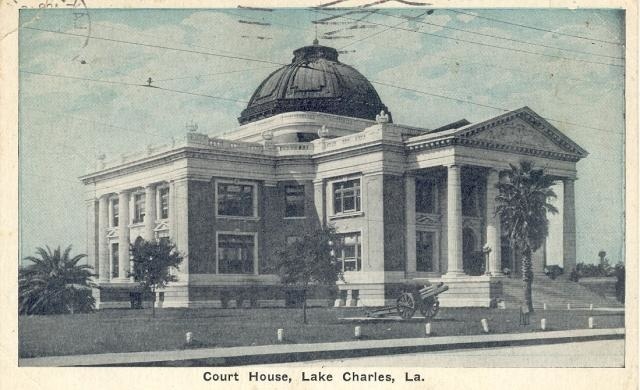
    <title type="html"><![CDATA[Calcasieu Courthouse]]></title>
    <summary type="html"><![CDATA[<p><strong><em>Perhaps Toni Jo Henry lurks the halls of the Calcasieu Courthouse.</em></strong></p><img src="https://mail.acadianahistorical.org/files/fullsize/3b4ff5f658f7f2390d7770c09ea016e9.jpg" alt="Calcasieu Courthouse " /><br/><p>In the beautiful city of Lake Charles, lies the Calcasieu Courthouse. To any tourist passing by, it is just a regular court. But, when the history of this noteworthy monument is applied, you will understand the peculiarity of it. </p><p>Annie Beatrice McQuiston, more infamously known as Toni Jo Henry, was a woman of this area who had a rough life that left her bitter and vengeful. She lost her mother at a young age and fell into the life drugs, sex work, and crime. That is, until she fell in love with a man by the name of Cowboy. What she didn’t know is before they were married, Cowboy had killed a cop and was running from being sentenced to 50 years in jail. Toni Jo teamed up with a homeless man named Arkie to break him out of prison in Texas. They brutally tortured and killed a car salesman, and fled to a dive bar later that night, where they drunkenly boasted of their so called "accomplishment" and others reported them to the police . She went through 3 trials and became the only woman in Louisiana to die in the electric chair. It is now said that her screams, footsteps, and an indistinguishable voice can be heard throughout the building. Also, smells of her perfume and burning hair linger in the air. The building is still open if you wish you meet her yourself.</p><p><em><strong><a href="https://mail.acadianahistorical.org/items/show/64">For more (including 3 images&#32;&amp;&#32;1 video) view the original article</a></strong></em></p>]]></summary>
    <published>2018-05-03T00:17:08+00:00</published>
    <updated>2026-03-04T22:42:47+00:00</updated>
    <link rel="alternate" type="text/html" href="https://mail.acadianahistorical.org/items/show/64"/>
    <id>https://mail.acadianahistorical.org/items/show/64</id>
    <author>
      <name>Amber Delahoussaye</name>
    </author>
  </entry>
  <entry>
    <title type="html"><![CDATA[Rip Van Winkle Gardens]]></title>
    <summary type="html"><![CDATA[<img src="https://mail.acadianahistorical.org/files/fullsize/e6dad6ab51bcd0dbe99447e275368e8a.jpg" alt="[Untitled]" /><br/><p>	Joseph Jefferson, a famed actor for his role in Rip Van Winkle, owned the Rip Van Winkle Gardens property. It was sold to Dr. Don Ray who renovated the gardens to its original beauty. He then sold it to Mike Richard, who is the current owner. The history behind this location is unbelievable! The calculations of where a crew should drill for something were a few inches off, and hit a salt dome which vanished into thin air. The entire estate was under water within a span of three hours! Today, the entire estate can be toured, but the story doesn’t just stop at its history. Along one tour, a girl was spotted in the middle of the hallway, and then she walked straight through the wall and vanished! Since the first discovery, her shyness has faded as she has been reported more frequently over recent years—especially from the maid working there. She explained that one night while alone in the kitchen storage, she tried to summon the girl by talking to her. As soon as the ghost realized she was being recognized, Styrofoam cups began FLYING. Other ghostly incidents have been reported—a slender figure appearing throughout the mansion, television remotes literally flying off of desks, and sounds of a woman crying have been heard with no person to be found. The most paranormal activity occurs where Mr. Jefferson would paint upstairs, which could mean possibly that Jefferson himself is still lives among us! </p><p><em><strong><a href="https://mail.acadianahistorical.org/items/show/65">For more (including 3 images&#32;&amp;&#32;1 video) view the original article</a></strong></em></p>]]></summary>
    <published>2018-05-03T07:58:38+00:00</published>
    <updated>2026-03-04T22:42:47+00:00</updated>
    <link rel="alternate" type="text/html" href="https://mail.acadianahistorical.org/items/show/65"/>
    <id>https://mail.acadianahistorical.org/items/show/65</id>
    <author>
      <name>Amber Delahoussaye</name>
    </author>
  </entry>
  <entry>
    <title type="html"><![CDATA[Egan Hotel and Opera House]]></title>
    <summary type="html"><![CDATA[<img src="https://mail.acadianahistorical.org/files/fullsize/45dc551eb7b2d5b2ef53b11a237108e0.jpg" alt="[Untitled]" /><br/><p>	The Eagan Hotel and The Grand Opera House, located next to each other proudly in Crowley Louisiana, both have some quirks that add character to the Cajun area. Both locations were owned by the same individual and he had never allowed a group inside either building to investigate… sounds suspicious doesn’t it?  Rumors of a boy and his father being murdered here as well as a woman being murdered by her husband have supposedly occurred but are not of proven history. Priests have been brought in to perform blessings of the building. They attempted to place their blessings over the doors of the rooms where deaths have taken place. During the crew’s investigation, several interesting things that happened. In room 302, they had numerous EMF spikes recorded on the EMF meter when the building has no power ran throughout it and there were knocking sounds in room 232. Two crew members reported seeing what looked like the shadow of a man walking into the bathroom on the second floor. Further investigation found no one present. About an hour and a half later, a sudden temperature drop was recorded from 57 to a drastic 39 degree drop. Once the investigators began their mission, they found many instances of indescribable activity, mostly on stage hand right, the exact location where the maintenance worker died from being hanged. Audio analysis provided a very clear EVP of a female saying, "I can hear." How chilling is that?</p><p><em><strong><a href="https://mail.acadianahistorical.org/items/show/66">For more (including 3 images) view the original article</a></strong></em></p>]]></summary>
    <published>2018-05-03T08:52:59+00:00</published>
    <updated>2026-03-04T22:42:47+00:00</updated>
    <link rel="alternate" type="text/html" href="https://mail.acadianahistorical.org/items/show/66"/>
    <id>https://mail.acadianahistorical.org/items/show/66</id>
    <author>
      <name>Amber Delahoussaye</name>
    </author>
  </entry>
  <entry>
    <title type="html"><![CDATA[Mary Jane&#039;s Bridge]]></title>
    <summary type="html"><![CDATA[<img src="https://mail.acadianahistorical.org/files/fullsize/532960ebb5b9503288fe8160bc08697d.jpg" alt="Here is a picture taken from the angle you would see Mary Jane." /><br/><p>      Every town has their fair share of urban legends, and this little town is no exception. In Broussard, Louisiana you can find the infamous Mary Jane’s Bridge. On small road called Bayou Tortue off of Highway 90, this tee-tiny bridge can be located at the narrowing roads past many subdivisions in the area. As predictable as any tale of a bridge could be, a girl by the name of Mary Jane was out on her prom night. Both her and her date stopped the car to get out and stand on the bridge to admire the beauty of the algae-infested muddy waters. Next thing you know, her supposedly well mannered date PUSHED HER off of the bridge, and poor little Mary Jane died upon impact. And of course, as the legend goes, a girl in a white dress haunts the bridge and the surrounding area. I have heard that if you stop on the bridge and turn your car off, she will magically appear in your car window starting at you.</p><p><em><strong><a href="https://mail.acadianahistorical.org/items/show/67">For more (including 3 images) view the original article</a></strong></em></p>]]></summary>
    <published>2018-05-03T10:31:31+00:00</published>
    <updated>2026-03-04T22:42:47+00:00</updated>
    <link rel="alternate" type="text/html" href="https://mail.acadianahistorical.org/items/show/67"/>
    <id>https://mail.acadianahistorical.org/items/show/67</id>
    <author>
      <name>Amber Delahoussaye </name>
    </author>
  </entry>
  <entry>
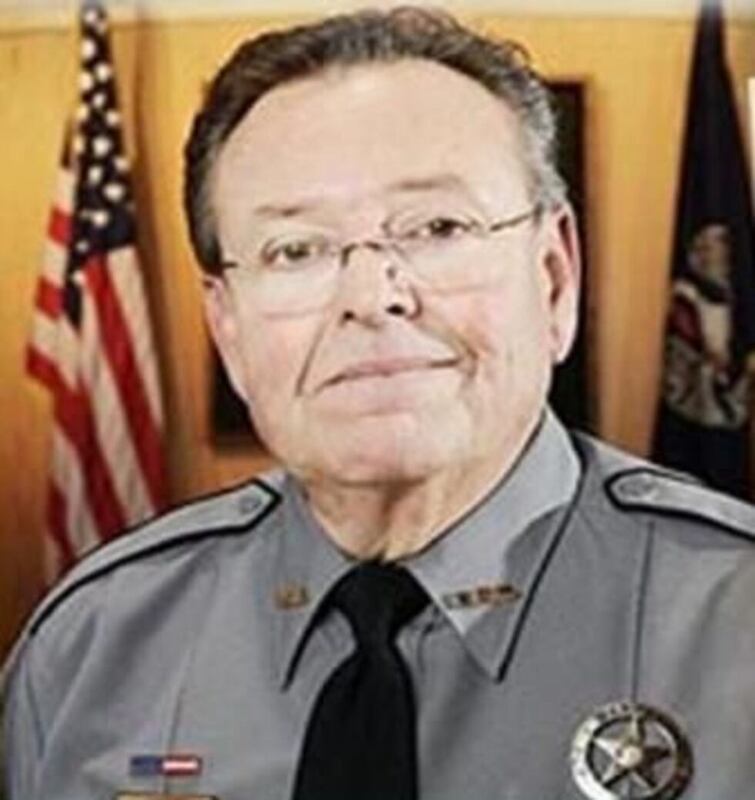
    <title type="html"><![CDATA[Johnny Wyatt Memorial Highway: Honoring a Legacy of Service, Leadership, and Community Impact]]></title>
    <summary type="html"><![CDATA[<p><strong><em>Sweeping across a key corridor of Bossier Parish, the Johnny Wyatt Memorial Highway serves to do more than connect points on a map—it connects a community to the enduring legacy of one of its most dedicated public servants.</em></strong></p><img src="https://mail.acadianahistorical.org/files/fullsize/09746db76edabc91aa5b7b4fc842b603.jpg" alt="Johnny Wyatt professional police Marshal photo" /><br/><p>The Johnny Wyatt Memorial Highway is a fitting testament to Bossier City Marshal Johnny Wyatt, whose life was an embodiment of steadfast public service and leadership. In 2004, this portion of I-220 in Bossier Parish was named, but it is not just a segment of highway—it is an evocative representation of a man who built his community through law enforcement and public service. Wyatt's legacy is embedded not just along the road but in the values that it represents: justice, dedication, and compassion. His work also left a lasting impact on Bossier City, setting a high standard of expectation for Louisiana's public officials. The highway ensures that his work will be remembered for centuries to come.</p><p>Johnny Wyatt's law enforcement career spanned decades and was diverse, characterized by a persistent commitment to the people he protected. Early in life, he committed himself to a public service career, eventually becoming Bossier City Marshal. He is remembered as a fair and humane dispenser of justice, and for his work ethic as he labored tirelessly to make the community safer. Apart from his official capacity, Wyatt was a working member of civic life, engaged in youth work and philanthropic causes for the benefit of the needy. His influence and presence were experienced on a daily basis in the lives of citizens, and he was a revered and well-liked person across every segment of society.</p><p>The legislative action of naming the highway was in itself an intentional and thoughtful gesture which reinforced the importance of Wyatt to the community. House Bill No. 1237 from Louisiana made it legal to mark the highway in his honor as a tribute, a move both parties among lawmakers welcomed. The bill emphasized Wyatt's exemplary service and broad public support behind the action to show how much his leadership weighed. At a time when civic trust in public institutions was undergoing a period of change, Wyatt was a person who had successfully walked the middle ground between the people and law enforcement. The highway designation ensured that his memory would be part of the state's permanent landscape.</p><p>A public dedication ceremony in August 2015 once again celebrated Wyatt's legacy, drawing the attention of the local news and reaffirming the community's affection for him. Family, law enforcement officers, and civic leaders gathered to celebrate his life and what he stood for. The ceremony was not only about his history but about how it was necessary to emulate his path of service and accountability. Speakers lauded his moves to bring modernization to the Marshal's office and transparency to city government, both of which had a profound impact. The ceremony was afternoon of unity and memory, that encouraged the gathering to carry forward Wyatt's mission of civic obligation.</p><p>Wyatt's work spanned beyond the state of Louisiana when he testifying before Congress in 2005 as the first congressman regarding the hurricane aftermath of Hurricane Katrina. His thoughtful and measured comments underscored the critical importance of local law enforcement and charities in responding to disasters, underlining the importance of community-based leadership. He spoke eloquently of the necessity to safeguard the most vulnerable—children, the elderly, and the displaced—during periods of crisis. His visibility at the national level ratified the wise choice to memorialize a state highway in his name and illustrated that his legacy was experienced many miles beyond the city limits. The Johnny Wyatt Memorial Highway therefore exists not merely as a tangible route but as a symbol of enduring service, which reminds every traveler of the power of integrity, empathy, and leadership in public service.</p><p><em><strong><a href="https://mail.acadianahistorical.org/items/show/280">For more (including 5 images, 1 audio file,&#32;&amp;&#32;1 video) view the original article</a></strong></em></p>]]></summary>
    <published>2025-05-11T14:44:43+00:00</published>
    <updated>2026-05-07T23:33:41+00:00</updated>
    <link rel="alternate" type="text/html" href="https://mail.acadianahistorical.org/items/show/280"/>
    <id>https://mail.acadianahistorical.org/items/show/280</id>
    <author>
      <name>Andrea Washington</name>
    </author>
  </entry>
  <entry>
    <title type="html"><![CDATA[An Old Plantation Meant for a Queen <br />
: From Rose Hill Plantation to Queen&#039;s Ranch ]]></title>
    <summary type="html"><![CDATA[<p><strong><em>From an antebellum plantation in the mid nineteenth century to a small family farm in the early twenty-first century, the old Rose Hill Plantation in now the beautiful Queen's Ranch. </em></strong></p><img src="https://mail.acadianahistorical.org/files/fullsize/9d0129ad7c5eb5560609406ac62a93b2.jpg" alt="Run Down Pieces of the Old Sugar Mill " /><br/><p>In 1833 in Vermillion Parish Louisiana, four miles outside of current day Abbeville, LA, War of 1812 veterans, Thomas Fletcher and Brandon McDermott were given 1,000 acres of conjoined land for their help in defeating the British at the Battle of New Orleans. They named this piece of land the Rose Hill Plantation, which, according to Loraine Sirmon, former owner of Queen’s Ranch – the name given to the ranch that Rose Hill Plantation would later become – was named after the Cherokee rose, a thorny rose bush that once surrounded the land. Originally a cotton mill, Rose Hill became a sugar plantation after J. Henry Putnam, a distant relative of famous Salem witch trials witness Ann Putnam, bought the plantation in 1871 with the hopes of becoming a sugar producer. Unfortunately for the Putnam family, a fire on the plantation on December 10, 1881, halted work towards Putnam’s sugar plantation dream after burning down the sugar house and entire crop of sugar. However, only six months later, in May 1882, Putnam was working towards rebuilding his plantation. On November 6, 1882, the Abbeville Meridional reported that J. Henry Putnam’s Rose Hill was working splendidly, grinding cane grown on the property, as well as purchasing cane for four dollars a ton from neighboring farmers.</p><p>In January 1883, the Abbeville Meridional reported that J. Henry Putnam’s Rose Hill Plantation had processed the largest crop ever made in Vermillion Parish. By 1893, the Daily Picayune reported that the plant had processed four million pounds of sugar from the 1892 crop and Putnam planned to produce ten million pounds of sugar per year by 1896. Unfortunately for the Rose Hill Plantation, a tariff put on imported Cuban sugar was lifted. In 1899, it was cheaper to buy imported sugar than it was to grow it and Rose Hill Planting and Refinery Co. Inc. went bankrupt. In 1901, Putnam handed over the deed to the property to the New Orleans banks, which took it over and put a railroad on the property. This railroad ran until about the early 1930s and today is not usable. </p><p>Between the city of New Orleans owning the plantation for the railroad and it eventually becoming Queen’s Ranch, little is known about the ownership of the land. After going through different ownership, Revis Sirmon and his wife, Lorraine Sirmon, purchased Rose Hill Plantation from Mack Schriever in the late 1950s and turned it into a working ranch and farm called Queen’s Ranch. Sirmon, being the jokester that he was, decided on the name “Queen’s Ranch” after his friend, Silas Cooper of Abbeville jokingly mentioned that Texas had the famous and massive King’s Ranch so Louisiana would now have its own Queen’s Ranch. Sirmon was a pilot in World War II and even installed a family museum on the property to showcase paraphernalia from the war along with antique farming equipment used to run the ranch. In the farm’s heyday, it boasted forty-two acres of property and was home to cattle, horses, ducks, quails and even some of the farm hands. In 2018 after the death of Revis Sirmon’s son, and heir to the ranch, Johnny Sirmon, the property was split amongst Revis Sirmon’s two grandsons, Patrick and Dannon Stokes, who still look after the farm today. Today, with more property later bought to add to the farm, Queen’s Ranch is an active cattle farm as well as an active crawfish farm with two hundred-thirty-seven acres making up the property. On the property, there still stands the remains of the old sugar processing plant from Rose Hill Plantation. Although it is no longer in use, lying on the banks of the Vermillion River, the ruins of the plant are beautiful, being overlooked by Louisiana moss and towering oak trees on the property. </p><p><em><strong><a href="https://mail.acadianahistorical.org/items/show/81">For more (including 9 images&#32;&amp;&#32;1 audio file) view the original article</a></strong></em></p>]]></summary>
    <published>2022-02-18T01:30:29+00:00</published>
    <updated>2026-03-04T22:42:47+00:00</updated>
    <link rel="alternate" type="text/html" href="https://mail.acadianahistorical.org/items/show/81"/>
    <id>https://mail.acadianahistorical.org/items/show/81</id>
    <author>
      <name>Anne-Marie Stokes</name>
    </author>
  </entry>
  <entry>
    <title type="html"><![CDATA[Beneath the Oaks, Amidst the Cane: From Oasis Plantation to Episcopal School of Acadiana ]]></title>
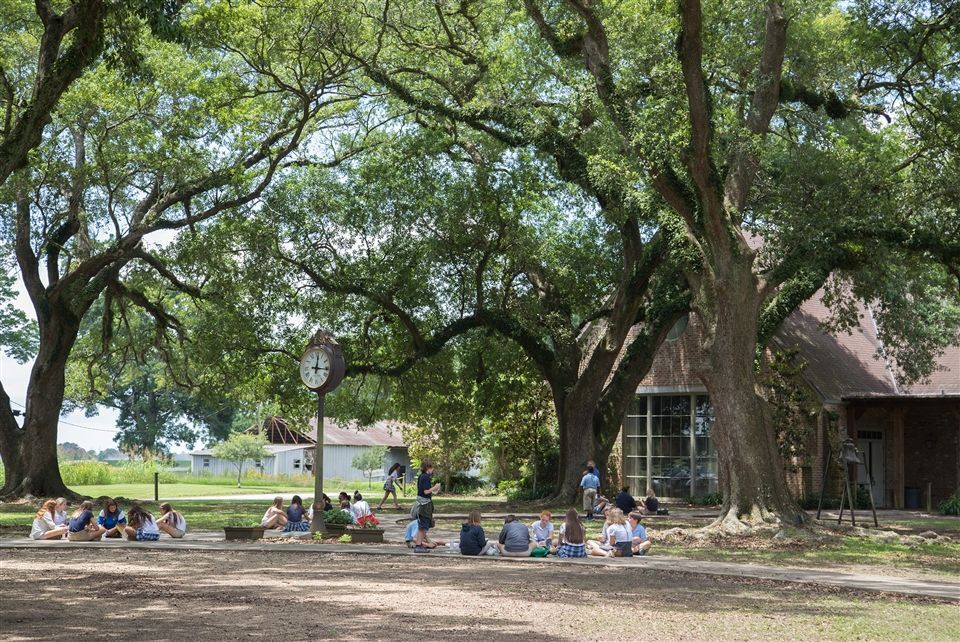
    <summary type="html"><![CDATA[<p><strong><em>Episcopal School of Acadiana resides on the beautiful mid-nineteenth century sugar plantation, Oasis Plantation, sitting along side the sugar cane and underneath the enormous oak trees covering the campus.</em></strong></p><img src="https://mail.acadianahistorical.org/files/fullsize/3de123a95572c0e07f1a7c48ede4ed0d.jpg" alt=" School Kids Under the Oaks " /><br/><p>Robert Cade established Oasis Plantation as a sugar plantation in 1863. He purchased the land from the government and proceeded to add more acreage to the plantation by buying out individuals in the area. He moved to Louisiana from South Carolina in 1820 and established three plantations in the area from Youngsville to Lafayette, including Oasis Plantation. In the 1870s, Cade donated around fifty to sixty acres of land to build a railroad. Robert Cade’s daughter, Sara Cade married Evert Banker Smede in 1830 linking the Cade and Smede families. The Smede family created a storehouse for the sugar under the name “Smede Brothers Sugar Refinery.” This building was eventually turned into a chapel for the school that would eventually take over the plantation, Episcopal School of Acadiana. </p><p>In 1980, Mrs. Betty Smede Jardine donated sixteen acres to the new, one year old school, ESA, as a permanent location. This school has since remained on this campus. There was a long line of educators in the Smede family, as well as Episcopal ministers which is why Betty Smede Jardine decided to donate the property. Today, the Episocpal School of Acadiana has expanded its education to include an elementary campus located in Lafayette, LA. </p><p><em><strong><a href="https://mail.acadianahistorical.org/items/show/103">For more (including 6 images&#32;&amp;&#32;1 audio file) view the original article</a></strong></em></p>]]></summary>
    <published>2022-03-03T04:32:57+00:00</published>
    <updated>2026-03-04T22:42:47+00:00</updated>
    <link rel="alternate" type="text/html" href="https://mail.acadianahistorical.org/items/show/103"/>
    <id>https://mail.acadianahistorical.org/items/show/103</id>
    <author>
      <name>Anne-Marie Stokes</name>
    </author>
  </entry>
  <entry>
    <title type="html"><![CDATA[An American Actor&#039;s Dream Plantation : From Bob Acres Plantation to Rip Van Winkle House and Gardens ]]></title>
    <summary type="html"><![CDATA[<img src="https://mail.acadianahistorical.org/files/fullsize/cd4d5f88835f03fc9ee7444c0a47b5af.jpg" alt="Joseph Jefferson House " /><br/><p>In 1869, American actor Joseph Jefferson purchased “Orange Island,” as it was known at the time of the purchase, which sat atop a salt dome on Lake Peigneur to use as his winter home and hunting lodge. The “island,” referred to now as Jefferson Island, is not actually an island at all; instead, it is a piece of land formed that sits atop the salt dome. It is one of four salt dome islands in Acadiana, along with Avery Island, Weeks Island, and Cote Blanche.</p><p>Jefferson built what he referred to as the Rip Van Winkle House in 1870. He had played the role of Rip Van Winkle in a film adaptation of Washington Irving’s short story by the same name of "Rip Van Winkle;" because of his love for the dramatic arts, he named his beloved plantation home after it. The plantation, which Jefferson called the Bob Acres Plantation after a character from another play that he acted in, "The Revivals," was made up of approximately 3,600 acres. The jewel of the property, the Rip Van Winkle House, was built using cypress wood that was grown in New Iberia, the location of the plantation. </p><p>Although plantations of this time were often used as farms for agriculture, Jefferson was not a farmer and did not use his plantation for commerce. Instead, he would host extravagant parties at his beloved Bob Acres Plantation, that included guests such as President Grover Cleveland, who is said to have enjoyed taking naps under the enormous oak trees dotting the plantation. </p><p>Joseph Jefferson died in 1905 leaving the Bob Acres Plantation to his heirs. In 1917, the heirs to the plantation sold Jefferson Island and the plantation to John Lyle Bayless, Sr. of Anchorage, Kentucky; Paul Jones, bourbon distiller of Louisville, Kentucky; and E. A. McIlhenny of Avery Island, Louisiana. Son of John Lyle Bayless, Senior, Bayless, Junior, developed gardens around the home in 1950 in honor of Joseph Jefferson, affectionately calling them the Rip Van Winkle Gardens. Bayless sold the salt mines that ran underneath the lake and property and donated the Joseph Jefferson House and 800 acres of gardens to a foundation that would ensure that the grounds would be maintained long after he died. </p><p>On November 20, 1980, a Texaco drilling rig pierced one of the giant salt caverns and flooded the entire salt mine. This caused four years of damage to the property, creating a vortex that  formed in the lake which swallowed a glass conservatory and garden that Bayless had built, Bayless’s retirement home, the Rip Van Winkle Welcome Center and 65 acres of native woodland. However, four years after this incident, Rip Van Winkle Gardens were up and running again and today are the location of many weddings, private events, tours, and an on site bed and breakfast. </p><p><em><strong><a href="https://mail.acadianahistorical.org/items/show/144">For more (including 5 images&#32;&amp;&#32;1 audio file) view the original article</a></strong></em></p>]]></summary>
    <published>2022-03-31T23:19:07+00:00</published>
    <updated>2026-03-04T22:42:48+00:00</updated>
    <link rel="alternate" type="text/html" href="https://mail.acadianahistorical.org/items/show/144"/>
    <id>https://mail.acadianahistorical.org/items/show/144</id>
    <author>
      <name>Anne-Marie Stokes</name>
    </author>
  </entry>
  <entry>
    <title type="html"><![CDATA[Louisiana&#039;s Most Revolutionary Educator]]></title>
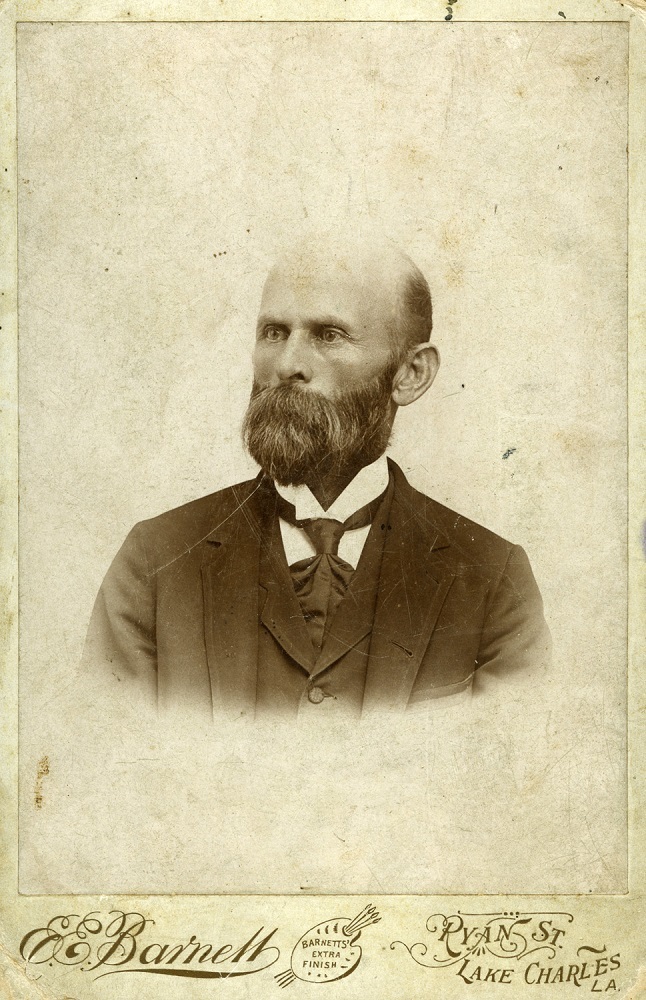
    <summary type="html"><![CDATA[<p><strong><em>John McNeese was one of the most influential educators of the Lake Charles area.</em></strong></p><img src="https://mail.acadianahistorical.org/files/fullsize/fc6b98f6bfed2f4b9d866034ac602cd7.jpg" alt="John McNeese" /><br/><p>John McNeese came to Louisiana with a few other men, planning to sell cattle in New Orleans. However, drought meant that most of the cattle were dead by the time the men reached Lake Charles. They sold the rest and McNeese began teaching in the Lake Charles area, at Hickory Flat. He also started studying law. He enrolled in Tulane Law School in 1886, and after receiving his degree, he returned to Lake Charles to practice. Very soon, however, he began teaching again and getting involved in education. He served on a committee to organize high schools, was elected to the examining board for qualifying teachers, and served as a principal in Lake Charles. In 1888 he was elected Superintendent of public education for Calcasieu Parish. Very few public schools existed in Louisiana at the time. His work on a system of organization and supervision was copied by many other parishes. He made a huge amount of progress with the building of the school system in the twenty-five years that he acted as superintendent. By the time he reached the end of his time as superintendent, Calcasieu Parish had voted in taxes to fund public schools, constructed school buildings, and increased teacher qualifications, student enrollment,and public interest in education.</p><p><em><strong><a href="https://mail.acadianahistorical.org/items/show/14">For more (including 4 images&#32;&amp;&#32;1 audio file) view the original article</a></strong></em></p>]]></summary>
    <published>2018-04-26T14:55:32+00:00</published>
    <updated>2026-03-04T22:42:45+00:00</updated>
    <link rel="alternate" type="text/html" href="https://mail.acadianahistorical.org/items/show/14"/>
    <id>https://mail.acadianahistorical.org/items/show/14</id>
    <author>
      <name>Bailey Lemoine</name>
    </author>
  </entry>
  <entry>
    <title type="html"><![CDATA[First Licensed Doctor of Calcasieu Parish]]></title>
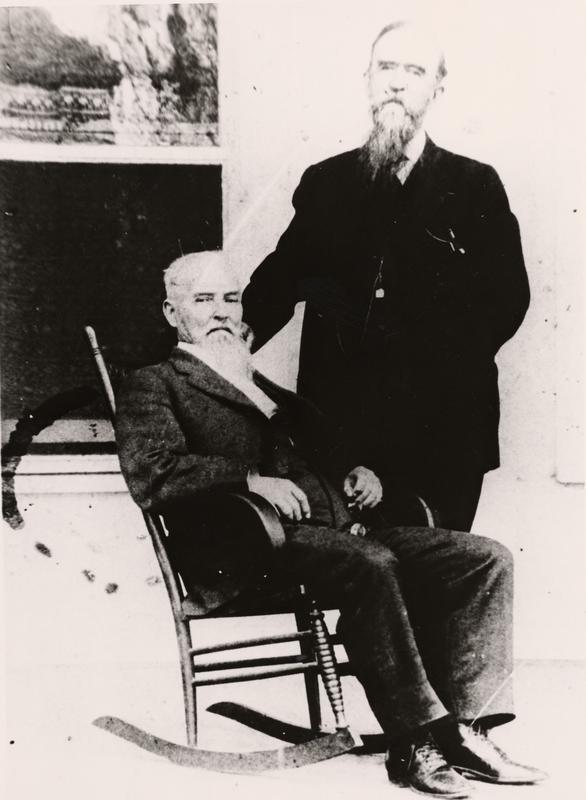
    <summary type="html"><![CDATA[<p><strong><em>Dr. Lyons was the first doctor with a diploma to ever practice in Calcasieu Parish.</em></strong></p><img src="https://mail.acadianahistorical.org/files/fullsize/d6e661645a61b73761fd3fa5bb1a1c9c.jpg" alt="Dr. E. J. Lyons and Dr. Richardson" /><br/><p>Dr. Erastus J. Lyons was born in Calcasieu parish on March 17, 1839, near Eunice on Bayou Plaquemine.  Erastus Lyons completed his initial education in public school, then attended school for three years in Jasper, Texas.  He returned to Louisiana to attend the University of Louisiana, now known as Tulane University, in 1861.  After receiving his M.D. there, he returned to Calcasieu Parish and enlisted in the Confederate Infantry.  He served as an assistant surgeon with the rank of captain for eleven months before the people of Calcasieu parish petitioned the Confederate government for his release on the grounds that he was the only resident practicing physician of the parish.  He was the first regular physician with a diploma to practice in Calcasieu Parish. 	After returning from the Confederate Army, he settled in Big Woods settlement and practiced there until moving into the city of Lake Charles in 1879.  He was a member of the Free and Accepted Masons, the Knights of Honor, and less secretive societies such as the Louisiana state and Calcasieu parish medical societies. </p><p>There was an increase in secret societies after the end of the Civil War.  Societies such as the Masons and Knights of Honor had extremely large membership and funds.  In the late 1800s, their membership was increasing rapidly.  It was very common for members of the community who could afford the fees to be a member of at least one such society.  As an active member of the community, Dr. Lyons would have been expected to be involved in at least one such society.  </p><p>He retired in 1911 after a little more than fifty years of constant practice.  He was very active in the community, serving several times on the City Council and once as the parish health officer. The street that bears his name is located in Lake Charles, running north of Interstate 10 to Channel Street.</p><p><em><strong><a href="https://mail.acadianahistorical.org/items/show/21">For more (including 3 images&#32;&amp;&#32;1 audio file) view the original article</a></strong></em></p>]]></summary>
    <published>2018-04-26T15:05:30+00:00</published>
    <updated>2026-03-04T22:42:45+00:00</updated>
    <link rel="alternate" type="text/html" href="https://mail.acadianahistorical.org/items/show/21"/>
    <id>https://mail.acadianahistorical.org/items/show/21</id>
    <author>
      <name>Bailey Lemoine</name>
    </author>
  </entry>
  <entry>
    <title type="html"><![CDATA[C.C. &quot;Taddy&quot; Aycock: Louisiana Lieutenant Governor and Lawyer]]></title>
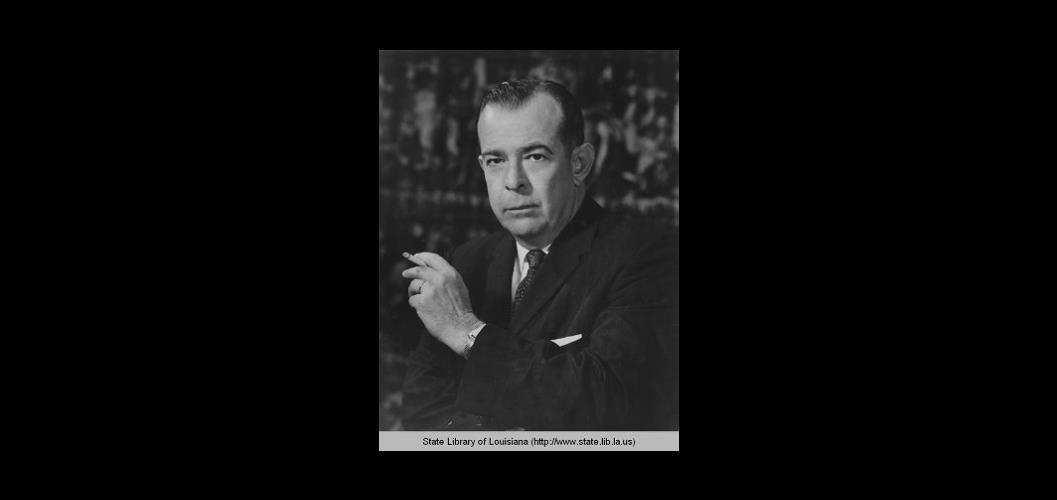
    <summary type="html"><![CDATA[<p><strong><em>C.C. ‘Taddy” Aycock was a prominent Louisiana politician in the 20th century.</em></strong></p><img src="https://mail.acadianahistorical.org/files/fullsize/8be0d8fcfd64463c64c18877338425e9.jpg" alt="C.C. &quot;Taddy&quot; Aycock: Louisiana&#039;s Lieutenant Governor and Senate President from 1960-1972." /><br/><p>Taddy served in World War II and received a Bronze Star. Although his records are difficult to find, there is a Clarence C Aycock who enlisted in Jacksonville, Florida. His state and county of residence are listed with unknown codes, but he was born in 1915 and his civilian occupation is listed as “lawyers and judges.” It says that he was single and without dependents, and Taddy did not marry Elaine Champagne until 1945, after the war ended. Their first child, Barbara Elaine, was born in 1946. </p><p>From 1952-1959, Aycock was a member of the state house of representatives in Louisiana. He was involved in the passage of Louisiana’s “right to work” law in 1952. The right to work law in Louisiana protects employees from being required to pay a fee or join a union. Because unions represent an entire bargaining unit, in states without right to work laws, they may require a monthly payment from everyone, including non-union-members. These laws are somewhat controversial: those who support such laws say that it protects workers from being coerced into joining a union if they do not want to, but opponents say that the laws are meant to weaken unions. </p><p>Despite being the only three-term lieutenant governor in Louisiana in the 20th century, serving from 1960 to 1972, Aycock’s political career ended after an unsuccessful run for governor. When he failed to win support at the Democratic primary in 1971, he retired from politics to practice law in his hometown. He died in 1987. The street that bears his name today runs from Bonvillain St. to Point St. in Terrebonne Parish.</p><p><em><strong><a href="https://mail.acadianahistorical.org/items/show/24">For more (including 3 images&#32;&amp;&#32;1 audio file) view the original article</a></strong></em></p>]]></summary>
    <published>2018-04-26T15:13:22+00:00</published>
    <updated>2026-03-04T22:42:45+00:00</updated>
    <link rel="alternate" type="text/html" href="https://mail.acadianahistorical.org/items/show/24"/>
    <id>https://mail.acadianahistorical.org/items/show/24</id>
    <author>
      <name>Bailey Lemoine</name>
    </author>
  </entry>
  <entry>
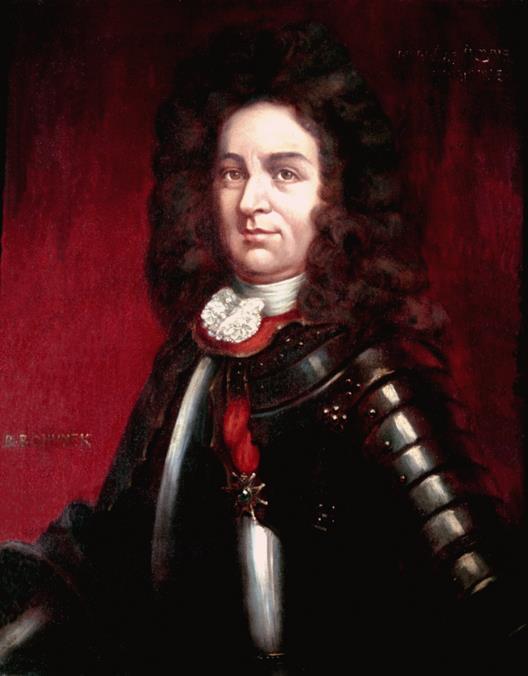
    <title type="html"><![CDATA[Louisiana&#039;s Canadian Founder: Pierre d&#039;Iberville]]></title>
    <summary type="html"><![CDATA[<p><strong><em>The soldier and explorer who founded the French colony "La Louisiane"</em></strong></p><img src="https://mail.acadianahistorical.org/files/fullsize/1df724e97bc6ee0fcd0e6a9e1f178e24.jpg" alt="Pierre Le Moyne d&#039;Iberville" /><br/><p>Pierre Le Moyne d’Iberville was born in 1661 in Montreal in Canada. He became well known through his strategic winning of battles in King William’s War. Iberville was the founder of the French colony La Louisiane. He was a soldier and explorer who was sent to find the mouth of the Mississippi River and establish a colony there for France. The Minister Ponchartrain tasked Iberville with following the guidelines left by the explorer La Salle and discovering the mouth of the Mississippi River. He was to build a fort there so that it would be protected from Spanish and English colonists. Iberville was chosen for the job because he had naval experience and had lead expeditions before, in Hudson Bay. On his first voyage, he was somewhat aimlessly exploring the delta and looking for a mixture of salt and freshwater that would signify the mouth of the river as La Salle had described it. Eventually he found a group of Native Americans who remembered La Salle, confirming that he was in the right place. He built a temporary fort at Biloxi so that he could return to France, leaving his brother Bienville behind with 80 other men. </p><p>On his second voyage, he built Fort Maurepas, and on the third voyage, a fort at Mobile. This was not welcomed by the Spanish acting governor because that territory was claimed by Spain, but Spain and France had recently made an agreement to work together in the colonies against their shared enemy, England. Iberville died in 1706 of yellow fever, weakened by years of diseases like malaria from his time in the Gulf area. The street that now bears his name in Iberville parish, also named after him, runs from Bayou Rd. along the Bayou Plaquemine to Main St. in Plaquemine, Louisiana.</p><p><em><strong><a href="https://mail.acadianahistorical.org/items/show/27">For more (including 2 images&#32;&amp;&#32;1 audio file) view the original article</a></strong></em></p>]]></summary>
    <published>2018-04-26T15:18:22+00:00</published>
    <updated>2026-03-04T22:42:45+00:00</updated>
    <link rel="alternate" type="text/html" href="https://mail.acadianahistorical.org/items/show/27"/>
    <id>https://mail.acadianahistorical.org/items/show/27</id>
    <author>
      <name>Bailey Lemoine</name>
    </author>
  </entry>
  <entry>
    <title type="html"><![CDATA[An Influential Politician: Jean Noel Destrehan]]></title>
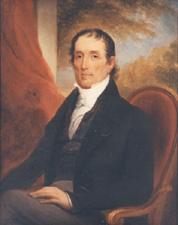
    <summary type="html"><![CDATA[<p><strong><em>A prominent Louisiana politician and legislator, as well as a mercantilist and planter.</em></strong></p><img src="https://mail.acadianahistorical.org/files/fullsize/cc4e7de1b51d3aab10d7588e2ec85a5c.jpg" alt="[Untitled]" /><br/><p>Jean Noel Destrehan was born in 1754 in what is today St. Charles Parish. He was the son of Jean Baptiste Honore Destrehan de Beaupre, “the head of the Destrehan family line in Louisiana,” the Treasurer of the Louisiana Colony of France (Harvey 13). Jean Noel was educated in France. </p><p>Jean Noel Destrehan married Marie Claude Celeste de Logny. His wife’s father, Antoine Robin de Logny, built for them the Destrehan Manor House in 1787, which is still in St. Charles Parish. Later, the couple had two more wings added to the original house to accomodate their total of fourteen children. </p><p>Destrehan was a prominent Louisiana politician and legislator, as well as a mercantilist and planter. He was a member of the Louisiana Territorial government from 1803 to 1812. At one point, he and two other members carried a petition to the United States Congress to protest a 6% tax duty put on the Louisiana Territory and that the appointed governor could not speak any French. Destrehan was elected the first Vice-Mayor of New Orleans in 1805, and was a member of the legislative council of the Territory of Orleans from 1806 to 1811. In 1812 he was elected as a United States Senator, just after Louisiana became a state. However, he resigned less than a month after his election before even qualifying for office, possibly because he did not speak much English. Destrehan served as a Louisiana State Senator from 1812 to 1818. During this time, he helped to draft the Louisiana Constitution.</p><p>Jean Noel Destrehan de Beaupre died in 1823 and is interred near Destrehan, Louisiana. The street that bears his family name today runs from River Road on the eastbank of the Mississippi to Noel Street in the town named after him.</p><p><em><strong><a href="https://mail.acadianahistorical.org/items/show/32">For more (including 2 images&#32;&amp;&#32;1 audio file) view the original article</a></strong></em></p>]]></summary>
    <published>2018-04-26T15:22:48+00:00</published>
    <updated>2026-03-04T22:42:46+00:00</updated>
    <link rel="alternate" type="text/html" href="https://mail.acadianahistorical.org/items/show/32"/>
    <id>https://mail.acadianahistorical.org/items/show/32</id>
    <author>
      <name>Bailey Lemoine</name>
    </author>
  </entry>
  <entry>
    <title type="html"><![CDATA[Hurdling For Gold]]></title>
    <summary type="html"><![CDATA[<img src="https://mail.acadianahistorical.org/files/fullsize/ceabef136b95fee227bcad04b9cab253.jpg" alt="[Untitled]" /><br/><p>Rodney Milburn was an Olympic hurdler who won gold at the 1972 Summer Olympics in Munich in the 110 meters hurdles. While in Munich, Rodney Milburn tied the world record of 13.24 in winning the gold medal. Rodney “Rod” Milburn Jr. was born in Opelousas, Louisiana on March 18, 1950 and died at the young age of 47 years old on November 11, 1997 from an accident while at work.</p><p>While in high school, he grew from a teenager knocking over hurdles in his first race to a national recorded breaking high school athlete. When he was a senior at Clark High school, he looked upon as an outstanding high school hurdler in the United States. Rodney attended Southern University and A&M College in Baton Rouge, Louisiana where he received an athletics scholarship. By 1971, he was unbeaten in twenty-eight races. During that time, Rodney Milburn had also broken the national age record for the 120 yard hurdles at 13.5 seconds.</p><p>Rodney Milburn retired from athletics in 1983. By the next year, he was hired as a coach at Southern University in Baton Rouge and coached there until 1987. In 1992, the city of Opelousas named a street after Rodney Milburn to show honor and commemorate his Olympic triumph. The name of the street is now Rodney Milburn Blvd. Rodney’s street run through the North City Park. The Opelousas Museum also has a dedicated section to Rodney Milburn.</p><p><em><strong><a href="https://mail.acadianahistorical.org/items/show/25">For more (including 2 images) view the original article</a></strong></em></p>]]></summary>
    <published>2018-04-26T15:15:30+00:00</published>
    <updated>2026-03-04T22:42:45+00:00</updated>
    <link rel="alternate" type="text/html" href="https://mail.acadianahistorical.org/items/show/25"/>
    <id>https://mail.acadianahistorical.org/items/show/25</id>
    <author>
      <name>Brennon Rami</name>
    </author>
  </entry>
  <entry>
    <title type="html"><![CDATA[Dr. Benoit Grolee]]></title>
    <summary type="html"><![CDATA[<img src="https://mail.acadianahistorical.org/files/fullsize/beaa915eb98e1e3ec678f2fece747150.jpg" alt="[Untitled]" /><br/><p>Grolee Street is one of the oldest streets in Opelousas, Louisiana. It was in 1934 on March 19th, when the Opelousas Board of Public met and passed an ordinance naming two streets that day. One of those streets just so happened to be named Grolee Street. </p><p>According to the research of the Daily World, “The name Grolee seems to go back as early as the fifteenth-century French history.” However, the street in Opelousas was named after a different Grolee and he went by the name of Dr. Benoit Grolee, who was an early Opelousas physician who died in 1833. But, according to researched records, “Dr. Grolee came to Opelousas during the early 1800s.” Per research, “We do know, however, that Dr. Benoit Grolee was born in 1783 in Saint-Symphorien, France. It was known that, “Dr. Grolee came to Louisiana as a young man and passed his physicians examination in 1801.” In 1817, Dr. Benoit Grolee received his medical degree in New Orleans, which allowed him to practice medicine in the state. </p><p>Dr. Benoit Grolee played a significant role in the early history of Opelousas.” “He was one of the first physicians in the town and the parish.” However, after the passing of Dr. Grolee, the Board of Police of the Town of Opelousas honored his memory by naming a street after him. So, in 1838, the Opelousas Board of Police voted to install brick path walks on some of the major streets in Opelousas. And, Grolee is one of those streets. As of today, many families and businesses have made their homes on East or West Grolee Street. There is also an elementary school called Grolee, which is located on the west end of Grolee</p><p><em><strong><a href="https://mail.acadianahistorical.org/items/show/38">For more view the original article</a></strong></em></p>]]></summary>
    <published>2018-04-26T15:35:12+00:00</published>
    <updated>2026-03-04T22:42:46+00:00</updated>
    <link rel="alternate" type="text/html" href="https://mail.acadianahistorical.org/items/show/38"/>
    <id>https://mail.acadianahistorical.org/items/show/38</id>
    <author>
      <name>Brennon Rami</name>
    </author>
  </entry>
  <entry>
    <title type="html"><![CDATA[Beloved Businessman ]]></title>
    <summary type="html"><![CDATA[<img src="https://mail.acadianahistorical.org/files/fullsize/f1dc1d45bd80087cf350a1c9317bfa42.jpg" alt="[Untitled]" /><br/><p>Joseph Bloch was born in France in 1833. He moved to the Americas and Louisiana when he was 21. Bloch owned a mercantile business in Ascension parish before moving to Opelousas. Bloch’s store was located on the northwest corner of Main and Bellevue streets in downtown Opelousas. The store building was eye catching and was a big part of the community for many years before Bloch located there. Not only was Joseph Bloch one of the largest merchants in the city but one of the well-respected citizens of Opelousas. The Bloch family is also very heavy involved in the Opelousas Communities. The Bloch family made sure that they are at events and activities that were going on in the city. Joseph Bloch and his family made an impact on Opelousas.</p><p>In 1878, the citizens of Opelousas petitioned the Opelousas Board of Police to have a street open from Union Street running east to west, passing through the property of Joseph Bloch and connecting with a street running west through the property of Alexandre LeJeune. The Board of Police meeting of Tuesday, April 23, 1878, the committee of streets reported that Joseph Bloch agreed to give the right of way for the street through his property provided a fence was put up on both sides of the street. The Board of Police authorized for payment of the fence, and it was approved. It was decided at that meeting to name the new street Bloch Street in honor of Bloch (Hartley). Joseph Bloch wasn’t a war hero, a famous musician or big-time doctor. He was just a good businessman who helped out the city that he loved.</p><p><em><strong><a href="https://mail.acadianahistorical.org/items/show/45">For more (including 3 images) view the original article</a></strong></em></p>]]></summary>
    <published>2018-04-26T15:45:27+00:00</published>
    <updated>2026-03-04T22:42:46+00:00</updated>
    <link rel="alternate" type="text/html" href="https://mail.acadianahistorical.org/items/show/45"/>
    <id>https://mail.acadianahistorical.org/items/show/45</id>
    <author>
      <name>Brennon Rami</name>
    </author>
  </entry>
  <entry>
    <title type="html"><![CDATA[New Life for Holy Rosary Institute ]]></title>
    <summary type="html"><![CDATA[<img src="https://mail.acadianahistorical.org/files/fullsize/ba7c66354bf9019a25fc80dd4a43da81.jpg" alt="[Untitled]" /><br/><p>So I know you are probably wondering what so special about 421 Carmel Drive. Well it’s not about the street but what is on the street. Located at that address is a building that was once Holy Rosary Institute. Before coming to Lafayette, the Holy Rosary Institute began as an industrial school for African American young women in Galveston, Texas. In 1913 it moved to Lafayette, Louisiana, and in 1947 began admitting males as well as women. The purpose of Holy Rosary was to help educated and uplift black during a time where the education of African Americans were critical to be able to function in the world. This historical landmark is important to the city of Lafayette because it was able to house and educate black men and women the city during the time of segregation. The school closed down in 1993 and the site has been abandoned since.</p><p>Now the National Park Service is looking into redeveloping this historical building.  According to Dustin Cravins, president of the Holy Rosary Redevelopment Board, “South Louisiana weather dictates that we have to do something with that building. We’re one storm away from losing it,” he said. “As we stabilize that building and get it in a state we’re comfortable with, we can begin the work of planning and putting some tenants in there and making it a living and breathing thing for this community. We can’t let historical building fall by the waste side and be lost in history.  </p><p><em><strong><a href="https://mail.acadianahistorical.org/items/show/61">For more (including 2 images) view the original article</a></strong></em></p>]]></summary>
    <published>2018-05-02T17:35:37+00:00</published>
    <updated>2026-03-04T22:42:47+00:00</updated>
    <link rel="alternate" type="text/html" href="https://mail.acadianahistorical.org/items/show/61"/>
    <id>https://mail.acadianahistorical.org/items/show/61</id>
    <author>
      <name>Brennon Rami</name>
    </author>
  </entry>
  <entry>
    <title type="html"><![CDATA[&quot;Lafayette Sports Hero&quot; J.C. Reinhardt ]]></title>
    <summary type="html"><![CDATA[<img src="https://mail.acadianahistorical.org/files/fullsize/8bebe31c07009cd36c008a95036d9994.jpg" alt="[Untitled]" /><br/><p>J.C. Reinhardt, a graduate from The University of Iowa, who was hired in 1931 came to Lafayette, Louisiana and totally changed the dynamics of local sports. He was brought in to be the head basketball coach, freshman football coach, tennis coach, intramural sports director, health and physical education instructor, trainer and director of the barracks dorm for athletes. During his time in lafayette he started a foundation in the 1970’s for basketball programs to develop, this formed after he’d retired from coaching in 1957.Before the completion of Blackham Colosseum in 1950, Reinhardt and his players had to visit wooden gyms to play games and if the facilities were occupied with other social events they would get kicked out. At the time basketball wasn’t a popular sport so there was no priority for games to be held. His overall coaching record was 346 victories and 253 losses and from what we know about Reinhardt, he had a passion for young lives and creating opportunity. He found a way to make work scholarships for his players; the method was to do things such as: clean up, mow the lawn or even sell programs at football games. Whatever there was a need he saw it fit for his athletes in order to create doors for their future. Fifty years after the Southwestern Louisiana Basketball Program was nationally known, the city of Lafayette decided to name a street after him. </p><p><em><strong><a href="https://mail.acadianahistorical.org/items/show/71">For more (including 2 images) view the original article</a></strong></em></p>]]></summary>
    <published>2018-05-03T19:43:10+00:00</published>
    <updated>2026-03-04T22:42:47+00:00</updated>
    <link rel="alternate" type="text/html" href="https://mail.acadianahistorical.org/items/show/71"/>
    <id>https://mail.acadianahistorical.org/items/show/71</id>
    <author>
      <name>Brennon Rami </name>
    </author>
  </entry>
  <entry>
    <title type="html"><![CDATA[A Grandiose Building with a War-Torn Past: St. Landry Catholic Church in Opelousas, LA]]></title>
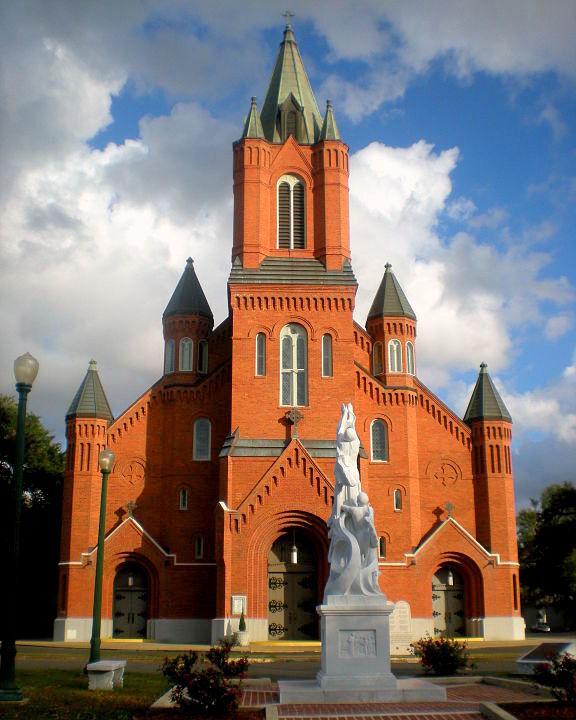
    <summary type="html"><![CDATA[<p><strong><em>This immense and ornate church holds centuries of stories which tell the impact of wars on Acadiana.</em></strong></p><img src="https://mail.acadianahistorical.org/files/fullsize/50c20f5e6e8e60ac0caf14d0da00e104.jpg" alt="St. Landry Catholic Church" /><br/><p>This cathedral-sized church in Opelousas is called the “Mother Church of Acadiana,” for it was the second to be founded in the Diocese of Lafayette, and many smaller church parishes have been formed within the wide boundaries of the original parish (“Parish History”). The beginnings of the parish date back to the 1750s, when missionary priests administered sacraments in the area (“Parish History”). Several churches have been built to serve this church parish over its long history; the current structure dates back to 1908 (Harper 55). During the Civil War, Opelousas served as the capitol of the Confederacy, bringing the war to the church’s front steps. Beginning in mid-1863, Federal troops camped around St. Landry Church, looting graves and destroying church property (Harper 46-47). In fact, “[t]he church would have been completely destroyed, but thanks to the Irish Catholics in the Union ranks, it was spared outright elimination” (“Parish History”).</p><p>The structure of the current church was designed in hopes that St. Landry would one day become a cathedral (Harper 55). In front of the church is a statue honoring Father Joseph Verbis Lafleur, a military chaplain who died as a prisoner of war in World War II and has received military honors for his bravery. Lafleur celebrated his first Mass at St. Landry, and every year on September 7, the anniversary of his death, a memorial Mass in his honor is attended by hundreds of people (Oubre). The history of this church is marked with events related to war, yet the cavernous space, filled with sacred artwork, invites worshippers to peaceful contemplation.</p><p><em><strong><a href="https://mail.acadianahistorical.org/items/show/11">For more (including 4 images) view the original article</a></strong></em></p>]]></summary>
    <published>2018-04-26T14:37:59+00:00</published>
    <updated>2026-03-04T22:42:45+00:00</updated>
    <link rel="alternate" type="text/html" href="https://mail.acadianahistorical.org/items/show/11"/>
    <id>https://mail.acadianahistorical.org/items/show/11</id>
    <author>
      <name>Briley Higginbotham</name>
    </author>
  </entry>
  <entry>
    <title type="html"><![CDATA[Bishop Jeanmard’s War against Racism: St. Paul the Apostle Church - Lafayette, LA]]></title>
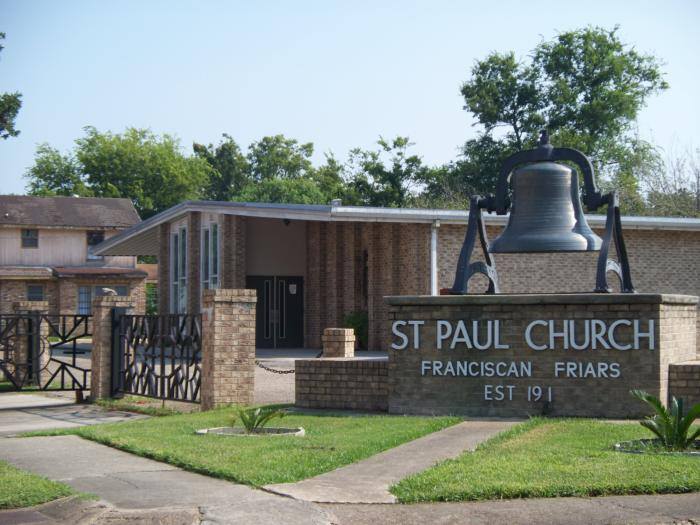
    <summary type="html"><![CDATA[<p><strong><em>This church was created out of the desire of a minority group to worship together as a community.</em></strong></p><img src="https://mail.acadianahistorical.org/files/fullsize/53a8e77ce554d3387eceb6b616705d53.jpg" alt="St. Paul the Apostle Catholic Church" /><br/><p>The history of St. Paul the Apostle Catholic Church tells a story of outreach to and inclusion of minority Catholics. In the early 1900s, the Diocese of Lafayette included “50,000 black Catholics, one fourth of the total for the entire United States” (Oubre 95). In this pre-Civil Rights era, Bishop Jeanmard devoted time and resources to establish Catholic institutions to serve black parishioners. It was black Catholics who expressed a desire for separate institutions; in fact, “[t]he black community of Lafayette was the first to specifically ask for their own church”; as a result, St. Paul was established in 1911 (Oubre 66).</p><p>Shortly after, Bishop Jeanmard was appointed bishop of the Diocese of Lafayette (Oubre 70). In 1934, Bishop Jeanmard accepted four of the first African American priests in the south into his diocese to serve at the newly created parish of the Immaculate Heart of Mary, formed from a portion of St. Paul’s parish (Oubre 94). The parish included Holy Rosary Institute, a church and a boys’ school (Oubre 94). The fruit of this work can be seen in the life of Bishop Joseph Francis, who was born in Lafayette, educated at St. Paul’s school, ordained in 1950 and eventually became associate director of Holy Rosary Institute. Later, he became Auxiliary Bishop of Newark, New Jersey (Oubre 138). Bishop Jeanmard showed his dedication to the minority parishioners of his Diocese to the end of his life; “[o]ne of his last requests was that his body be laid out for an overnight vigil and Mass at St. Paul’s Church” (Oubre 95). The parish of St. Paul was created out of the church’s cooperation with black parishioners when most of the South preferred to do otherwise.</p><p><em><strong><a href="https://mail.acadianahistorical.org/items/show/42">For more (including 4 images) view the original article</a></strong></em></p>]]></summary>
    <published>2018-04-26T15:42:39+00:00</published>
    <updated>2026-03-04T22:42:46+00:00</updated>
    <link rel="alternate" type="text/html" href="https://mail.acadianahistorical.org/items/show/42"/>
    <id>https://mail.acadianahistorical.org/items/show/42</id>
    <author>
      <name>Briley Higginbotham</name>
    </author>
  </entry>
  <entry>
    <title type="html"><![CDATA[A Phoenix Rises from the Ashes: Cathedral of the Immaculate Conception - Lake Charles, LA]]></title>
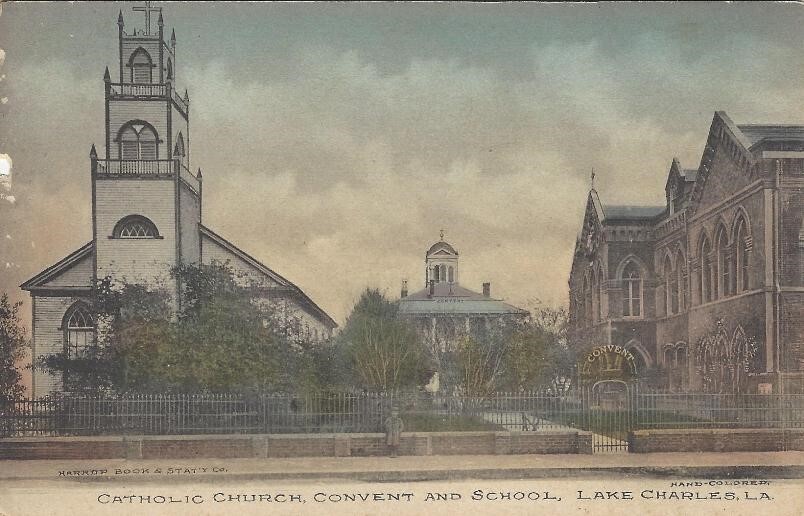
    <summary type="html"><![CDATA[<p><strong><em>Though this church and its associated buildings were destroyed in a catastrophic fire in 1910, it has been rebuilt into something magnificent.</em></strong></p><img src="https://mail.acadianahistorical.org/files/fullsize/5089b5df2b22fdc0feba3e0558a14d74.jpg" alt="Postcard of Immaculate Conception Parish" /><br/><p>In the wake of the Civil War, a 4,000-square-mile parish named St. Francis de Sales formed in western Louisiana (Oubre 40). In 1869, St. Francis de Sales became an established parish by the archbishop; in 1881, the parish constructed a new church and named it the Immaculate Conception (“The Story”). Attached to the parish was St. Charles Academy, which “served as the center of education for Calcasieu Parish” (“Our History”). These structures were lost, however, to a devastating fire in 1910, which consumed 109 buildings in Lake Charles (“The Fire Walk Script”), including “Immaculate Conception Church, its rectory, the boys and girls Catholic schools, and the convent of the Sisters Marianites of Holy Cross” (“The Story”).</p><p>On December 18, 1913, the current Immaculate Conception church was dedicated. This structure was designed by the same architects who designed Calcasieu Marine Bank, Calcasieu Parish Courthouse, and the Strand Theatre, all of which “are listed on U.S. National Park Service’s National Register of Historic Places” (“The Story”). It is interesting to know that, while “buildings owned by religious organizations are typically excluded from being listed in the registry, an exception was made for Immaculate Conception because of [its] great artistic value” (“The Story”). In 1980, Pope John Paul II established the Diocese of Lake Charles, and the church of the Immaculate Conception was elevated to the status of a cathedral. It is a beautiful landmark worthy of this honor.</p><p><em><strong><a href="https://mail.acadianahistorical.org/items/show/57">For more (including 4 images) view the original article</a></strong></em></p>]]></summary>
    <published>2018-04-30T14:23:59+00:00</published>
    <updated>2026-03-04T22:42:47+00:00</updated>
    <link rel="alternate" type="text/html" href="https://mail.acadianahistorical.org/items/show/57"/>
    <id>https://mail.acadianahistorical.org/items/show/57</id>
    <author>
      <name>Briley Higginbotham</name>
    </author>
  </entry>
  <entry>
    <title type="html"><![CDATA[The Miracle that Paved the Way to Sainthood: Academy of the Sacred Heart - Grand Coteau, LA]]></title>
    <summary type="html"><![CDATA[<p><strong><em>The first miracle in North America ratified by the Vatican happened in a small town in south Louisiana.</em></strong></p><img src="https://mail.acadianahistorical.org/files/fullsize/3303090a011f97355a292b7e23f4d188.jpg" alt="Oaks Connecting the Academy and St. Charles College" /><br/><p>Situated in the quiet beauty of Grand Coteau is a historic school which attracts talented female scholars both from Louisiana and around the world. Established by the Religious of the Sacred Heart in the early 1800s, the Academy has remained in existence for nearly two hundred years—longer than any of the over 200 schools run by the order (“One Hundred” 6). What began as a simple convent in a remote area has since grown into a beautiful school with a history that has earned it national recognition (“One Hundred” 6). In 1866, seventeen-year-old Mary Wilson, a postulant in the Sacred Heart order, lay dying of cancer at the Academy. The sisters at the Academy began a novena asking Blessed John Berchmans for his intercession; on the ninth day, Mary Wilson was visited by John Berchmans and immediately cured of her illness. This miracle was ratified by the Vatican and was used as one of the two required miracles needed for canonization of St. John Berchmans (Sibille 4). A small shrine and chapel are located in the room where St. John Berchmans appeared to Mary Wilson, and the all-boys school, a counterpart to the girls’ Academy, is named after St. John Berchmans in honor of this miracle.</p><p><em><strong><a href="https://mail.acadianahistorical.org/items/show/62">For more (including 4 images&#32;&amp;&#32;1 audio file) view the original article</a></strong></em></p>]]></summary>
    <published>2018-05-02T20:26:02+00:00</published>
    <updated>2026-03-04T22:42:47+00:00</updated>
    <link rel="alternate" type="text/html" href="https://mail.acadianahistorical.org/items/show/62"/>
    <id>https://mail.acadianahistorical.org/items/show/62</id>
    <author>
      <name>Briley Higginbotham</name>
    </author>
  </entry>
  <entry>
    <title type="html"><![CDATA[The Church that Started a City: Saint Mary Magdalen Church – Abbeville, LA]]></title>
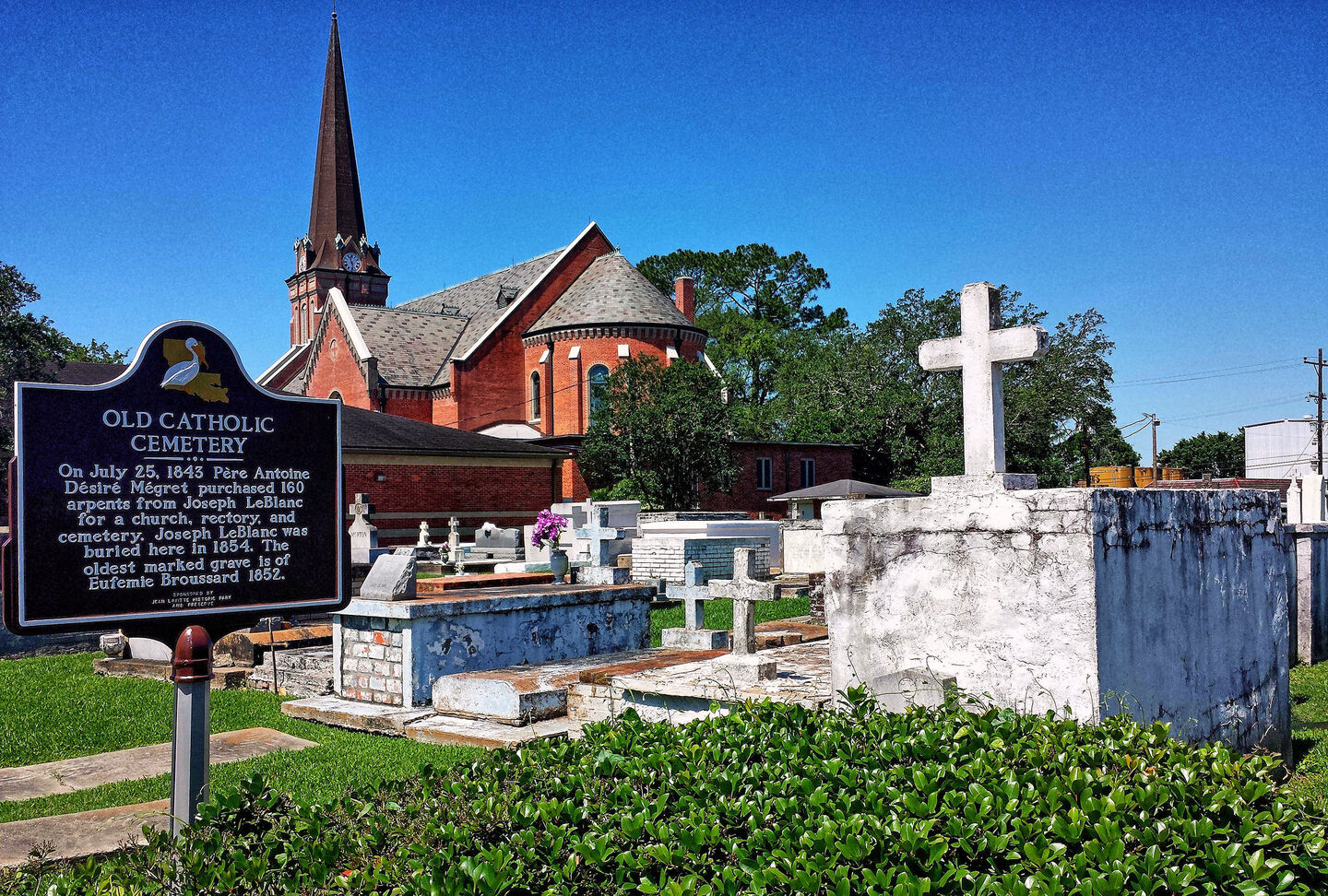
    <summary type="html"><![CDATA[<p><strong><em>The city of Abbeville owes its origins to the founder of St. Mary Magdalen Church.</em></strong></p><img src="https://mail.acadianahistorical.org/files/fullsize/df5c1d30194633563c63a2e601a35f93.jpg" alt="St. Mary Magdalen Cemetery" /><br/><p>The expansive, star-studded church that towers over downtown Abbeville is integral to the very existence of the city. Abbe Megret, the pastor of St. John the Evangelist at the time, established St. Mary Magdalen parish in 1842 in an effort to remove himself from the grip of the board of church trustees in Vermilionville. Abbe Megret purchased a large tract of land; some was reserved for church property, and the rest was “divided…into lots and sold,” forming the nucleus of the town of Abbeville, named after the church’s founder (Oubre 28).</p><p>For much of the church’s existence, it was staffed by foreign francophone priests; however, a Cajun clergyman, Father Joseph Verbis Lafleur, stands out in its history as a figure who has risen to national attention (“Our History”). Lafleur’s first assignment was to St. Mary Magdalen church; he later became a military chaplain during World War II. He was captured as a prisoner of war and died when the Japanese ship on which he was detained was attacked. For his heroism, he has earned military honors, and his cause for canonization may soon be opened (O’Neel). The history of St. Mary Magdalen demonstrates the centrality of the Church to early Acadian towns and traces the evolution of Acadiana as a mission territory to a Diocese with many native vocations.</p><p><em><strong><a href="https://mail.acadianahistorical.org/items/show/63">For more (including 4 images&#32;&amp;&#32;1 audio file) view the original article</a></strong></em></p>]]></summary>
    <published>2018-05-02T20:48:49+00:00</published>
    <updated>2026-03-04T22:42:47+00:00</updated>
    <link rel="alternate" type="text/html" href="https://mail.acadianahistorical.org/items/show/63"/>
    <id>https://mail.acadianahistorical.org/items/show/63</id>
    <author>
      <name>Briley Higginbotham</name>
    </author>
  </entry>
  <entry>
    <title type="html"><![CDATA[“The Place Where Everybody Is Somebody”: State Representative Pinkie Wilkerson Memorial Interchange: I-20 &amp; LA 149 interchange in Grambling, Louisiana]]></title>
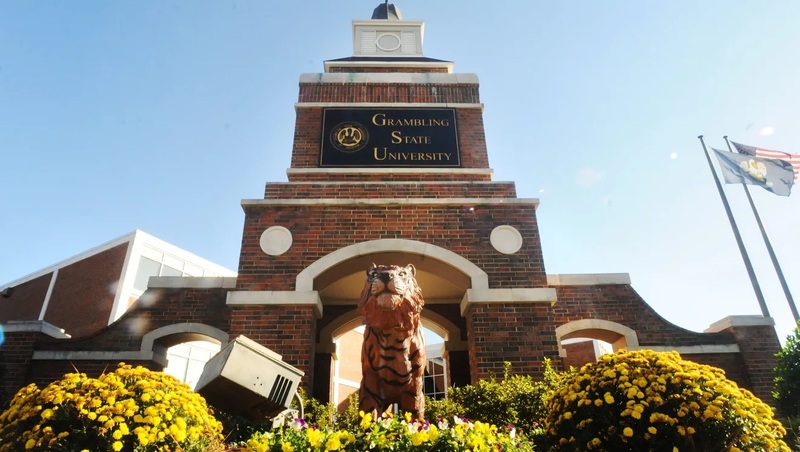
    <summary type="html"><![CDATA[<p><strong><em>Louisiana Memorial Highway 148 is named the State Representative Pinkie Wilkerson Memorial Interchange. The small connection located at the intersection of Interstate 20 and Louisiana Highway 149, sits north of Grambling, Wilkerson’s hometown. House Bill 104 was passed in 2015 which designated the piece of road in her name. Wilkerson advocated for better lighting in the Louisiana legislature at the exact I-20 exit to commemorate her contributions to and in Grambling.</em></strong></p><img src="https://mail.acadianahistorical.org/files/fullsize/ad33582bd9d42270c520322bf1451681.jpg" alt="Photograph of Grambling State University in Grambling, Louisiana." /><br/><p><p style="font-weight:400;">Pinkie Carolyn Wilkerson was a Gambling native through and through. She was born in Grambling on February 8, 1948, and spent her whole life indebted to the location. Both of her parents were teachers. Her father, Calvin, was fired from his teaching position for getting individuals registered to vote in the 1950s. He became a merchandise peddler to make ends meet for his family. His peddling turned into a sport’s merchandise and high-end clothing business, named the Collegiate Shoppe, in 1957. The business allowed Calvin, a first-generation college student, to support students in need—providing them with books and professional clothing, at little to no cost. The Collegiate Shoppe would close 67 years later in 2024. Yet, the store gained its name from the college town that it resided in—Grambling, Louisiana.
<p style="font-weight:400;">Grambling State University (GSU), a public historically black college, is Grambling’s main attraction. The 124-year-old institution started as a way for rural Black farmers to educate one another, but it has grown into one of the most renown Historically Black Colleges and Universities (HBCU) in the United States. Wilkerson attended Grambling State University Lab High School, the high school attached to the university.<span>  </span>After high school, Wilkerson attended University classes at Grambling, later graduating with her bachelor’s degree (B.A).
<p style="font-weight:400;">After attending Grambling State University, Pinkie Wilkerson moved away temporarily to pursue a master’s degree (M.A.) in Ohio at Ohio State University. But after two years, she returned back to Louisiana, where she went on to receive a Juris Doctrine (J.D.) from Southern University School of Law in Baton Rouge in 1979. After finishing top of her class, Wilkerson continued her education in Louisiana getting a Master of Laws (LL. M.) degree from Tulane University School of Law in New Orleans. She returned to Grambling, Louisiana to open her own practice in 1979—later earning the title of assistant district attorney for Lincoln and Union Parishes. She then served as the assistant attorney general for the State of Louisiana. In addition to being a fantastic lawyer, she was an accomplished academic professor. Wilkerson taught law, business law, American history, and American government at several universities across the United States, including Grambling State University where she was an assistant professor.
<p style="font-weight:400;">In 1992, Wilkerson was elected to the State Legislature, becoming the first black state representative for Louisiana’s District 11. In her eight-year tenure in the House of Representatives, she supported legislation on social issues, education, and rural issues. In 1993, Wilkerson supported the creation of a 24-hour statewide compulsive gamblers helpline. With its requirement to be displayed on all casinos and advertisements for gambling and lottery tickets, this legislation has helped millions of people. Wilkerson’s legislative colleagues respected her ability to not give up on her constituents, accessing all the resources and funds she could for her district and hometown. She made history in 1997 becoming the first and only woman to chair the Rural Caucus of the Louisiana legislature. She was active in many committees during her time in Congress, like the Health and Welfare committee, Civil Law and Procedure committee, and the House Judiciary—where she was vice chairman of all these. Wilkerson was also a proud member of the Women’s Caucus, during her entire term in the Louisiana legislature. She was an avid supporter of women, advocating for domestic violence prevention. She was also the president of National Bar Association’s Women Lawyers Division and the League of Women Voters in the Ruston-Grambling area, where she followed in her father’s footsteps to promote voting rights.
<p style="font-weight:400;">Wilkerson remained an active legislator until her death on August 1st, 2000. Wilkerson’s vehicle was stuck from behind by a truck while stopped for construction on I-20—the same road that would wear her name two decades later—in Bossier City, Louisiana. Her funeral service itself took place on the campus of GSU, furthering solidifying Wilkerson’s ties to the college and town. Today, Wilkerson’s legacy lives on in Grambling through numerous scholarship funds named in her honor.</p><p>While Grambling is known as “the place where everybody is somebody,” Pinkie Wilkerson is not just somebody to her state, hometown, college, and community. She is somebody to remember.</p><p><em><strong><a href="https://mail.acadianahistorical.org/items/show/253">For more (including 11 images&#32;&amp;&#32;1 audio file) view the original article</a></strong></em></p>]]></summary>
    <published>2025-03-06T09:20:28+00:00</published>
    <updated>2026-03-04T22:42:50+00:00</updated>
    <link rel="alternate" type="text/html" href="https://mail.acadianahistorical.org/items/show/253"/>
    <id>https://mail.acadianahistorical.org/items/show/253</id>
    <author>
      <name>Caroline Dugan</name>
    </author>
  </entry>
  <entry>
    <title type="html"><![CDATA[Preserving Louisiana’s Coastline: The Rodney Guilbeaux Memorial Highway : LA Highway 82 through Cameron Parish, Louisiana along the coastline]]></title>
    <summary type="html"><![CDATA[<p><strong><em>Louisiana Memorial Highway 102 is named the Rodney Guilbeaux Memorial Highway. Senate Bill 737 was passed in 2008, which designated the portion of Louisiana Highway 82 (LA 82) located in Cameron Parish in Rodney Guilbeaux’s honor. Guilbeaux was a native to Cameron Parish; he lived on, worked down, and advocated for coastal preservation on LA 82.</em></strong></p><img src="https://mail.acadianahistorical.org/files/fullsize/dee07e1895c77700834425c9681bd136.jpg" alt="The Gulf of Mexico from Constance Beach. https://visitcameronparish.org/explores/constance-beach/" /><br/><p>Rodney John Guilbeaux, Jr. was born on Dec 18, 1926, in Kaplan, Louisiana. On his eighteenth birthday in 1944, Guilbeaux entered the military and served as a junior-grade lieutenant in the U.S. Marines. Upon returning from war, Guilbeaux settled in New Orleans, Louisiana, but by the early 1950s, he decided to move back west to the area he grew up in. He is noted as saying, "Some people like the lakes, some people like the rivers. I was a beach bum” to Fox News. So, Guilbeaux bought a camp in the newly developed, Constance Beach. The village is south of LA 82 and seven miles west of Holly Beach—Louisiana’s most famous beach, where the Rodney Guilbeaux Memorial Sign is located. He lived there on the weekends and  worked in Sulphur, Louisiana as an advertising manager for Wise Publications, a Printing and Bookstore in Southwest Louisiana. In 1961, Guilbeaux purchased property along LA 82 in Cameron Parish. He bought and opened the Gulf Coast Store in Holly Beach, Louisiana. Owning and operating a family business was not a new quest for Guilbeaux. His dad, Rodney John Guilbeaux, Sr., owned not one but two influential storefronts in Cameron Parish. Guilbeaux Sr. owned Guilbeaux's Dry Cleaners and Laundry in Cameron, Louisiana prior to the 1950s. He was quite successful as “Cameron’s only cleaning and pressing shop,” taking out ads regularly in the local newspaper, the Cameron Parish Pilot. One of the last ads for Guilbeaux's Dry Cleaners and Laundry was on August 8th, 1957, after Hurricane Audrey. The ad stated “Rodney Guilbeaux, owner of Guilbeaux's Laundry & Cleaners, announces that he and his son, Guilbeaux Jr., will be at the shop this Sunday between 10 a.m. and 3 p.m. to return all clothing that was in the shop at the time of the storm.” However, as a successful businessman, no one was surprised when the Cameron Parish Pilot announced in a full-page spread that the “Cameron Shell Service Station was now under new management”— Guilbeaux Sr. in 1962, five years after the devastating storm. </p><p>Guilbeaux followed in his father’s footsteps as an active community leader and businessman.  In 1964, Guilbeaux was the publicity chairmen for the Southwest District Fat Stock Show and Rodeo in Lake Charles at the McNeese State University coliseum. He was a fan of McNeese State University, becoming their athletic radio announcer. Guilbeaux was particularly fond of their basketball team and was ecstatic when they made it to the Sweet 16 Tournament in 1968. Guilbeaux has an archival collection at McNeese State University’s Frazer Memorial Library to commemorate his time there. He also coached youth girls’ softball for the St. Charles Academy and the Veterans of Foreign Wars’ youth baseball in Sulphur. His dedication to youth recreation and sports was solidified in the 1990s, when he was inducted into the Wall of Honor for Sulphur Parks and Recreation (SPAR). Guilbeaux cared for every community member regardless of age.  He was active in numerous community service organization, including International Order of Alhambra and Louisiana Lions League. However, Guilbeaux took some of his humanitarian work relatively more seriously than others, like Southwest Louisiana Safety Engineering Society, Calcasieu Area Safety Council, West Cameron Port Commission, and the Environmental Development Task Force in Louisiana. </p><p>Guilbeaux cared deeply about the environment, coastal erosion, and weather safety due to growing up along the Gulf Coast of Mexico. He began to take action towards preserving the coastline in his retirement years when his beachfront home slowly started eroding. Guilbeaux recalled that his property on Richard Lane, used to have four streets between his camp and the Gulf of Mexico—250 feet of beach. However, by the 1990s, Guilbeaux’s property was touching the Gulf. To combat water erosion, Guilbeaux continued to buy properties, one after another when the water engulfed them. Guilbeaux and his wife, Mickey, had acquired so much land that locals referred to their property as the “Constance Beach Hilton.” They paid taxes on all of the land, even though most of it was underwater, in hopes that the land would reemerge from the Gulf. Guilbeaux turned towards activism and advocacy efforts in hopes to keep the coastline in Cameron Parish. Guilbeaux recalled in a Fox News interview that the government did not want to help, but once the Army Corps of Engineers realized that “I was [not] just trying to protect my house [, but I was] trying to protect the whole marsh because we were the last ridge, the last high spot between the Gulf and the marshes,” they began to listen. LA 82 was the anchor between the Gulf Coast and the Sabine National Wildlife Refuge’s marsh—home to Louisiana specific and protected animals, like Alligators, egrets, and the brown pelican. Guilbeaux did such a good job at advocating for Cameron Parish’s coastline that he was able to convince a U.S. Senator from Louisiana, John Breaux, to join his fight. Breaux sponsored the Coastal Wetlands Planning, Protection and Restoration Act of 1990. At Guilbeaux’s request, the Coastal Wetlands’ task force was able to fund sand filling along the beach and breakwater systems along Cameron Parish’s shoreline on LA 82.  Engineers began to request Guilbeaux’s consultation on restoration projects. Locals referred to him as “the mayor” of the area of Constance Beach, even the Louisiana Governor visited him there.</p><p>Guilbeaux was a pioneer member of the Coalition to Restore Coastal Louisiana (CRCL), founded in 1988. In the 1990s, the CRCL worked on a diverse range of restoration activities, and Coastal Wetlands Planning, Protection, and Restoration Act (CWPPRA), signed into law in 1990, provided funding for coastal restoration projects. By 1998, Guilbeaux received a Coastal Stewardship Award for his dedication to promoting Cameron parish and erosion-prevention. A year prior in 1997, Guilbeaux won the Citizen of the Year award for Cameron Parish. By 1999, Guilbeaux was a prominent figure in the fight for coastal preservation on a governmental level. He served as the Cameron Parish Representative on the Louisiana Coastal Wetlands Conservation and Restoration Task Force and Wetlands Conservation and Restoration Authority. Guilbeaux helped to create a “plan to address Louisiana’s massive coastal land loss problem and provide for a sustainable coastal ecosystem by the year 2025.” One of their worries for Cameron Parish was hurricane damage effects on its fragile coast. The state of Louisiana loses around 35 miles per year to coastal erosion. After Hurricane Isidore, which washed away miles of beach and endangered wildlife near Holly Beach in 2002, Guilbeaux authored the 7-mile Holly Beach restoration project. Guilbeaux insisted the community and government should take action before "[t]here [was] […] nothing left of my beach.” In 2003, Guilbeaux saw the Holly Beach/ Constance Beach Restoration Project, the largest shoreline protection built according to the Natural Resources Conservation Service (NRCS) and the Department of Energy and Natural Resources (DNR), to completion. It cost a whopping $30 million dollars and protected 300,000 acres of coastline. The project built and packed the sand up on the coastline by five feet, allowing for the waves to crash further out in the Gulf coast rather than against LA 82. LA 82 is a state highway that runs horizontal along the most southern part of Louisiana; it is 143 miles, ranging from the Texas state line in the East to the Vermillion-Lafayette parish line in the West, where it turns into United States Highway 90. LA 82 is vital to the region serving as a connection from small coastal communities to major port distributors in Port Arthur, Abbeville, and Lake Charles via LA 27—servicing the region’s oil, gas, and seafood industries. The road, although prone to flooding and hurricane damage, is a crucial route for the area. This action of adding five feet of sand to the coast would help preserve the land in South Cameron Parish for longer, conserving homes and roads. Those who worked with Guilbeaux on the project described him as an “advocate, ambassador, and pest in the best sense of the word.”</p><p>Flooding and storm surges have a long history in Cameron Parish. Hurricanes were so frequent along the Louisiana coastline that Guilbeaux became a regular “Weather Watcher” for Constance Beach on KPLC News Channel 7. On September 24, 2005, Guilbeaux watched as a category 3 hurricane named Rita made landfall, with 110 miles per hour winds and peak gusts of 150 miles per hour according to the National Weather Service, on Johnson Bayou, a little under five miles from his home on Constance Beach. All of the inhabited houses surrounding Holly Beach, including Guilbeaux’s camp, were destroyed or disappeared when the storm began to turn inward to the East. By the next morning, Guilbeaux decided that he would not rebuild the next day, as he could not physically endure the carpentry since losing his leg to diabetes in the year prior, 2004. Guilbeaux died two years later, at the age of 80, on Thursday, September 20, 2007, in Lake Charles, Louisiana. </p><p>Guilbeaux’s legacy still lives on today. In 2020, a monumental, category-four hurricane named Laura hit Cameron Parish in the early morning hours of August 27. Hurricane Laura made history as the 10th strongest hurricane to make landfall in the United States, causing damage across the entire state of Louisiana.  Without their storm watcher Rodney in the area, KPLC News anchor, Cynthia, retold the story of Rodney Guilbeaux’s life during Hurricane Audrey, as Hurricane Laura brought back similar memories. Cynthia says “I’m really gonna take you back with this one [story]” to June 27, 1957. Hurricane Audrey made landfall near the Texas-Louisiana Border in Cameron Parish. Audrey was the first major hurricane since 1945 and quickly became one of the deadliest. Hurricane Audrey killed at least 416 people—including nine members of Guilbeaux's family. Cynthia recalls the Guilbeaux’s tragic survival story of hurricane, with “his finger going through water” when he woke up in the middle of the night. Guilbeaux thought “he was dreaming” until he woke up and “his bed was floating in the middle of the water.” Guilbeaux lost his mother that night in 1957. She drowned in the flood water and her body was recovered miles away 15 days after the storm settled. This event would serve as the catalyst for Guilbeaux’s interest in watching the weather and protecting the coastline in Cameron Parish.  Today, coastal conservationists still work along the Cameron Parish coast to preserve Guilbeaux’s life effort. </p><p><em><strong><a href="https://mail.acadianahistorical.org/items/show/277">For more (including 15 images&#32;&amp;&#32;1 audio file) view the original article</a></strong></em></p>]]></summary>
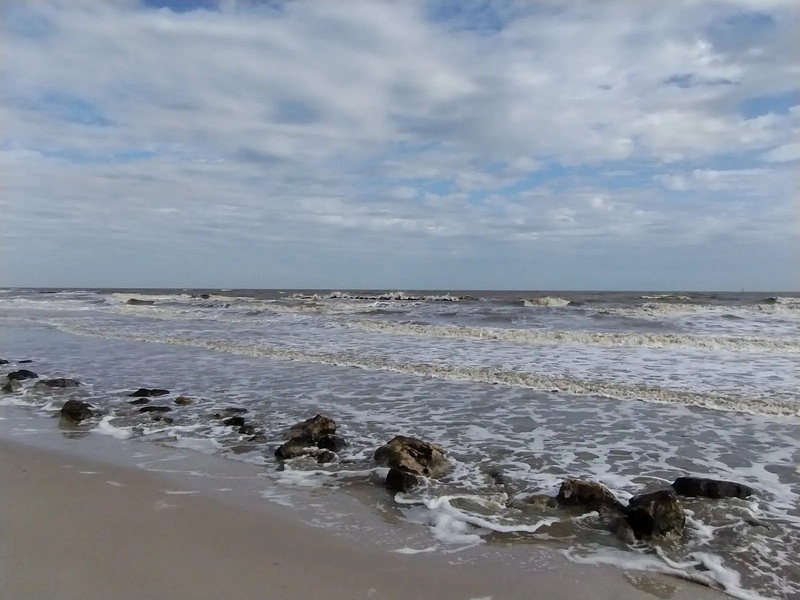
    <published>2025-05-02T05:27:46+00:00</published>
    <updated>2026-03-04T22:42:50+00:00</updated>
    <link rel="alternate" type="text/html" href="https://mail.acadianahistorical.org/items/show/277"/>
    <id>https://mail.acadianahistorical.org/items/show/277</id>
    <author>
      <name>Caroline Dugan</name>
    </author>
  </entry>
</feed>