<?xml version="1.0" encoding="UTF-8"?>
<feed xmlns="http://www.w3.org/2005/Atom">
  <title type="text">Acadiana Historical</title>
  <updated>2026-03-04T22:42:50+00:00</updated>
  <generator uri="http://framework.zend.com" version="1.12.20">Zend_Feed_Writer</generator>
  <link rel="alternate" type="text/html" href="https://mail.acadianahistorical.org/"/>
  <link rel="self" type="application/atom+xml" href="https://mail.acadianahistorical.org/items/browse?output=rss2"/>
  <id>https://mail.acadianahistorical.org/</id>
  <author>
    <name>Acadiana Historical</name>
    <uri>https://mail.acadianahistorical.org</uri>
  </author>
  <link rel="hub" href="https://pubsubhubbub.appspot.com/"/>
  <entry>
    <title type="html"><![CDATA[Against The Grain: The Endurance Of The Conrad Rice Mill: The 112-year-old Conrad Rice Mill is the oldest operating rice mill in America. ]]></title>
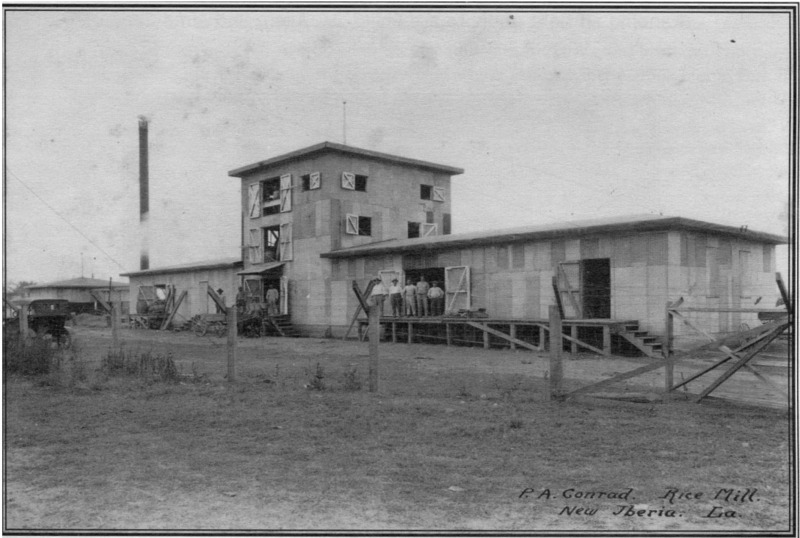
    <summary type="html"><![CDATA[<p><strong><em>The Conrad Rice Mill is a story of success and resilience, steered by competent and astute businessmen from Philip Conrad to Mike Davis.</em></strong></p><img src="https://mail.acadianahistorical.org/files/fullsize/a12caeca25911578813211e87fd4bf1f.jpg" alt="Conrad Rice Mill When Purchased" /><br/><p>Philip Amalus Conrad, a true entrepreneur, founded the Conrad Rice Mill and Planting Company in 1912. Following in his father's footsteps as a rice planter, Philip saw an opportunity for growth. Instead of shipping his rice to New Orleans, a risky and time-consuming process, he decided to establish a mill on his property in New Iberia. As the company flourished, the mill began sourcing grain from other rice growers to meet consumer demand. </p><p>At the age of retirement, Philip passed on his hard work to his three sons. The brothers branded the company KONRIKO as an acronym for Conrad Rice Company in the 1950s. In 1975, Mike Davis bought the mill and brought it back to life after it had been dormant for two years. Davis was a schoolteacher for St. Martin and Iberia Parishes. One of the biggest obstacles for Davis was having to learn how to produce rice. He had to analyze why the mill had been sitting dormant and needed to execute a plan to get it running again. He also had to figure out how to pack the milled rice; after packaging the rice, he went store to the store to ask them to sell the product. </p><p>When Davis took over the mill, they started by simply selling white rice, but as time moved on, he transitioned the mill to creating specialty rice. KONRIKO also expanded into selling cooking mixes and seasonings: Greek, Creole, jalapeno, etc. The brand also created a gravy thickener using rice starch instead of corn starch. KONRIKO's signature product is wild pecan rice; it was the first product Davis released about two years after purchasing the mill. </p><p>In the 1980s, Davis applied to the National Historical Register. It helped to create a tourist attraction. Now, the Conrad Rice Mill is a must-see in New Iberia, although ironically, half of the city has yet to see it. Roughly 50,000 people visit the mill annually. Davis also built a general store in 1981. It is modeled after a plantation company store. KONRIKO offers tours of the mill and a slide show presentation. In total, KONRIKO covers about 5 – 6 acres in New Iberia. The oldest building was built in 1912, and the newest building, a warehouse, was built by Davis in the late 1980s and early '90s.</p><p>Today, the Conrad Rice Mill continues to thrive, producing rice and rice-based products nationwide. This is a testament to the ingenuity and perseverance of those who have worked to keep the mill running for over a century.</p><p><em><strong><a href="https://mail.acadianahistorical.org/items/show/230">For more (including 19 images&#32;&amp;&#32;1 audio file) view the original article</a></strong></em></p>]]></summary>
    <published>2024-04-19T03:09:37+00:00</published>
    <updated>2026-03-04T22:42:50+00:00</updated>
    <link rel="alternate" type="text/html" href="https://mail.acadianahistorical.org/items/show/230"/>
    <id>https://mail.acadianahistorical.org/items/show/230</id>
    <author>
      <name>Marie Hamilton</name>
    </author>
  </entry>
  <entry>
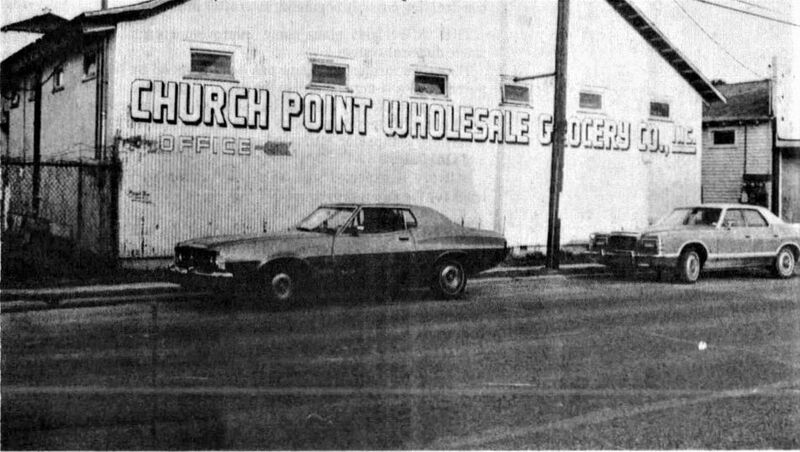
    <title type="html"><![CDATA[Peddler to Pioneer: A Slovakian Immigrant&#039;s Journey to Church Point Wholesale: Supplying Church Point and the South with almost anything, 112 years and counting.]]></title>
    <summary type="html"><![CDATA[<p><strong><em>After four generations of Horeckys and going on two of Gielens, this company remains one of the largest wholesale distributors in the South, located in the tiny town of Church Point. "At Church Point Wholesale, we still believe in quality, service, and tradition!"</em></strong></p><img src="https://mail.acadianahistorical.org/files/fullsize/d9dfdf760be9670100938216dfbfa027.jpg" alt="Church Point Wholesale" /><br/><p>       Ján Hvorecký was born to Andrej Hvorecký and Anne Pastorek on January 3, 1868. They resided in Bytča, Slovakia, an organized Jewish community with a population of 750 in the Austro-Hungarian Empire. At 18 years old, in 1885, Ján immigrated to the United States, Anglicized his name to John Horecky, and began peddling in St. Louis, Missouri. John sold textile and sewing supplies out of his horse-drawn wagon. Peddling was an extremely common occupation for Eastern European immigrants in the 19th century, and many of them went on to establish successful long lasting businesses in Acadiana. </p><p>          By 1890, John made it down the Mississippi River to Church Point. He met Julia McBride, whose father William was from a blacksmithing family, and her mother Marie Euphrosine Barousse, was the daughter of prominent French peddler turned businessman Jean Barousse. In 1892, John and Julia were married and he made the developing town his permanent home. He established the John Horecky store where he sold a variety of items, including groceries, dry goods, and clothing. In 1899, John was a naturalized citizen. At the turn of the century, he built a cold storage plant and began delivering ice. In 1912, he bought a small wholesale grocery from Leo Franques and Emile Daigle next door. Here, Church Point Wholesale Grocery Company would be established and run by John and ten employees. </p><p>          John's health began to decline in 1922 and his son Roy took over the Wholesale. After prohibition ended in 1933, they began bottling liquor, particularly wine, including Rosalie's California Sherry Wine, T & T, and Silver City, that would arrive to the factory by the truckload. John passed away on October 4, 1941. Seven years later, his store was demolished and all resources were devoted to the wholesale aspect of the company. Fires in 1937, 1943, and 1953 prompted the building of a 120,000 square foot warehouse for the grocery department on the outskirts of town in 1967. Main St. still housed the liquor department. </p><p>          Roy served as President, his brother Conrad Sr. as Vice President, and his nephew Conrad Jr. as Sales Manager. Roy became a well-known and successful businessman in Church Point. He owned three cotton gins, 4,000 acres of farmland, Horecky Motors, part of a sweet potato cannery, and was on the town-council for 16 years. Many families in Church Point and the surrounding rural areas were his sharecroppers who brought cotton to his gins and sweet potatoes to his cannery. There were 150 Wholesale employees when Roy died in 1988. </p><p>         Throughout the years, the Wholesale was still owned by the Horecky family, with Francis Burleigh Jr. and Jackie Casanova being some of the subsequent presidents. Long term employees include Julia Fontenot, Nolton Daigle and Warren Bourgeois. As the new century approached, changes came to Church Point Wholesale. In 1995, the liquor department shut down and in 2001, the company was sold to Crowley native John Dan Gielen, founder of ShopRite and Tobacco Plus. The Wholesale expanded to include cigarettes, tobacco products, snacks, and a 20,000 square foot cooler. After John Dan's death in 2018, his daughters and grandson Cody, CEO of Acadia Tobacco, began managing the company. Church Point Wholesale continues to expand in its products and partnerships with other companies. Its trucks can be seen delivering merchandise all over the south. </p><p>          In 2020, the Town of Church Point demolished the old Wholesale building and built a park in its place. The park will be home to a historic Buggy display, dog park, and playground. <span>Mayor Ryan "Spanky" Meche, museum staff, board members, and Curator Harold Fonte at Le Vieux Presbytère Museum created an exhibit to showcase historic Church Point businesses, such as this one. Local historian Gene Thibodeaux also works to preserve these stories in his newspaper column titled "Tales of Yesterday Acadia Parish: Its History." </span></p><p><em><strong><a href="https://mail.acadianahistorical.org/items/show/226">For more (including 25 images&#32;&amp;&#32;1 audio file) view the original article</a></strong></em></p>]]></summary>
    <published>2024-04-13T22:50:41+00:00</published>
    <updated>2026-03-04T22:42:50+00:00</updated>
    <link rel="alternate" type="text/html" href="https://mail.acadianahistorical.org/items/show/226"/>
    <id>https://mail.acadianahistorical.org/items/show/226</id>
    <author>
      <name>Kallie R. Barron</name>
    </author>
  </entry>
  <entry>
    <title type="html"><![CDATA[A Lost Paradise: Rousseau&#039;s Catahoula Inn: The Tragic Story of a Forgotten Getaway]]></title>
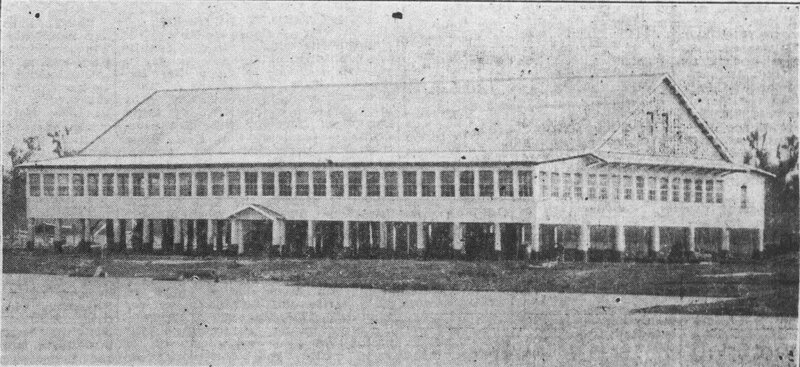
    <summary type="html"><![CDATA[<p><strong><em>Deep in the bayous of Louisiana once stood Rousseau’s Catahoula Inn. Shaded by majestic oak trees and with the sound of cicadas humming in the background, it was a picturesque respite for young and old. </em></strong></p><img src="https://mail.acadianahistorical.org/files/fullsize/767fe92d31d91c46eecda1a57db86c4a.jpg" alt="Rousseau&#039;s Catahoula Inn" /><br/><p>Gaston L. Rousseau was born in Breaux Bridge, Louisiana, on November 7, 1881. In 1908, Gaston moved to Springfield, Illinois, where he lived for ten years. There, he met Lena Hogan of Illinois. The couple married in New Orleans in 1918. Within two years of marriage, they settled down in St. Martinville, Louisiana. </p><p>In 1927, Gaston Rousseau began building the Catahoula Inn in Catahoula, Louisiana. The structure was built on ten-foot-high wooden posts, each pole grounded in cement. The building was large, 120 feet long by 80 feet wide. Situated nine miles northeast of St. Martinville, on the Western shore of Catahoula Lake, Catahoula Inn stood at the gateway to the Atchafalaya Basin. In "The Sportsman's Paradise," the land and water were plentiful with all forms of game. The lake had abundant underwater creatures for fishing excursions, including ducks, squirrels, and other waterfowl for hunting. The Inn was near St. Rita's Chapel. He finished construction in 1928 and had the grand opening on Easter Sunday, April 7, 1928.</p><p>The grand opening was a joyous and lively all-day event designed to attract visitors from the surrounding area. The Inn featured a sprawling dance floor that could hold up to 2,500 people. Chairs were neatly arranged around the perimeter, and the band, their instruments gleaming, stood on the stage, filling the air with music. The dance floor overflowed with couples dancing to the lively tune and patrons eating fine Cajun cuisine. The thick humidity lay like a fog, encasing the guests in a hazy nostalgia. </p><p>To the right side was the restaurant, which held 40 sanitary onyx tables and 200 chairs to accommodate guests. The dining room could be easily transformed into a banquet room should the occasion arise. Outside was a wrap-around veranda with plenty of chairs and tables to allow guests to enjoy lunch outside, where they could enjoy a beautiful view. After the sun set into the horizon, patrons then enjoyed the electric lighting that illuminated the building, the fun extending well into the night. In the back were the guest rooms and a spacious kitchen.</p><p>The Inn was a great success within its first few years. It attracted guests from all over Southern Louisiana and beyond. Despite its initial prosperity, the magnificent vision of Gaston Rousseau faced a tragic end. Rousseau's Catahoula Inn went on sale in 1930. In 1932, Galbert Benoit, the new proprietor, reopened the Inn under the name Catahoula Inn (as opposed to Rousseau's Catahoula Inn). Only two years later, in 1934, a destructive storm caused $500,000 in damage to the area. With half the building collapsed, Catahoula Inn was severely damaged. With costs too high to warrant any potential profit, the structure was instead deconstructed and sold for lumber. Catahoula Inn closed its doors a mere six years after opening, and its memory has slowly been carried away with the current of the Atchafalaya River.</p><p><em><strong><a href="https://mail.acadianahistorical.org/items/show/224">For more (including 7 images&#32;&amp;&#32;2 audio files) view the original article</a></strong></em></p>]]></summary>
    <published>2024-04-12T05:18:19+00:00</published>
    <updated>2026-03-04T22:42:49+00:00</updated>
    <link rel="alternate" type="text/html" href="https://mail.acadianahistorical.org/items/show/224"/>
    <id>https://mail.acadianahistorical.org/items/show/224</id>
    <author>
      <name>Marie Hamilton</name>
    </author>
  </entry>
  <entry>
    <title type="html"><![CDATA[A Survey of Success: The Fenstermaker Story]]></title>
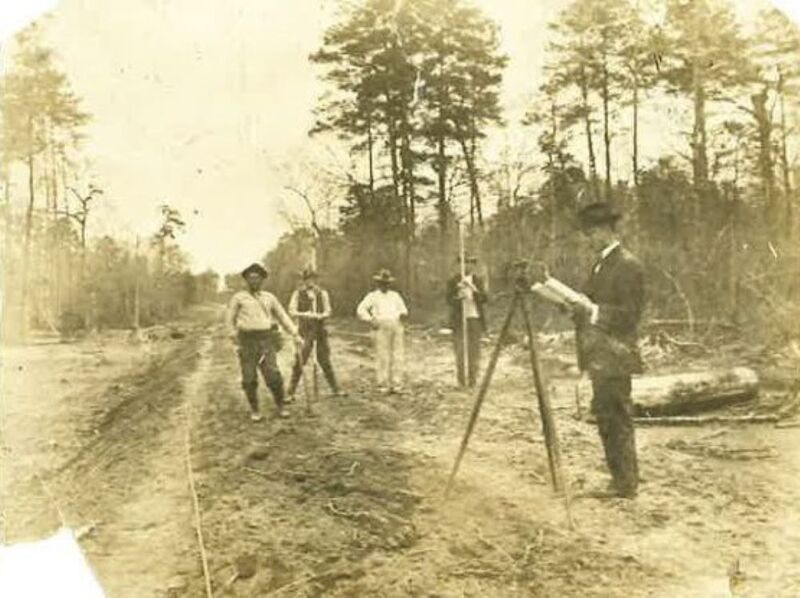
    <summary type="html"><![CDATA[<p><strong><em>C. H. Fenstermaker & Associates, L.L.C., started in the back bedroom of Charles Howard Fenstermaker's family home at 317 Allen Street, New Iberia.</em></strong></p><img src="https://mail.acadianahistorical.org/files/fullsize/c12030ed4886514274c0c6b5a1d64dc7.jpg" alt="Howard Fenstermaker, C.E." /><br/><p>Charles Howard Fenstermaker Jr. studied civil engineering at Louisiana State University from 1934-38. He fought in World War 2 at the Western Front, including the Battle of Anzio, and returned home in 1945. He worked as a surveyor for Texaco before becoming an independent contractor in 1950. In 1951, he was called back into service during the Korean War. </p><p>After returning stateside in 1952, Howard resumed his job as a civil engineer, working from his home at 317 Allen St., New Iberia. The job of a surveyor was a physical one. It required a minimum of three people to make a crew. One crewman cut a line through the swamp or dense forest using a machete. Two men were required to hold two poles with a link of chains 66 ft long stretched between them. Howard used his level - a surveyor's tool with a compass and a level - to calculate the land's bearing, direction, height, and fall using trigonometry. They used USGS monuments as control points, building catalogs of their work. </p><p>Howard would gather his survey crew from a nearby bar at 3:30/4 in the morning. He would collect men who had been at the bar all night or knew to show up early seeking work. It was strenuous work and left the men exposed to the elements. There were snakes, hornets, sun, and humidity; it wasn't uncommon for the men to walk away with snake bites or stings. When they finished surveying for the day, Howard would return to his office and draw the data at his drafting table, often working late into the night to finish the job. He was known for his attention to detail and photographic memory, and his work earned him a reputation for reliability and excellence. </p><p>By 1954, Howard needed more space as his family and business grew, so he moved his office to three rooms in a commercial building at 127 Burke Street, New Iberia. The company moved twice more before settling its headquarters at 135 Regency Square, Lafayette, in the early 80s. In 1971, Howard's oldest son, William Fenstermaker, started working full-time with his father. Nine years later, William took over as C.E.O. and president of Fenstermaker. In 2019, Charles Howard Fenstermaker III, William's son, was named president of the company. The company has remained family-oriented, with three of Howard's sons and several of his grandchildren working for the company. </p><p>Howard Fenstermaker's incredible work drive and belief in development and growth built a company that has lasted nearly 75 years and will undoubtedly continue to grow over the next half-century. Fenstermaker has grown all across the South and it all started in the back bedroom of 317 Allen Street.</p><p><em><strong><a href="https://mail.acadianahistorical.org/items/show/210">For more (including 9 images&#32;&amp;&#32;1 audio file) view the original article</a></strong></em></p>]]></summary>
    <published>2024-03-30T22:57:12+00:00</published>
    <updated>2026-03-04T22:42:49+00:00</updated>
    <link rel="alternate" type="text/html" href="https://mail.acadianahistorical.org/items/show/210"/>
    <id>https://mail.acadianahistorical.org/items/show/210</id>
    <author>
      <name>Marie Hamilton</name>
    </author>
  </entry>
  <entry>
    <title type="html"><![CDATA[Chocolate Soldier Chronicles: From Church Point to Hanley&#039;s Bottling Works: Supplying Church Point with delicious refreshments, from 1906 to 1978.]]></title>
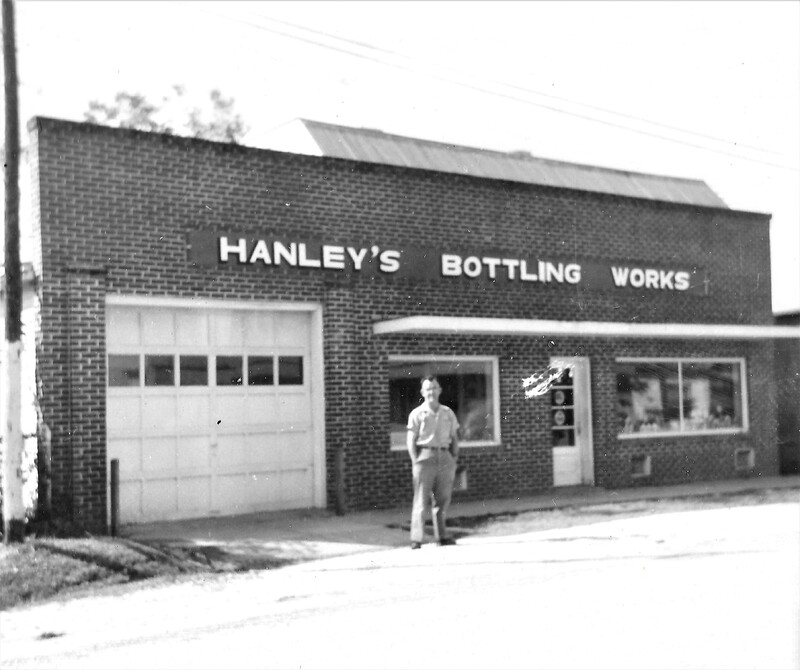
    <summary type="html"><![CDATA[<p><strong><em>The turn of the century's railroad industry supported the creation and operation of the tiny Church Point Bottling Works by Church Point natives Alcee Sonnier and Pierre Guidry. By the 1950s, the son of an Irish railroad man, "Tooney" Hanley, had bought the factory, renovated and upgraded equipment, and began exporting "pop" all over Acadiana. Hanley's Bottling Works' slogan was "bottled in Church Point for America since 1925."</em></strong></p><img src="https://mail.acadianahistorical.org/files/fullsize/47e28e16668d8c234d5280a01bed528e.jpg" alt="Hanley&#039;s Bottling Works " /><br/><p><span>          Our story starts off once more with the Daigle family of Church Point. In 1902, Ernestine Daigle, daughter of Joseph Ernest and Maria Madeleine Breaux Daigle, married Pierre Guidry, son of Thelismar and Marie Hermina Daigle Guidry. Marie Hermina taught her husband, who had grown up on a farm, how to read and write in both French and English. Thelismar went on to become a prominent businessman and community leader, opening up a saddlery, hotel, store, and barbershop. Pierre was the town's barber, as well as the manager of his father’s hotel that served as lodging for the travelers, salesmen, and schoolteachers who had traveled by railroad. The Guidry Hotel was located </span><span>where Sunny's Fried Chicken currently is today.</p><p>         Alcee Sonnier, a policeman, opened up the "Church Point Bottling Works" in 1906 at what is now 318 South Horecky Street. He sold it to Pierre around 1909, who operated it for a while until the 1920s, when it had a few different owners, including Bill and Hubert Daigle, Albert Guidry, and later the Hanleys.</p><span>          Frank LeMoine “Tooney” Hanley, was born in 1905 in Cottonport, a small town ten miles northeast of Bunkie in Avoyelles Parish. His mother, Corinne LeMoine, was a Cottonport native that his father, Frank, from Mississippi, met while working on the railroad. Frank was the son of an Irish immigrant who came to New York in 1855. </p><p>          By 1913, Frank and Corinne had moved to Church Point after the Texas & Pacific Railroad bought out the recently bankrupted railway near them. Frank became a telegraph operator for the T&P Railroad, where he would translate messages into Morse code and send them to recipients. </span><span>The Hanleys were adored by the townspeople. Tooney went on to marry Gertie Mae David, a Church Point native and schoolteacher, who attended a Fine Arts school in Mexico. She taught piano and singing lessons at their home.</p><p>          In 1925, Tooney purchased Church Point Bottling Works. After some years, he relocated the small factory to 329 South Main Street and renamed it "Hanley's Bottling Works." The growth of Church Point’s economy was supported by local businesses, and Tooney took this opportunity to remodel and expand the building. Sometime in the 1950s, the factory nearly tripled in size, was rebuilt with bricks, had a garage door to load trucks and large windows for the public to view soda being bottled, as well a hand painted store sign. Hanley's Bottling Works sold soda across Acadia, St. Landry, and Evangline Parishes. </p><span>          Many young Church Point students throughout the years took field trips to learn about how soda was made. Soda was made by workers mixing water, sugar, and flavorings, followed up by pressurizing the glass bottles. Local bottling companies would mix and bottle their own generic flavors of soda like grape, orange, strawberry, root beer, and cream soda. They would also bottle franchised drinks, like "Orange Crush," "Hire's Root Beer," and "Mr. Cola." Hanley’s Bottling Works was particularly famous for its "Chocolate Soldier," which was a chocolate drink most often compared to a Yoo Hoo. At the end of the factory tour, students would receive a bottle of Chocolate Solider to enjoy and keep them hyper once they returned to the classroom. </p><span>          Unfortunately, Tooney passed away suddenly in 1963; he left his business behind to his wife. Their son, Michael Hanley, became the manager. On July 18</span><span>th</span><span>, 1966, at 6pm, Mike, his younger brother Tim, and long-term employee Milton Guidry were present doing equipment maintenance and cleaning bottles. Suddenly, a thousand-pound boiler exploded and was launched 300 feet into the air, landing in a nearby field that children would play baseball in. The roof, north wall, and the front glass of the factory were severely damaged, but according to legend, not a single Hanley bottle was ever broken. However, Milton's ankle was broken, but he recovered fine in the Church Point Sanitarium.</span><span> </p><span>          On May 11, 1974, Mike Hanley and his wife Sue Harmon had their grand opening of the new Hanley's Bottling Works. The building was exceptionally beautiful, with 125-year-old cypress doors from an old Acadian house in Iota, as well as cypress frames, antique lighting fixtures, rare furniture, and a collection of old Hanley bottles from throughout the years. A few years later, in 1976, the company was sold to Monarch Beverage Company and was dedicated to the production of Chocolate Soldier, rebranding itself as "Church Point Chocolate Company," and still under management of Mike and his brother Pat.</p><p>           In 1978, Monarch moved operations to Opelousas and 329 South Main Street no longer produced soda. The factory would become home to Richard's Cajun Country Sausage. Locals enjoy <span class="NormalTextRun SCXW149255556 BCX0">reminiscing</span> about Hanley's Bottling Works and the Hanley family being a large part of their childhoods, often sharing images of bottle openers, icepicks, and soda bottles. Mike Hanley has amassed a collection of Hanley <span class="TextRun SCXW149255556 BCX0"><span class="NormalTextRun SCXW149255556 BCX0">memorabilia </span></span>over the years. Mayor Ryan "Spanky" Meche, museum staff, board members, and Curator Harold Fonte at Le Vieux Presbytère Museum created an exhibit to showcase historic Church Point businesses, such as this one. Local historian Gene Thibodeaux also works to preserve these stories in his newspaper column titled "Tales of Yesterday Acadia Parish Its History." </p><p>          "The orange 'pop' from there was the best ever! None nearly as good. Big summer treat was the crate of assorted flavors Mama would keep on hand. Chocolate was also super good. Keeping the fingerprints and nose prints off that front window had to be a major job. Can still hear those bottles clinking as they went around." - Elaine Bellard Favre via Facebook.</span></p><p><em><strong><a href="https://mail.acadianahistorical.org/items/show/208">For more (including 24 images&#32;&amp;&#32;1 audio file) view the original article</a></strong></em></p>]]></summary>
    <published>2024-03-25T01:00:35+00:00</published>
    <updated>2026-03-04T22:42:49+00:00</updated>
    <link rel="alternate" type="text/html" href="https://mail.acadianahistorical.org/items/show/208"/>
    <id>https://mail.acadianahistorical.org/items/show/208</id>
    <author>
      <name>Kallie R. Barron</name>
    </author>
  </entry>
  <entry>
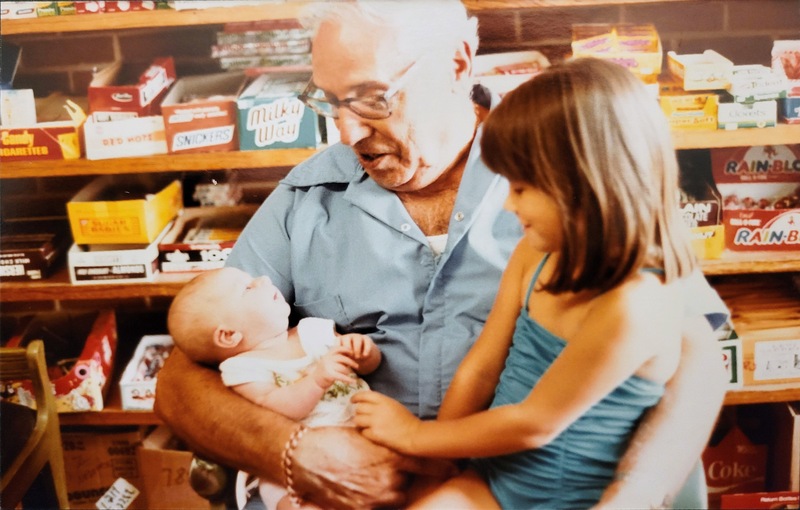
    <title type="html"><![CDATA[Greig&#039;s West Main Grocery: Greig&#039;s little store was a gatekeeper of the growing city of New Iberia for nearly 50 years.]]></title>
    <summary type="html"><![CDATA[<p><strong><em>The buzzer sounded on the kitchen door, notifying Raymond August Greig that someone had entered his store. The kitchen door opened into the small, connected building on West Main Street in New Iberia. Raymond would meander behind the counter, greet his guest, sit in his worn yellow chair, and welcome a new business day. Greig's West Main Grocery was your average small corner store that supported patrons heading in and out of town on Highway 182.</em></strong></p><img src="https://mail.acadianahistorical.org/files/fullsize/2afebdec2a2a18638cff05ab2a603f6d.jpg" alt="Raymond holding his grandkids in his West Main grocery store." /><br/><p>Raymond August Greig was born in St. Martinville, Louisiana, on November 28, 1914. Raymond was a bright boy but never received more than an 8th-grade education. Ray met Carrie Leigh Broussard at a county fair. They wed on November 30, 1935, before moving to Texas, where Raymond worked for the Southern Pacific Railroad. They moved all over Texas following the growth of the railroad. Raymond was indispensable to the railroad: he was unafraid of heights and skilled at his job; this allowed him to escape the draft into World War 2. The family returned to Louisiana in 1941 and eventually made their home in New Iberia, on 1200 West Main Street. Raymond built the property and store in the 1940s. There, they raised their three kids; their grandkids would also spend much of their childhood at the store and home. </p><p>Attached to their private residence, Greig's Grocery was a hotspot for cola, cigarettes, and cold beer. The front door opened to a small space; on either side of the door were two large windows. The store was small, boasting 1-2 isles in the middle and a long counter holding a large old-time cash register with a satisfying cha-ching when he pulled the lever. Below the register, Raymond kept track of purchases in a flip book, even opening tabs for regular customers. </p><p>Behind the long counter on the right side of the store was a wall of candy boasting all the latest brands: Snickers, Milky Way, M&M's, etc. Cigarettes and toothpaste were also waiting on the shelves for the desiring customer. The long counter held a deli with fresh meat and cheese to be sliced in the grocery's deli slicer. Raymond had chickens in the backyard; he pickled the eggs and sold them in the store. At the end of the counter were shelves holding packages of baked goods, not only bread but packaged Little Debbie treats. Various dried goods were on the far wall across from the long checkout counter. A big Coca-Cola icebox stood by the front door.</p><p>Greig's West Main Grocery served customers for nearly 50 years. Carrie Leigh passed away in 1995. Shortly after her death, the store was robbed. The offenders attacked Raymond and sprayed him with pepper spray. The store was closed and put up for sale by 1997.  The property was sold and became May's Oriental Grocery. Raymond August's middle son had a small wooden cabin built for his father to live in for the remainder of his life, where Raymond resided until his passing on February 27, 2000. Raymond is buried beside his wife at the Nativity Mausoleum in New Iberia.</p><p><em><strong><a href="https://mail.acadianahistorical.org/items/show/198">For more (including 9 images&#32;&amp;&#32;1 audio file) view the original article</a></strong></em></p>]]></summary>
    <published>2024-03-16T19:03:11+00:00</published>
    <updated>2026-03-04T22:42:49+00:00</updated>
    <link rel="alternate" type="text/html" href="https://mail.acadianahistorical.org/items/show/198"/>
    <id>https://mail.acadianahistorical.org/items/show/198</id>
    <author>
      <name>Marie Hamilton</name>
    </author>
  </entry>
  <entry>
    <title type="html"><![CDATA[Beyond Hammers and Nails: The Long Legacy of Theo. Daigle &amp; Bros. Hardware Store: Supplying Church Point with the tools to build a town, 114 years and counting.]]></title>
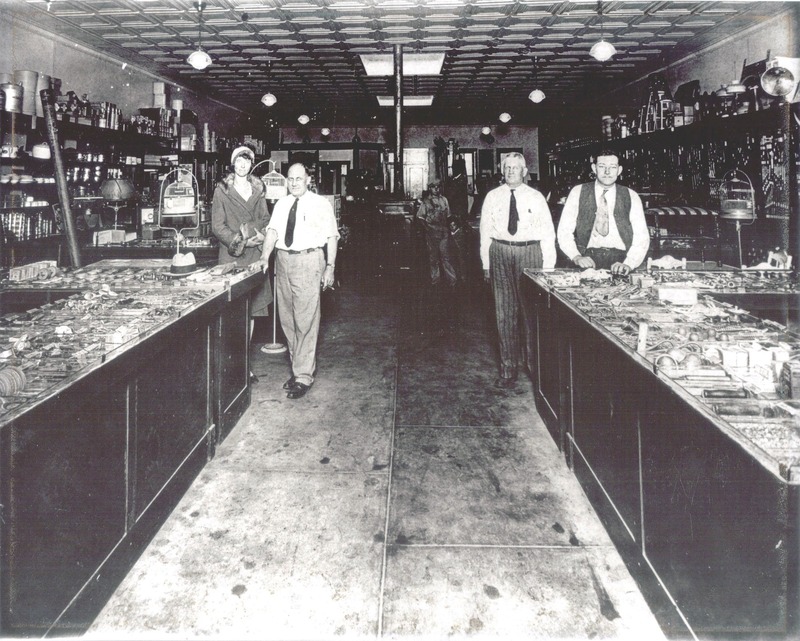
    <summary type="html"><![CDATA[<p><strong><em>The Daigle family operated dozens of businesses in Church Point and the surrounding rural areas for decades. Ranging from banks, grocery stores, cotton gins, department stores, and lumber and power companies, the family played a key role in the town's early development. One hardware store remains the oldest business in town.</em></strong></p><img src="https://mail.acadianahistorical.org/files/fullsize/e9e1440f3dac5720c27f125824b51012.jpg" alt="&quot;Theo. Daigle and Bros. Hardware Store&quot; Interior" /><br/><p> Our story starts with Joseph Ernest Daigle and his wife, Maria Madeleine Breaux Daigle, whose 12 children nearly had a monopoly over Church Point. One son, Theodore Daigle, was born in 1875, and after receiving his education in town, dabbled in a few business ventures, including the People’s Lumber Co., Ltd, a saloon, and a hardware store. In 1901, he received a tiger cub from his uncle for Christmas and showed it off at his two-story "Klondyke Saloon."</p><p>His most well-known contribution to the town was “Theo. Daigle & Brother’s Hardware Store” that opened in 1910, with his brothers Joseph Ernest Jr. and Emilien owning shares of the company. At 221 N. Main St., Theodore and staff stocked and sold a variety of items including carpentry, plumbing, and electrical materials, paint, tools, small machinery, home appliances, farm implements and heavy machinery, and eventually tractors, auto parts, and furniture. </p><p>In 1917, another brother, Benjamin, bought Joseph Ernest Jr. and Emilien’s shares. Shortly after that, namesake Theodore passed away in 1924. His son, Clarence Dodd, bought a fourth of the company’s shares and began working with his uncle Ben, becoming the owner after his death in 1947. Dodd also owned the Daigle Oil Company, Daigle Butane and Appliance Company, and a distribution center for Texaco products. After Dodd's death in 1974, his son, Freddie, managed the store until 2000.</p><p>The store stayed within the family until 2007 when Dodd’s granddaughter Posie Pole and her husband Ronald “Rolaid” Carrier sold the store to Kent Latiolais, owner of "Kent’s Flooring and Furniture Center." Their only condition was that he keep the last name in the store’s updated name because of the approaching 100th year anniversary that would solidify Theo. Daigle & Brother’s Hardware Store as the oldest continuously operating business in Church Point. Kent happily obliged, and after moving from Main Street to the old Thibodeaux Chevrolet Car Dealership (which was also built by Theo Daigle Hardware in 1936) to 110 E. Plaquemine St., he called it “Daigle Hardware.” </p><p>In 2015, Mayor Ryan “Spanky” Meche purchased the hardware store. He, museum staff, board members, and Curator Harold Fonte at Le Vieux Presbytère Museum created an exhibit to showcase historic Church Point businesses, such as this one. Local historian Gene Thibodeaux also works to preserve these stories in his newspaper column titled "Tales of Yesterday: Acadia Parish: Its History." </p><p>Today, Daigle Hardware is often referred to as “Theo. Daigle” or even “Dodd’s” by patrons who always seek to honor the business’ history by actively acknowledging its age and impact on the community. Despite the presence of hardware and auto-parts stores run by large corporations in Church Point, locals support this now 114-year-old business for its hospitality and nostalgia.</p><p><em><strong><a href="https://mail.acadianahistorical.org/items/show/195">For more (including 21 images&#32;&amp;&#32;1 audio file) view the original article</a></strong></em></p>]]></summary>
    <published>2024-03-12T23:33:29+00:00</published>
    <updated>2026-03-04T22:42:49+00:00</updated>
    <link rel="alternate" type="text/html" href="https://mail.acadianahistorical.org/items/show/195"/>
    <id>https://mail.acadianahistorical.org/items/show/195</id>
    <author>
      <name>Kallie R. Barron</name>
    </author>
  </entry>
</feed>